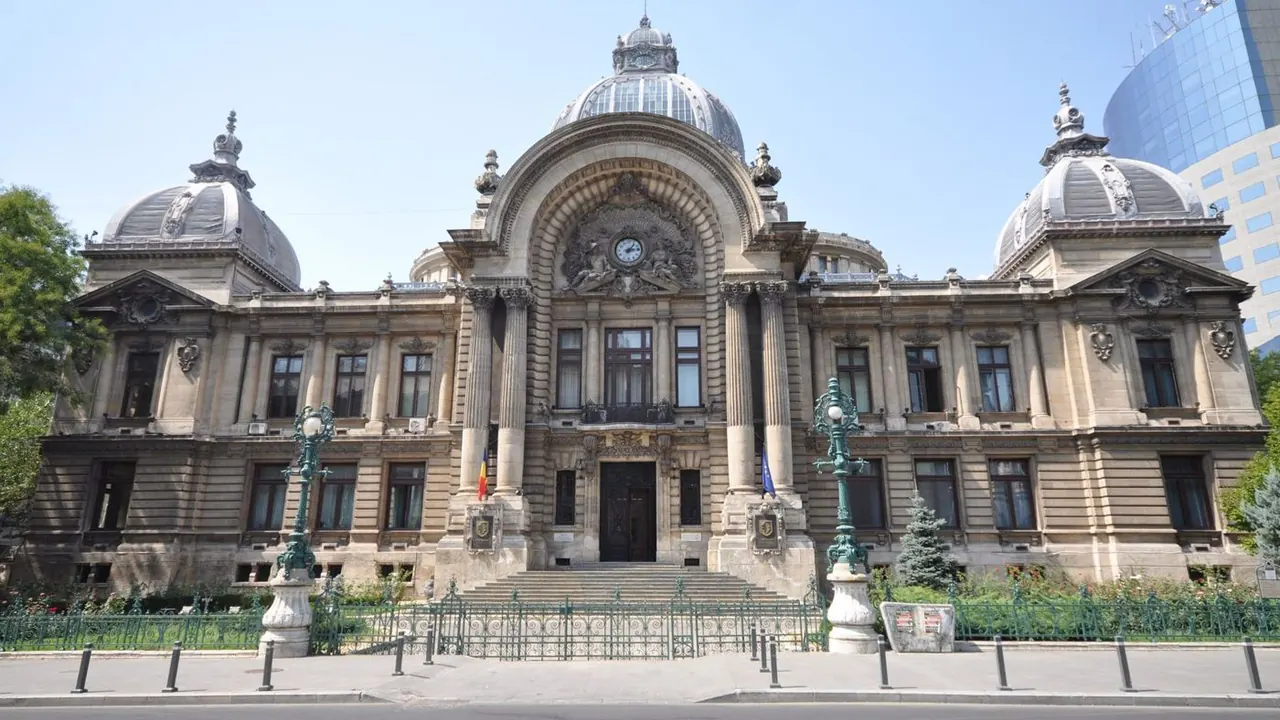
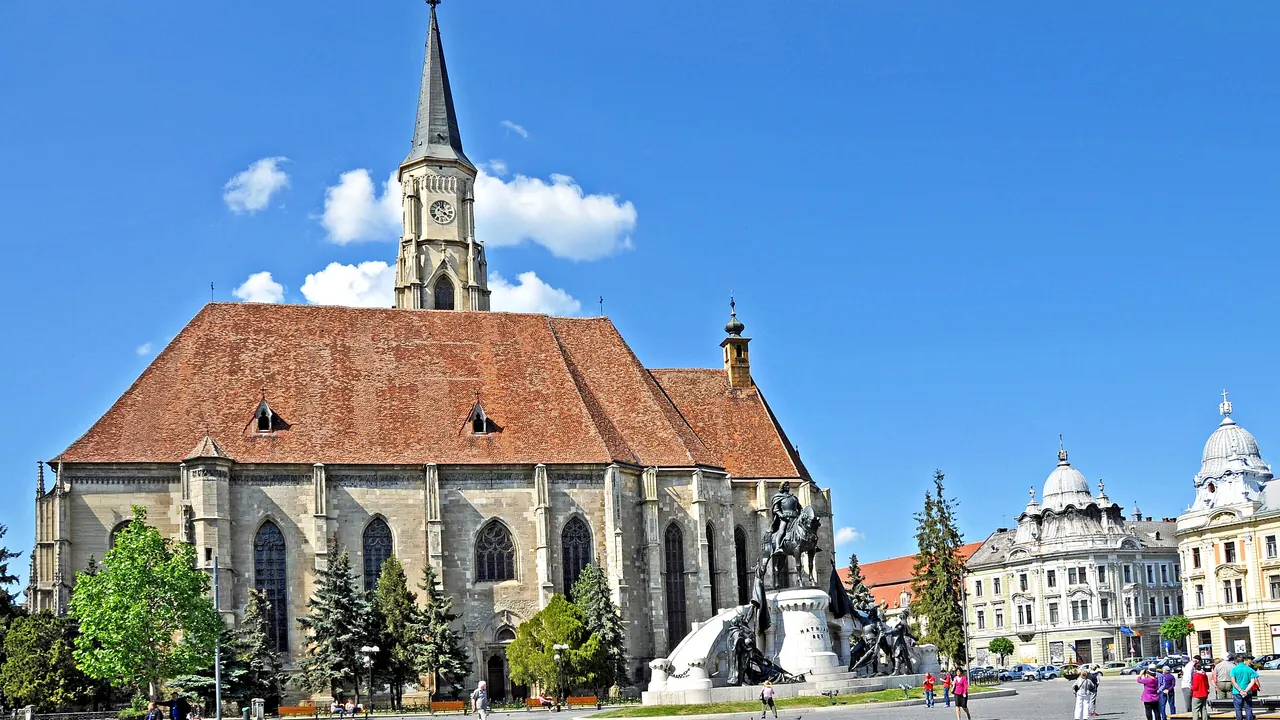
Photos: Bucharest by Jorge Láscar, CC BY 2.0, cropped; Cluj-Napoca by Dennis G. Jarvis, CC BY-SA 2.0, cropped.
Bucharest or Cluj-Napoca?
Our verdict in twelve categories, each scored against the same fixed benchmark cities, and the climate month by month, so you can choose for your trip.
Choose Bucharest for
- wellness
- nightlife
- culture and sights
Bucharest suits the traveller who wants a capital's range. You get Belle Epoque streets beside the vast Palace of the Parliament, a wider choice of restaurants and wine bars, nights in the techno clubs that run past sunrise, and a thermal-water complex just north of the city for a lazy day. The city is loud and tiring to walk, but its days and evenings are fuller.
Choose Cluj-Napoca for
- nature and the outdoors
- getting around
- day trips
Cluj-Napoca is the better pick for anyone who would rather stroll a compact old centre and then head into the hills. Făget woods, Turda Gorge and the Apuseni Mountains are close, and the salt mine, Alba Iulia and Transylvania's castles and villages make good day trips. It is the calmer and smaller base, easiest with a hired car, and its student bars give it enough life after dark for a weekend.
Scoreboard
Twelve categories on one fixed scale from 0 to 100. The shaded stretch is the gap between the two.
Your match
Pick a travel style or drag the sliders, and both match scores follow your weighting.
Wins on wellness and nightlife with your weighting.
Wins on nature and the outdoors and getting around with your weighting.
What matters to you?
Category by category
What the scores mean for a trip.
Beaches & swimming
Neither city is a place to plan swimming around. Bucharest lies inland on the Wallachian plain, far from the resorts near Constanta, and Cluj sits in the Transylvanian hills, a long day's travel from the sea. The difference is the summer fallback: in Bucharest it means a hotel pool, the big pool complexes on the city's edge or Lake Snagov. Cluj has the outdoor salt lakes at Turda, where people float in the salty water.
Food & drink
Both kitchens share the same core of sour ciorba, sarmale with polenta and papanasi, so the difference is range. Bucharest adds modern bistros, specialty coffee and wine bars around Calea Victoriei and Dorobanti. It also has the big Piata Obor market and the painted beer hall of Caru' cu Bere.
Cluj adds a Hungarian strand, with varză à la Cluj and Târnave whites, and its student cafés pour serious coffee. International cooking and fine dining are thin, though. A few days of eating well are easy in either city, but on a longer stay Bucharest gives you more variety.
Culture & sights
Bucharest has more to see and more variety. Along Calea Victoriei stand Belle Epoque mansions and the Athenaeum, and small Orthodox churches such as Stavropoleos survive in the old streets. There is also the huge Palace of the Parliament and the art museum in the former royal palace. Its appeal lies in contrast rather than beauty.
Cluj is prettier but has less to see. Its compact centre runs around Gothic St Michael's on Piața Unirii, with the Bánffy Palace and stretches of medieval wall nearby. Both cities have an open-air museum of wooden village buildings. In Cluj, the one in the Hoia hills is the highlight, while in Bucharest the one on Lake Herastrau is one sight among several.
Nightlife
Bucharest is much the bigger night out. The Old Town's cobbled lanes fill with groups every evening, and Piata Romana and the garden bars in old villas have more local character. The techno and minimal clubs play until well after sunrise, and summer rooftops add a long open-air season.
In Cluj, the student crowd keeps the cellar bars around Piața Muzeului busy late. But the scene covers only a few streets, and it goes quiet in summer, just when Bucharest's outdoor season is at its height.
Nature & outdoors
Cluj has real landscape on its doorstep. Forest starts at the edge of town in Făget and Hoia, and Turda Gorge, a limestone canyon, is under an hour away. Anyone with a car can explore the karst plateaus, caves and beech woods of the Apuseni.
Bucharest is flat, and its green spaces are parks and lakes. Herastrau has rowing and cycling, and the reed beds of Vacaresti are good for birdwatching. Its mountains, the more dramatic Bucegi above Sinaia and Busteni, are about two hours north and deserve a night rather than a rushed day.
Day trips
Both cities offer a decent choice of outings, but of different kinds. From Bucharest the standout is Peles Castle in the forest above Sinaia, an easy train ride away. Mogosoaia's lakeside palace and the island monastery at Snagov are closer still. Beyond those the choice narrows, and Brasov needs an overnight stay.
Cluj has more within easy reach. The Turda Salt Mine has a lake to row on deep underground, Alba Iulia has its star-shaped Habsburg citadel, and there is Bánffy Castle at Bonțida and the whitewashed village of Rimetea. Most of these are easier by car than on Transylvania's slow trains.
Good for families
Bucharest gives children more to do. There is the lively Grigore Antipa natural history museum, plus boats and playgrounds in the big parks. A thermal water park with slides fills a whole day in any weather. The downside is heavy traffic, broken pavements and hot summers, which are hard going for parents with a pushchair.
Cluj is calmer and easier to manage but has fewer attractions. The Turda Salt Mine, with a small Ferris wheel deep below ground, is its one real highlight for children. It works best as a stop on a wider Transylvanian route rather than a family base.
Getting around
Cluj is the easier city on foot. Nearly everything lies within a twenty-minute walk of Piața Unirii on flat ground, and the airport is a short ride away. Its weak point is leaving town, where slow trains and infrequent buses make a hired car the practical choice.
Bucharest is more spread out, with uneven pavements, wide crossings and some of Europe's worst rush-hour traffic. The cheap, reliable metro helps, although it misses much of the city. Ride-hailing fills the gaps, and a car is only worth having for the mountains.
Shopping & style
Neither city is a shopping destination, but Bucharest has more on offer. There are big malls of international chains, a handful of luxury labels around Piata Victoriei and Romanian designers selling from concept stores in the old villa districts. Cluj's pedestrian centre has a scattering of independent shops, and beyond that mostly malls.
For things to take home the two are much alike. Both sell embroidered blouses, painted ceramics and folk crafts at museum shops and fairs. In Cluj, the Christmas market on Piața Unirii is the busiest time of the shopping year.
Affordability
Both cities cost well below Western European levels, so price should not decide between them. What differs is where the savings lie. In Bucharest, transport, taverns and museums are cheap, while the smart restaurants and cocktail bars in the north charge close to Western prices. Cluj costs more than most of Romania because of its tech and university economy. Even so, its opera and theatre seats are a bargain, though rooms become scarce and expensive during the big summer festivals.
Live music & performing arts
Both are good for an evening of music, but in different ways. Bucharest's draw is the Athenaeum, where the George Enescu Philharmonic plays under a frescoed dome. It also has the National Opera and, every other year, the Enescu Festival in late summer and early autumn.
Cluj's stage life runs in two languages, with Romanian and Hungarian opera houses and theatres alongside the Transylvania State Philharmonic, and tickets are easy to get. In summer it hosts large electronic and pop festivals rather than an orchestral one. In both cities, plays are rarely in a language most visitors understand.
Wellness & relaxation
Bucharest has one big asset: one of Europe's largest thermal-water complexes, half an hour north, with warm pools under a glass dome, saunas and quiet rooms filled with palms. The city itself is noisy, so calm comes from a morning by the lake in Herastrau or a coffee in a garden courtyard.
Cluj is calmer day to day but has no bathing tradition. It offers hotel spas, and at Turda people breathe the salty mine air as a cure for breathing problems. For a restorative trip, Bucharest gives you more.
When should you go?
Pick your month. The climate figures are measured averages, not a forecast.
Bucharest in July
Cluj-Napoca in July
Daytime high, °C
Rainfall in the month, mm
Temperature and rainfall are climate normals, averaged over the years shown. Bucharest: 1991-2020 normals, Bucuresti / Imh (10 km from centre). Cluj-Napoca: 1991-2020 normals, Cluj-Napoca (2.4 km from centre).
Both cities have hot summers and cold winters, but Bucharest is the hotter of the two. In July and August it reaches about 31°C and gets the most sunshine, which makes walking around at midday hard work. Cluj sits higher, in the Transylvanian hills, and peaks at around 27°C, so summer sightseeing is more comfortable there. The catch is that June and July are its wettest months, with about 90mm of rain in June.
For walking the streets, May and September are the best months in both cities. Spring arrives a little earlier in Bucharest and autumn lasts a little longer. From December to February, daytime highs sit just above freezing in both. Cluj is colder still and its hills get snow, so in winter both cities are better for concert halls than for long days outdoors.
Which traveller are you?
For a food and nightlife trip, Bucharest is the better choice. A capital gives you a different neighbourhood to eat in each evening, and nights that can run until morning. Cluj makes a lively student weekend, but its choice of places runs thin after a few nights.
On a relaxing and wellness trip, Bucharest also comes out ahead. You get one long, warm, unhurried day just outside the city that nothing in Cluj can match, and slow mornings in the parks the rest of the time. Away from those, the city is noisy.
On an outdoors trip, Cluj is the clear pick. Walkers and cyclists can be on a trail before lunch and in real hill country by the afternoon, and a hired car opens up several days of varied ground. From Bucharest, the mountains mean a separate overnight trip.
Before you go
| Measure | Bucharest | Cluj-Napoca |
|---|---|---|
| Official language | Romanian | Romanian |
| Currency | Romanian Leu (RON) | Romanian Leu (RON) |
| Sockets | CF230 V, 50 Hz | CF230 V, 50 Hz |
| Driving side | Right | Right |
| Time zone | UTC+2, UTC+3 in summer | UTC+2, UTC+3 in summer |
| Emergency number | 112 | 112 |
| Elevation | 70 m | 356 m |
| Main airport | Bucharest Henri Coandă International Airport (OTP)18 km from centre121 non-stop destinations | Avram Iancu Cluj International Airport (CLJ)7 km from centre53 non-stop destinations |
| Public holidays this year | 17 days | 17 days |
By the numbers
| Measure | Bucharest | Cluj-Napoca |
|---|---|---|
| City population | 1,716,961 | 286,598 |
| People per km² | 7,597 | 1,640 |
| Museums within 10 km | 41 | 6 |
| UNESCO World Heritage sites within 50 km | 0 | 0 |
Where else could you go?
Every comparison below shares a destination with this one, so you can follow Bucharest or Cluj-Napoca somewhere new.
- Sibiuvs Cluj-Napoca
- Brasovvs Bucharest
- Varnavs Bucharest
- Brasovvs Cluj-Napoca
- Sibiuvs Bucharest
- Burgasvs Bucharest