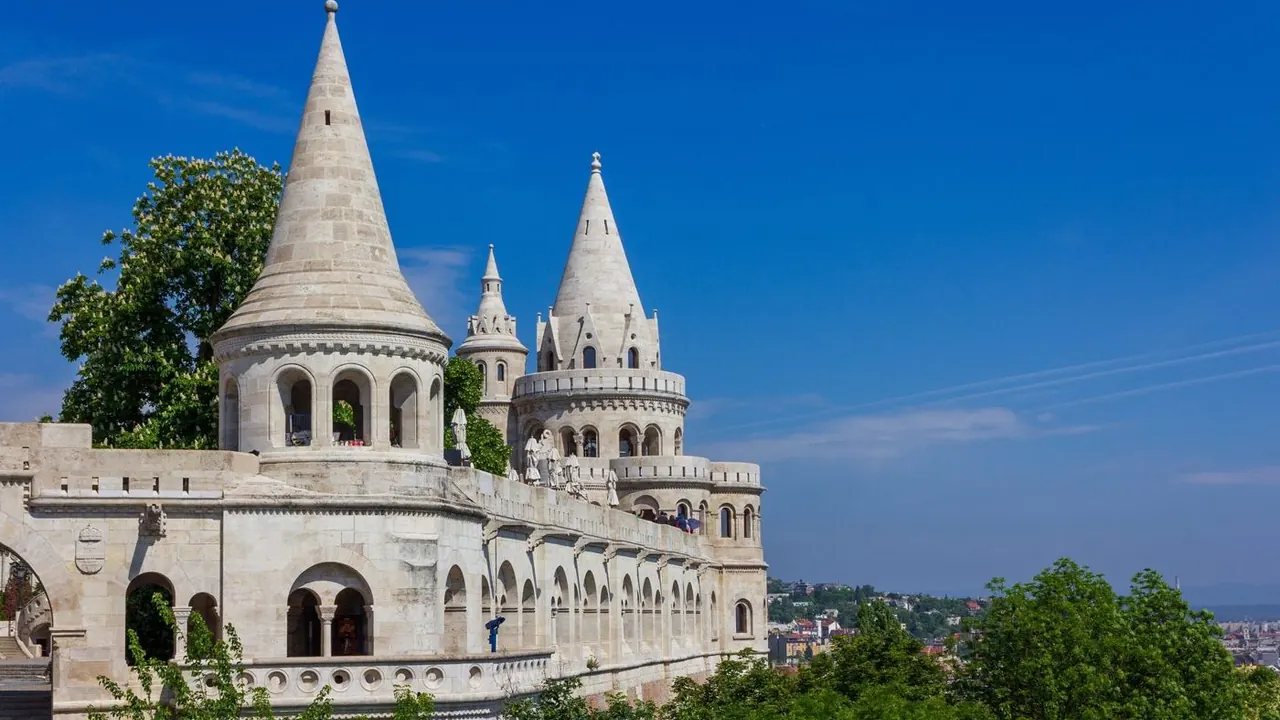
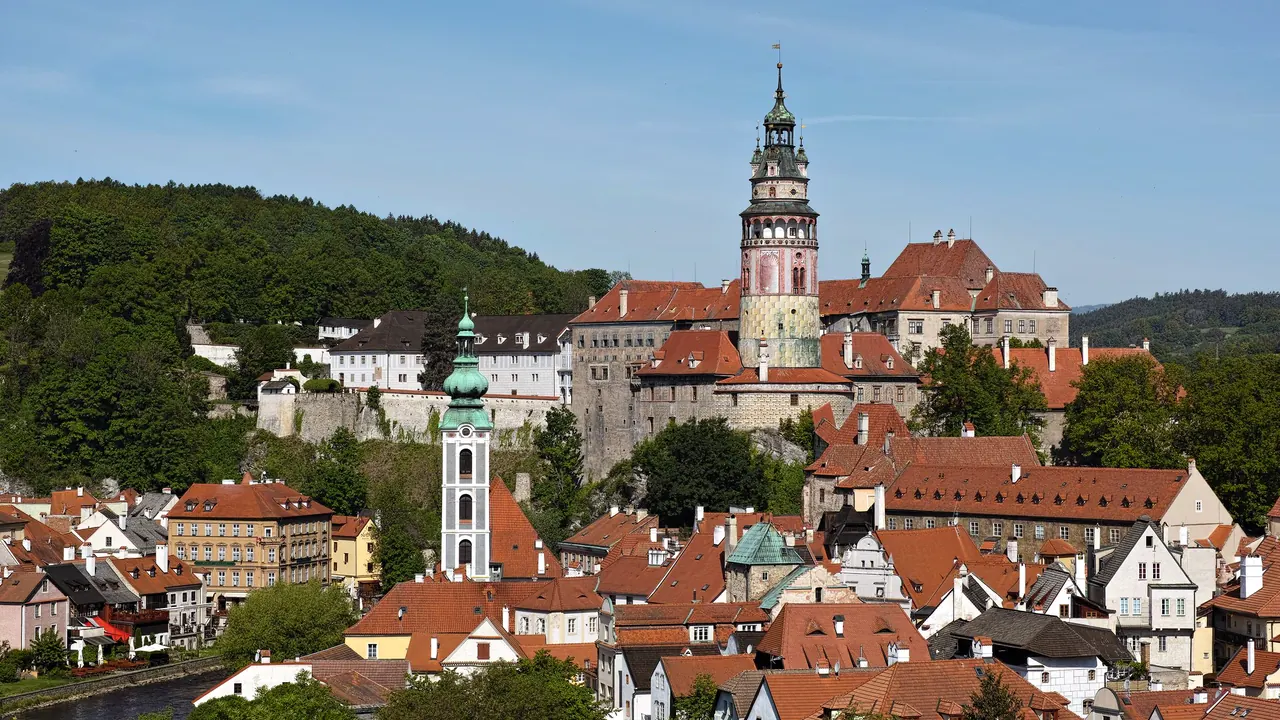
Photos: Budapest by Perituss, CC0; Cesky Krumlov by Xth-Floor, CC BY-SA 4.0, cropped.
Budapest or Cesky Krumlov?
Our verdict in twelve categories, each scored against the same fixed benchmark cities, and the climate month by month, so you can choose for your trip.
Choose Budapest for
- wellness
- nightlife
- live music and the arts
Budapest suits the traveller who wants a full capital to explore: a river front of palaces and bridges, serious museums, thermal baths that shape the day, classical music most evenings and a late scene in the old Jewish Quarter. It rewards a stay of several days, works well with children, and needs no car because trams and the metro reach almost everything.
Choose Cesky Krumlov for
- nature and the outdoors
Choose Cesky Krumlov for a slower, smaller trip. It is a single UNESCO-listed townscape under a great castle in a bend of the Vltava, seen properly in a day or two and loveliest once the coaches have gone. It is a good base for canoeing the river and walking in the Bohemian Forest. Quiet evenings with a beer by the water are the point here, and a hire car opens up the castles and villages of South Bohemia.
Scoreboard
Twelve categories on one fixed scale from 0 to 100. The shaded stretch is the gap between the two.
Your match
Pick a travel style or drag the sliders, and both match scores follow your weighting.
Wins on wellness and nightlife with your weighting.
Wins on nature and the outdoors with your weighting.
What matters to you?
Category by category
What the scores mean for a trip.
Beaches & swimming
Neither place has a beach, and both offer only a summer substitute. In Budapest that means the big city lidos such as Palatinus on Margaret Island, with lawns and several pools. For open water, the shallow Lake Velence is under an hour away by train and warms past 25°C in high summer.
Cesky Krumlov's option is Lipno, a large reservoir about half an hour's drive away, with grassy and sandy shores and cooler water of around 20°C. You need a car to get there, while Budapest's lidos are a tram ride away.
Food & drink
Budapest is the much better place to eat. You can browse the Great Market Hall for salami and dried peppers, eat cake in the grand Austro-Hungarian coffee houses, and work through the country's wines in the bars of Districts V and VII. The city also has a serious modern restaurant scene.
Cesky Krumlov serves solid South Bohemian food, such as svíčková, river trout and game, in vaulted cellars. Its own beer is the highlight. Many menus are written for day-trippers, and you are unlikely to plan meals around it the way you might in Budapest.
Culture & sights
Budapest offers far more to see. The Parliament faces the Royal Palace and Fishermen's Bastion across the Danube, and Andrássy Avenue leads out to Heroes' Square. Add the Museum of Fine Arts, the Dohány Street Synagogue, Art Nouveau buildings and the statues of Memento Park, and there is enough for several days.
Cesky Krumlov's appeal is one intact Renaissance and Baroque townscape below a vast castle. Its three-level Cloak Bridge and a Baroque theatre with its original stage machinery are rare sights. Beyond them the collections are small, and a day or two covers it.
Nightlife
The two could hardly be further apart. Budapest's ruin bars fill crumbling courtyard tenements in District VII, Kazinczy and Király streets stay loud well past 2am at weekends, and in summer people move out to garden bars and Danube terraces.
Cesky Krumlov has a few pubs and cellar bars and busy riverside terraces on summer evenings, but no clubs. Outside the peak months the lanes empty early.
Nature & outdoors
Cesky Krumlov has the better outdoors. You can float down the Vltava by canoe or raft through wooded bends, walk or cycle for long quiet stretches in the Bohemian Forest national park, look towards the Alps from Klet, and sail at Lipno. In winter there is cross-country skiing.
Budapest's green spaces are closer to hand. The oak and beech woods of the Buda Hills are within half an hour of the centre, with thermal caves beneath them, and the Danube Bend adds ridge walks and a riverside cycle path. Neither place has mountains.
Day trips
Budapest has the wider choice, and much of it is easy by suburban train. Szentendre's Baroque lanes, Visegrád's citadel, Esztergom's basilica and Gödöllő's palace are all straightforward outings. Eger and the UNESCO-listed village of Hollókő are about two hours away.
Cesky Krumlov has a good South Bohemian circuit. It includes the arcaded square of České Budějovice, the white castle at Hluboká, the farmhouses of Holašovice and the abbey at Zlatá Koruna, with Linz across the border. Thin public transport means most of these work best with a car.
Good for families
For children, the gap is between a city full of things to do and a small town built like a storybook. In Budapest, the City Park zoo with its Art Nouveau animal houses, the Children's Railway run by uniformed schoolchildren, the hands-on Palace of Wonders and the summer lidos with slides and wave pools fill several days. Trams make getting about with a pushchair easy, though metro stairs take some planning.
Cesky Krumlov is small, safe and largely car-free. The bears in the castle moat and a gentle raft trip on the river delight most children. Steep cobbles are hard work with a pushchair, though, and the castle interior tours suit adults better.
Getting around
In Budapest, trams and a short, simple metro do most of the work, and central Pest is flat enough to walk between them. The tram along the Danube embankment passes Parliament and makes a sightseeing ride of its own, the boulevard lines run through the night, and continental Europe's oldest underground still runs its little yellow carriages under Andrássy Avenue. Ferries cross the river, and nobody needs a car.
Cesky Krumlov can be crossed on foot in a quarter of an hour, apart from the climb to the castle. Getting out into the countryside is the problem, because buses and trains to the forest and the smaller castles are sparse, so most visitors hire a car or join a tour.
Shopping & style
Few people travel to either place mainly to shop, but only in Budapest will you come home with much beyond souvenirs. Look for Herend and Zsolnay porcelain, Tokaji and paprika at the Great Market Hall, small design boutiques in Districts V and VII, and communist-era finds at the Ecseri flea market.
Cesky Krumlov's lanes sell mainly souvenirs: Bohemian glass, garnet jewellery, marionettes and the green regional stone moldavite. A few workshops sell ceramics and prints.
Affordability
Both are good value by Western European standards, and in both the costs build up in the most visited streets. In Budapest, cheap trams, wine and lunch menus in residential districts keep a stay light, while the restaurants on Váci utca and the grand cafés charge for their setting.
In Cesky Krumlov, family guesthouses in old houses and local beer stay moderate. Rooms with castle views and the separately priced castle tours add up. Staying just outside the centre or coming outside summer helps.
Live music & performing arts
Budapest has music most nights of the year. There is the State Opera House on Andrássy Avenue, the Art Nouveau hall of the Liszt Academy, the national concert hall at Müpa, and operetta and folk-dance ensembles too. Tickets are easy to get.
Cesky Krumlov's season is essentially summer. It brings plays and opera at the castle garden's revolving open-air theatre and a classical music festival in the castle and churches. The Baroque theatre rarely stages performances, and the rest of the year is quiet.
Wellness & relaxation
This is Budapest's greatest strength. More than a hundred hot springs feed baths that range from the neo-Baroque Széchenyi and the Art Nouveau Gellért to the Ottoman domes of Rudas and Király. An afternoon moving between pools and saunas is part of any stay.
Cesky Krumlov has no bathing tradition, only a few hotel wellness rooms and beer baths. Its relaxation comes from quiet evenings once the day visitors leave. Třeboň's peat baths are a day trip away for anyone who wants proper treatments.
When should you go?
Pick your month. The climate figures are measured averages, not a forecast.
Budapest in July
Cesky Krumlov in July
Daytime high, °C
Rainfall in the month, mm
Where the figures come from
Cesky Krumlov's temperatures are measured 50 km from the centre, at Grainet-Rehberg.
Cesky Krumlov has no rain gauge within 25 km of the centre, so its rainfall comes from a gridded climate dataset read at the city rather than from a gauge further away.
Temperature and rainfall are climate normals, averaged over the years shown. Budapest: 1991-2020 (sunshine 1981-2010, rainfall 1981-2010) normals, Budapest Met Center (2.1 km from centre). Cesky Krumlov: 1991-2020 normals, Grainet-Rehberg (50.3 km from centre).
Budapest has the warmer, sunnier summer. From June to August highs reach 28°C, July is the sunniest month, and the lidos and Lake Velence are at their best. Hot August afternoons can make long walks across Pest tiring. May and September, at around 22°C, are the most comfortable months for sightseeing. Winters are cold and grey, but the steaming outdoor thermal pools give the city a good reason to visit even then.
Cesky Krumlov stays several degrees cooler all year and peaks near 23°C in July and August. That is pleasant for walking and canoeing, but it keeps swimming at Lipno to high summer. Summer is also its wettest season, with July bringing around 111mm, so a raincoat belongs in the bag. Late spring and early autumn are the most comfortable times to visit, and December and January stay close to freezing.
Which traveller are you?
For a relaxing and wellness trip, Budapest is the clear choice. Its thermal baths, from the open-air pools of the Széchenyi to the Ottoman domes of Rudas and Király, are part of everyday life there. Cesky Krumlov offers calm, but only a few hotel wellness rooms.
On a food and nightlife trip, Budapest wins again. It has paprika cooking, coffee-house cakes and wine bars pouring Tokaji and Eger reds, followed by ruin bars and late clubs in District VII. Cesky Krumlov's roast duck and local beer are pleasant, but the town goes quiet early.
For an outdoors trip, Cesky Krumlov comes out ahead. A day canoeing the Vltava through wooded meanders, the Bohemian Forest half an hour away and cycling or sailing at Lipno give more variety than Budapest's walks in the Buda Hills.
Before you go
| Measure | Budapest | Cesky Krumlov |
|---|---|---|
| Official language | Hungarian | Czech |
| Currency | Forint (HUF) | Czech Koruna (CZK) |
| Sockets | CF230 V, 50 Hz | CE230 V, 50 Hz |
| Driving side | Right | Right |
| Time zone | UTC+1, UTC+2 in summer | UTC+1, UTC+2 in summer |
| Emergency number | 112 | 112 |
| Elevation | 117 m | 492 m |
| Main airport | Budapest Liszt Ferenc International Airport (BUD)18 km from centre157 non-stop destinations | Václav Havel Airport Prague (PRG)143 km from centre178 non-stop destinations |
| Public holidays this year | 13 days | 13 days |
By the numbers
| Measure | Budapest | Cesky Krumlov |
|---|---|---|
| City population | 1,675,777 | 12,797 |
| People per km² | 3,191 | 576 |
| Museums within 10 km | 81 | 4 |
| UNESCO World Heritage sites within 50 km | 1 | 2 |
Where else could you go?
Every comparison below shares a destination with this one, so you can follow Budapest or Cesky Krumlov somewhere new.
- Praguevs Cesky Krumlov
- Salzburgvs Cesky Krumlov
- Hallstattvs Cesky Krumlov
- Bratislavavs Budapest
- Viennavs Cesky Krumlov
- Brnovs Cesky Krumlov