Photos: Burgas by Mister No, CC BY 3.0, cropped; Sibiu by Chainwit., CC BY 4.0, cropped.
Burgas or Sibiu?
Our verdict in twelve categories, each scored against the same fixed benchmark cities, and the climate month by month, so you can choose for your trip.
Choose Burgas for
- beaches
- families
- nightlife
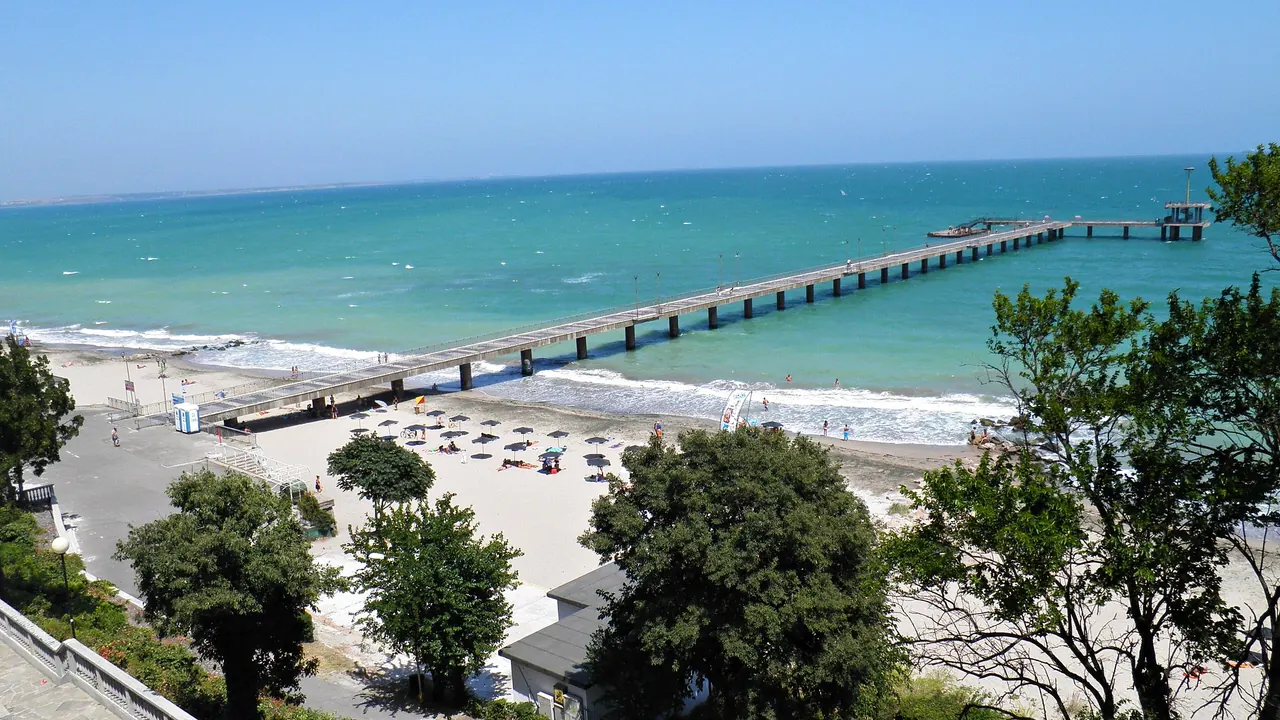
Burgas is the pick for a summer trip built around the sea. It has soft sand and warm, shallow water a few minutes' walk from the centre, and more beaches and the old coastal towns of Nessebar and Sozopol within the hour. Evenings in summer also run later than in Sibiu. It suits families with small children, and anyone who would rather have mud baths, flocks of pelicans over the lagoons and plain grilled fish than a long list of sights.
Choose Sibiu for
- culture and sights
- nature and the outdoors
- live music and the arts
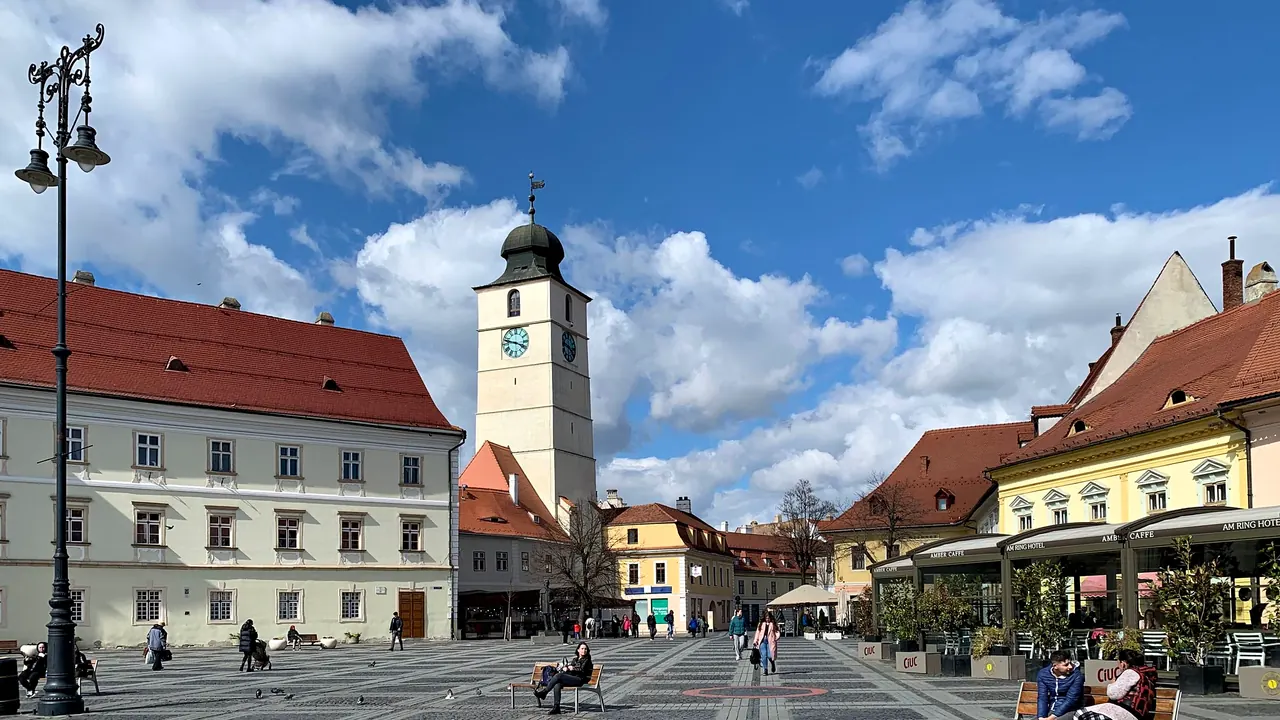
Travellers who would rather walk old streets than lie on sand will get more from Sibiu. Its Saxon Upper Town, the Brukenthal and ASTRA museums and a serious theatre tradition give it the cultural depth Burgas lacks, and the Carpathians on its horizon offer proper mountain walking. Its appeal does not depend on the summer sun, though you will need a car or a tour to see most of what lies beyond the city walls.
Scoreboard
Twelve categories on one fixed scale from 0 to 100. The shaded stretch is the gap between the two.
Your match
Pick a travel style or drag the sliders, and both match scores follow your weighting.
Too close to call, 1 point apart
Wins on beaches and families with your weighting.
Wins on culture and sights and nature and the outdoors with your weighting.
What matters to you?
Category by category
What the scores mean for a trip.
Beaches & swimming
There is no real contest here. Burgas has a long town beach of soft, dark sand below the Sea Garden. Locals prefer Sarafovo or Kraimorie, away from the port, and a whole coast of small bays and broad sands from Sozopol to Sunny Beach lies within an hour. The catch is the short season, from late June to mid-September.
Sibiu is landlocked in Transylvania, a long day's travel from any sea. The salt lakes at Ocna Sibiului, about 20km out, make for an unusual summer float, but apart from them, swimming means outdoor pools and mountain reservoirs.
Food & drink
Both cities feed you well and simply rather than ambitiously, and neither has much international range. Where they differ is what goes on the plate. Burgas cooks from the sea, with fried sprats, grilled bluefish, turbot and mussels from the gulf at plain harbourside places, and Pomorie and Thracian wines to go with them.
Sibiu cooks from the hills: sarmale with polenta, bean soup in a bread bowl, smoked pork, and sheep's cheese from the Marginimea villages, served in vaulted cellars around the squares. Go to Burgas for fish and to Sibiu for heartier, meatier cooking.
Culture & sights
Sibiu is by far the richer city to explore. In its Saxon Upper Town, the three linked squares, the Gothic Lutheran Cathedral, the Bridge of Lies and the surviving guild towers make the streets the main attraction. The Brukenthal's European paintings and the hundreds of rural buildings at ASTRA add real substance.
Burgas is a younger port city whose sights are a few small regional museums and the sculptures of the Sea Garden. Its best heritage lies on the edges, at the Roman and Ottoman baths of Aquae Calidae and on St Anastasia Island, and two days covers it.
Nightlife
Burgas has more to offer after dark, but mostly in summer. From June to September the seafront and the pedestrian centre stay up late, and for anyone who wants to dance until dawn, the resort clubs of Sunny Beach are about forty minutes up the coast. It is a seasonal scene, though. Once the visitors leave, an evening out usually means a quiet drink or dinner in a mehana.
Sibiu's nights are smaller but less tied to the weather. Its students keep the vaulted cellar bars and craft beer pubs of the old town going through the academic year, not just in summer. It is good for a drink after dinner under old brick ceilings, but there is no equivalent of Sunny Beach to escalate to.
Nature & outdoors
Sibiu has the grander landscape. The Southern Carpathians fill its horizon, with easy hiking around Paltinis, the Fagaras ridge rising above 2,500m and the hairpins of the Transfagarasan road climbing to Balea Lake. Brown bears live in the forests.
Burgas is flat but distinctive. Its four lakes and lagoons lie on the Via Pontica, where storks, pelicans and flamingos gather in late summer and autumn. The Poda reserve, the wooded hills of Strandzha and windy shallows for kitesurfing add to it, but there are no mountains within reach.
Day trips
From Burgas, the outings follow the coast and are mostly old seaside towns. The UNESCO-listed peninsula of Nessebar, with its medieval churches, and the wooden old quarter of Sozopol are each about forty minutes away by regional bus. Pomorie, with its salt museum and Thracian tomb, is closer still. The Strandzha villages lie inland to the south, and Varna, just under two hours north, is the longest trip that makes sense in a day.
Sibiu has the longer list and more variety. Within reach are walled Sighisoara, Biertan and the other fortified Saxon churches, the star-shaped Habsburg citadel at Alba Iulia and the Gothic Corvin Castle at Hunedoara, and the Marginimea shepherd villages fill an easy half day. The trains are slow, so most of these trips need a car or a tour.
Good for families
Burgas suits young children better in summer, mainly because of the sea: water that shelves gently, soft sand, and the shaded playgrounds of the Sea Garden right beside it. The centre is flat and easy with a pushchair, and the water parks are up the coast. Out of season, though, there is little to do.
Sibiu has fewer draws but they work all year: the windmills and farmhouses of ASTRA, the small zoo in Dumbrava park and the Natural History Museum for wet days. Its stairways between the Upper and Lower Town are hard work with a pushchair.
Getting around
Both centres are compact and walkable, and both cities have an airport close to town. Burgas is flat from the station to the Sea Garden and easy to cycle, while Sibiu means climbing steep lanes and stairways between the Upper and Lower Town.
Further out, Burgas is easier without a car, as coastal buses reach Sozopol, Nessebar and Pomorie, though they fill up in high summer. From Sibiu, slow and infrequent trains leave the mountains and fortified churches to drivers and tours.
Shopping & style
Neither city is worth a trip for shopping, and both cover the basics with high-street chains and malls. What you take home differs. From Burgas it is mostly edible or practical: local wine, rose oil, honey and salt from Pomorie.
Sibiu has the better crafts, with painted ceramics, embroidered blouses, wooden toys and icons on glass along Nicolae Balcescu Street. Its Christmas market and summer pottery fair on the Large Square are the highlights of its year.
Affordability
Both are cheap by European standards, with inexpensive meals, local wine and beer, cheap transport and modest museum entry. Prices rise at different times. In Burgas it is the July and August peak, when coastal rooms fill up. In Sibiu it is the June theatre festival and the Christmas market season. Outside those weeks, either is easy on a budget.
Live music & performing arts
Sibiu is the stronger city for the stage. The Radu Stanca National Theatre is known well beyond Romania. Each June the International Theatre Festival, one of the largest anywhere, fills the halls, churches and squares for over a week, and there is also a jazz festival and a regular philharmonic season.
Burgas relies on the State Opera, whose opera and ballet are easier for foreign visitors to follow than spoken drama, and on summer festivals on open-air stages by the sea. Out in the Strandzha villages, folk music and fire-dancing survive as living customs.
Wellness & relaxation
Burgas makes more of its spa heritage. Hot springs have been used here since Roman times, and the black, salty mud of the Atanasovsko and Pomorie lakes is used for wraps in sanatoria. Plenty of visitors simply smear it on at the shore and let it dry in the sun. The more polished spa hotels are in Pomorie.
Sibiu's own offer is a few hotel wellness areas, so relaxation comes from the slow pace of the old town, floating in the salt lakes at Ocna Sibiului and the clean mountain air of Paltinis.
When should you go?
Pick your month. The climate figures are measured averages, not a forecast.
Burgas in July
Sibiu in July
Daytime high, °C
Rainfall in the month, mm
Where the figures come from
Burgas's sunshine is measured 86 km from the centre, at Varna.
Temperature and rainfall are climate normals, averaged over the years shown. Burgas: 1991-2020 (rainfall 1981-2010) normals, Burgas (2.4 km from centre). Sibiu: 1991-2020 normals, Sibiu (0 km from centre).
Burgas is a summer place. From late June to mid-September the sea is warm enough for swimming, reaching about 25°C in August, when days climb to 29°C. July and August are also its sunniest and driest months. Spring is pleasant for walking the Sea Garden and the old coastal towns, and September keeps the warm water with gentler heat. From October the rain increases, peaking at around 72mm in November, and winter is cool, grey and quiet.
Sibiu has an inland climate with sharper seasons and is never as sunny as the coast. Summer is warm rather than hot, which is good for the mountains and the old town, but it is also the wettest time, with close to 97mm in June, so pack for showers. May and September are the most comfortable months for walking, with mild days and less rain. Winters are properly cold, with January highs around 2°C.
Which traveller are you?
On a beach and sun trip, Burgas wins easily. Central Beach lies a few minutes from the centre, the sea stays warm through high summer, and the bays of Sozopol are within an hour. Sibiu has only its salt lakes for floating.
For a culture and arts trip, choose Sibiu. Its three linked squares, medieval walls, the Brukenthal paintings and the ASTRA open-air museum fill two or three days, and the Radu Stanca theatre and June festival give the evenings a focus Burgas cannot match.
On an outdoors trip, Sibiu again has more to offer. The Fagaras and Cindrel ranges bring ridge walks, glacial lakes and the Transfagarasan drive. Burgas is flat by comparison, though its lagoons on a great migration route reward anyone keen on birds.
Before you go
| Measure | Burgas | Sibiu |
|---|---|---|
| Official language | Bulgarian | Romanian |
| Currency | Euro (EUR) | Romanian Leu (RON) |
| Sockets | CF230 V, 50 Hz | CF230 V, 50 Hz |
| Driving side | Right | Right |
| Time zone | UTC+2, UTC+3 in summer | UTC+2, UTC+3 in summer |
| Emergency number | 112 | 112 |
| Elevation | 30 m | 415 m |
| Main airport | Burgas Airport (BOJ)8 km from centre69 non-stop destinations | Sibiu International Airport (SBZ)5 km from centre11 non-stop destinations |
| Public holidays this year | 15 days | 17 days |
By the numbers
| Measure | Burgas | Sibiu |
|---|---|---|
| City population | 189,086 | 134,308 |
| People per km² | 746 | 1,110 |
| Museums within 10 km | 7 | 12 |
| UNESCO World Heritage sites within 50 km | 1 | 2 |
| Swim season, months above 21 °C | 4 months | - |
Where else could you go?
Every comparison below shares a destination with this one, so you can follow Burgas or Sibiu somewhere new.