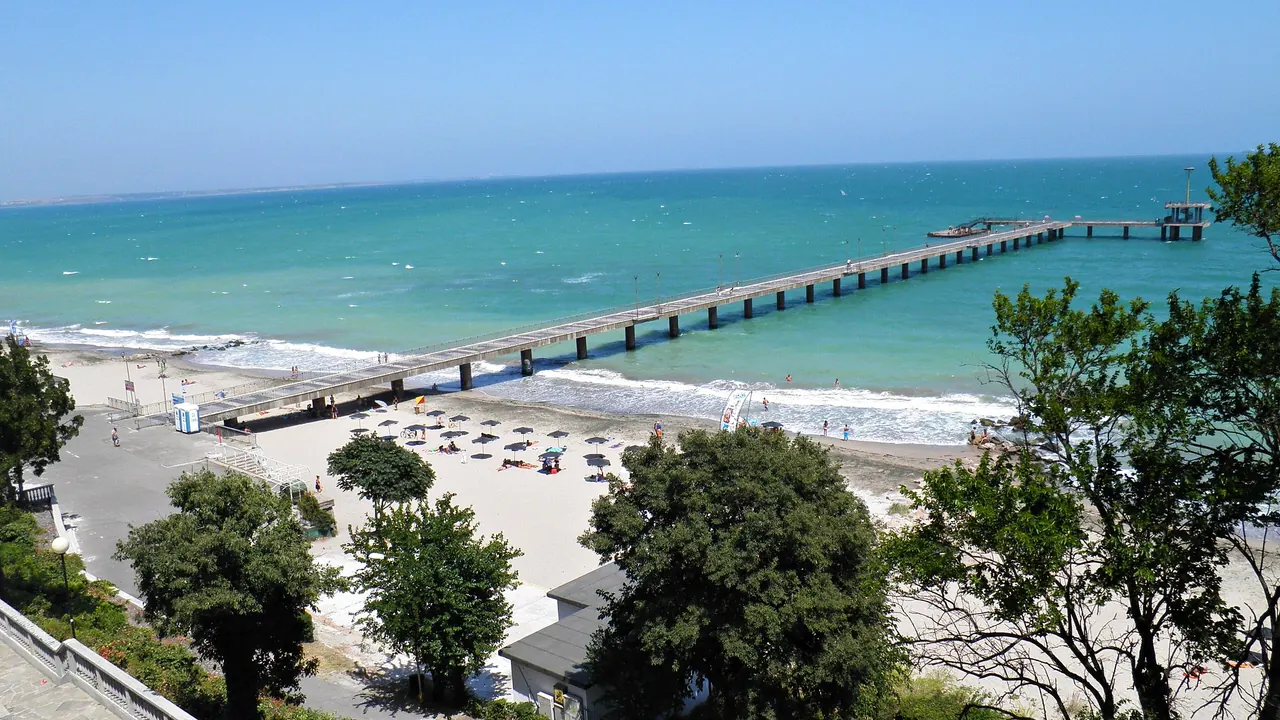
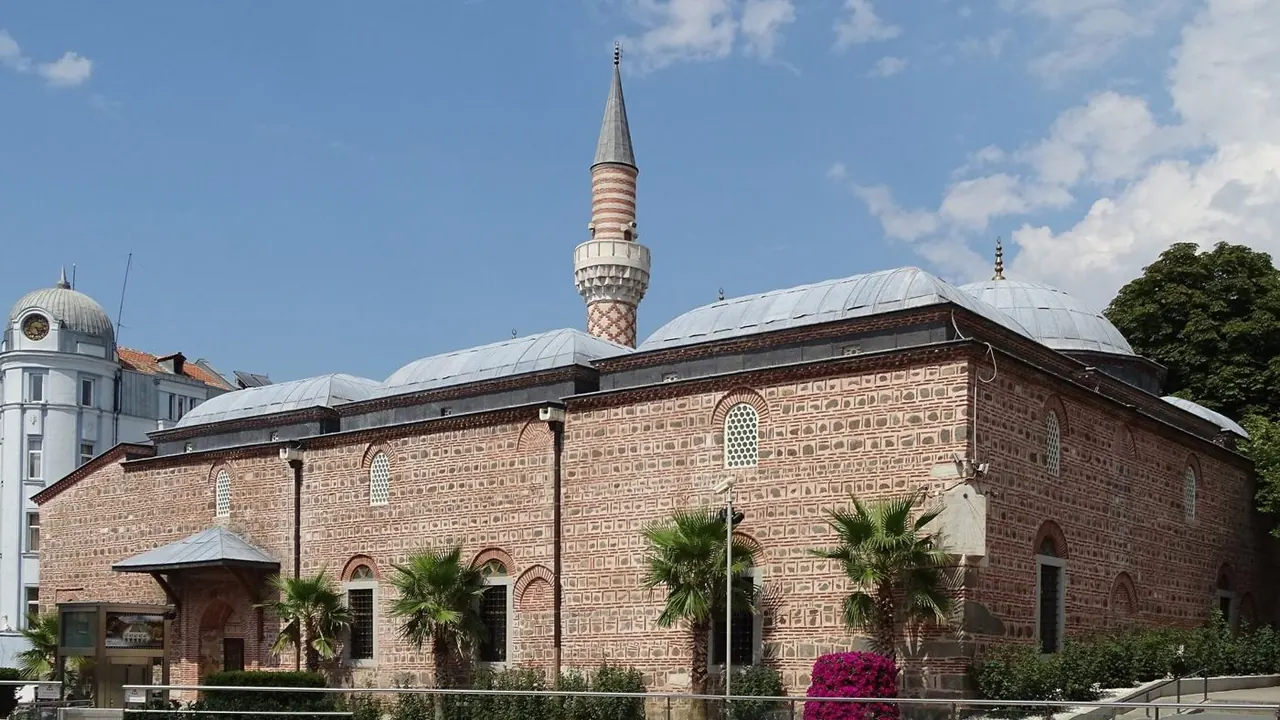
Photos: Burgas by Mister No, CC BY 3.0, cropped; Plovdiv by Ad Meskens, CC BY-SA 4.0, cropped.
Burgas or Plovdiv?
Our verdict in twelve categories, each scored against the same fixed benchmark cities, and the climate month by month, so you can choose for your trip.
Choose Burgas for
- beaches
- families
- wellness
Burgas is the pick for a summer seaside trip. Its long sandy beach is a short walk from the centre and the sea shelves gently for children. The coast on either side adds medieval Nessebar, the wooden old quarter of Sozopol and, for a late night, the clubs of Sunny Beach. Birdwatchers have a second reason to go: the lagoons around the city fill with migrating birds in autumn.
Choose Plovdiv for
- culture and sights
- day trips
- food and drink
Travellers who come for history should head inland to Plovdiv. Its Roman theatre, stadium and mosaics, a hilltop Old Town of painted Revival houses and evenings in the wine bars of Kapana give it far more to see. It is also the better base for central Bulgaria, from Bachkovo Monastery to the Thracian tombs at Kazanlak and walking in the Rhodopes. It has no sea, though, and midsummer heat on the plain is harder going.
Scoreboard
Twelve categories on one fixed scale from 0 to 100. The shaded stretch is the gap between the two.
Your match
Pick a travel style or drag the sliders, and both match scores follow your weighting.
Too close to call, 1 point apart
Wins on beaches and families with your weighting.
Wins on culture and sights and day trips with your weighting.
What matters to you?
Category by category
What the scores mean for a trip.
Beaches & swimming
Burgas has the Black Sea on its doorstep. Central Beach, with its soft, dark sand, runs below the Sea Garden a few minutes' walk from the centre. Many locals go a little further, away from the port, to Sarafovo, Kraimorie or the dunes towards Pomorie. Within an hour lie the small bays of Sozopol and the broad sands of Sunny Beach and Nessebar.
From Plovdiv, that same coast is about 250km away, several hours by road, so the beaches around Burgas are a separate trip rather than a day out. Swimming in Plovdiv means a pool or a mountain reservoir, a way to cool off in the heat rather than a reason to come.
Food & drink
Plovdiv eats a little better. Both cities serve plain Bulgarian cooking, but Plovdiv adds clay-pot kavarma in the beamed mehanas of the Old Town, the bistros and craft beer bars of Kapana, and the Mavrud and Rubin reds of the Thracian Valley, with wineries close to town.
Burgas has the edge only for fish: fried sprats, grilled bluefish, turbot and mussels from the gulf at simple harbourside places, with Pomorie wines to go with them. Beyond that, its seafront menus are routine, and neither city offers much fine dining.
Culture & sights
Burgas grew up as a port from the late nineteenth century, so sightseeing here fills the gaps between beach days. In town there is the cathedral, some good early-twentieth-century buildings and small museums of archaeology and ethnography. The more rewarding history lies at the edges: the excavated baths of Aquae Calidae to the north, and St Anastasia Island, where the boat ride across the bay is half the outing.
Plovdiv is the other way round. Its history sits in the middle of town rather than on the outskirts, with ancient remains among everyday streets, so even a walk to dinner passes Roman stonework. Beyond the Roman sights there is the Ottoman Dzhumaya Mosque, the Thracian finds in the Archaeological Museum and the old fortifications on the hilltops. A day or two covers Burgas, while Plovdiv can carry a whole trip on its own."}
Nightlife
Neither offers a big night out, so the difference is one of style. Burgas is busiest in summer, with beach bars along the Sea Garden and a few clubs open late. It goes quiet in winter, but the Sunny Beach club strip, open until dawn all summer, is about forty minutes away.
In Plovdiv, evenings centre on Kapana, where wine, craft beer and cocktail bars spill onto narrow streets and students keep things going through term, so it holds up better outside summer. Expect to spend the night over local wine rather than dancing.
Nature & outdoors
Plovdiv is stronger outdoors, mainly because of its mountains. The Rhodopes begin about 20km to the south, with gorges and forest trails, the Central Balkan range is about an hour to the north, and Pamporovo has skiing. Even in town, the rocky hills give short climbs with views.
Burgas is flat but has its own speciality: birds. Its four lagoons lie on the Via Pontica migration route, with pelicans, storks and flamingos in late summer and autumn, and the low wooded hills of Strandzha are an hour to the south. It suits cycling and kitesurfing better than hiking.
Day trips
Plovdiv opens up more of the country. Bachkovo Monastery is half an hour away, and the Roman walls of Hisarya and the Thracian temple at Starosel are within an hour. Kazanlak's Thracian tomb, the Valley of Roses and Koprivshtitsa are about an hour and a half away, though a car helps a great deal.
Day trips from Burgas run along the coast. UNESCO-listed Nessebar and the old town of Sozopol are each about forty minutes away, Pomorie has its salt museum and wineries, and Varna is a little under two hours to the north. These are good outings, but there are fewer of them, and the inland sites around Plovdiv are too far for a day.
Good for families
Burgas is easier with children in summer, almost entirely thanks to the sea. It has soft sand, warm water that shelves gently, and the shaded playgrounds of the Sea Garden right beside the beach, with water parks up the coast. Out of season it has little to keep children busy.
Plovdiv is welcoming to families, with the singing fountains in the Tsar Simeon Garden, the playgrounds by the rowing canal and the Roman theatre to run around in. But the steep Old Town cobbles are hard work with a pushchair, and the summer heat tires small children.
Getting around
Both centres are compact and best explored on foot; the difference is the terrain. Central Burgas is flat all the way from the station to the Sea Garden and easy to cycle, and the airport is close to town. Coastal buses reach Sozopol and Nessebar but get crowded in high summer.
In Plovdiv, a long car-free main street links most of the sights, but the Old Town climbs steep, polished cobbles. City buses are of little use to visitors, and in both cities a car is the easiest way into the countryside.
Shopping & style
Neither city is worth choosing for shopping. Burgas has chain stores on its pedestrian streets, malls and food markets, and the most useful things to take home are Pomorie sea salt, honey and wine. Plovdiv has a little more character, with design studios and craft shops in Kapana and antique stalls on the way up to the Old Town, where embroidered textiles and pottery are sold alongside rose oil.
Affordability
Both are very cheap by European standards, so cost hardly separates them. The difference is timing. Rooms in Burgas fill up and get dearer in July and August, so book ahead for those weeks. Plovdiv's Old Town guesthouses cost little, and many of its best moments, from the ruins along the main street to evenings in Kapana, are free.
Live music & performing arts
Plovdiv has the edge, thanks largely to one setting: summer opera and concerts in the Roman theatre, under the open sky. It also has an established jazz festival.
Burgas has its State Opera, with operetta and ballet, and large open-air festivals in the Sea Garden and on the beach in summer. In the Strandzha villages, nestinari fire-dancing survives as a living custom. In both cities, theatre is in Bulgarian, so music is the safer choice for visitors.
Wellness & relaxation
Burgas has the deeper spa tradition. Its hot springs have been used since Roman times, and the black mud of the Atanasovsko and Pomorie lakes goes into wraps at sanatoria, or visitors simply smear it on at the shore. The polished spa hotels are in Pomorie rather than in the city.
Plovdiv has no thermal baths of its own, so proper bathing means a trip to Hisarya, about 45 minutes away, or Velingrad in the Rhodopes. What it offers instead is pace: aylyak, the local habit of taking things slowly over coffee under the plane trees.
When should you go?
Pick your month. The climate figures are measured averages, not a forecast.
Burgas in July
Plovdiv in July
Daytime high, °C
Rainfall in the month, mm
Where the figures come from
Burgas's sunshine is measured 86 km from the centre, at Varna.
Plovdiv has no rain gauge within 25 km of the centre, so its rainfall comes from a gridded climate dataset read at the city rather than from a gauge further away.
Plovdiv's sunshine is measured 75 km from the centre, at Kurdjali.
Temperature and rainfall are climate normals, averaged over the years shown. Burgas: 1991-2020 (rainfall 1981-2010) normals, Burgas (2.4 km from centre). Plovdiv: 1997-2020 (sunshine 1991-2020, rainfall 1991-2020) normals, Plovdiv (1.2 km from centre).
Burgas is at its best in summer. The sea is comfortable for swimming from late June to mid-September and reaches about 25°C in August. July and August are the sunniest months, and afternoons there stay a couple of degrees cooler than inland. From October the rain builds, peaking at around 72mm in November, and winter is cold and grey, a season for walks along the shore rather than swimming.
Plovdiv gets hotter in high summer. Afternoons of around 31°C in July and August make the climbs into the Old Town tiring. May, June and September suit sightseeing and walking better, with days around 24°C in May, although late spring and early summer bring the city's heaviest rain. October is still mild enough for exploring on foot. January is a little colder than on the coast.
Which traveller are you?
On a beach and sun trip, Burgas wins outright. Its sandy Central Beach is a walk from the centre, the sea is warm from late June, and Sozopol's bays and the quieter sands towards Primorsko are within an hour. Plovdiv is hours from any sea.
For a culture and arts trip, Plovdiv is the clear choice. The Roman theatre, the stadium and basilica mosaics, the painted merchant houses of the Old Town and summer opera at the ancient theatre fill two or three days in a way Burgas cannot.
On a family trip with young children, Burgas suits better in summer. Soft sand, shallow warm water and the shady playgrounds of the Sea Garden keep small children happy. In Plovdiv, the steep Old Town cobbles and midsummer heat make outings hard work.
Before you go
| Measure | Burgas | Plovdiv |
|---|---|---|
| Official language | Bulgarian | Bulgarian |
| Currency | Euro (EUR) | Euro (EUR) |
| Sockets | CF230 V, 50 Hz | CF230 V, 50 Hz |
| Driving side | Right | Right |
| Time zone | UTC+2, UTC+3 in summer | UTC+2, UTC+3 in summer |
| Emergency number | 112 | 112 |
| Elevation | 30 m | 172 m |
| Main airport | Burgas Airport (BOJ)8 km from centre69 non-stop destinations | Plovdiv International Airport (PDV)12 km from centre8 non-stop destinations |
| Public holidays this year | 15 days | 15 days |
By the numbers
| Measure | Burgas | Plovdiv |
|---|---|---|
| City population | 189,086 | 333,994 |
| People per km² | 746 | 3,274 |
| Museums within 10 km | 7 | 18 |
| UNESCO World Heritage sites within 50 km | 1 | 0 |
| Swim season, months above 21 °C | 4 months | - |
Where else could you go?
Every comparison below shares a destination with this one, so you can follow Burgas or Plovdiv somewhere new.
- Varnavs Burgas
- Sofiavs Plovdiv
- Istanbulvs Burgas
- Thessalonikivs Plovdiv
- Bucharestvs Burgas
- Skopjevs Plovdiv