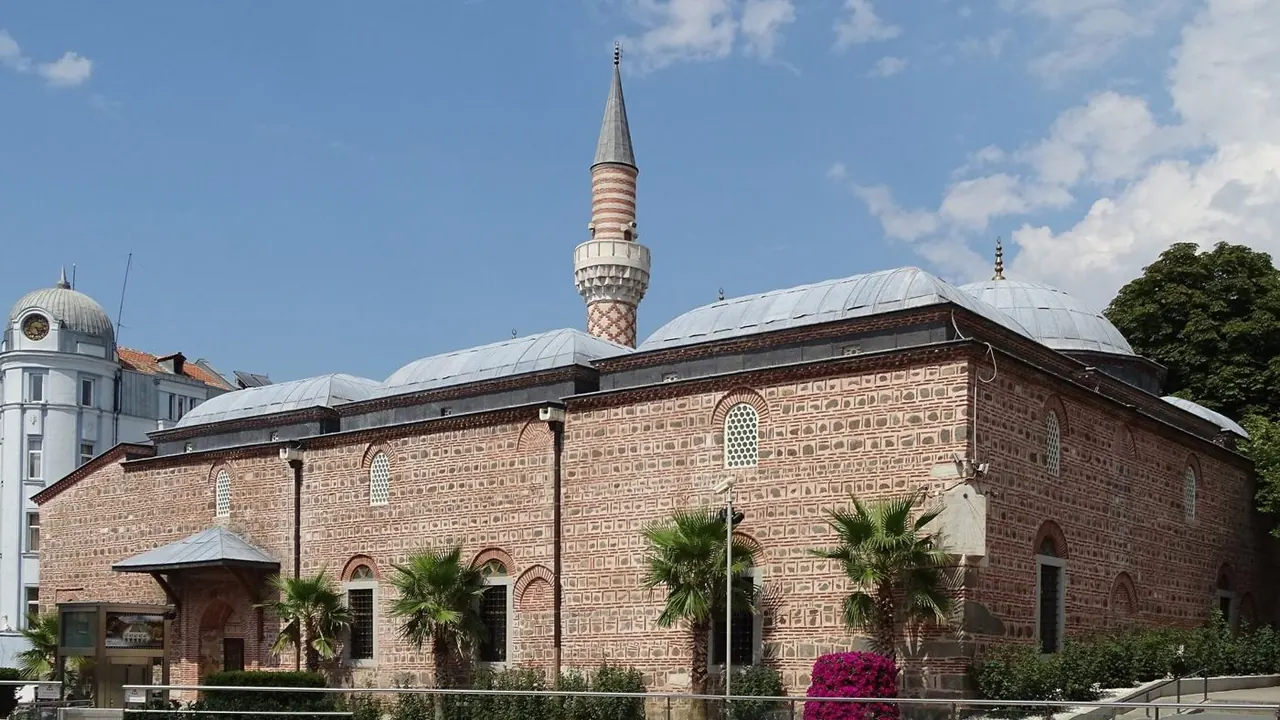
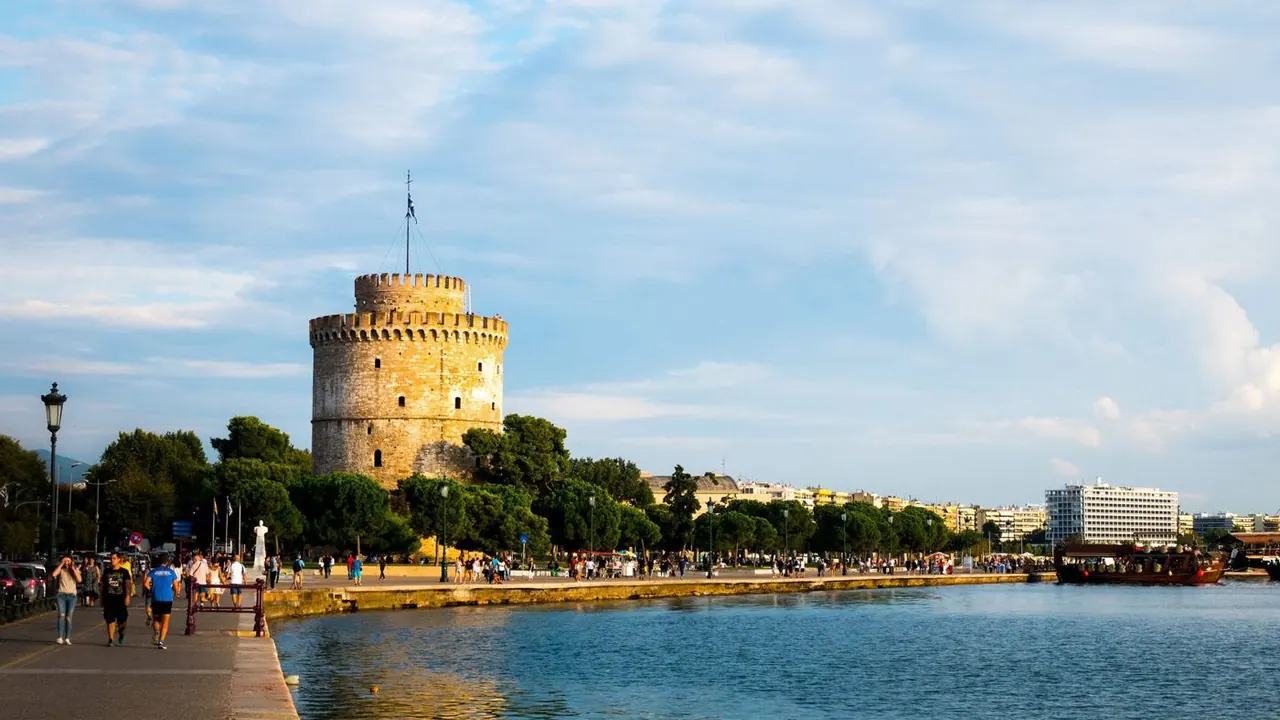
Photos: Plovdiv by Ad Meskens, CC BY-SA 4.0, cropped; Thessaloniki by Destinygreece, CC BY-SA 4.0, cropped.
Plovdiv or Thessaloniki?
Our verdict in twelve categories, each scored against the same fixed benchmark cities, and the climate month by month, so you can choose for your trip.
Choose Plovdiv for
- prices
- wellness
- getting around
Plovdiv suits travellers who want a compact, unhurried city where history sits right underfoot. The Roman theatre, the stadium under the main street and the painted Revival houses of the Old Town can all be seen on foot in a few days. Evenings go on Thracian wine in Kapana rather than late nights out, and money goes noticeably further here. It also makes a good base for monasteries, Thracian tombs and the Rhodope Mountains.
Choose Thessaloniki for
- beaches
- nightlife
- food and drink
Thessaloniki is the better pick for anyone who travels to eat, stay out late and fit some sea into the trip. Meze tables at the ouzeri and the Kapani market sit alongside one of the best groups of Byzantine churches anywhere. The nights run past three. Halkidiki's clear coves are an hour away for anyone who wants the beach. It costs a little more and the centre is plainer, but it offers much more to do.
Scoreboard
Twelve categories on one fixed scale from 0 to 100. The shaded stretch is the gap between the two.
Your match
Pick a travel style or drag the sliders, and both match scores follow your weighting.
Wins on prices and wellness with your weighting.
Wins on beaches and nightlife with your weighting.
What matters to you?
Category by category
What the scores mean for a trip.
Beaches & swimming
Thessaloniki is clearly better for swimming, though not in town. Nobody swims off the waterfront, and the nearby beaches at Perea are ordinary. Kassandra's clear coves in Halkidiki are only about an hour's drive away, though, so a beach day fits easily into a stay.
Plovdiv is roughly 250km from the Black Sea, so the coast is a separate trip of several hours. In summer, swimming means the outdoor pools, the rowing canal or a reservoir in the Rhodopes.
Food & drink
Thessaloniki is the stronger food city. Its cooking draws on Ottoman, Sephardic and Anatolian refugee traditions. Tsipouro comes with small plates at the ouzeri, and the Kapani and Modiano markets have tavernas squeezed in among the fish and spice stalls.
Plovdiv offers good, plain Bulgarian food: kebapche, clay-pot kavarma and banitsa, eaten in beamed mehanas or the bistros of Kapana. The choice is narrower. What Plovdiv does better is wine, with Mavrud and Rubin reds from the Thracian Valley on every table. Neither city has much fine dining.
Culture & sights
Thessaloniki has more to see and bigger museums. There is a whole UNESCO-listed group of Byzantine churches, from the mosaics of the Rotunda to Agios Dimitrios. The Archaeological Museum displays the Macedonian gold, and the Museum of Byzantine Culture is one of the best of its kind. These sights stand as islands among the plain blocks built after the 1917 fire.
Plovdiv is smaller but feels more intact. You can sit in the seats of its Roman theatre, see stadium ruins under the shopping street, and walk up into an Old Town of painted Revival merchant houses that survives as a whole quarter. It takes two or three days to see on foot.
Nightlife
Thessaloniki's nightlife is far bigger, and it starts late in the Greek way. The bars of Ladadika, the DJ nights around Valaoritou and the outdoor tables at the Bit Bazaar fill up even on weeknights. In summer the crowds move to open-air clubs at the edge of the city.
In Plovdiv almost everything happens in Kapana's few small streets, with craft beer, wine bars and pavement tables. There are only a handful of clubs, and most evenings end over a glass of wine rather than on a dance floor.
Nature & outdoors
The two are about even for the outdoors, but the landscapes differ. Plovdiv is a mountain base: its rocky tepeta hills give short climbs inside the city, and the forested gorges of the Rhodopes begin about 20km away. The higher Central Balkan range is around an hour north, and Pamporovo has skiing.
Thessaloniki adds the sea. Mount Olympus and the Enipeas gorge offer serious hiking, while Halkidiki has sailing, kayaking and coastal paths. Closer in, there is the Seich Sou pine forest and a long promenade for cycling. You need a car for most of it in both cities.
Day trips
Both make good bases, and each opens up a different strand of history. From Plovdiv you can reach Bachkovo Monastery in half an hour. Thracian sites are also within reach: the temple at Starosel, the UNESCO-listed tomb at Kazanlak in the Valley of Roses and the Roman walls of Hisarya. The painted village of Koprivshtitsa and Sofia complete the list.
Around Thessaloniki lies ancient Macedonia, with the royal tombs at Vergina, Alexander's Pella and Dion below Olympus. It also has towns with their own character, such as Edessa with its waterfalls and wine-making Naoussa, and a coast to explore, including boat trips along Mount Athos. Buses there cover more of this than Plovdiv's slow rural services do.
Good for families
Thessaloniki is somewhat better with children. The seafront promenade has playgrounds and plenty of room to run, and the Noesis science centre and planetarium is made for them. Halkidiki's shallow beaches are close by. On the downside, the pavements are cramped and the traffic is heavy.
Plovdiv is calm and easy with a pushchair along its car-free main street. The singing fountains in the Tsar Simeon Garden, Lauta park and the Roman theatre will fill a few outings. Little is built specifically for children, though, and the Old Town's steep cobbles are hard work.
Getting around
Both are easy to get around on foot, in different ways. Plovdiv is compact, with a single car-free street linking the station area, the ruins, Kapana and the Old Town, so a visitor hardly needs a bus. Thessaloniki stretches along a flat strip by the sea, best walked along the promenade. Its metro line under the centre helps, while buses crawl in traffic and parked cars clutter the pavements.
Each has a steep old quarter, Plovdiv's polished cobbles and Thessaloniki's Ano Poli, where a cheap taxi saves the climb. Both are much easier with a car once you leave the city.
Shopping & style
The two differ in what you carry home: craft from Plovdiv, food from Thessaloniki. Plovdiv's main street is mostly chains. The finds are in Kapana's design studios and galleries, and at the antique stalls on the climb into the Old Town. Rose oil, embroidered textiles, pottery and a bottle of Mavrud are the usual things to pack.
Thessaloniki gives a shopper more ground to cover. Tsimiski and the streets behind it make a proper high street of Greek and international fashion. Its real draw is edible, though: spices, olives, cheeses, loukoumi and tsipouro from the Kapani and Modiano markets. Neither city has a luxury district.
Affordability
Plovdiv is the cheaper of the two. The gap shows most in the costs that build up over a stay. A room near the centre, a taxi across town and a bottle of Thracian wine all cost less than in Thessaloniki. Entry to the Roman sites and the Revival house museums is cheap, so a full day of sightseeing costs little.
Thessaloniki is still kind to a budget, because its tavernas and bars are priced for students and locals. Plates are generous, bougatsa costs little and a night out is affordable. Accommodation is the bigger expense. Hotels are mostly mid-range and sensibly priced, except during the autumn trade fair, and a hire car for Vergina or Halkidiki adds a real cost.
Live music & performing arts
Plovdiv's performing arts come down to one great summer setting: opera, concerts and festival nights in the Roman theatre, under the stars. The rest of the year there is a local opera company, a philharmonic orchestra and a drama theatre, mostly performing in Bulgarian, plus an established jazz festival.
Thessaloniki keeps a fuller programme all year. The State Orchestra plays at the waterfront Concert Hall, the National Theatre of Northern Greece runs seasons at the Royal Theatre, and Dasos hosts open-air concerts in summer. For a visitor the best of it needs no Greek: rebetiko and laika played late in the tavernas, where the music is what fills the room.
Wellness & relaxation
Plovdiv is the better place to unwind, mainly because of the mineral spas near the city. Hisarya's warm pools are about 45 minutes away, and the spa resort of Velingrad is around an hour and a half. In town, the local habit of aylyak means long, slow hours over coffee under the plane trees.
Thessaloniki's Ottoman hamams, such as the Bey Hamam, survive only as monuments. The springs at Lagadas offer simple baths and little more. Its way of relaxing is iced coffee by the sea and an evening walk along the waterfront.
When should you go?
Pick your month. The climate figures are measured averages, not a forecast.
Plovdiv in July
Thessaloniki in July
Daytime high, °C
Rainfall in the month, mm
Where the figures come from
Plovdiv has no rain gauge within 25 km of the centre, so its rainfall comes from a gridded climate dataset read at the city rather than from a gauge further away.
Plovdiv's sunshine is measured 75 km from the centre, at Kurdjali.
Temperature and rainfall are climate normals, averaged over the years shown. Plovdiv: 1997-2020 (sunshine 1991-2020, rainfall 1991-2020) normals, Plovdiv (1.2 km from centre). Thessaloniki: 1991-2020 normals, Thessaloniki Airport (14 km from centre).
Both cities have hot summers. July and August reach about 31°C in Plovdiv and slightly more in Thessaloniki, so in midsummer sightseeing in either works best early and late in the day. For walking, May, June and September are the best months in both. The big difference comes in winter. Plovdiv sits inland on the plain and drops to around 5°C in January, while Thessaloniki stays near 10°C. Plovdiv also gets more rain through most of the year, with May the wettest month, and fewer sunny hours from autumn to spring.
Only Thessaloniki has sea swimming, and it is at its best from late June to September. Off Halkidiki the water reaches about 27°C in August and is still warm in September, then cools quickly from October. In Plovdiv's hot, dry August the nearest place to cool off is a pool or the rowing canal.
Which traveller are you?
For a food and nightlife trip, choose Thessaloniki. It is known in Greece for eating well: long meze tables, bougatsa for breakfast and busy markets. After that come bars in Ladadika and around Valaoritou that stay busy past three. Plovdiv's nights in Kapana are pleasant but short.
On a beach and sun trip, Thessaloniki is the only real option. Halkidiki's warm, clear coves are about an hour away by car, and the city's summers are sunnier. Plovdiv is several hours from the Black Sea, so swimming there means pools and reservoirs.
For a trip on a tight budget, Plovdiv makes the money last longer. It is among the cheapest cities in the EU, with cheap Old Town guesthouses, modest mehana bills and free evenings spent wandering among the ruins. Thessaloniki is good value too, but it costs more.
Before you go
| Measure | Plovdiv | Thessaloniki |
|---|---|---|
| Official language | Bulgarian | Greek |
| Currency | Euro (EUR) | Euro (EUR) |
| Sockets | CF230 V, 50 Hz | CF230 V, 50 Hz |
| Driving side | Right | Right |
| Time zone | UTC+2, UTC+3 in summer | UTC+2, UTC+3 in summer |
| Emergency number | 112 | 112 |
| Elevation | 172 m | 6 m |
| Main airport | Plovdiv International Airport (PDV)12 km from centre8 non-stop destinations | Thessaloniki Macedonia International Airport (SKG)14 km from centre90 non-stop destinations |
| Public holidays this year | 15 days | 15 days |
By the numbers
| Measure | Plovdiv | Thessaloniki |
|---|---|---|
| City population | 333,994 | 309,617 |
| People per km² | 3,274 | 16,042 |
| Museums within 10 km | 18 | 32 |
| UNESCO World Heritage sites within 50 km | 0 | 1 |
| Swim season, months above 21 °C | - | 5 months |
Where else could you go?
Every comparison below shares a destination with this one, so you can follow Plovdiv or Thessaloniki somewhere new.