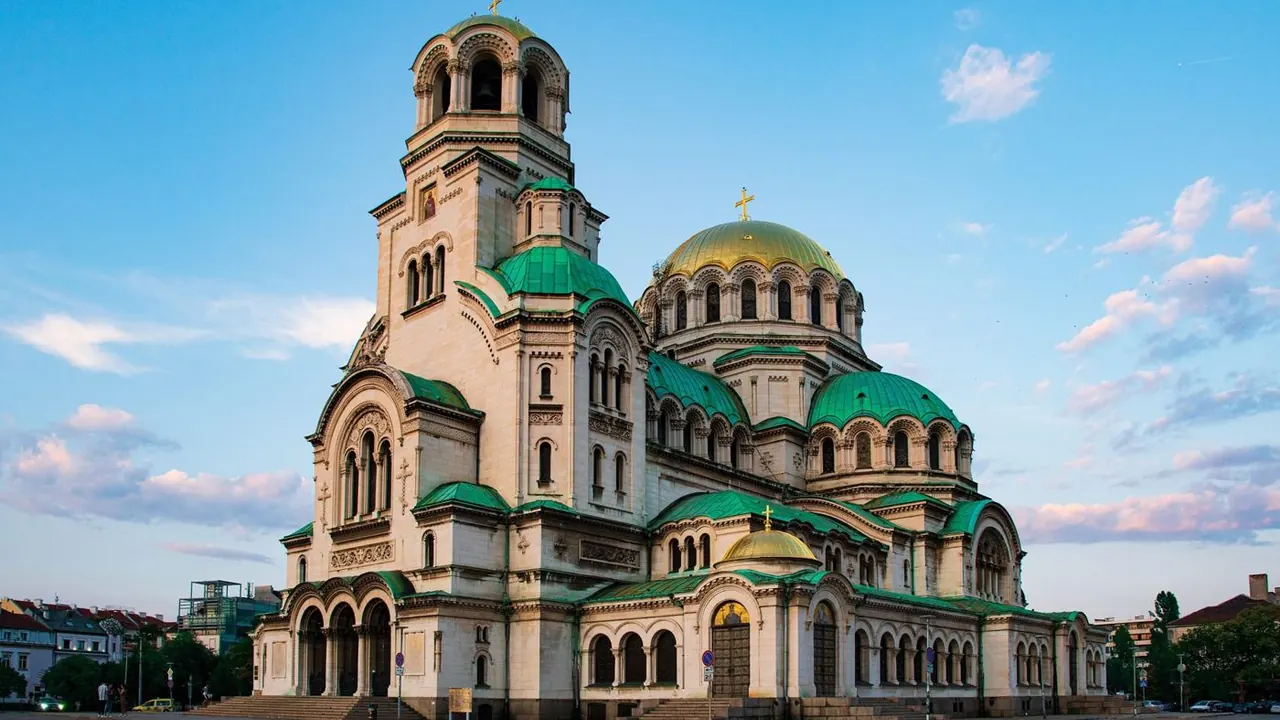
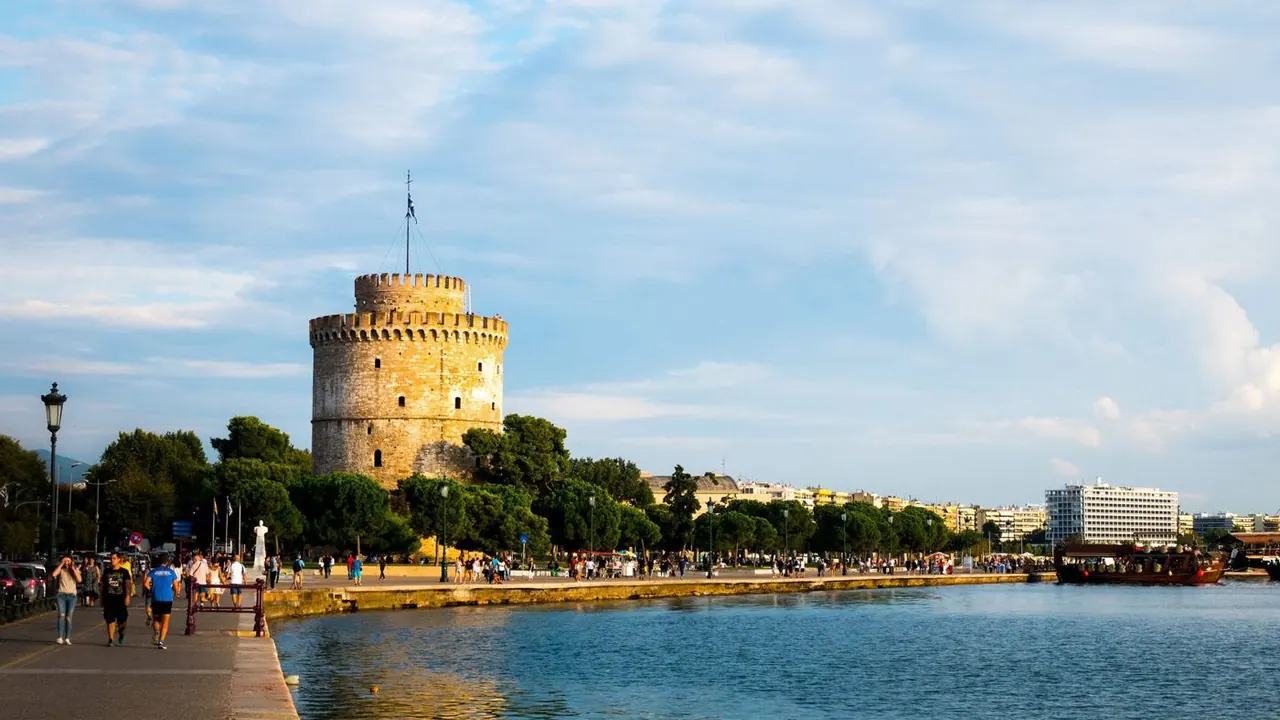
Photos: Sofia by Jose Ligero Loarte, CC BY-SA 4.0, cropped; Thessaloniki by Destinygreece, CC BY-SA 4.0, cropped.
Sofia or Thessaloniki?
Our verdict in twelve categories, each scored against the same fixed benchmark cities, and the climate month by month, so you can choose for your trip.
Choose Sofia for
- nature and the outdoors
- prices
- wellness
Sofia suits travellers who want mountains on the doorstep and a capital that asks little of their budget. Vitosha rises straight from the southern suburbs, Rila's lakes and monastery are close, and hotels, tavern meals and Bulgarian wine go a long way. It rewards walkers, winter skiers and anyone happy with a calm, compact centre of Roman ruins and gold domes.
Choose Thessaloniki for
- beaches
- food and drink
- nightlife
Choose Thessaloniki for a trip built around eating, late nights and the Aegean. Its ouzeri and market tavernas, streets that stay full long after midnight, Byzantine churches and the royal tombs at Vergina give it more to fill each day. Anyone with a car also has Halkidiki's clear water about an hour away.
Scoreboard
Twelve categories on one fixed scale from 0 to 100. The shaded stretch is the gap between the two.
Your match
Pick a travel style or drag the sliders, and both match scores follow your weighting.
Wins on nature and the outdoors and prices with your weighting.
Wins on beaches and food and drink with your weighting.
What matters to you?
Category by category
What the scores mean for a trip.
Beaches & swimming
Sofia has no beach at all. In summer, swimming means outdoor pools in the parks or the lake at Pancharevo, and the Black Sea is a full day's journey away.
Thessaloniki has the sea, but the gulf along its waterfront is for walking beside, and the nearby beaches at Perea and Nea Michaniona are ordinary. The real draw is Kassandra in Halkidiki, about an hour's drive away, with warm, clear coves among the best in Greece. Treat it as a day out or a second base rather than part of the city stay.
Food & drink
Both cities start the day with a flaky cheese pastry, banitsa in Sofia and bougatsa in Thessaloniki, but after breakfast they go separate ways. Sofia eats well in a hearty Balkan way: grilled kebapche, shopska salad and clay-pot dishes in mehana taverns, with Mavrud and Melnik wines as its quiet strength.
Thessaloniki is the stronger place to eat, and many Greeks call it their country's best. Its cooking mixes Ottoman, Sephardic and Anatolian influences, tsipouro arrives at the ouzeri with small plates, and the Kapani and Modiano markets have tavernas tucked between the fish and spice stalls. For a trip planned around meals, it is the clear choice.
Culture & sights
Each city has a fourth-century Rotunda, and in each the sights stand as islands among plain modern streets. Sofia makes a solid two or three days. Roman Serdica lies around the metro, the gold domes of Alexander Nevsky rise over the centre, and the UNESCO-listed frescoes of Boyana Church sit at the foot of Vitosha.
Thessaloniki goes deeper. Fifteen of its Byzantine monuments are on the UNESCO list, from the mosaics of the Rotunda to the crypt of Agios Dimitrios. The Archaeological Museum and the Museum of Byzantine Culture are a step above Sofia's museums, and the Ottoman lanes and walls of Ano Poli add a historic quarter to wander.
Nightlife
Sofia's evenings are pleasant but low-key: cocktail bars and craft beer pubs around Shishman Street, cellar bars under old buildings, and summer terraces in the parks. It is fine for a long weekend, but not a reason to go.
Thessaloniki's large student population and Greek late hours make its nights far livelier. Nobody goes out much before eleven, Ladadika and the streets around Valaoritou stay packed past three, and in summer the crowds move to the waterfront and open-air clubs. Even weeknights are busy.
Nature & outdoors
Sofia has a 2,200m mountain on its edge. City buses and a gondola climb Vitosha, so you can be among spruce forest or heading up Cherni Vrah within an hour of the centre. Beyond it are the glacial Seven Rila Lakes and the proper skiing at Borovets.
Thessaloniki's wild country is grander but further off. Olympus and the Enipeas gorge are about an hour and a half away by car, and Halkidiki offers sailing and kayaking. Close to town there is only the Seich Sou pine forest and the seafront promenade, and summer heat pushes activity into the mornings.
Day trips
From Sofia there are two outstanding trips, Rila Monastery in its mountain valley and Roman Plovdiv. Each is about two hours away, and after those the choice soon thins to quieter places such as Koprivshtitsa.
Thessaloniki is surrounded by ancient Macedonia, and much of it is close. The royal tombs at Vergina are about an hour away, with Pella's mosaics and Dion beneath Olympus nearby. Edessa's waterfalls, the Naoussa vineyards and boat trips along the Athos coast give more days than most visitors have. A car makes the circuit far easier.
Good for families
Neither city has much built for children, but Thessaloniki copes a little better. Its long seafront with playgrounds is an easy afternoon, the Noesis centre has a planetarium, and children are welcome at tavernas late into the evening. The drawbacks are heavy traffic and summer heat, so many families stay in Halkidiki and visit the city from there.
Sofia is calm and manageable. Its best family day is the gondola and forest trails on Vitosha, but broken pavements make pushchairs hard work.
Getting around
Both are easy to manage without a car, but they are laid out differently. Sofia has a compact centre and a metro that runs from the airport through the middle towards Vitosha's foothills. Away from the centre, most signs are in Cyrillic.
Thessaloniki stretches along a flat strip by the water, so the White Tower, the markets and Ladadika are linked by the promenade on foot. Buses get stuck in traffic, the climb to Ano Poli calls for a taxi, and its sights beyond the city really need a hired car, whereas buses reach Sofia's mountain.
Shopping & style
Neither city is somewhere to plan a trip around shopping, but Thessaloniki has the better morning of it. Beyond the chains on Tsimiski, the Kapani and Modiano markets sell spices, olives, loukoumi and tsipouro to take home.
Sofia's Vitosha Boulevard is mostly international chains. Its distinctive buys are rose oil, Troyan pottery, embroidery and the icons at the flea market by Alexander Nevsky.
Affordability
Both are gentle on the wallet, but Sofia goes further. It is one of the cheapest capitals in the European Union: central hotels, mehana meals and good local wine all cost little, and a day on Vitosha or at Rila Monastery adds almost nothing.
Thessaloniki is priced for students and locals, so tavernas and nights out stay modest. Its hotels are more firmly mid-range, though, and car hire for Vergina or Halkidiki is a real extra.
Live music & performing arts
Here the two are much alike, but they differ in style. Sofia offers a traditional formal season at the National Opera and Ballet and the Sofia Philharmonic, and its Orthodox and choral singing is the sound most worth seeking out.
In Thessaloniki the State Orchestra plays in the waterfront Concert Hall and summer concerts move to open-air stages, but the best music is informal: rebetiko in tavernas late into the night. In both cities the theatre is almost all in the local language.
Wellness & relaxation
Sofia has the stronger spa culture, because it sits on mineral springs. Locals fill bottles at the warm taps by the old Central Mineral Baths, Bankya's pools are half an hour west, and spa resorts such as Velingrad are further out.
Thessaloniki's Ottoman hammams, such as the Bey Hamam, survive only as monuments, and the baths at Lagadas are simple. Its way of relaxing is iced coffee by the sea and the slow evening walk along the waterfront.
When should you go?
Pick your month. The climate figures are measured averages, not a forecast.
Sofia in July
Thessaloniki in July
Daytime high, °C
Rainfall in the month, mm
Temperature and rainfall are climate normals, averaged over the years shown. Sofia: 1991-2020 normals, Sofia Observ. (7.3 km from centre). Thessaloniki: 1991-2020 normals, Thessaloniki Airport (14 km from centre).
Sofia sits high on its plain and has real seasons. Summer days peak around 28°C in July and August, warm but comfortable for the streets and ideal for hiking on Vitosha and in Rila, and those are also the sunniest months. The wettest stretch runs from May into June, when showers are most frequent, while winter is the driest time of year. It is also cold, with highs near 4°C in January. That makes for grey sightseeing, but the mountains get snow for skiing.
Thessaloniki is milder in winter and much hotter in summer. July and August reach about 32°C, too hot for long walks in the middle of the day. Those are its driest months, and the sea warms to 27°C by August, so June to September is the time for swimming in Halkidiki. For the rest of the year the rain is spread fairly evenly, and December is the wettest month. For walking the city, choose May or late September into October.
Which traveller are you?
On a beach and sun trip, Thessaloniki is the only real choice of the two. Its own shore is for strolling, but Halkidiki's clear coves begin about an hour's drive away. In Sofia, swimming means park pools and the lake at Pancharevo.
For a food and nightlife trip, Thessaloniki is well ahead. Long meze tables at the ouzeri lead into bars in Ladadika and around Valaoritou that stay full past three. Sofia has hearty tavern cooking and a quieter cocktail-bar scene.
On an outdoors trip, Sofia has the edge. Vitosha's spruce forests and boulder rivers are a bus and gondola ride from the centre, with the Seven Rila Lakes and Borovets ski slopes close behind. From Thessaloniki, Mount Olympus needs a car.
Before you go
| Measure | Sofia | Thessaloniki |
|---|---|---|
| Official language | Bulgarian | Greek |
| Currency | Euro (EUR) | Euro (EUR) |
| Sockets | CF230 V, 50 Hz | CF230 V, 50 Hz |
| Driving side | Right | Right |
| Time zone | UTC+2, UTC+3 in summer | UTC+2, UTC+3 in summer |
| Emergency number | 112 | 112 |
| Elevation | 560 m | 6 m |
| Main airport | Sofia Airport (SOF)8 km from centre97 non-stop destinations | Thessaloniki Macedonia International Airport (SKG)14 km from centre90 non-stop destinations |
| Public holidays this year | 15 days | 15 days |
By the numbers
| Measure | Sofia | Thessaloniki |
|---|---|---|
| City population | 1,213,134 | 309,617 |
| People per km² | 2,466 | 16,042 |
| Museums within 10 km | 42 | 32 |
| UNESCO World Heritage sites within 50 km | 1 | 1 |
| Swim season, months above 21 °C | - | 5 months |
Where else could you go?
Every comparison below shares a destination with this one, so you can follow Sofia or Thessaloniki somewhere new.