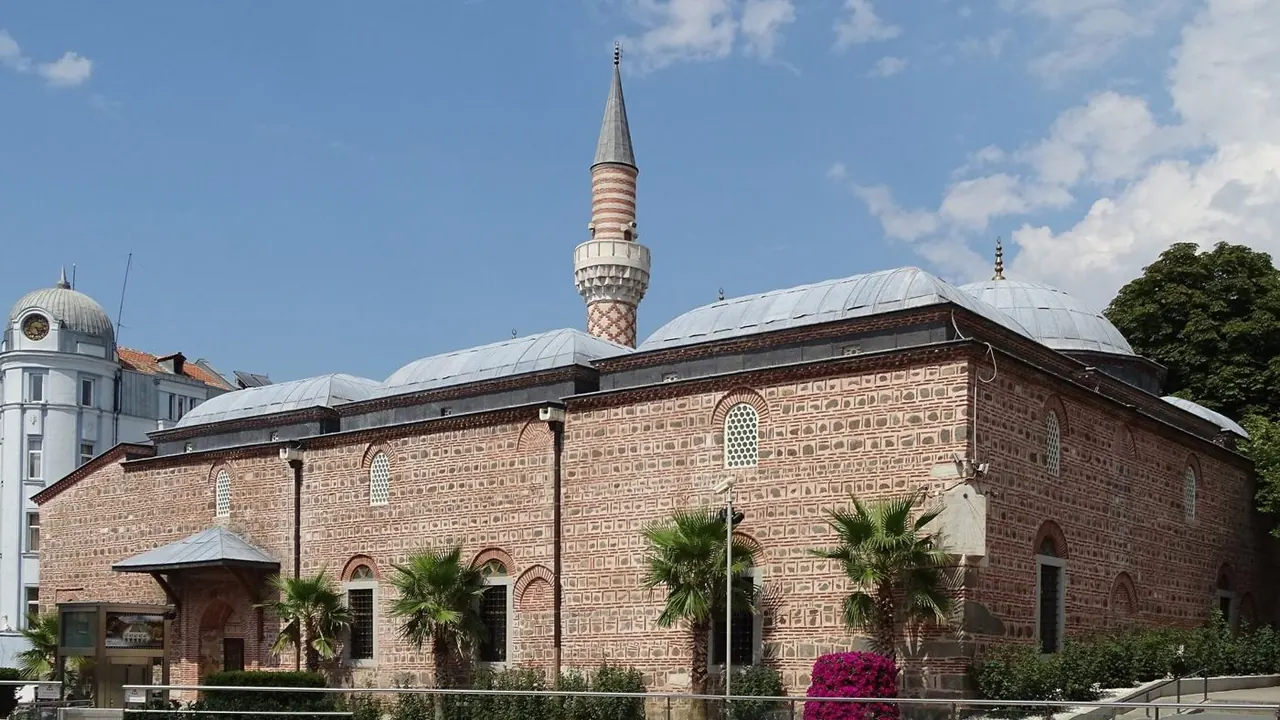
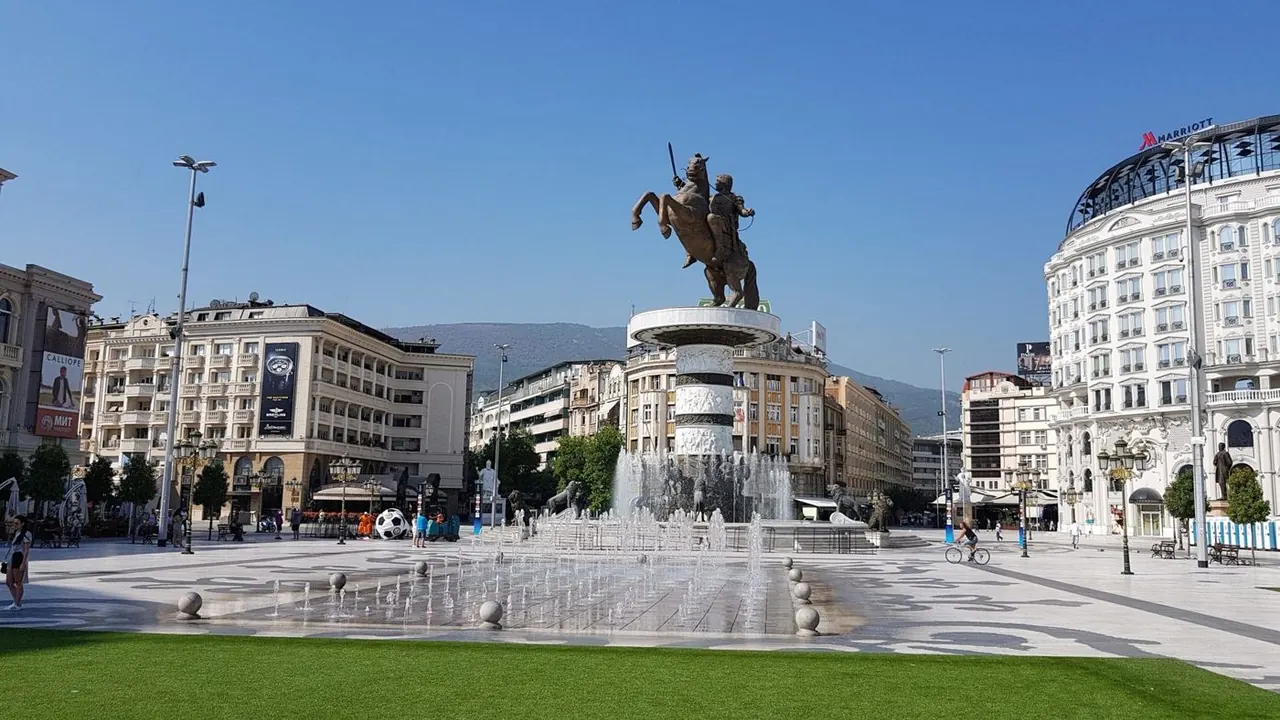
Photos: Plovdiv by Ad Meskens, CC BY-SA 4.0, cropped; Skopje by George M. Groutas, CC BY 2.0, cropped.
Plovdiv or Skopje?
Our verdict in twelve categories, each scored against the same fixed benchmark cities, and the climate month by month, so you can choose for your trip.
Choose Plovdiv for
- getting around
- wellness
- day trips
Plovdiv suits travellers who want an old city they can read on foot. Its Roman theatre, stadium and mosaic basilicas sit under a hill of painted Revival houses, all linked by one long car-free street. Around it lies the richer spread of excursions, from Bachkovo Monastery to the Thracian tombs of Kazanlak. Add the mineral pools of Hisarya and the local habit of taking things slowly, and it makes the better choice for a cultured, unhurried week in central Bulgaria.
Choose Skopje for
- shopping
- food and drink
- nature and the outdoors
Skopje is the pick for anyone curious about a city with two faces: an Ottoman bazaar of caravanserais and silver workshops on one bank, and the statues and replica galleons of the Skopje 2014 programme on the other. It has the better market shopping, and Matka Canyon and Mount Vodno are close by. It works best as a lively stop of two or three days, perhaps before heading on to Lake Ohrid.
Scoreboard
Twelve categories on one fixed scale from 0 to 100. The shaded stretch is the gap between the two.
Your match
Pick a travel style or drag the sliders, and both match scores follow your weighting.
Wins on getting around and wellness with your weighting.
Wins on shopping and food and drink with your weighting.
What matters to you?
Category by category
What the scores mean for a trip.
Beaches & swimming
Neither city offers any real swimming. Plovdiv is about 250km from the Black Sea, and Skopje's nearest good water is Lake Ohrid, three hours away. In summer, Plovdiv locals use the rowing canal and the Rhodope reservoirs, while in Skopje it comes down to public and hotel pools, because Matka's water is too cold for bathing. Either way, plan separate days on the coast or by the lake.
Food & drink
Both cities serve hearty Balkan home cooking with surprisingly good local wine, and neither has much fine dining or international range. Plovdiv's tables lean on kavarma in clay pots, kebapche and banitsa, with Mavrud reds from the Thracian Valley. The Old Town mehanas suit traditional meals, and Kapana has the more modern bistros and craft beer.
Skopje has tavche gravche, pastrmajlija and early-morning burek in the Old Bazaar, with Vranec and Temjanika from Tikves and rakija before the meal. Its Debar Maalo taverns, with long tables and live starogradska music, give dinner more of a sense of occasion.
Culture & sights
Plovdiv has the deeper sightseeing. Its Roman theatre, the stadium beneath the main street and the basilicas with early Christian mosaics trace an unusually long history, and the cobbled Old Town of painted Revival houses rises right above them.
Skopje's interest is more about contrast. The large Ottoman bazaar with its caravanserais, Kale Fortress and the carved iconostasis of the Holy Saviour stand opposite the much-debated Skopje 2014 statuary. The 1963 earthquake, remembered at the stopped clock of the old station, adds a modern story that Plovdiv lacks.
Nightlife
The two are evenly matched: both have small, sociable scenes built on terraces rather than dance floors. Plovdiv's evenings gather in the tight grid of Kapana, with wine and craft beer bars that are busiest during university term. Skopje's centre is Debar Maalo, where café-bars move from coffee to rakija as the night goes on, and Old Bazaar courtyards stay up late in summer. Weeknights there are noticeably quieter.
Nature & outdoors
Both have mountains close at hand, so the difference is in how close. Skopje has Mount Vodno rising from its own suburbs, with a cable car to the summit, and Matka Canyon's limestone walls and Vrelo Cave half an hour away. Further out are the Sar ridges and Mavrovo.
Plovdiv's own green spaces are the rocky tepeta hills in town. Its real hiking starts about 20km away in the Rhodopes, with gorges and forest trails, and the higher Central Balkan range is an hour to the north. Both cities are best in spring and autumn, and in both a car helps.
Day trips
Plovdiv is the better base for excursions. Bachkovo Monastery is half an hour away, Hisarya's Roman walls and the Starosel temple are within an hour, and Kazanlak's Thracian tomb, the Valley of Roses and Koprivshtitsa are all comfortable days out. Sofia is also easy to reach.
Skopje's best-known destination, Ohrid, is too far for a day. What remains is still varied: Stobi's mosaics, the Tikves wineries, the crater town of Kratovo, and Prizren across the border in Kosovo. These are spread out more widely, though buses reach most of them.
Good for families
Neither city offers much that is designed for children, but Plovdiv is slightly easier going. Its car-free main street works well for pushchairs, and the Tsar Simeon Garden with its singing fountains, Lauta park and the playgrounds by the rowing canal fill an afternoon. The steep Old Town cobbles are the snag.
Skopje is just as welcoming in its cafés, and the Vodno cable car and a boat in Matka make good outings. Its busy roads and uneven pavements are harder going, though, which is why many families pair it with a lake.
Getting around
Plovdiv is the easier city to get around. One long pedestrian street joins the station area, the Roman ruins, Kapana and the Old Town, so a visitor rarely needs transport at all, apart from on the steep, slippery cobbles of the hills.
Skopje's centre along the Vardar is flat and walkable too, but anything beyond the bazaar and Debar Maalo means taxis. The double-decker buses are confusing for newcomers, and rush-hour traffic slows the trip to Vodno or Matka.
Shopping & style
Plovdiv's shopping is modest. The long main street and the malls on the edge of town are mostly chains and everyday shops. The more interesting finds are in Kapana's small design studios and galleries, and at the antique and souvenir stalls on the climb into the Old Town. Rose oil cosmetics, pottery and a bottle of Mavrud are the usual things to take home.
Skopje has the more rewarding browsing, because its shopping still centres on a working Ottoman market quarter rather than a high street. Ohrid pearls, embroidered textiles and Tikves wine make good gifts, and a morning among the stalls is as much a sight as a shopping trip. What Skopje lacks is Plovdiv's small independent design: away from the bazaar, it is mostly malls full of international chains.
Affordability
Both are among the cheapest places in Europe for a city break, and the gap between them is negligible. In both, a tavern dinner with wine and a taxi ride cost little. Plovdiv's best experiences, the ruins along the main street and evenings in Kapana, are free. Skopje's coffee-and-burek breakfasts are about as cheap as eating out gets, and even its few smarter riverside hotels stay modest.
Live music & performing arts
The two are closely matched, each with an opera, a philharmonic and a national-language theatre. Plovdiv has the more memorable setting: a summer evening of opera or a concert in its Roman theatre is the highlight of either city. Skopje's strength lies in its calendar, with a jazz festival held every autumn since the early 1980s, summer performances at the fortress, and starogradska music in the Debar Maalo taverns on ordinary nights.
Wellness & relaxation
Plovdiv is the better choice for unwinding. Its tradition of aylyak, taking life slowly over coffee under the plane trees, sets the pace of the city. Hisarya, 45 minutes away, and Velingrad both have proper mineral pools and treatments.
Skopje's Ottoman hamams house art galleries rather than bathers. Its one thermal option, Katlanovska Banja, is closer to an old sanatorium than a day spa, so relaxing there mostly means long hours on café terraces.
When should you go?
Pick your month. The climate figures are measured averages, not a forecast.
Plovdiv in July
Skopje in July
Daytime high, °C
Rainfall in the month, mm
Where the figures come from
Plovdiv has no rain gauge within 25 km of the centre, so its rainfall comes from a gridded climate dataset read at the city rather than from a gauge further away.
Plovdiv's sunshine is measured 75 km from the centre, at Kurdjali.
Skopje has no rain gauge within 25 km of the centre, so its rainfall comes from a gridded climate dataset read at the city rather than from a gauge further away.
Skopje's sunshine is measured 68 km from the centre, at Stip.
Temperature and rainfall are climate normals, averaged over the years shown. Plovdiv: 1997-2020 (sunshine 1991-2020, rainfall 1991-2020) normals, Plovdiv (1.2 km from centre). Skopje: 1991-2020 (sunshine 1961-1990) normals, Skopje-Petrovec (18.3 km from centre).
The two cities share almost the same temperature curve. Both are cold in winter, pleasant from April, and very hot in July and August, when afternoons reach 31-32°C and walking the streets is best left to the morning and evening. May and September, at about 24-26°C with long sunny days, are the best months in both for sightseeing and for walks in the mountains. Neither has a sea, so summer means pools rather than beaches.
Rain is where they differ. Plovdiv is no wetter than Skopje for most of the year, with a damp late autumn and winter that peaks at around 49mm in December, and only August is properly dry. Skopje stays drier through the colder months, with only around 39mm in January and February, and it keeps a little more autumn sunshine. That makes Skopje slightly the better choice for a winter or October city break.
Which traveller are you?
On a culture and arts trip, Plovdiv is the stronger choice. It has Roman ruins in the middle of town, a hillside theatre that still holds summer opera, and a whole quarter of National Revival merchant houses, several of them open as museums.
For a relaxing and wellness trip, Plovdiv again comes out ahead. It has a slow café culture of its own, and the warm mineral pools of Hisarya and Velingrad are within easy reach. Skopje's hamams are galleries, not baths.
On a shopping trip, Skopje has more to offer. Silver filigree and copper workshops fill the Old Bazaar, and Bit Pazar is a real everyday market of spices, cheese and peppers, which gives it more character than Plovdiv's high-street chains and malls.
Before you go
| Measure | Plovdiv | Skopje |
|---|---|---|
| Official language | Bulgarian | Albanian, Macedonian |
| Currency | Euro (EUR) | Denar (MKD) |
| Sockets | CF230 V, 50 Hz | CF230 V, 50 Hz |
| Driving side | Right | Right |
| Time zone | UTC+2, UTC+3 in summer | UTC+1, UTC+2 in summer |
| Emergency number | 112 | 112 |
| Elevation | 172 m | 251 m |
| Main airport | Plovdiv International Airport (PDV)12 km from centre8 non-stop destinations | Skopje International Airport (SKP)16 km from centre52 non-stop destinations |
| Public holidays this year | 15 days | 12 days |
By the numbers
| Measure | Plovdiv | Skopje |
|---|---|---|
| City population | 333,994 | 422,540 |
| People per km² | 3,274 | 739 |
| Museums within 10 km | 18 | 17 |
| UNESCO World Heritage sites within 50 km | 0 | 0 |
Where else could you go?
Every comparison below shares a destination with this one, so you can follow Plovdiv or Skopje somewhere new.