Cairo or Marrakech?
Two destinations compared in twelve categories, each scored against the same fixed benchmark cities. Weight what matters to you and the verdict follows.
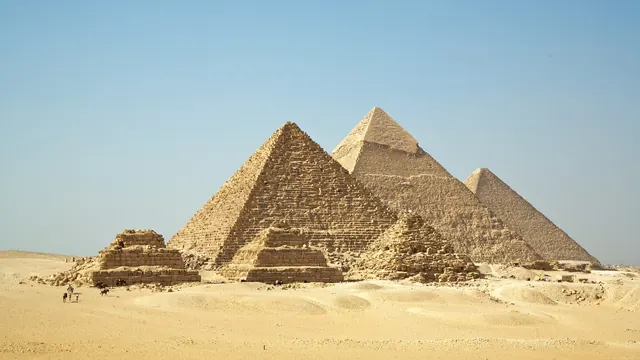
Photo: Ricardo Liberato, CC BY-SA 2.0, cropped
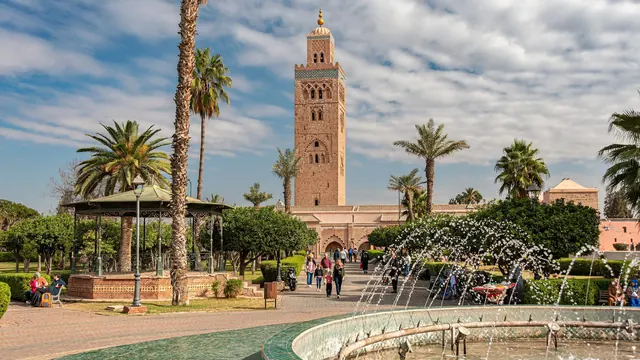
Photo: Jorge Franganillo, CC BY 2.0, cropped
Your match
Too close to call, 1 point apart
Wins on day trips and live music and the arts with your weighting.
Wins on wellness and nature and the outdoors with your weighting.
What matters to you?
Pick a travel style or drag the sliders. The match scores above update as you do.
The verdict
Cairo is the choice for travellers who want history on a monumental scale and are willing to work for it. The pyramids, the great antiquities museums and the medieval mosques of Islamic Cairo outweigh anything Marrakech can show. Saqqara, Dahshur and Alexandria lie within reach for excursions, and the costs stay very low. It suits a longer, sightseeing-heavy trip, with patience for traffic and noise.
Marrakech works better as a vacation in the restful sense. You can sleep in a courtyard riad, spend an afternoon in a hammam, bargain in souks organised by trade and drive out to the High Atlas or the Agafay desert. The monuments are smaller and can be seen in a few days, but the city gives you more ways to slow down and get outdoors than Cairo does.
Scoreboard
Our verdict on each category, scored 0 to 100 against fixed benchmark cities.
Category by category
What the scores mean for a trip to Cairo or Marrakech.
Beaches & swimming107
Neither city is a beach destination. In both, swimming during a city stay means a hotel pool, and in Marrakech the riad plunge pool. The sea that each one leads to is very different, though.
From Cairo, the Red Sea at Ain Sokhna is warm and calm, but the shore is lined with resort compounds and is better for a weekend than a day out. From Marrakech, Essaouira's Atlantic shore is further away, with cool water and strong wind. The Lalla Takerkoust reservoir is the only nearby water for a lakeside afternoon.
Food & drink6064
The two eat about equally well but in different ways. Cairo's best food is quick, cheap street fare: ful and taameya at breakfast, a bowl of koshari at lunch, feteer and sugar-cane juice. Afterwards the evening moves to the ahwa for tea and shisha.
Marrakech cooks slowly. Tagines, pastilla and the tanjia buried in hammam embers are the dishes to try, along with the grill stalls on Jemaa el-Fna at dusk. Its menus repeat themselves sooner than Cairo's do, and both cities have only a thin layer of fine dining.
Culture & sights9676
This is where Cairo pulls well ahead. It has the Giza pyramids and the Sphinx, two major antiquities museums and the royal mummies at Fustat. On top of that come the mosques and madrasas of Al-Muizz Street, the Citadel and Coptic Cairo, enough to fill many days.
Marrakech's heritage is real but smaller in scale. The medina itself is the main sight, with the Koutoubia, the Ben Youssef Madrasa, the Bahia and El Badi palaces and the Jardin Majorelle, and its museums are modest. Most visitors have covered it in two or three days.
Nightlife4833
Cairo's nights are longer and more sociable, even though they run on tea rather than alcohol. Families stroll the corniche and the ahwas stay full past midnight. For a drink, Zamalek has bars, rooftops and party boats on the Nile.
In Marrakech, an evening usually means a long dinner and the scene on Jemaa el-Fna. Drinking happens in licensed places, with the lounges and a few big clubs grouped in Hivernage and Gueliz. It suits a sunset cocktail more than a night out.
Nature & outdoors3070
Marrakech has much better access to landscape. The High Atlas is visible from the city, and within an hour and a half you can reach the Ourika waterfalls and the trails around Imlil. There is winter skiing at Oukaimeden, the Agafay desert is closer still, and balloons rise over the plain at dawn.
Cairo's green space comes down to Al-Azhar Park and the canyons of Wadi Degla. Its real scenery starts two hours away in the Fayoum, with the lakes of Wadi El Rayan and the whale fossils of Wadi Al-Hitan.
Day trips6628
Cairo makes the far better base for excursions. The Step Pyramid at Saqqara, the Bent and Red Pyramids at Dahshur and the ruins of Memphis are all under an hour or so south. The monasteries of Wadi Natrun and a long day in Alexandria extend the choice, though most of these trips need a driver.
From Marrakech, the places worth seeing are mostly too far for a single day. Essaouira is a long round trip, and Ait Benhaddou needs a night away. Close by, the choice is limited to village souks at Asni and Amizmiz and the mosque at Tinmel.
Good for families3225
Both cities are demanding with children, but Cairo gives them a little more to remember. There are the pyramids, a camel ride by the desert and Tutankhamun's gold, and the reward makes the traffic and touts easier to put up with.
Marrakech has fewer standout sights for children, beyond a water park and the snake charmers of Jemaa el-Fna. Its strength is the calm base that a riad with a plunge pool or a garden resort provides. It suits older, adventurous children best.
Getting around3538
Getting around is tiring in both, in different ways. Cairo has a metro and river taxis, but it does not reach the pyramids, so ride-hailing or a hired driver means sitting in heavy traffic. Walking there is a matter of short stretches.
Marrakech has no metro, but its medina is compact and has to be walked, through unnamed lanes shared with motorbikes. Petit taxis link it to Gueliz, usually after agreeing the fare.
Shopping & style5872
Cairo's shopping centres on Khan el-Khalili, trading since the fourteenth century, where much of the brass, inlaid wood and spice on display is tourist stock. The better finds are close by: hand-stitched appliqué on the Street of the Tentmakers, the coppersmiths hammering in their alley, and cotton linens and contemporary Egyptian design in the small boutiques of Zamalek.
Marrakech is the stronger shopping city, and its souks are a reason to come in themselves. The lanes north of Jemaa el-Fna are grouped by trade, so leatherworkers, dyers and carpet sellers each keep to their own stretch, and a purchase can turn into a long bargaining session over tea. Beyond the souks, Gueliz has boutiques that rework Moroccan crafts, and Sidi Ghanem has the showrooms where decorators buy.
Affordability9572
Cairo is the cheaper of the two by a clear margin. Street food, the metro, ride-hailing and comfortable mid-range hotels all cost very little, and only foreigners' entry fees to the big sites, alcohol and guided tours add noticeably to the bill.
Marrakech is still inexpensive for meals, taxis and palace entries. However, its boutique riads, palace hotels and smart restaurants charge international prices. Souk purchases depend heavily on how patiently you bargain.
Live music & performing arts5025
Cairo offers a proper season to attend. The Opera House on Gezira Island hosts the symphony orchestra, ballet and Arabic music. In Islamic Cairo, tanoura whirling dancers perform in the Wikala of al-Ghouri, and small venues keep zar and traditional song going.
In Marrakech, performance takes place mostly in the open, with gnawa musicians, drummers and storytellers on Jemaa el-Fna each evening. It is memorable, but there is no opera, orchestra or theatre to book beyond tourist dinner shows.
Wellness & relaxation1575
Marrakech is much the better place to rest. You can choose between neighbourhood hammams with black soap and a kessa glove, marble spa hammams with argan oil massages and quiet hours in riad courtyards and the Majorelle and Agdal gardens.
Cairo's old hammams have largely fallen out of use. Rest there means a hotel spa or a felucca on the Nile, and many visitors save their recovery for the Red Sea afterwards.
Which traveller are you?
On a culture and arts trip, Cairo is the stronger pick. The pyramids, the royal mummies and Tutankhamun's treasures sit alongside a whole medieval Islamic city, and the Opera House and the Sufi tanoura dancers add evenings that Marrakech cannot match.
For a relaxing and wellness trip, Marrakech is far better suited. Every quarter has a hammam, the spas offer argan oil and clay treatments, and riad courtyards shut out the noise. Cairo offers little beyond hotel spas and a felucca at sunset.
On an outdoors trip, Marrakech wins clearly. Berber village trails in the High Atlas, the climb of Jebel Toubkal, the Ourika valley and nights in the Agafay desert are all close by, while Cairo's real landscapes start two hours away in the Fayoum.
When should you go?
Pick the month you can travel and see both cities side by side. The climate figures are measured averages, not a forecast.
| July | Cairo | Marrakech |
|---|---|---|
| Daytime high | 36 °C | 38 °C |
| Night-time low | 23 °C | 21 °C |
| Rainfall in the month | 0 mm | 1 mm |
| Sunshine | 12 hours a day | 11 hours a day |
| Daylight | 14 hours a day | 14 hours a day |
Both cities are dry, sunny and fiercely hot in summer, so the comfortable season for walking is the cooler half of the year. Cairo stays almost rainless all year and is at its best from October to April. Winter days there are mild at around 19°C, and from May the heat climbs until July and August sit at about 36°C, which makes midday sightseeing hard work.
Marrakech has the same mild winters, but it gets real rain from November to April, peaking at about 36mm in March. In return, spring arrives more gently than in Cairo, with April at about 26°C against Cairo's 29°C, and that suits the mountains and gardens well. Its summer is the harsher of the two, with July reaching about 38°C, so March to May and October to November are the months to aim for.
The whole year
Each row is shaded against that destination’s own year, so the deepest cell is its best month for that figure and the palest its weakest. Shades are not comparable between the two rows.
Temperature and rainfall are climate normals, averaged over the years shown. Cairo: 1991-2020 normals, Helwan (21.9 km from centre). Marrakech: 1991-2020 normals, Marrakech (5.1 km from centre).
Getting there
| Flying from | Cairo | Marrakech |
|---|---|---|
| LondonLHR, LGW, STN, LTN +2 | 4 h 50 m €240-288 CAI · 17 km | 3 h 20 m €140-172 RAK · 6 km |
| ParisCDG, ORY, BVA | 4 h 25 m €249-480 CAI · 17 km | 3 h 10 m €85-123 RAK · 6 km |
| MilanMXP, BGY, LIN | 3 h 45 m €147-173 CAI · 17 km | 3 h 10 m €61-121 RAK · 6 km |
| JeddahJED | 2 h 5 m €158-202 CAI · 17 km | 6 h 15 m no fares RAK · 6 km |
| BrusselsBRU, CRL | 4 h 25 m no fares CAI · 17 km | 3 h 30 m €122-160 1 stop RAK · 6 km |
| IstanbulIST, SAW | 2 h 10 m €154-167 CAI · 17 km | 4 h 40 m no fares RAK · 6 km |
| RomeFCO, CIA | 3 h 10 m €280-302 CAI · 17 km | 3 h 10 m €115-186 1 stop RAK · 6 km |
| MadridMAD | 4 h 35 m €274-412 1 stop CAI · 17 km | 1 h 55 m €64-110 RAK · 6 km |
| ZurichZRH | 3 h 55 m €267-300 1 stop CAI · 17 km | 3 h 20 m no fares RAK · 6 km |
| New YorkJFK, EWR, LGA | 11 h 15 m €624-1013 1 stop CAI · 17 km | 7 h 35 m no fares RAK · 6 km |
The busiest departure cities for these two, with a place kept for each other part of the world. Busiest means arriving passengers where an official count exists, and where none does, the number of non-stop services flown: official route statistics are published by the European reporting countries and by nobody else, so a table ranked on them alone would offer a reader in New York or Tokyo ten European cities. Flying times are estimated from the distance between airports, and every row is a city flown non-stop to both. Where the typical offer connects anyway, the stops are shown. Under each figure is the airport the flight lands at and how far that is from the centre, because the nearest airport is not always the one a route is flown to. Where both columns name the same airport it is one flight, and the difference between the two is the distance printed beside it. Typical return fares for 2026-10 to 2026-12, cached market data up to 7 days old. The figure is the middle half of the offers found, so a single price means they agreed and a range means they did not; for a typical route that middle half spans about a quarter of the median, and for the least settled routes rather more than the median itself.
Before you go
| Measure | Cairo | Marrakech |
|---|---|---|
| Official language | Arabic | Arabic, Standard Moroccan Tamazight |
| Currency | Egyptian Pound (EGP) | Moroccan Dirham (MAD) |
| Sockets | CF220 V, 50 Hz | CE50 Hz |
| Driving side | Right | Right |
| Time zone | UTC+2, UTC+3 in summer | UTC+1 |
| Emergency number | Police 122, ambulance 123, fire 180 | Police 19/112, ambulance 15, fire 15 |
| Elevation | 23 m | 465 m |
| Main airport | Cairo International Airport (CAI)17 km from centre127 non-stop destinations | Marrakesh Menara Airport (RAK)6 km from centre113 non-stop destinations |
| Public holidays this year | 15 days | 10 days |
By the numbers
| Measure | Cairo | Marrakech |
|---|---|---|
| City population | 9,801,536 | 1,002,697 |
| People per km² | 18,564 | 4,360 |
| Museums within 10 km | 48 | 14 |
| UNESCO World Heritage sites within 50 km | 2 | 1 |
Where else could you go?
Every comparison below shares a destination with this one, so you can follow Cairo or Marrakech somewhere new.