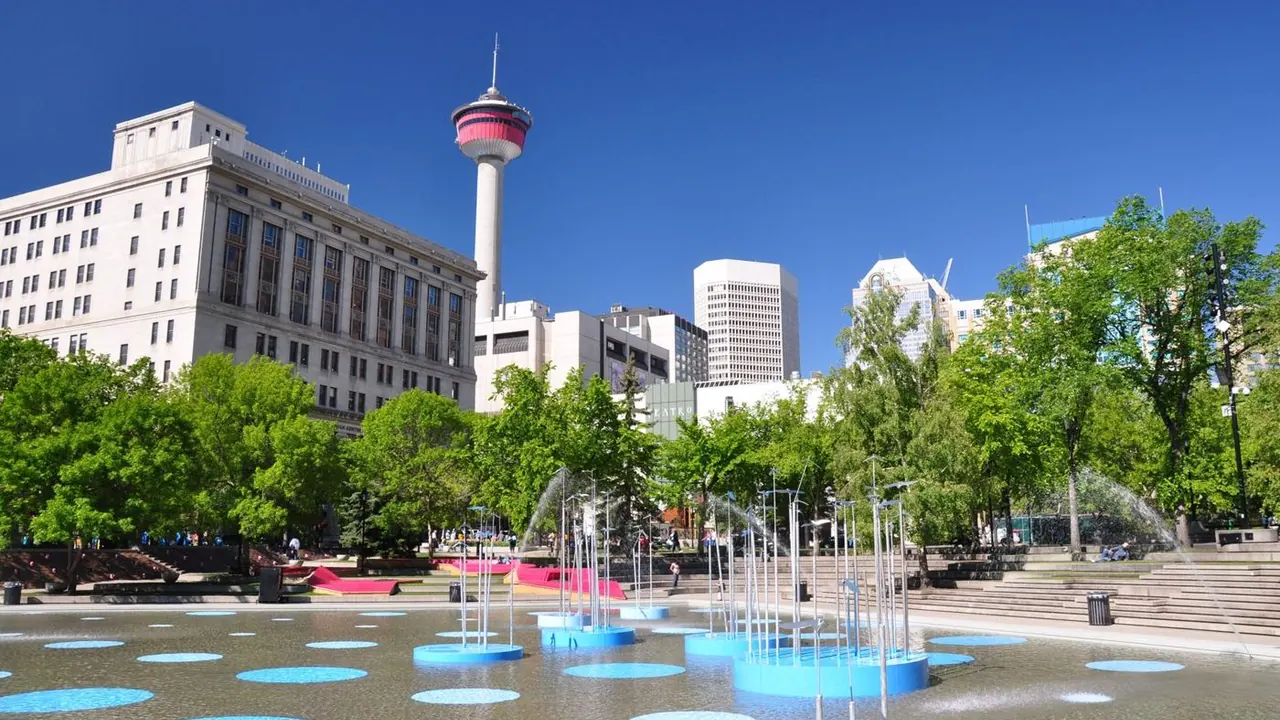
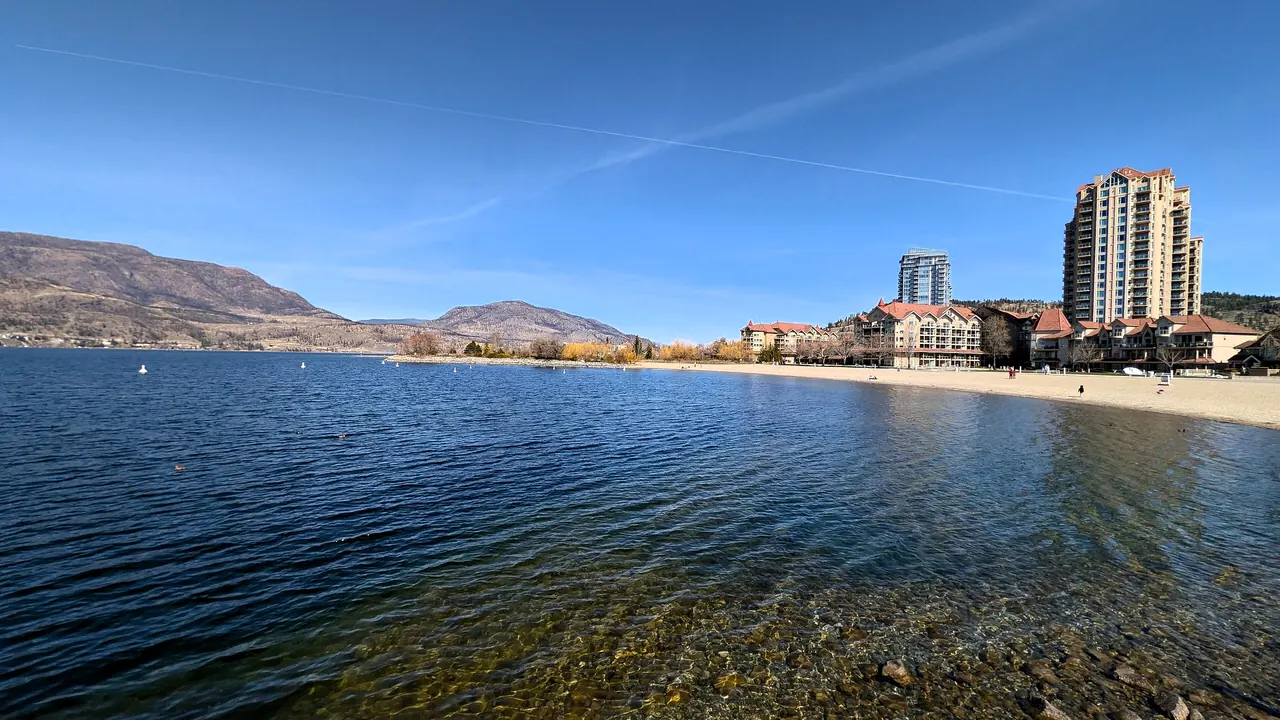
Photos: Calgary by abdallahh, CC BY 2.0, cropped; Kelowna by Joli Rumi, CC BY-SA 4.0, cropped.
Calgary or Kelowna?
Our verdict in twelve categories, each scored against the same fixed benchmark cities, and the climate month by month, so you can choose for your trip.
Choose Calgary for
- live music and the arts
- culture and sights
- shopping
Calgary suits travellers who want the Rockies within reach and a proper city to come back to. Banff and Kananaskis are an easy drive away, and in town there is more to fill a wet day or an evening: the Glenbow, Studio Bell, the zoo, Heritage Park, a wider choice of bars and a concert hall. It is the stronger pick for families, for winter skiing in the high mountains and for anyone timing a trip to the Stampede in July.
Choose Kelowna for
- beaches
- food and drink
Pick Kelowna if your idea of summer is a sandy beach on a warm lake and a long lunch on a winery terrace above it. It is a smaller, slower place with little to see indoors, so it rewards people who spend their days on the water, cycling the Myra Canyon trestles or touring the vineyards. In winter it also works as a base for Big White.
Scoreboard
Twelve categories on one fixed scale from 0 to 100. The shaded stretch is the gap between the two.
Your match
Pick a travel style or drag the sliders, and both match scores follow your weighting.
Wins on live music and the arts and culture and sights with your weighting.
Wins on beaches and food and drink with your weighting.
What matters to you?
Category by category
What the scores mean for a trip.
Beaches & swimming
Calgary has no beach life to speak of. Summer swimming means Sikome Lake in Fish Creek Park, Chestermere Lake or drifting down the Bow on a tube, and the famous mountain lakes are too cold for anything more than a paddle.
Kelowna, by contrast, is a real lake resort in July and August. City Park's sandy beach sits beside downtown, Gyro and Rotary beaches stretch further south, and Okanagan Lake warms enough for long swims. The season is short, though, and the lake is cold for the rest of the year.
Food & drink
Kelowna has the edge because its food and drink are tied to the place. There are winery terraces over the lake, summer stands selling cherries and peaches, and cideries and distilleries around the valley. Downtown has only a modest choice of restaurants, and the highway chains soon take over.
Calgary has a wider range, from Alberta beef in its steakhouses and ginger beef in Chinatown to Vietnamese and Filipino cooking in the suburbs and the breweries around Manchester and Ramsay. Little of it, though, is a reason to make the trip.
Culture & sights
Neither is a sightseeing city, but Calgary gives you two days of material where Kelowna gives you an afternoon. The Glenbow, Studio Bell's instruments and music archives, the living-history village at Heritage Park and the 1880s sandstone along Stephen Avenue together give a fair picture of western Canada.
Kelowna's list ends with the Okanagan Heritage Museum and its Syilx Okanagan history, a small art gallery and the log buildings of Father Pandosy Mission.
Nightlife
Calgary has more going on after dark. There is the long strip of pubs and patios on 17th Avenue SW, bars downtown and in the East Village, and country bars with line dancing and a mechanical bull. During the Stampede the whole city stays out late.
Kelowna's evenings centre on the taprooms and patios of Bernard Avenue. They are lively with students and lake-weekend crowds in summer and quiet for the rest of the year.
Nature & outdoors
Both are good bases for the outdoors, but Calgary's is on a bigger scale. Kananaskis is about an hour away and Banff National Park about ninety minutes, with ridge hikes, Johnston Canyon, glacial lakes, elk and bighorn sheep by the road, and skiing at Sunshine and Lake Louise. In town, the river pathways and Fish Creek Park give you open space without leaving the city.
Kelowna's outdoors are gentler and closer to hand: water sports on Okanagan Lake, the short climb up Knox Mountain, the Myra Canyon trestles and Big White an hour away in winter. In some years, wildfire smoke can spoil late summer.
Day trips
Calgary's day trips are more varied. You can head to Banff and Canmore in the mountains, to the dinosaur fossils of the Royal Tyrrell Museum in the Drumheller badlands, or south to the UNESCO-listed Head-Smashed-In Buffalo Jump.
From Kelowna, nearly every outing is more wine country: Penticton and the Naramata Bench, the vineyards of Oliver and Osoyoos with the Nk'Mip desert cultural centre, or Vernon and the O'Keefe Ranch. That is pleasant for wine lovers but repetitive for anyone else, and from either city you will need a car.
Good for families
Calgary has the purpose-built attractions that Kelowna lacks. There is a large zoo with life-size dinosaurs, the TELUS Spark science centre, steam trains at Heritage Park, Calaway Park and summer zip lines at Canada Olympic Park, and Drumheller makes a day out for older children.
Kelowna is better for a summer of shallow beaches, paddleboards, mini-golf and pick-your-own orchards. It has no zoo or theme park, though, and heat or smoke can cut outdoor days short.
Getting around
Neither works well without a car, but Calgary is easier to manage on foot and by rail. It has a grid downtown, the Plus 15 skywalks for cold days, two CTrain lines out to the zoo and Stampede Park, and riverside cycle paths linking Kensington, Inglewood and the Beltline.
In Kelowna you can walk downtown and along the waterfront from City Park to the marina. The buses do little for visitors, though, and the wineries and trails need a car or a tour.
Shopping & style
Western wear is the purchase worth making in Calgary: hand-made cowboy boots, felt hats, belt buckles and saddlery from long-established outfitters. Around that you can browse the CORE and Chinook Centre malls and the independent record shops and antique dealers of Kensington and Inglewood, which is enough to fill a wet afternoon.
Kelowna's best buys are mostly food and drink: wine from the cellar door, cider, fruit preserves and produce from the farmers' market. Beyond those there are a few boutiques and outdoor shops on Bernard Avenue and the chains at Orchard Park.
Affordability
Calgary is the easier of the two on the budget. For most of the year its hotels cost less than those in Canada's coastal cities, and food courts and suburban family restaurants keep meals manageable, although tax and the tip add to any sit-down dinner. Rooms only become scarce and dear during the ten days of the Stampede in July. The real expense lies in the mountains, where a hire car, park entry and a night or two in Banff push the bill up quickly.
Kelowna costs more, and its dear season lasts longer, covering all of July and August, which is exactly when the lake is warm enough to swim. Lakefront rooms charge peak rates then, winery tastings and boat rentals add up, and a car is close to essential. Outside summer and the Big White ski weeks rooms are far easier to afford, but by then the beaches are out of season.
Live music & performing arts
A resident philharmonic and two theatre companies at the Werklund Centre, plus an opera season at the Jubilee Auditorium, give Calgary a year-round programme you can plan an evening around. July adds the Folk Music Festival on Prince's Island and the Stampede grandstand show with its chuckwagon races and fireworks, and country and roots bands play the bars throughout the year.
Kelowna's evenings out depend on the summer, with free concerts in the lakeside park and live music on winery patios. For the rest of the year the Okanagan Symphony and local theatre at the Rotary Centre for the Arts keep things going on a smaller scale.
Wellness & relaxation
Neither city has hot springs or a bathing culture of its own, so the difference is where you find your rest. From Calgary you drive out to it, to the outdoor Nordic spa in Kananaskis or Banff's historic Upper Hot Springs.
In Kelowna it is close at hand: resort spas by the lake, quiet mornings on the water and long lunches among the vines. It is best outside the busiest weeks of summer.
When should you go?
Pick your month. The climate figures are measured averages, not a forecast.
Calgary in July
Kelowna in July
Daytime high, °C
Rainfall in the month, mm
Temperature and rainfall are climate normals, averaged over the years shown. Calgary: 1991-2020 normals, Calgary Int'l CS (8.2 km from centre). Kelowna: 1991-2020 normals, Kelowna Mws0 (8.4 km from centre).
Calgary is a summer city. Daytime highs reach about 25°C in July, but June is the wettest month at around 106mm, so July and August are the most dependable for mountain hiking, and September brings cool, settled days for the golden larches of Kananaskis. From November to March the days hover around freezing. That is good for skiing, but cold for walking around downtown.
Kelowna runs hotter and drier. July and August reach about 30°C with little rain, which makes them the months for swimming in the lake, although the heat can make long walks heavy going. May, June and September are more comfortable for cycling and touring the wineries. Its winters are a few degrees milder than Calgary's, but damper, with the rain spread more evenly through the cold months.
Which traveller are you?
For a beach and sun trip, Kelowna is the clear winner. July and August bring hot, dry days, sandy beaches on Okanagan Lake right beside downtown and water warm enough for long swims. Calgary offers only a couple of local lakes and a float down the Bow.
On a culture and arts trip, Calgary is the better choice, though neither is a cultural capital. The Glenbow, Studio Bell, Heritage Park and a concert hall with a resident orchestra fill a couple of days. Kelowna's museums and gallery take a single afternoon.
On a family trip with children, Calgary has far more built for them: a large zoo with a dinosaur park, a hands-on science centre, steam trains at Heritage Park and the Stampede rodeo in July. Kelowna suits families who are happy with beach days and paddleboards.
Before you go
| Measure | Calgary | Kelowna |
|---|---|---|
| Official language | French, English | French, English |
| Currency | Canadian Dollar (CAD) | Canadian Dollar (CAD) |
| Sockets | AB120 V, 60 Hz | AB120 V, 60 Hz |
| Driving side | Right | Right |
| Time zone | UTC-7, UTC-6 in summer | UTC-8, UTC-7 in summer |
| Emergency number | 911 | 911 |
| Elevation | 1,045 m | 344 m |
| Main airport | Calgary International Airport (YYC)9 km from centre102 non-stop destinations | Kelowna International Airport (YLW)10 km from centre24 non-stop destinations |
| Public holidays this year | 13 days | 11 days |
By the numbers
| Measure | Calgary | Kelowna |
|---|---|---|
| City population | 1,306,784 | 144,576 |
| People per km² | 1,583 | 683 |
| Museums within 10 km | 13 | 0 |
| UNESCO World Heritage sites within 50 km | 0 | 0 |
Where else could you go?
Every comparison below shares a destination with this one, so you can follow Calgary or Kelowna somewhere new.
- Canmorevs Calgary
- Banffvs Calgary
- Lake Louisevs Calgary
- Whistlervs Kelowna
- Vancouvervs Kelowna
- Edmontonvs Calgary