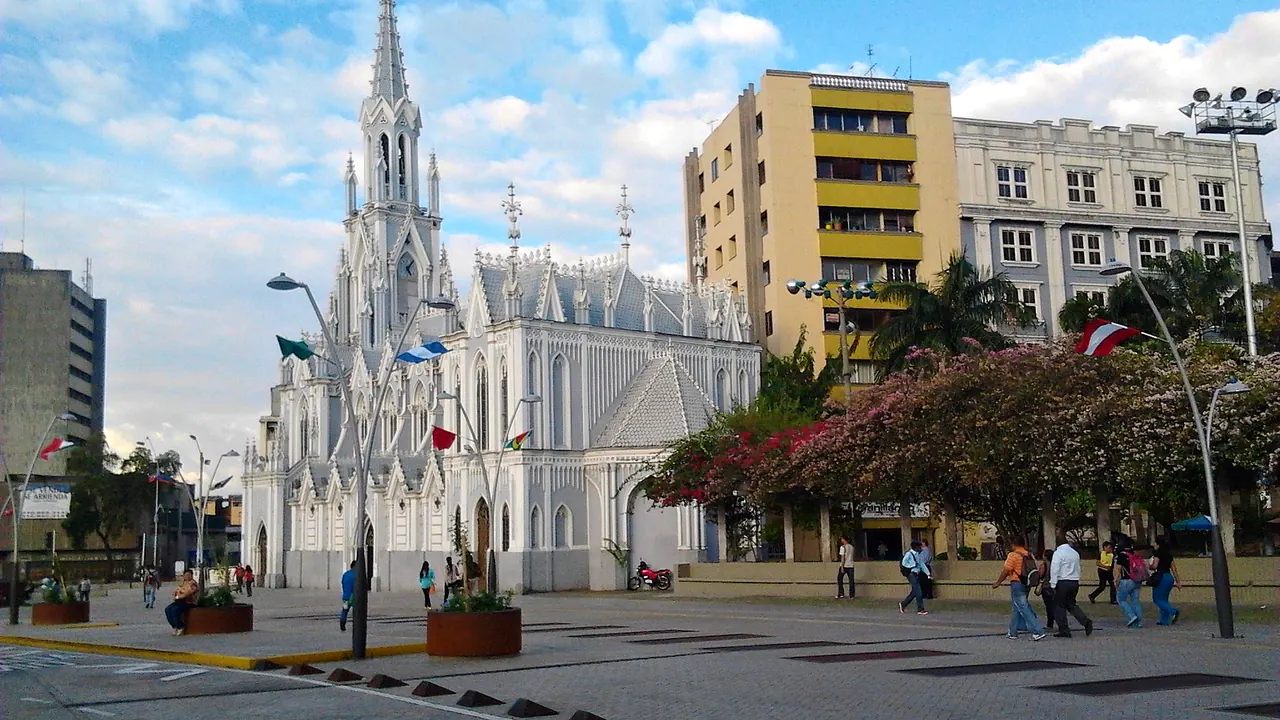
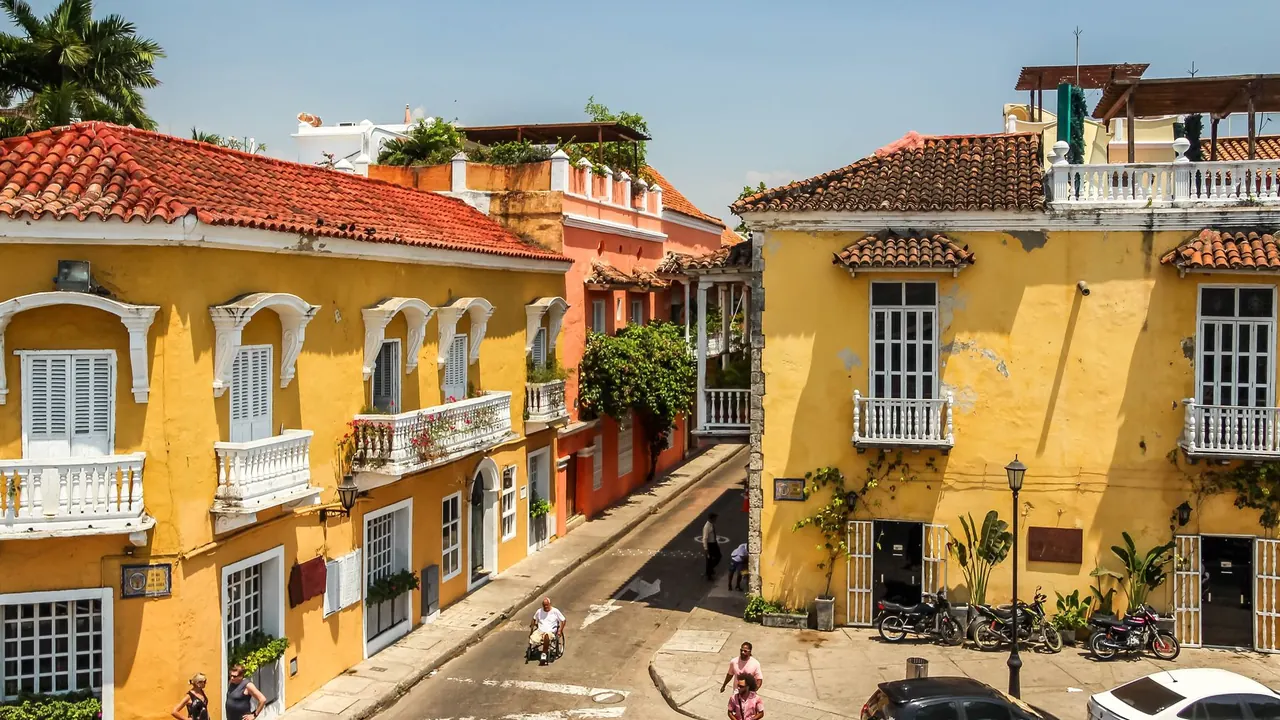
Photos: Cali by Melissa Marin, CC BY-SA 3.0, cropped; Cartagena by Dr. Thomas Liptak, CC BY-SA 4.0, cropped.
Cali or Cartagena?
Our verdict in twelve categories, each scored against the same fixed benchmark cities, and the climate month by month, so you can choose for your trip.
Choose Cali for
- nature and the outdoors
- prices
- live music and the arts
Cali suits travellers who would rather dance than sightsee. Salsa runs through the whole city, from vinyl-playing salsotecas to the late clubs of Juanchito, and cloud forest and some of Colombia's best birding begin where the suburbs end. Your money also goes noticeably further. Plan on a day or two for the sights, and treat the sea as a separate leg of the journey.
Choose Cartagena for
- beaches
- culture and sights
- wellness
For a first taste of Colombia's Caribbean, Cartagena is the easier pick. It has a walled colonial city to wander, a warm sea, and island beaches with clear water a short boat ride away. The old town is compact enough to walk, and its courtyard hotels give you more chances to rest. It costs more, and almost all of its outdoors is on or under the water.
Scoreboard
Twelve categories on one fixed scale from 0 to 100. The shaded stretch is the gap between the two.
Your match
Pick a travel style or drag the sliders, and both match scores follow your weighting.
Wins on nature and the outdoors and prices with your weighting.
Wins on beaches and culture and sights with your weighting.
What matters to you?
Category by category
What the scores mean for a trip.
Beaches & swimming
Cali is inland, behind the Western Cordillera. Its nearest real beaches, at Juanchaco and Ladrilleros, mean a road trip to Buenaventura and then a boat, so locals cool off in the river pools of the Pance or in hotel pools instead.
Cartagena is far stronger for a beach trip, though not on its own shoreline. Bocagrande's darkish sand and cloudy water are fine for a quick dip. The real draw is the boat out to the Rosario Islands and Barú, where you get clear Caribbean water within an hour.
Food & drink
Both cities cook their own regional food, so the difference is mostly in range. Cartagena eats like a Caribbean port, with fried fish and coconut rice, ceviche from street carts and arepas de huevo. It also has a polished set of restaurants in restored colonial houses inside the walls, which gives it the edge at dinner.
Cali's strengths are its street drinks and bakeries: lulada, champús, cholado and warm pandebono, along with Pacific seafood stews at the counters of the Galería Alameda. Its fine dining is thin, so the best meals there tend to be the simple ones.
Culture & sights
Cartagena is far ahead on sights. Its UNESCO-listed walled city is one of the most complete colonial townscapes in the Americas, with about 11km of ramparts you can walk and the huge Castillo San Felipe just outside. Wandering the streets is the main experience, and the museums are modest.
Cali's colonial core is small: the churches of La Merced and San Francisco, La Ermita by the river, and the old houses of San Antonio. Add the Museo La Tertulia for modern art, and a day or two covers it. The city's culture lives more in its music than in its buildings.
Nightlife
Cali has the edge if you go out to dance. Salsa is the city's identity: small salsotecas play old vinyl for serious dancers, and the big clubs of Juanchito run until near dawn at weekends. A few lessons before you go will make your nights much better.
Cartagena's nights are more varied but more tourist-focused. You might start on the steps of the Plaza de la Trinidad in Getsemaní, move to rooftop cocktails inside the walls, and end at a champeta party or on a chiva bus with a band. Expect touts along the way.
Nature & outdoors
Cali has the better outdoors, with steep green country starting at the edge of town. The Farallones de Cali park has trails into cloud forest from the Pance valley, the Kilometre 18 forests are rich in tanagers and hummingbirds, and Lake Calima has steady wind for windsurfing.
Cartagena's best nature is underwater, with reefs to snorkel and dive in the Corales del Rosario park and canoe trips through the mangroves at La Boquilla. On land the country is flat and farmed, and there are no hills worth the trip.
Day trips
Neither city is a great base for day trips, but Cali has a little more within easy reach. Buga and its pilgrimage basilica are about an hour away, and the old sugar estates of the valley, including the Hacienda El Paraíso from the novel María, are on the way.
From Cartagena, the main outing is San Basilio de Palenque, which keeps its own language and music. Beyond that, most trips are really about the islands and the water. In both cases the best places nearby, Popayán and the coffee region from Cali, or Mompox and Santa Marta from Cartagena, need an overnight stay.
Good for families
Neither city does much for children, and both are tiring in the heat. The difference is in the kind of outing. Cali has the riverside zoo with its Colombian animals, weekend picnics in the Pance pools, and water parks and malls for wet afternoons, though you will mostly move around by taxi.
Cartagena has the islands, with calm, warm water at the better beaches. The National Aviary is on the way to Playa Blanca, and horse carriages go round the walled city. The long boat rides are hard work for small children.
Getting around
Cartagena is easier to get around. The walled city, San Diego and Getsemaní are a few minutes apart on foot, the Castillo San Felipe is a walk away, and taxis cover Bocagrande. The heat is the main thing that slows you down.
Cali is flat but spread out. Visitors rely on taxis and ride-hailing, with the MIO buses as a crowded alternative. Walking works only within the close-set area of San Antonio, Granada and the riverside, and many streets are best avoided on foot after dark.
Shopping & style
Cartagena gives a shopper more to find. Las Bóvedas, built into the city walls, sells Wayuu mochilas, sombreros vueltiaos and hammocks, jewellers near the Plaza de Bolívar sell emeralds, and small boutiques stock Colombian linen and swimwear.
Cali's shopping happens mainly in large malls. Its most distinctive buys are salsa shoes and dancewear, along with coffee and fruit from the Galería Alameda, and it has no boutique quarter.
Affordability
Cali is clearly the cheaper stay. Hotels, set lunches, taxis and nights out all cost little, and you only feel the cost rise during the December feria or in the smart restaurants of the north.
Cartagena is Colombia's most expensive city. The boutique mansions and better restaurants inside the walls charge close to European rates, especially at Christmas and Easter. Staying in Getsemaní, eating street food and agreeing boat prices before you board keep it reasonable.
Live music & performing arts
Cali has much more to watch. It puts on big salsa shows with full orchestras, dance-school showcases with astonishing footwork, and two major festivals: the Petronio Álvarez in August for Pacific marimba music and the Festival Mundial de Salsa. The Teatro Experimental de Cali and the city's philharmonic add some formal stage life.
Cartagena's seated programme rests largely on the Teatro Adolfo Mejía and a week of classical concerts in January. The rest of the year, what you hear is cumbia drummers in the plazas and salsa bands in Getsemaní.
Wellness & relaxation
Cartagena is the better place to slow down, mostly thanks to its colonial-house hotels, with plunge pools and shaded courtyards in the middle of the old town. A few nights out on the islands, in a hammock, are calmer still. Cheap massages on the beaches help too.
Cali is built around music and energy rather than rest. Apart from hotel spas, unwinding there means a slow afternoon in San Antonio or a weekend at a country house in the hills around Pance.
When should you go?
Pick your month. The climate figures are measured averages, not a forecast.
Cali in July
Cartagena in July
Daytime high, °C
Rainfall in the month, mm
Temperature and rainfall are climate normals, averaged over the years shown. Cali: 1991-2020 normals, Cali / Alfonso Bonillaaragon (19.5 km from centre). Cartagena: 1991-2020 normals, Cartagena / Rafael Nunez (3.1 km from centre).
Cali's temperature hardly moves, with afternoons of about 28°C all year, so timing comes down to rain. There are two wetter spells, one around April and another in October and November. The driest and sunniest stretch is July and August, when monthly rainfall drops to about 35mm. The heat makes midday walking tiring, but no month is too hot or too cold to explore the city.
Cartagena is a few degrees hotter all year and has one sharp dry season. From December to April there is almost no rain and the most sunshine, which makes those months the best time for the islands and for walking the ramparts. From May the rain builds to a peak in October of about 241mm. The sea stays warm enough to swim all year, between 27°C and 30°C.
Which traveller are you?
On a beach and sun trip, Cartagena is the clear choice. The sea is warm all year, and the Rosario Islands and Playa Blanca on Barú have pale sand and turquoise water a short boat ride away. From Cali, the nearest Pacific beaches take an overnight trip.
For an outdoors trip, Cali wins on land. The cloud-forest trails of the Farallones start at the city's edge, the forests at Kilometre 18 are among Colombia's best for birding, and Lake Calima has steady wind. Cartagena's outdoors is mostly snorkelling, diving and the mangroves.
On a trip on a tight budget, Cali stretches your money further. Guesthouses in Granada and San Antonio, set lunches, taxis and dance classes all cost little. Cartagena can be cheap in Getsemaní, but it is Colombia's most expensive city, and the old town quickly raises the bill.
Before you go
| Measure | Cali | Cartagena |
|---|---|---|
| Official language | Spanish | Spanish |
| Currency | Colombian Peso (COP) | Colombian Peso (COP) |
| Sockets | AB110 V, 60 Hz | AB110 V, 60 Hz |
| Driving side | Right | Right |
| Time zone | UTC-5 | UTC-5 |
| Emergency number | 123 | 123 |
| Elevation | 1,018 m | 2 m |
| Main airport | Alfonso Bonilla Aragon International Airport (CLO)19 km from centre27 non-stop destinations | Rafael Nuñez International Airport (CTG)2 km from centre26 non-stop destinations |
| Public holidays this year | 19 days | 19 days |
By the numbers
| Measure | Cali | Cartagena |
|---|---|---|
| City population | 2,471,474 | 914,552 |
| People per km² | 4,382 | 1,599 |
| Museums within 10 km | 10 | 2 |
| UNESCO World Heritage sites within 50 km | 0 | 1 |
| Swim season, months above 21 °C | - | 12 months |
Where else could you go?
Every comparison below shares a destination with this one, so you can follow Cali or Cartagena somewhere new.