Cambodia
Phnom Penh
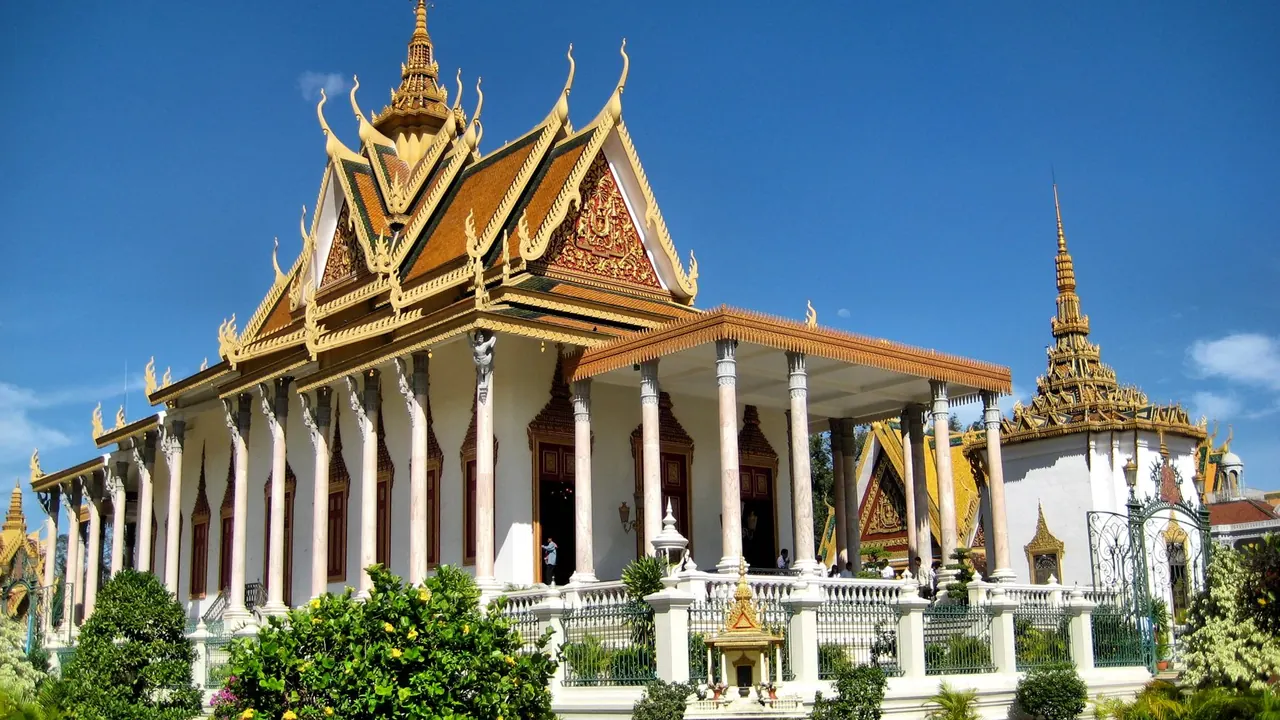
The Silver Pagoda
- Affordable cities86
- Food & drink62
- Culture & sights62
Photo: Francisco Anzola, CC BY 2.0, cropped
Match
44
Every category weighted equally
- Beach & sun42
- Culture & arts48
- Food & nightlife49
- Family trip41
- Outdoors41
- Relax & unwind42
- Shopping & style47
- On a budget49
Phnom Penh in twelve categories
Our verdict on each, scored 0 to 100 against the same fixed benchmark cities, so a score means the same thing on every page.
Beaches & swimming. Scores 6 out of 100.
Food & drink. Scores 62 out of 100.
Culture & sights. Scores 62 out of 100.
Nightlife. Scores 58 out of 100.
Nature & outdoors. Scores 28 out of 100.
Day trips. Scores 34 out of 100.
Good for families. Scores 32 out of 100.
Getting around. Scores 35 out of 100.
Shopping & style. Scores 46 out of 100.
Affordability. Scores 86 out of 100.
Live music & performing arts. Scores 32 out of 100.
Wellness & relaxation. Scores 50 out of 100.
Phnom Penh category by category
Beaches & swimming
6Phnom Penh is an inland river city. There is no beach to reach in a day. The nearest coast, around Kep and Kampot, is about three hours by road, and the island beaches further west need an overnight stay. Swimming here means a hotel or rooftop pool, which matters in the year-round heat. The Mekong and Tonle Sap are for looking at from the riverside or a boat, not for bathing. If beaches matter to you, plan a separate stay on the coast.
Food & drink
62Khmer cooking is gentler and more herbal than its neighbours' food, built on prahok fish paste, kroeung spice pastes, lemongrass and Kampot pepper. A visitor meets it in fish amok, lok lak, sour soups and grilled meats with green mango. Mornings start at market stalls with bai sach chrouk, rice with grilled pork, or a bowl of kuy teav noodle soup. Central Market and the Russian Market have food halls where locals eat at the counters.
The French period left good baguettes, strong iced coffee with condensed milk and a café habit that runs through BKK1 and the riverside. Some restaurants rework Khmer dishes for fine dining, and NGO training restaurants add to the scene. Wine is imported and ordinary, and local beer is light. The scene is deep at the street level and decent at the top, but international range is thinner than in bigger Asian capitals.
Culture & sights
62The main sights stand close together along the riverfront. The Royal Palace and the Silver Pagoda have gilded spires and a floor of silver tiles. Next door, the terracotta National Museum holds one of the world's best collections of Angkorian sculpture. Wat Phnom sits on the small hill that gave the city its name, and the Independence Monument and the domed art deco Central Market are landmarks of the city's twentieth century.
The Khmer Rouge years are just as much a part of a visit. The Tuol Sleng Genocide Museum is a former school that became a prison, and the Choeung Ek killing fields are about 15km south. Both are harrowing and essential. Colonial villas and the New Khmer Architecture of the 1960s reward a walk. Still, the city's heritage takes two or three days, and Cambodia's greatest monuments are at Angkor, far to the north.
Nightlife
58Going out in Phnom Penh is loose, cheap and runs late. Sundowners on rooftop terraces over the Tonle Sap give way to the narrow lanes of small cocktail and craft bars around Bassac Lane in BKK1. The streets near the riverside and Street 51 keep their clubs and late bars open well into the early morning. Expat pubs, beer gardens and local beer halls with hostesses and loud music make up the rest.
The scene has character, and it is small. A few blocks have most of it, and parts of the riverside strip are rough round the edges. Moto drivers and tuk-tuks wait outside all night. Keep your bag on the side away from the road, because snatch theft from passing motorbikes is a known risk.
Nature & outdoors
28The city sits on flat floodplain where the Mekong, the Tonle Sap and the Bassac meet. The riverfront promenade and sunset boat trips are the main ways to enjoy that landscape. The ferry to Koh Dach, the rural Mekong island, makes an easy half-day of cycling past stilt houses and fields. The Phnom Tamao wildlife rescue centre, about an hour south, shelters sun bears, elephants and gibbons.
For hills and forest you have to go further, to the pine-covered plateau of Kirirom National Park, about two and a half hours away. The wet season greens the countryside and floods the plains, but heat limits outdoor activity for much of the year. This is not an outdoor base.
Day trips
34The best-known outing is Oudong, the old royal capital about an hour north, where stupas and temples cover a ridge above the rice fields. To the south, Tonle Bati has a twelfth-century laterite temple beside a lake, and the hilltop temple of Phnom Chisor looks across the plains. Kampong Chhnang, about two hours up the Tonle Sap, is a pottery town with floating villages. Closer in, the weaving villages on the Mekong islands make silk on wooden looms.
These are pleasant, quiet days out, though none is a major destination. Angkor and Siem Reap, the colonial town of Kampot and the coast around Kep are all too far for a day and are better as stops of their own.
Good for families
32Cambodians are warm towards children, and families with young ones get a friendly welcome everywhere. The trouble is everything else. There are few pavements, motorbike traffic is constant and the heat is relentless. The main sights, Tuol Sleng and the killing fields, are not places for children. The Phnom Tamao wildlife rescue centre, river cruises, the riverside promenade in the evening and the big shopping malls with play areas and ice rinks fill some days. A hotel with a pool becomes the centre of the stay. It works for families who already travel in Southeast Asia, less well as a first trip with small children.
Getting around
35There is no metro or urban rail, and the city buses cover only a few main roads. Visitors get around by tuk-tuk, either hailed in the street or booked through ride-hailing apps, which take away most of the haggling. Motorbike taxis are quicker for one person. The main sights along the riverfront and around the Royal Palace are close together, but pavements are broken, blocked by parked motorbikes or simply missing, and crossing a road takes nerve. Walking is short and slow. Nobody needs a car, but every trip relies on a driver.
Shopping & style
46Markets are the main event. The covered stalls of the Russian Market, Toul Tom Poung, sell silk scarves, silver, wood carvings, antiques of varying honesty and overrun clothing from local garment factories. The art deco dome of Central Market covers jewellery, gold and everyday goods. Around Street 240 and BKK1, small boutiques and fair-trade shops sell Cambodian silk, homewares, Kampot pepper and crafts made by artisan cooperatives. Large malls cover international chains. There is no luxury street or real fashion scene, but you can come home with good textiles and crafts.
Affordability
86Phnom Penh is cheap for a visitor. Market meals, noodle soups, tuk-tuk rides, massages and guesthouse rooms cost a fraction of what they do in the West, and comfortable boutique hotels with pools are good value. Entry fees to the main sights are modest.
The exception is anything imported. Wine, Western restaurants and the international hotels cost about what they would at home, so how you split your spending between local and international places makes a big difference to the bill. A traveller who eats at the markets and in Khmer restaurants spends very little, while one who sticks to hotel dining and cocktail bars will find it much less of a bargain.
Live music & performing arts
32The art form a visitor should seek out is classical Khmer dance. The apsara and folk repertoire was nearly lost under the Khmer Rouge and has been rebuilt by the Royal University of Fine Arts. Regular evening shows near the National Museum present it with masked dance and shadow puppetry, and the Chaktomuk Theatre on the riverfront hosts larger occasions. Beyond that, the offer is small. A few bars host jazz, local bands and acoustic nights, and touring acts are rare. There is no opera, orchestra season or theatre district.
Wellness & relaxation
50Massage is the main way to unwind. Small parlours offer Khmer and foot massage on almost every street. Blind-masseur centres and NGO spas train local staff, and boutique hotels have calm spas and garden pools. There is no bathhouse or bathing tradition beyond that. The city is gentler than its larger neighbours. Life slows in the midday heat, the riverfront fills with walkers and evening aerobics groups as the sun drops, and a villa hotel in a leafy street can feel very quiet. Traffic, dust and noise are never far away, though.
When should you go?
Pick a month to see what it is like. The climate figures are measured averages, not a forecast.
Phnom Penh in July
Daytime high, °C
Rainfall in the month, mm
The whole year
Shaded against this city’s own year: the deepest cell is its best month for that figure and the palest its weakest.
Temperature and rainfall are climate normals, averaged over the years shown. Phnom Penh: 1991-2020 normals, Phnom-Penh / Pochentong (8 km from centre).
Before you go
| Measure | Phnom Penh |
|---|---|
| Official language | Khmer |
| Currency | Riel (KHR) |
| Sockets | ACG230 V, 50 Hz |
| Driving side | Right |
| Time zone | UTC+7 |
| Emergency number | Police 117, ambulance 119, fire 118 |
| Elevation | 11 m |
| Main airport | Techo International Airport (KTI)23 km from centre41 non-stop destinations |
| Public holidays this year | 21 days |
By the numbers
| Measure | Phnom Penh |
|---|---|
| City population | 2,129,371 |
| People per km² | 3,138 |
| Museums within 10 km | 3 |
| UNESCO World Heritage sites within 50 km | 1 |
Compare Phnom Penh with
Every comparison with a written verdict behind it.