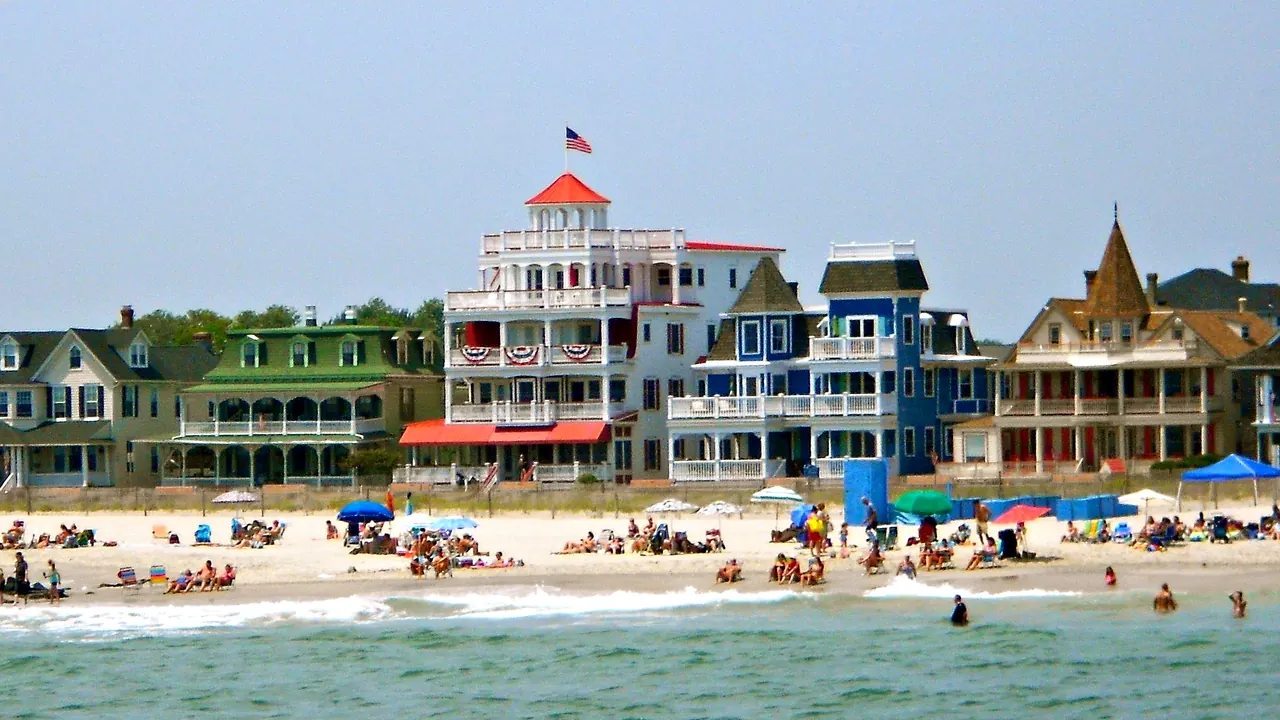
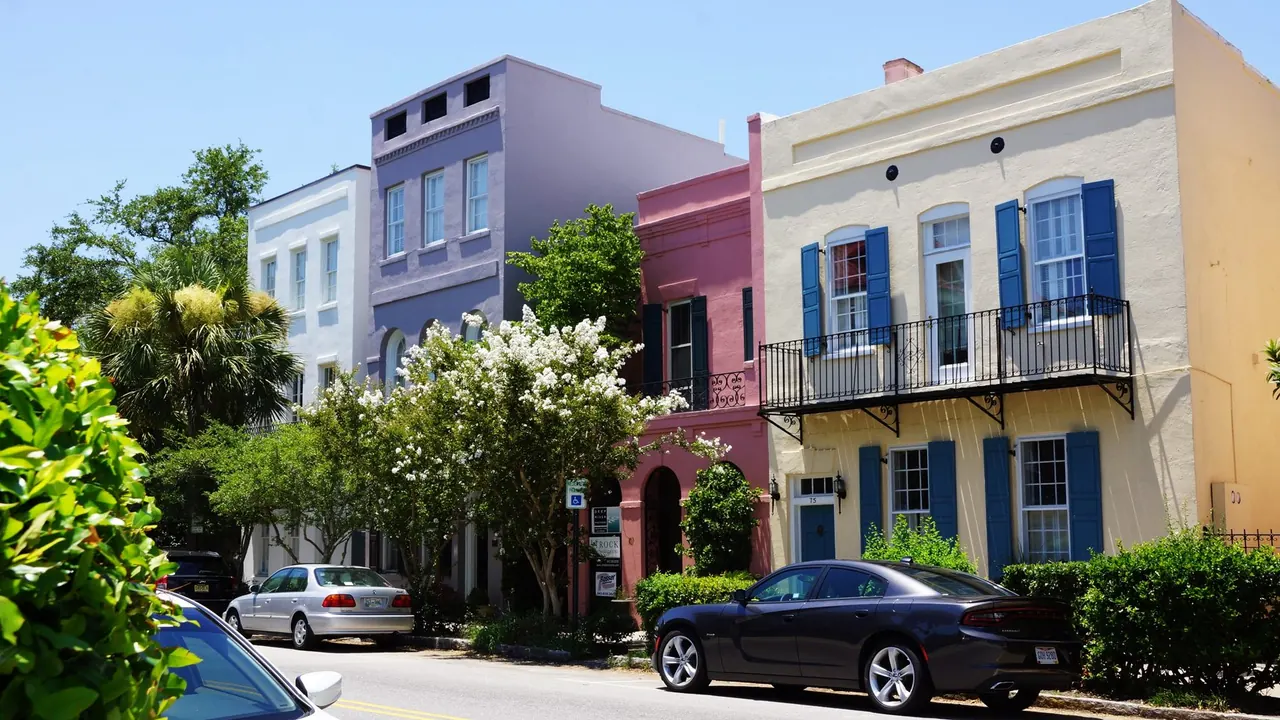
Photos: Cape May by Smallbones, CC0; Charleston by NealVickers, CC BY-SA 4.0, cropped.
Cape May or Charleston?
Our verdict in twelve categories, each scored against the same fixed benchmark cities, and the climate month by month, so you can choose for your trip.
Choose Cape May for
- families
- nature and the outdoors
Cape May suits a slow summer week by the sea, above all with young children. The lifeguarded sand is a short walk from a Victorian town of porches and shady streets, and bikes, dolphin boats and the lighthouse fill the days around it. Autumn birders and people who like a quiet evening and an early start will be happy here too. Just don't expect much after dark, or much variety at the table beyond seafood.
Choose Charleston for
- food and drink
- culture and sights
- nightlife
Couples and friends who want a real city as well as a beach should pick Charleston. Lowcountry cooking, a long and difficult history told in house museums and at Fort Sumter, King Street's shops and bars, and outings to the plantations or Savannah will fill several days. You'll need a car to get to the island beaches, and the old town is at its best outside the sticky summer months.
Scoreboard
Twelve categories on one fixed scale from 0 to 100. The shaded stretch is the gap between the two.
Your match
Pick a travel style or drag the sliders, and both match scores follow your weighting.
Wins on families and nature and the outdoors with your weighting.
Wins on food and drink and culture and sights with your weighting.
What matters to you?
Category by category
What the scores mean for a trip.
Beaches & swimming
These are equally good beach places, but they work very differently. Cape May's sand runs right along the town, so from most guesthouses you can walk to the beach, the promenade behind it and the gentle, lifeguarded surf. The cost is a short season and cooler water. Quieter Cape May Point and the hunt for Cape May diamonds at Sunset Beach add some variety.
Charleston's beaches are out on the barrier islands, about half an hour away, so a beach day there means taking the car. In return you get warmer water over a longer season and a choice of moods: surfy Folly Beach, residential Sullivan's Island, resort-style Isle of Palms. The sea there is tidal and greenish rather than clear.
Food & drink
Charleston is clearly the better place to eat. It has a cuisine of its own, Lowcountry cooking with West African and Gullah Geechee roots, and you can follow it from townhouse dining rooms to whole-hog barbecue and roasted oysters, with plenty of cocktail bars and breweries as well.
Cape May has excellent fish straight off its own boats, especially scallops and local oysters, and long porch breakfasts. Away from seafood, though, the choice soon drops to fudge and boardwalk snacks, and many kitchens close in winter.
Culture & sights
Both towns are best seen by simply walking their old streets, but Charleston has much more to see. Its Georgian and antebellum peninsula is grander and older, and its history goes deeper: house museums that show the enslaved people's quarters next to the ballrooms, the boat out to Fort Sumter, and museums about the city's role in the slave trade.
Cape May's appeal is the sheer number of gingerbread Victorian cottages. You see them on walking or trolley tours, along with the Emlen Physick Estate and a climb up the lighthouse, and a day or two covers it all.
Nightlife
Neither town has much clubbing, but Charleston at least has a proper night out. Upper King Street has rooftop bars, oyster bars and loud pubs that stay busy until late at weekends, and there are quieter wine bars in the French Quarter and beach bars on Folly.
Cape May's evenings mean a hotel bar or a pub with a cover band near the mall, and most people are in bed by midnight. Anyone after noise drives up to the Wildwoods.
Nature & outdoors
Both are flat coastal country with wildlife as the draw, but the wildlife is different. Cape May sits on one of North America's great migration routes: hawks and monarch butterflies pour over the Point and Higbee Beach in autumn, and boats go out to see dolphins in summer and whales in the cooler months.
Charleston's outdoors is the Lowcountry marsh. You paddle tidal creeks among dolphins, walk under live oaks hung with Spanish moss, and look for alligators in the ACE Basin or Francis Marion forest. In summer the mosquitoes come with it.
Day trips
Charleston has more good outings within easy reach. The Ashley River plantations, with their gardens and the history of slavery, are about half an hour away. Savannah's squares make a full day, and Beaufort and the Gullah sea islands are a gentler trip.
Cape May's best outing is the ferry across Delaware Bay to colonial Lewes. The Wildwoods and Atlantic City are easy, but Philadelphia is a tiring round trip.
Good for families
Cape May has the edge with young children, mostly because everything is close. The beach, the bike rides along the promenade, crabbing on the bay, the dolphin boats and the free county zoo all fit into easy days, and the Wildwoods' amusement piers are nearby when the children want rides. One thing to check: some historic B&Bs don't accept small children.
Charleston has better rainy-day attractions: the aquarium, the Children's Museum and the aircraft carrier at Patriots Point. But every beach day needs a drive, house tours bore younger children, and summer heat cuts days short.
Getting around
They are much the same here: a flat, walkable old centre, and a car for anything beyond it. In Cape May the historic district, the promenade and the Washington Street Mall are close together and best covered by bike, with a seasonal trolley in summer. Getting there means driving down the Garden State Parkway or taking the Delaware ferry, as there is no passenger rail.
Charleston's peninsula is a little larger, and pedicabs and a free shuttle bus help you get round it. Ride-hailing covers trips to the beaches and plantations, but midday summer heat soon cuts how far anyone wants to walk.
Shopping & style
Charleston is the better place to shop. King Street changes as you walk it, with antiques at the lower end, fashion brands in the middle and independent design shops further up. At the City Market, Gullah artisans weave sweetgrass baskets, a craft you won't find in Cape May.
Cape May's shopping is three pedestrian blocks of boutiques, bookshops and taffy shops, plus a few galleries. It fills a rainy afternoon.
Affordability
Neither is cheap, but Charleston is a little easier on the budget. Its old streets, the Battery and the island beaches cost nothing to enjoy, and staying in Mount Pleasant or the suburbs brings rooms down, though you then drive in every day.
Cape May in summer stacks up extra costs: minimum-stay rules at B&Bs, beach tags and paid parking all add to the bill. The ways round them are coming in spring or autumn, renting a house as a group, or staying in the Wildwoods and visiting for the day.
Live music & performing arts
Charleston has the stronger programme, and it peaks in late spring with Spoleto Festival USA, more than two weeks of opera, dance, theatre and jazz. For the rest of the year there are plays at the Dock Street Theatre, the symphony at the Gaillard Center and Gullah storytelling and song.
Cape May runs on small-scale theatre, a long-running chamber music festival in its churches, and summer concerts in Convention Hall. That's enough for a pleasant evening, but it isn't a reason to come.
Wellness & relaxation
Neither has a bathing tradition, and both relax you mainly through their slow pace. In Cape May that means rocking chairs on porches, afternoon tea in guesthouse parlours and sunsets over the bay, and it works best in spring and autumn, away from crowded summer weekends.
Charleston has more choice of spas, including resort spas out on Kiawah Island. Its quiet moments are in walled gardens, church courtyards and evenings at White Point Garden.
When should you go?
Pick your month. The climate figures are measured averages, not a forecast.
Cape May in July
Charleston in July
Daytime high, °C
Rainfall in the month, mm
Where the figures come from
Cape May has no rain gauge within 25 km of the centre, so its rainfall comes from a gridded climate dataset read at the city rather than from a gauge further away.
Temperature and rainfall are climate normals, averaged over the years shown. Cape May: 2006-2020 (rainfall 1991-2020) normals, Wildwood / Sally Marshall Crossing (8.4 km from centre). Charleston: 1991-2020 (sunshine 1981-2010) normals, Charleston Airport (16.1 km from centre).
Cape May's beach season is short and clear-cut. From mid-June to mid-September the days are warm and the sea reaches about 24°C by August. Outside those months the water is too cold for most swimmers, and winter is raw, with January highs around 6°C. Spring and autumn are mild and good for walking and birding. Rain falls fairly evenly through the year, so no month stands out as the wet one.
Charleston is warmer in every season. The sea reaches 28°C in high summer and stays fine for swimming into October. July highs of about 33°C and heavy summer downpours make midday walking hard, though, and August is the wettest month at 173mm. The old town is at its best from March to May, when late spring brings long sunny days and May is the sunniest month of the year, and again in October and November. Even winter is mild enough for walking the streets, while Cape May is cold.
Which traveller are you?
On a family trip with young children, choose Cape May. You can walk to lifeguarded sand straight from the house, and there are surrey bikes on the promenade, crabbing on the bay and a free zoo nearby. Charleston's beaches all need a drive, and its summer afternoons wear children out.
For a culture and arts trip, Charleston gives you much more. There's the antebellum peninsula, the Nathaniel Russell and Aiken-Rhett houses, Fort Sumter and the museums on slavery, and Spoleto in late spring. Cape May's Victorian streets and the Physick Estate take a day or two.
For a food and nightlife trip, go to Charleston. Lowcountry dishes such as shrimp and grits and she-crab soup are cooked seriously across the city, and upper King Street fills with rooftop and cocktail bars at weekends. Cape May eats well on seafood, but the town is asleep by midnight.
Before you go
| Measure | Cape May | Charleston |
|---|---|---|
| Currency | US Dollar (USD) | US Dollar (USD) |
| Sockets | AB120 V, 60 Hz | AB120 V, 60 Hz |
| Driving side | Right | Right |
| Time zone | UTC-5, UTC-4 in summer | UTC-5, UTC-4 in summer |
| Emergency number | 911 | 911 |
| Elevation | 3 m | 6 m |
| Main airport | Atlantic City International Airport (ACY)65 km from centre11 non-stop destinations | Charleston International Airport (CHS)16 km from centre56 non-stop destinations |
| Public holidays this year | 13 days | 12 days |
By the numbers
| Measure | Cape May | Charleston |
|---|---|---|
| City population | 2,768 | 150,227 |
| People per km² | 390 | 532 |
| Museums within 10 km | 4 | 19 |
| UNESCO World Heritage sites within 50 km | 0 | 0 |
| Swim season, months above 21 °C | 3 months | 6 months |
Where else could you go?
Every comparison below shares a destination with this one, so you can follow Cape May or Charleston somewhere new.
- Rehoboth Beachvs Cape May
- Bethany Beachvs Cape May
- Ocean City, Marylandvs Cape May
- Atlantic Cityvs Cape May
- Philadelphiavs Cape May
- Savannahvs Charleston