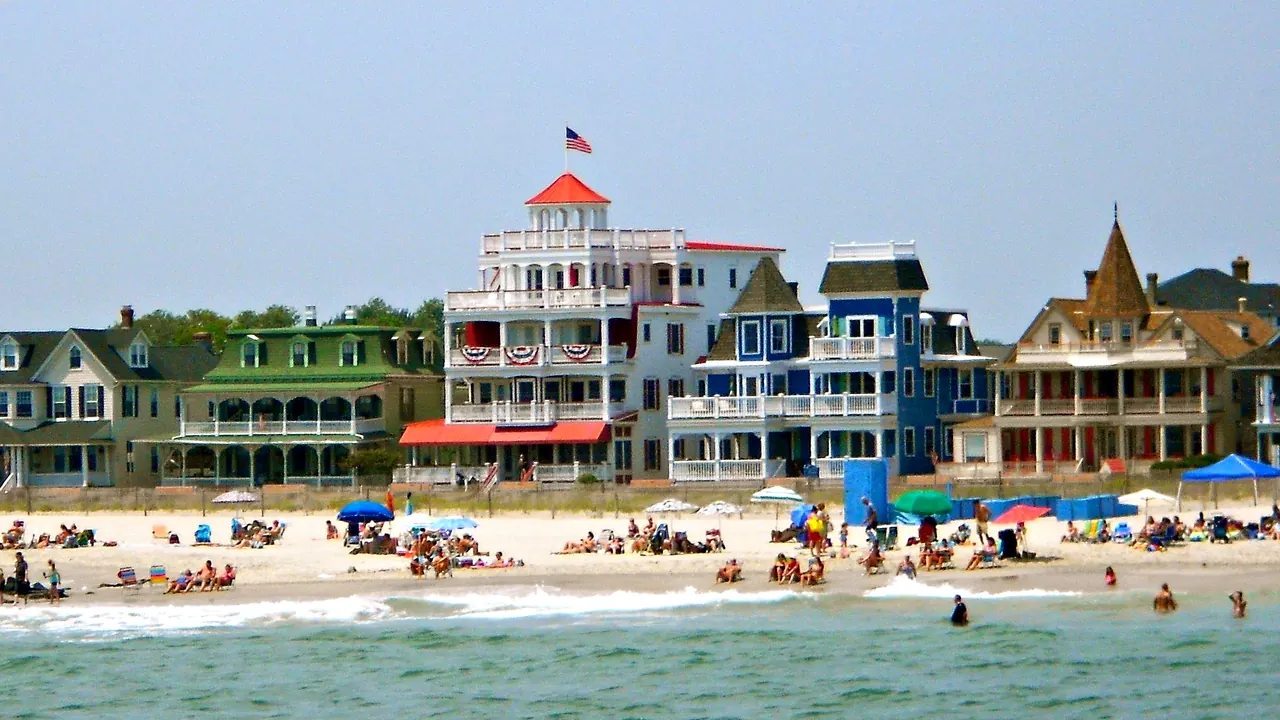
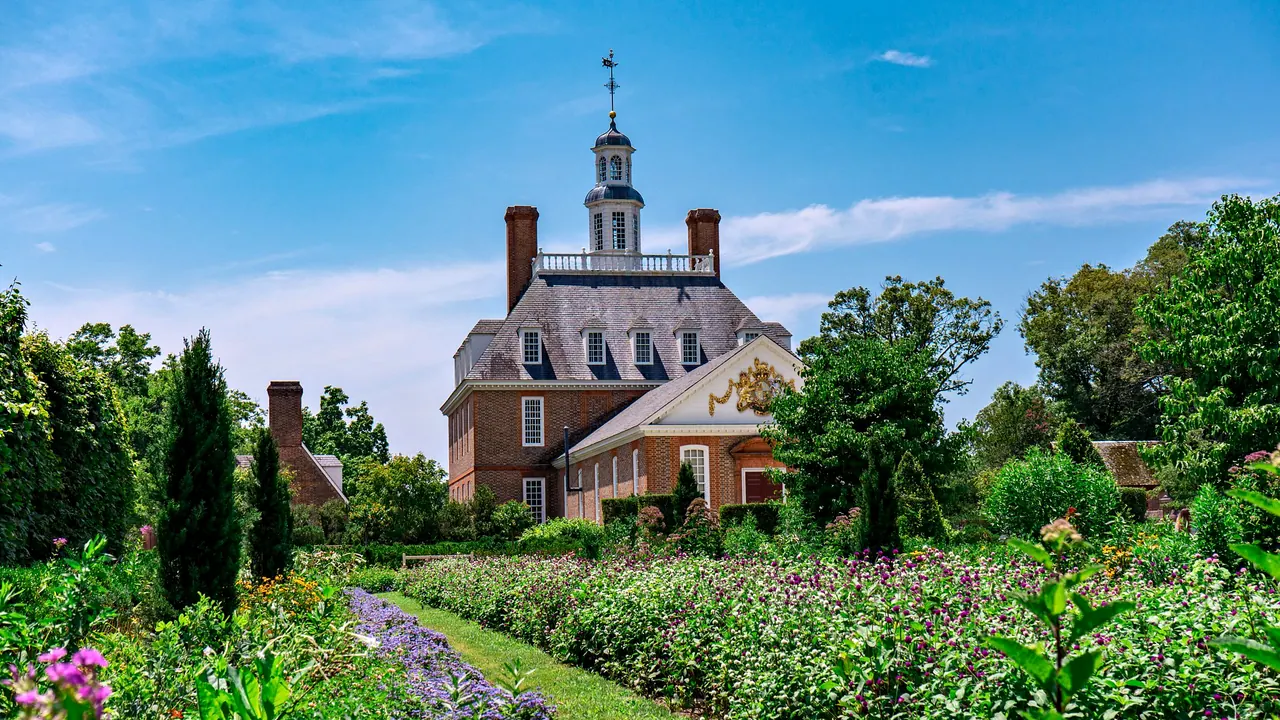
Photos: Cape May by Smallbones, CC0; Williamsburg, Virginia by Brian Magill, Pexels License.
Cape May or Williamsburg, Virginia?
Our verdict in twelve categories, each scored against the same fixed benchmark cities, and the climate month by month, so you can choose for your trip.
Choose Cape May for
- beaches
- nature and the outdoors
- getting around
Cape May is the better choice for a summer beach week with an old-fashioned feel. The sand starts at the end of the street and the Victorian district is a short walk from it. Bikes, porches, seafood and birdwatching in the shoulder seasons fill the rest of the time. It suits couples and families who want to park the car and slow down, and who can accept the high summer prices.
Choose Williamsburg, Virginia for
- culture and sights
- prices
- day trips
Williamsburg rewards travellers who come for American history and want plenty to do. The restored colonial capital, Jamestown and Yorktown sit close together, and Busch Gardens is on hand for children who need a break from the past. Rooms are cheaper, and a car is needed. The beach is a separate day out rather than part of the stay.
Scoreboard
Twelve categories on one fixed scale from 0 to 100. The shaded stretch is the gap between the two.
Your match
Pick a travel style or drag the sliders, and both match scores follow your weighting.
Too close to call, 1 point apart
Wins on beaches and nature and the outdoors with your weighting.
Wins on culture and sights and prices with your weighting.
What matters to you?
Category by category
What the scores mean for a trip.
Beaches & swimming
Cape May has the sand on its doorstep. A lifeguarded oceanfront strip runs along the promenade, the beaches at the Point are quieter, and at Sunset Beach on the bay you can hunt for Cape May diamonds. The Atlantic is warm enough for long swims from mid-June to mid-September.
Williamsburg is inland between two rivers, so a swim means driving to the small York River beach at Yorktown, the bay at Hampton or Virginia Beach, about an hour away. The water there is warmer in midsummer, but sea nettles can drift into the bay, and most visitors settle for a pool or a water park.
Food & drink
Neither town is a dining destination, but Cape May has the edge because of its fishing port. Scallops, flounder and local oysters turn up everywhere, from dockside shacks to dining rooms in Victorian houses, and breakfast on a porch becomes part of the stay.
Williamsburg's strength is Virginia country cooking: ham biscuits, peanut soup, crab cakes and barbecue. Its candlelit colonial taverns are more about the setting than the food. Beyond Merchants Square, the pancake houses and buffets of Richmond Road set the tone.
Culture & sights
Williamsburg is the stronger choice for history. Colonial Williamsburg is a whole restored capital where costumed interpreters work at the old trades. Duke of Gloucester Street runs from the Capitol to the Wren Building, the Governor's Palace stands at the end of its green, and the art museums hold serious collections of folk and decorative arts. It fills two or three days.
In Cape May the culture is the architecture. The whole town is a National Historic Landmark district of gingerbread cottages and porch-fronted hotels, best seen on a walking or trolley tour, with the Physick Estate and the lighthouse climb to round it off. It is a town people still live and stay in rather than a staged re-creation, and a day or two covers it.
Nightlife
Both towns go quiet early, so neither suits a big night out. In Cape May the evening means a pub or hotel bar near the pedestrian mall, often with a cover band in summer, and the boardwalk bars of the Wildwoods are a short drive away.
Williamsburg's evenings revolve around a tavern dinner or a candlelit ghost walk, with student pubs in term time and taprooms on the edge of town. For anything louder, people drive to Norfolk or Richmond.
Nature & outdoors
Cape May sits at the tip of a peninsula, which makes it one of North America's great bird-migration sites. In autumn, hawks and monarch butterflies pour through Cape May Point State Park and Higbee Beach. In summer, boats go out to see dolphins, which are close to certain.
Williamsburg offers gentler Tidewater scenery of forest, marsh and the wide estuaries of the James and York. It is best seen by cycling the Colonial Parkway or the Virginia Capital Trail, or by kayaking creeks where ospreys and eagles nest. Both places are flat, but Williamsburg's summer heat and mosquitoes push outdoor plans into spring and autumn.
Day trips
Williamsburg sits at the centre of a cluster of outings. Jamestown and Yorktown are each under half an hour away, the James River plantation houses line Route 5, and Richmond is about an hour off. You can fill several days without repeating yourself.
Cape May's best outing is the ferry across Delaware Bay to colonial Lewes. The Wildwoods are next door and Atlantic City is about an hour up the coast. Philadelphia is possible, but it makes for a long and tiring day.
Good for families
Williamsburg is built for family trips. Busch Gardens and Water Country USA provide the rides. Musket firings, fife-and-drum parades and the replica ships at Jamestown and Yorktown turn history into something children can touch. Motels with pools are everywhere, though the summer heat and the driving between sights can wear small children out.
Cape May suits a slower family week, especially with young children: lifeguarded sand, surrey rides on the promenade, crabbing on the bay and the free county zoo. For rides you have to go to the Wildwoods, and some B&Bs in the historic district do not accept small children.
Getting around
Cape May is easier once you are there. The historic district, the beachfront and the Washington Street Mall are a short, flat walk apart, and bikes handle the rest. Getting there is harder, since there is no passenger rail.
Williamsburg has the train, with Amtrak stopping near the centre, and a walkable core around Duke of Gloucester Street. But the theme parks, outlets, hotels, Jamestown and Yorktown are spread along highways, so you rely on a car far more than in Cape May.
Shopping & style
Williamsburg offers a little more. The colonial shops sell hand-made pewter, pottery and reproduction furniture, Merchants Square has Virginia gifts and books, and the large outlet centre on Richmond Road covers the familiar brands.
In Cape May, shopping means browsing the three-block Washington Street Mall, with its independent boutiques, bookshops, fudge and taffy, plus antique dealers and galleries around the historic district. It fills a rainy afternoon, but there are no outlets or department stores.
Affordability
Williamsburg is easier on the budget. Motels, chain hotels and condos line the main roads and are reasonably priced outside summer weekends. The big costs are the admission tickets, and combination passes help with those.
In summer, Cape May charges premium rates for its Victorian B&Bs and oceanfront rooms, often with minimum stays, and beach tags and paid parking come on top. Coming in spring or autumn, renting a house as a group, or staying in the Wildwoods brings the cost down.
Live music & performing arts
Neither town has opera or an orchestra of note, so this is about a pleasant evening out. Cape May leans on theatre: one professional company plays in a converted church and another stages historic American drama. A long-running chamber music festival fills its churches in late spring and early summer.
In Williamsburg the performances belong to the colonial setting: candlelit eighteenth-century recitals, period theatre and fife-and-drum corps. College concerts in term time and the theme-park stage shows add to them.
Wellness & relaxation
Cape May's calm comes from the town itself. You get rocking chairs on wide Victorian porches, afternoon tea in guesthouse parlours and sunsets watched from the bay, with a few day spas in the hotels for a massage. Summer weekends are busy rather than serene, so a restful stay works best in spring or autumn.
Williamsburg's rest is found more in its resorts. The spas at the historic inn and the golf resorts along the James River offer pools and treatments. Early mornings on the empty colonial greens are peaceful once the theme-park crowds have gone. There are no thermal baths in either town.
When should you go?
Pick your month. The climate figures are measured averages, not a forecast.
Cape May in July
Williamsburg, Virginia in July
Daytime high, °C
Rainfall in the month, mm
Where the figures come from
Cape May has no rain gauge within 25 km of the centre, so its rainfall comes from a gridded climate dataset read at the city rather than from a gauge further away.
Williamsburg, Virginia's sunshine is measured 60 km from the centre, at Richmond International Airport.
Temperature and rainfall are climate normals, averaged over the years shown. Cape May: 2006-2020 (rainfall 1991-2020) normals, Wildwood / Sally Marshall Crossing (8.4 km from centre). Williamsburg, Virginia: 2006-2020 (sunshine 1981-2010, rainfall 1991-2020) normals, Williamsburg / Kingspoint (3.6 km from centre).
Cape May's beach season is short. From late June to early September the days are warm and the sea reaches about 24°C in August, but by November the water is cold again and winter highs fall to around 6°C, when much of the town closes. Rain falls evenly through the year, so spring and autumn are mild and dependable for walking and birding.
Williamsburg runs warmer at every time of year. July highs reach about 33°C with heavy humidity, and the summer is also the wet season, with August the wettest month at around 151mm, so a full day on foot in the Historic Area is hard work in midsummer. April and October bring highs near 23°C and plenty of sunshine, which makes them the best months for walking the colonial streets. Winters are milder than at the cape.
Which traveller are you?
On a beach and sun trip, Cape May is the clear pick. Its lifeguarded sand runs along the town itself, and the Atlantic is warm enough for long swims in high summer. From Williamsburg every beach day means a drive.
For a culture and arts trip, Williamsburg has far more to fill the days. You get the restored streets and costumed trades of Colonial Williamsburg, the art museums, and Jamestown and Yorktown close by. Together they go deeper than Cape May's Victorian streets and lighthouse.
On a trip on a tight budget, Williamsburg goes further. Its roadside motels and chain hotels are reasonably priced outside the peak weeks. In Cape May, summer B&B rates, beach tags and parking add up fast. In Williamsburg the money goes on attraction tickets instead.
Before you go
| Measure | Cape May | Williamsburg, Virginia |
|---|---|---|
| Currency | US Dollar (USD) | US Dollar (USD) |
| Sockets | AB120 V, 60 Hz | AB120 V, 60 Hz |
| Driving side | Right | Right |
| Time zone | UTC-5, UTC-4 in summer | UTC-5, UTC-4 in summer |
| Emergency number | 911 | 911 |
| Elevation | 3 m | 15 m |
| Main airport | Atlantic City International Airport (ACY)65 km from centre11 non-stop destinations | Newport News Williamsburg International Airport (PHF)24 km from centre1 non-stop destination |
| Public holidays this year | 13 days | 13 days |
By the numbers
| Measure | Cape May | Williamsburg, Virginia |
|---|---|---|
| City population | 2,768 | 15,425 |
| People per km² | 390 | 656 |
| Museums within 10 km | 4 | 8 |
| UNESCO World Heritage sites within 50 km | 0 | 0 |
| Swim season, months above 21 °C | 3 months | 4 months |
Where else could you go?
Every comparison below shares a destination with this one, so you can follow Cape May or Williamsburg, Virginia somewhere new.
- Rehoboth Beachvs Cape May
- Bethany Beachvs Cape May
- Ocean City, Marylandvs Cape May
- Atlantic Cityvs Cape May
- Virginia Beachvs Williamsburg, Virginia
- Philadelphiavs Cape May