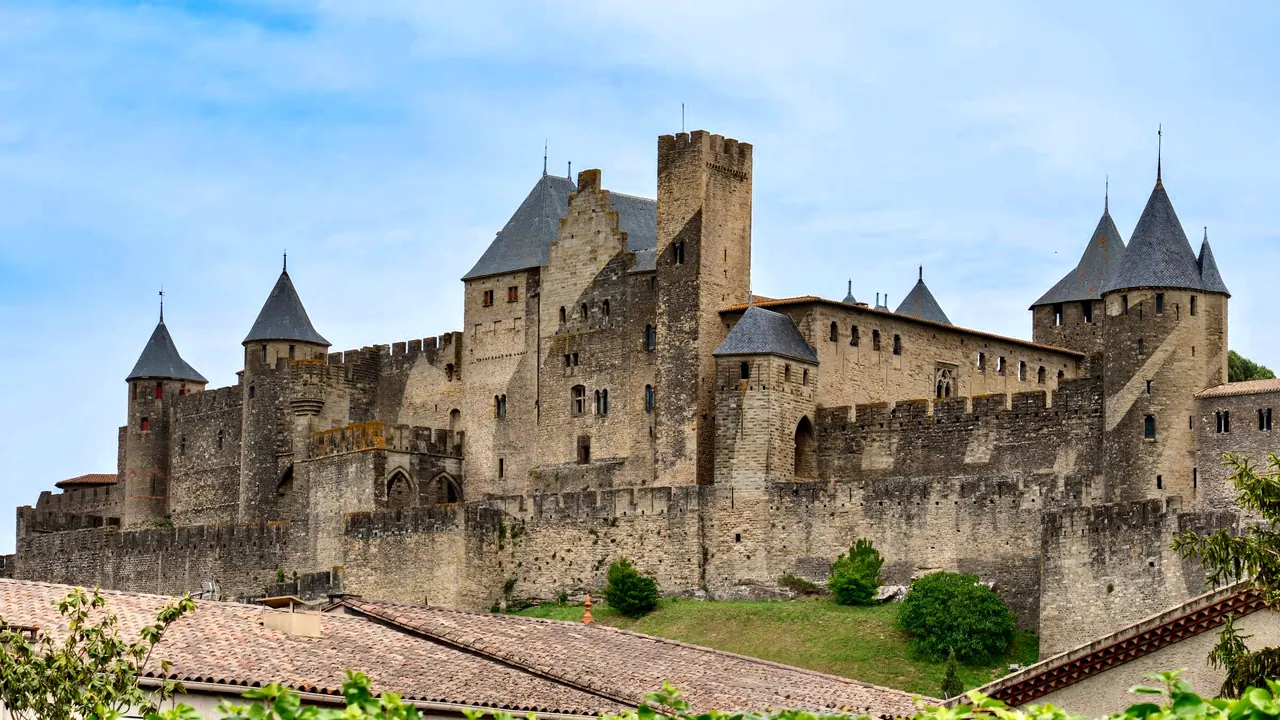
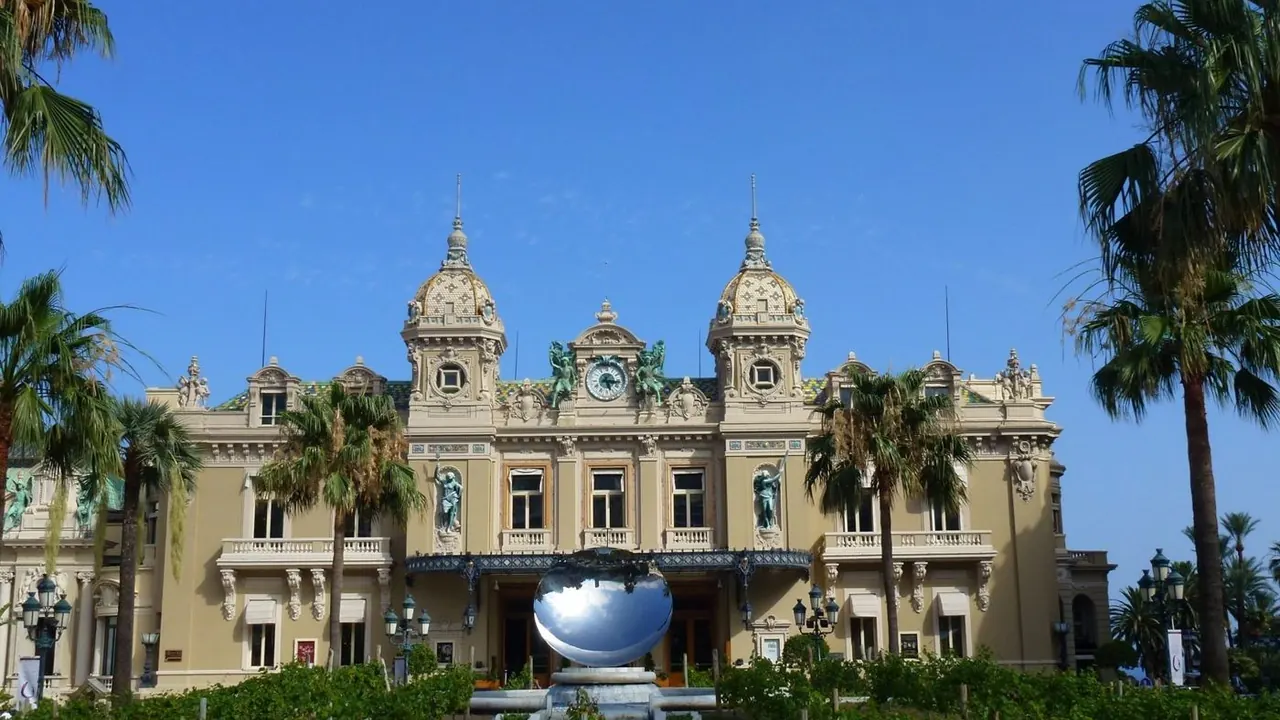
Photos: Carcassonne by Susanne Jutzeler, suju-foto, Pexels License; Monaco by otterboris, CC BY 3.0, cropped.
Carcassonne or Monaco?
Our verdict in twelve categories, each scored against the same fixed benchmark cities, and the climate month by month, so you can choose for your trip.
Choose Carcassonne for
- prices
- culture and sights
Carcassonne is for travellers who want history they can walk into: the double-walled Cité and its ramparts, the arcaded Bastide below, and a countryside of Cathar castles, wine estates and canal towpaths that rewards a hire car. It is a calm, provincial base where money goes a good deal further, and evenings mean a slow dinner rather than a late night.
Choose Monaco for
- live music and the arts
- beaches
- nightlife
Monaco suits a more polished coastal trip. Clear Mediterranean water, opera and ballet at the Salle Garnier, dressed-up evenings around the Casino and a railway that puts the whole Riviera within reach make it the livelier and more varied stay. That holds only if the budget can cope with prices that few places anywhere match.
Scoreboard
Twelve categories on one fixed scale from 0 to 100. The shaded stretch is the gap between the two.
Your match
Pick a travel style or drag the sliders, and both match scores follow your weighting.
Wins on prices and culture and sights with your weighting.
Wins on live music and the arts and beaches with your weighting.
What matters to you?
Category by category
What the scores mean for a trip.
Beaches & swimming
Neither is a true beach destination, but Monaco at least sits on the sea. Larvotto is short and enclosed by breakwaters, yet its water is calm and clear, Cap d'Ail's coves are a walk away and the long beaches of Menton and Nice are a short train ride off.
Carcassonne is inland. Its everyday swim is the Lac de la Cavayère, a lifeguarded reservoir with sandy shores. Reaching the Mediterranean at Gruissan or Narbonne-Plage means about an hour in the car, and the tramontane often whips up the water.
Food & drink
Monaco eats more ambitiously, with an unusual number of starred and grand hotel dining rooms cooking Riviera and Ligurian food, and barbagiuan and socca from the Condamine market. The catch is that casual, cheap meals are scarce and dinner is a dressed-up affair.
Carcassonne is narrower and earthier, built around cassoulet and the reds of Corbières and Minervois, with blanquette de Limoux poured almost everywhere. Eat in the Bastide around Place Carnot rather than inside the Cité, where the set menus aimed at the crowds are uneven.
Culture & sights
Carcassonne has the greater single sight: the double-walled Cité with its fifty-two towers, the rampart walk of the Château Comtal and the Gothic glass of Saint-Nazaire, with the Bastide's grid streets and the UNESCO-listed Canal du Midi below. Whatever you make of Viollet-le-Duc's restoration, it is a real piece of medieval Europe.
Monaco's sights are more mixed but lighter: the Prince's Palace and its guard ceremony, Grace Kelly's grave in the cathedral, the Oceanographic Museum on the cliff and the Casino. Both can be seen in a day or two, but in Monaco the setting impresses more than the depth.
Nightlife
Monaco has a night out and Carcassonne largely does not. In the principality, evenings revolve around the Casino square, the hotel bars and glossy clubs on the Larvotto seafront and the port, peaking in summer and on Grand Prix weekend. You will need to dress up, and there are no casual pubs or dive bars.
Carcassonne's evenings mean a stroll on the floodlit walls and a drink on Place Carnot. That is pleasant but over early, and for clubs people go to Toulouse or Montpellier.
Nature & outdoors
Monaco's outdoors is steep, coastal and close to hand: mule paths climbing from the shore up to Èze, the view from the Tête de Chien, pine-lined footpaths around Cap Martin, and clear water for snorkelling, diving and paddleboarding.
Carcassonne's countryside is broader but needs a car. There is beech forest in the Montagne Noire, garrigue and castle ridges in the Corbières, and rafting in the upper Aude gorges. Its easiest outing is the flat, plane-shaded towpath of the Canal du Midi, ideal by bike.
Day trips
Carcassonne's surroundings are rich but rural: the Cathar castles of Peyrepertuse and Quéribus on their limestone ridges, the abbey village of Lagrasse, Minerve above its gorges and the Corbières wine estates. Toulouse and Narbonne are easy by train, but nearly everything else needs a hire car.
Monaco is the stronger base because so much lies within reach of a train or bus. Villefranche, Nice, Menton and Èze are short hops. Antibes, Saint-Paul-de-Vence and Grasse make longer days, as does Sanremo over the Italian border. The range, from Picasso to perfume to Italian markets, is wider, and you will hardly ever need to drive.
Good for families
Monaco is the easier place with children. It is safe and compact, public lifts do much of the climbing, Larvotto's sheltered water suits small swimmers and the sharks in the aquarium are the highlight. Its weakness is that it is built for adults, with formal restaurants and little to fill more than a couple of days.
Carcassonne has the storybook moment, with drawbridges, jousting and falconry in the Cité, plus a lake beach, a water park and an animal park. But the cobbled, crowded hill is hard going with pushchairs in the summer heat.
Getting around
Monaco is about 3km end to end, and its free lifts, escalators and little harbour ferry tame the steep levels. The station then puts the whole coast within easy reach by train.
Carcassonne's town is just as walkable, with a flat Bastide and a steady twenty-five minute climb to the Cité. Beyond the rail lines to Toulouse and Narbonne, though, the villages and castles are poorly served, so a hire car becomes close to essential.
Shopping & style
Monaco has shopping, though of one kind. The Carré d'Or around the Casino gardens gathers fashion houses, jewellers and watchmakers within a fifteen-minute stroll, with a mall below for mainstream labels, but ordinary high-street shopping barely exists.
Carcassonne offers even less: plastic swords and Cathar trinkets in the Cité and a provincial high street in the Bastide. What is worth taking home is to eat or drink, such as Limoux blanquette, Minervois wine and tinned cassoulet.
Affordability
This is the widest gap between the two. Carcassonne costs what a provincial town in southern France costs, with moderate rooms in the Bastide, good-value lunch menus and cheap local wine. The hotels inside the Cité and the months of July and August are the main exceptions.
Monaco is among the most expensive places anywhere, from hotel rooms down to a café coffee. The free lifts and the walks on the Rock help, but many visitors sleep in Beausoleil or Nice and come in for the day.
Live music & performing arts
Monaco has a serious stage for its size. The Monte-Carlo Opera performs in the gilded Salle Garnier, the orchestra and Les Ballets de Monte-Carlo have international reputations, and the main season runs from winter into spring alongside the Printemps des Arts.
Carcassonne's moment is July, when the Festival de Carcassonne puts concerts and theatre on the open-air stage inside the Cité walls, and the Bastille Day fireworks light up the ramparts. Outside summer there is little beyond the municipal theatre.
Wellness & relaxation
Monaco has a proper place for treatments: the large thalassotherapy centre beside the Casino, with heated seawater pools, and sizeable spas in the grand hotels. Calm mornings in the Japanese Garden round it off.
In Carcassonne, the rest comes from the pace rather than the facilities: canal walks, long lunches and quiet evenings on the walls outside high summer. For thermal water you have to drive to the small spa villages of Rennes-les-Bains or Alet-les-Bains.
When should you go?
Pick your month. The climate figures are measured averages, not a forecast.
Carcassonne in July
Monaco in July
Daytime high, °C
Rainfall in the month, mm
Where the figures come from
Carcassonne has no rain gauge within 25 km of the centre, so its rainfall comes from a gridded climate dataset read at the city rather than from a gauge further away.
Carcassonne's sunshine is measured 68 km from the centre, at Perpignan.
Temperature and rainfall are climate normals, averaged over the years shown. Carcassonne: 1999-2020 (sunshine 1991-2020, rainfall 1991-2020) normals, Carcassonne (2.8 km from centre). Monaco: 1991-2020 normals, Nice (19.9 km from centre).
Both reach the high twenties in July and August, with little rain, but the summers feel different. In Carcassonne the heat bounces off the stone of the Cité, so midday on the ramparts is hard work, and swimming means the lake or a drive to the coast. Monaco has the sea at about 25°C in August, warm enough for bathing from June into September, and it is the sunnier of the two through the summer.
For walking the streets, spring and early autumn suit both. Winter is milder by the sea, with highs of 13°C against 10°C inland. Monaco's autumn is its wet season, though, with October and November the rainiest months at up to 138mm. Carcassonne's rain is spread more evenly across the cooler half of the year.
Which traveller are you?
On a trip on a tight budget, Carcassonne lets the money last. An evening walk around the Cité's walls, the Bastide squares, the canal towpath and a swim in the lake cost little or nothing. In Monaco, even a simple day out feels like an extravagance.
For a food and nightlife trip, Monaco is the better pick. Carcassonne is made for a long lunch with plenty of wine rather than a late night. Monaco offers serious cooking followed by evenings that run late in summer, provided you pack something smart.
On a shopping trip, Monaco is the only real contender. In Carcassonne a shopper has little to do beyond filling the car boot at a wine estate. Monaco gathers luxury fashion and jewellery into a few walkable streets, which suits serious spending or an evening of window-gazing.
Before you go
| Measure | Carcassonne | Monaco |
|---|---|---|
| Official language | French | French |
| Currency | Euro (EUR) | Euro (EUR) |
| Sockets | CE230 V, 50 Hz | CEF230 V, 50 Hz |
| Driving side | Right | Right |
| Time zone | UTC+1, UTC+2 in summer | UTC+1, UTC+2 in summer |
| Emergency number | 112 | 112 |
| Elevation | 81 m | 68 m |
| Main airport | Carcassonne Salvaza Airport (CCF)4 km from centre10 non-stop destinations | Nice-Côte d'Azur Airport (NCE)18 km from centre130 non-stop destinations |
| Public holidays this year | 11 days | 12 days |
By the numbers
| Measure | Carcassonne | Monaco |
|---|---|---|
| City population | 46,080 | 38,857 |
| People per km² | 708 | 18,503 |
| Museums within 10 km | 6 | 14 |
| UNESCO World Heritage sites within 50 km | 2 | 2 |
| Swim season, months above 21 °C | - | 4 months |
Where else could you go?
Every comparison below shares a destination with this one, so you can follow Carcassonne or Monaco somewhere new.
- Nicevs Monaco
- Antibesvs Monaco
- Cannesvs Monaco
- Saint-Tropezvs Monaco
- Toulousevs Carcassonne
- Montpelliervs Carcassonne