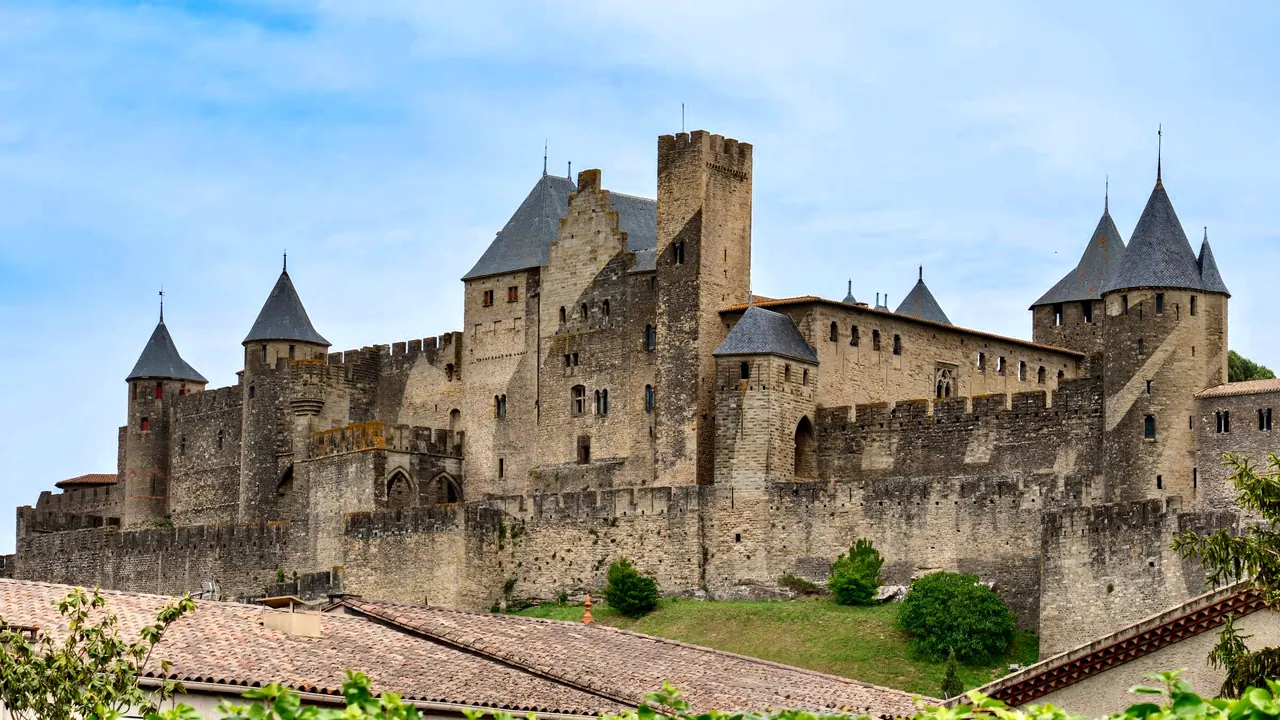
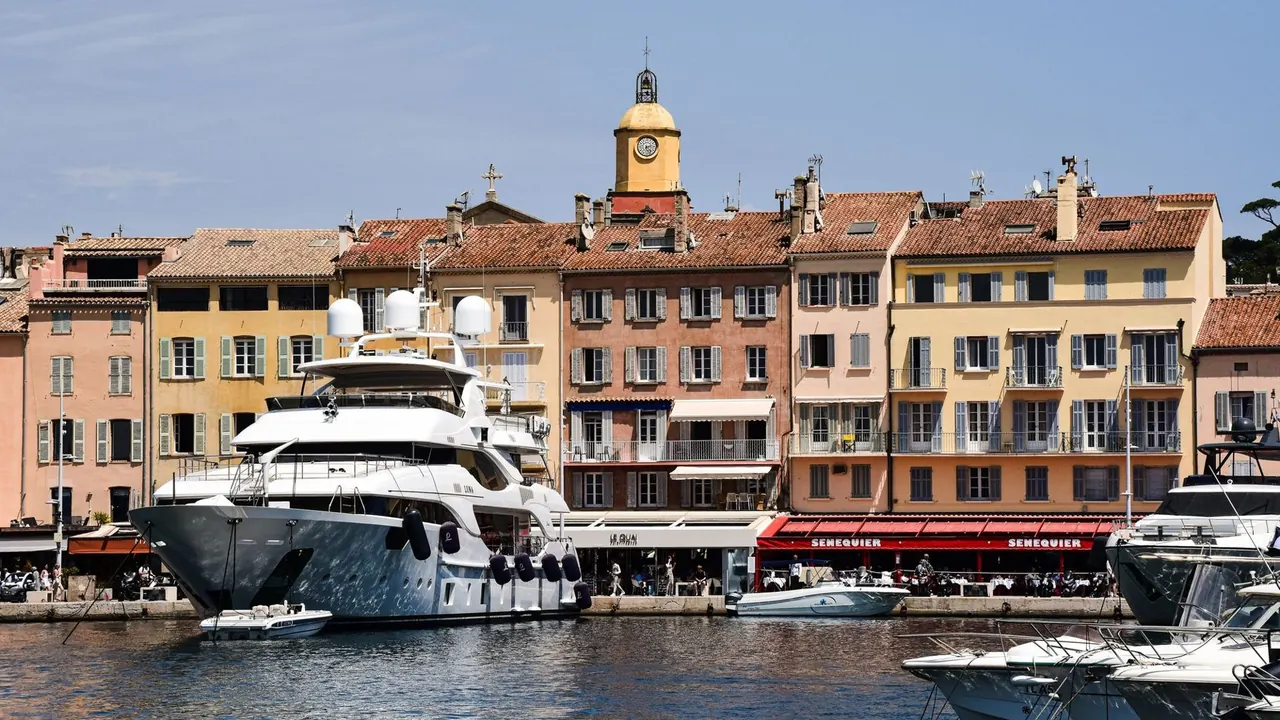
Photos: Carcassonne by Susanne Jutzeler, suju-foto, Pexels License; Saint-Tropez by AXP Photography, Pexels License.
Carcassonne or Saint-Tropez?
Our verdict in twelve categories, each scored against the same fixed benchmark cities, and the climate month by month, so you can choose for your trip.
Choose Carcassonne for
- prices
- culture and sights
- day trips
Carcassonne is the better pick for travellers who care about history and the country around it. The walled Cité and the Bastide below it give you two days of real sightseeing, and the Cathar castles, abbey villages and wine estates of the Corbières and Minervois fill the rest of a week. It costs far less, it has a railway station and it is relaxed with children. The trade-off is that the sea is an hour away and the evenings end early.
Choose Saint-Tropez for
- beaches
- nightlife
- shopping
Saint-Tropez suits a summer trip built around sand, sea and being seen. Pampelonne and the quieter coves to the south are the reason to go, with the coastal path and the islands for walking days, beach-club afternoons running on into harbour nights, and luxury boutiques packed into a few lanes. Come with a generous budget and don't expect much heritage. You will also need patience on the one road in.
Scoreboard
Twelve categories on one fixed scale from 0 to 100. The shaded stretch is the gap between the two.
Your match
Pick a travel style or drag the sliders, and both match scores follow your weighting.
Too close to call, 2 points apart
Wins on prices and culture and sights with your weighting.
Wins on beaches and nightlife with your weighting.
What matters to you?
Category by category
What the scores mean for a trip.
Beaches & swimming
This is the clearest gap between the two. Carcassonne is inland, so a swim means the lifeguarded Lac de la Cavayère just outside town, or an hour's drive to the long, shallow sands of Gruissan and Narbonne-Plage, where the tramontane often roughens the water.
Saint-Tropez is a beach destination in its own right. Pampelonne gives you kilometres of fine sand, mixing beach clubs and public stretches, and further south lie wilder coves along the coast path. The small town beaches of Les Graniers and La Ponche are handy for a quick dip between lunch and the harbour.
Food & drink
The two eat about equally well, but in very different styles. Carcassonne is hearty and inland: cassoulet, Corbières and Minervois reds and Limoux blanquette, best found around the Place Carnot market rather than among the set menus inside the Cité.
Saint-Tropez cooks the lighter Provençal coast: grilled fish, bouillabaisse, aïoli and chilled rosé, plus the tarte tropézienne. Its top tables are more polished, but simple, fairly priced meals are much easier to find in Carcassonne.
Culture & sights
Carcassonne has the far deeper heritage. The Cité's walls and towers are a sight of European rank, and the ramparts walk, the stained glass of Saint-Nazaire and the arcaded Bastide fill two full days.
Saint-Tropez offers a single strong museum, the Annonciade, with its pointillist and Fauvist harbour scenes. Add the citadel's maritime collection and a stroll through La Ponche, and it is done in a day. People go there for the setting, not the monuments.
Nightlife
Saint-Tropez has a real night out in summer, Carcassonne largely does not. In Carcassonne an evening means a floodlit walk on the walls and a glass on a terrace around Place Carnot, and anyone wanting clubs takes the train to Toulouse.
In Saint-Tropez, beach-club afternoons at Pampelonne roll into champagne on the harbour and clubs that run until dawn. It is a dressed-up, table-service scene rather than a bar crawl, and it largely stops when the season ends in autumn.
Nature & outdoors
Both have good walking country, but Saint-Tropez's is more rewarding and easier to reach. The coastal path rings the peninsula past pine-backed coves to the capes of Camarat and Taillat, the Massif des Maures lies inland, and snorkelling, sailing and the national park islands of Port-Cros and Porquerolles add a sea side to the outdoors.
Carcassonne's landscape is drier and more rugged: the Corbières garrigue, the forests of the Montagne Noire and Pyrenean gorges with summer rafting. Beyond the flat, shady canal towpath, nearly all of it needs a car.
Day trips
Carcassonne is the better base for days out. Peyrepertuse, Quéribus and Lastours are among the most dramatic castle ruins in France, Toulouse and Narbonne are easy by train, and Lagrasse, Minerve, Mirepoix and Albi make a week of varied outings.
Saint-Tropez's excursions are pleasant but smaller in scale: the hilltop villages of Ramatuelle and Gassin, boat crossings to Port Grimaud and Sainte-Maxime, and a fuller day to Porquerolles. Summer traffic on the gulf road eats into all of them.
Good for families
Carcassonne is the easier choice with children. A real castle with drawbridges, jousting and falconry, a supervised lake beach with a water park, and an animal park make a good mix, as long as you avoid the midday heat on the cobbles.
Saint-Tropez's gently shelving sands at Pampelonne and Gigaro are excellent for small children. Almost everything else in town is built for adults, though, and the cost and traffic lead many families to stay across the gulf instead.
Getting around
Carcassonne is the easier place to arrive in and move about. Trains pull in at the edge of the flat Bastide, the Cité is under half an hour's walk away or a short ride on the seasonal shuttle, and Toulouse and Narbonne make simple outings by rail. Only the castles and wine villages really call for a car or a tour.
Saint-Tropez is just as easy on foot once you are there, but there is no station at all. Getting there means a drive, a slow bus from Saint-Raphaël or Toulon, or a boat across the gulf. In Carcassonne the train covers your longer trips, but here even a day on the sand at Pampelonne needs a scooter, a bicycle or a taxi.
Shopping & style
Saint-Tropez is far stronger for shopping. Major fashion houses, resort-wear labels and jewellers fill the lanes behind the port, hand-stitched Tropézienne sandals are still made in the old town, and the Place des Lices market adds linen, baskets and pottery.
Carcassonne offers souvenir swords in the Cité and an ordinary provincial high street in the Bastide. The best things to bring home from there are cassoulet, wine and blanquette.
Affordability
There is a wide gap in cost. Carcassonne is a moderately priced provincial town, with good-value set lunches, cheap local wine and a walkable centre. Only hotels inside the Cité and the peak summer weeks push spending up.
Saint-Tropez is expensive in every way: rooms, beach loungers, harbourside meals and even a coffee on the port. Taxis or parking add to the bill. Staying inland or across the gulf and picnicking from the market is how budget travellers manage it.
Live music & performing arts
Neither town is a place for culture after dark, but Carcassonne has a little more. Its July festival puts concerts, theatre and dance on the open-air stage inside the Cité walls, Bastille Day fireworks light up the ramparts, and the municipal theatre keeps a small programme going the rest of the year.
Saint-Tropez has summer concerts in gardens and at the citadel, plus the Bravade procession each May. Beyond that, there is little to see until Toulon or Nice.
Wellness & relaxation
Neither has a bathing tradition, so the calm both offer comes from the season more than from spas. Carcassonne's restful side is canal walks and quiet evenings on the walls, and the modest thermal villages of the upper Aude are within an hour's drive.
Saint-Tropez relies on polished luxury hotel spas. In May, June and September it becomes a calm place of long lunches and pétanque under the plane trees.
When should you go?
Pick your month. The climate figures are measured averages, not a forecast.
Carcassonne in July
Saint-Tropez in July
Daytime high, °C
Rainfall in the month, mm
Where the figures come from
Carcassonne has no rain gauge within 25 km of the centre, so its rainfall comes from a gridded climate dataset read at the city rather than from a gauge further away.
Carcassonne's sunshine is measured 68 km from the centre, at Perpignan.
Saint-Tropez has no rain gauge within 25 km of the centre, so its rainfall comes from a gridded climate dataset read at the city rather than from a gauge further away.
Saint-Tropez's sunshine is measured 62 km from the centre, at Nice.
Temperature and rainfall are climate normals, averaged over the years shown. Carcassonne: 1999-2020 (sunshine 1991-2020, rainfall 1991-2020) normals, Carcassonne (2.8 km from centre). Saint-Tropez: 1999-2020 (sunshine 1991-2020, rainfall 1991-2020) normals, Le Luc (24.2 km from centre).
Both towns are at their best in late spring and early autumn, but they peak differently in summer. Carcassonne reaches about 29°C in July and August. That is fine for the lake but hard work on the exposed ramparts, so May, June and September are the comfortable months for walking the Cité and the hills. Rain comes mainly in October and through the winter, when days are cool, grey and quiet.
Saint-Tropez is hotter and sunnier at every point in the year, with highs near 32°C in July and August. The sea is warm enough for proper swimming from June to September and peaks around 24°C in August. June and September are the sweet spot, with warm water and less heat. Autumn turns wet quickly, with November the rainiest month at about 155mm, while winter is milder here than inland Carcassonne.
Which traveller are you?
On a beach and sun trip, Saint-Tropez wins easily. Long sandy Pampelonne, sheltered coves such as Escalet and Gigaro, clear water and a summer of reliable sunshine are all on hand, while Carcassonne offers a reservoir beach and a drive to the coast.
For a culture and arts trip, Carcassonne is the stronger base. You get the double-walled Cité with its castle and Gothic basilica, the medieval Bastide and the Canal du Midi, and the Cathar castles within reach. Saint-Tropez has one fine painting museum and a citadel.
On a tight budget, Carcassonne is the realistic choice. Rooms in the Bastide, local wine and lunchtime set menus are all moderately priced, and the town is walkable. Saint-Tropez is among the costliest places on the Mediterranean, and even day visitors pay heavily.
Before you go
| Measure | Carcassonne | Saint-Tropez |
|---|---|---|
| Official language | French | French |
| Currency | Euro (EUR) | Euro (EUR) |
| Sockets | CE230 V, 50 Hz | CE230 V, 50 Hz |
| Driving side | Right | Right |
| Time zone | UTC+1, UTC+2 in summer | UTC+1, UTC+2 in summer |
| Emergency number | 112 | 112 |
| Elevation | 81 m | 0 m |
| Main airport | Carcassonne Salvaza Airport (CCF)4 km from centre10 non-stop destinations | Nice-Côte d'Azur Airport (NCE)64 km from centre130 non-stop destinations |
| Public holidays this year | 11 days | 11 days |
By the numbers
| Measure | Carcassonne | Saint-Tropez |
|---|---|---|
| City population | 46,080 | 3,582 |
| People per km² | 708 | 320 |
| Museums within 10 km | 6 | 4 |
| UNESCO World Heritage sites within 50 km | 2 | 0 |
| Swim season, months above 21 °C | - | 3 months |
Where else could you go?
Every comparison below shares a destination with this one, so you can follow Carcassonne or Saint-Tropez somewhere new.
- Cannesvs Saint-Tropez
- Antibesvs Saint-Tropez
- Nicevs Saint-Tropez
- Monacovs Saint-Tropez
- Toulousevs Carcassonne
- Aix-en-Provencevs Saint-Tropez