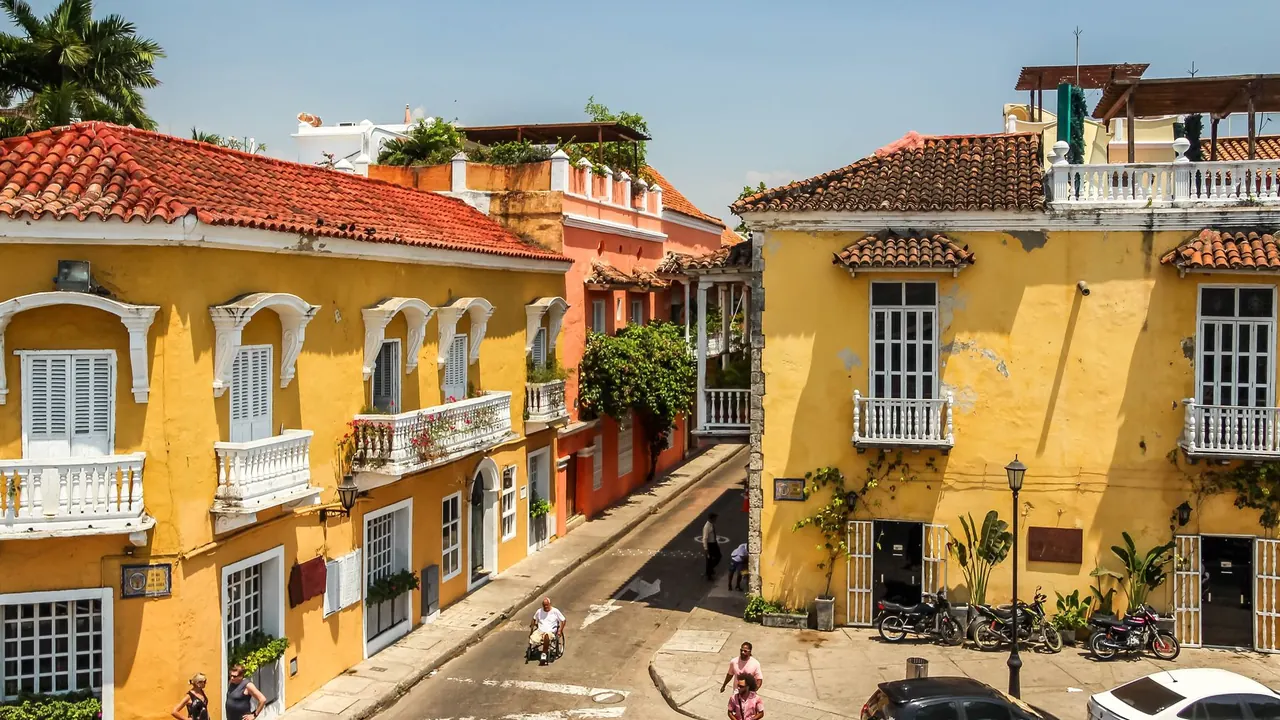
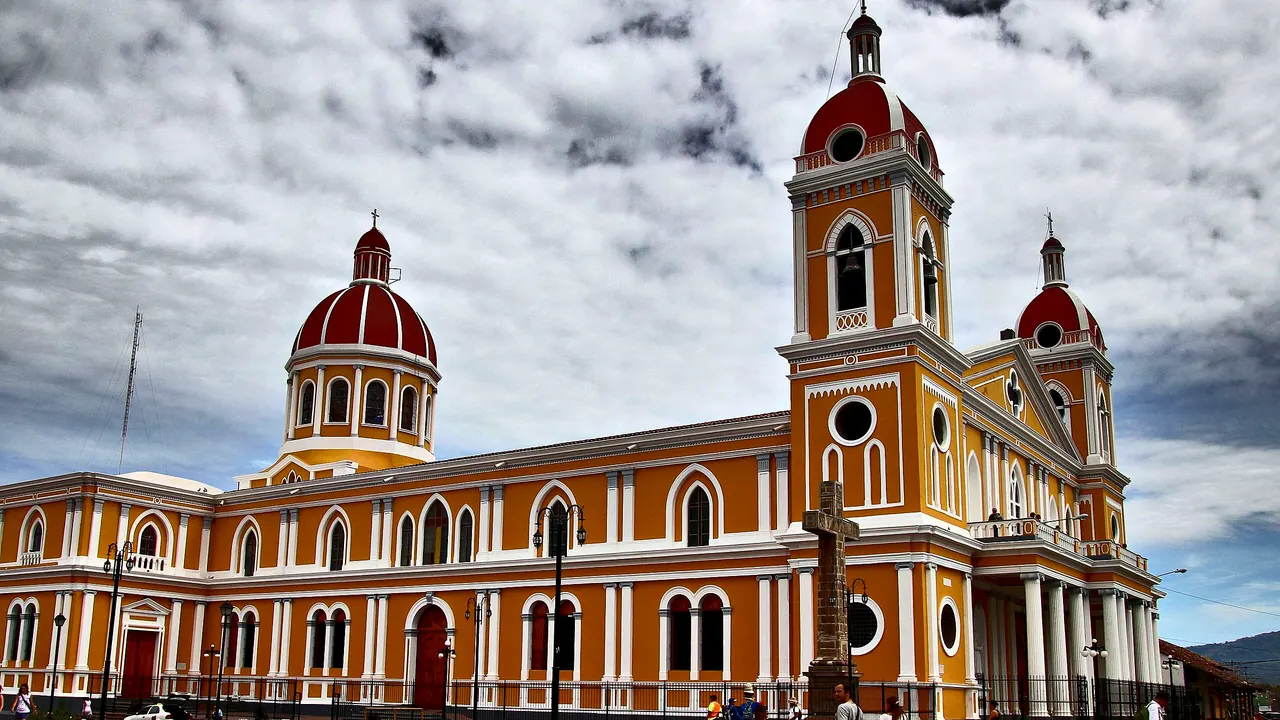
Photos: Cartagena by Dr. Thomas Liptak, CC BY-SA 4.0, cropped; Granada, Nicaragua by Guillaume Baviere from Uppsala, Sweden, CC BY-SA 2.0, cropped.
Cartagena or Granada, Nicaragua?
Our verdict in twelve categories, each scored against the same fixed benchmark cities, and the climate month by month, so you can choose for your trip.
Choose Cartagena for
- nightlife
- beaches
- live music and the arts
Cartagena suits travellers who want the Caribbean with a real city attached. The walled old town is grand enough to fill two or three days. Getsemaní and the streets around the Clock Tower keep going late with salsa and rooftop bars, and boats run out to the clear water of the Rosario Islands and Playa Blanca. It costs more, and the touts and heat are tiring, but there is more to eat, drink and do after dark.
Choose Granada, Nicaragua for
- nature and the outdoors
- prices
- day trips
Granada is the better pick for a slower, cheaper trip built around the land rather than the sea. Its colonial grid is smaller and quieter, and most evenings end early. In return, Mombacho's cloud forest, the islets of Lake Nicaragua, Masaya's steaming crater and a swim in Laguna de Apoyo are all close by, and a budget goes much further here.
Scoreboard
Twelve categories on one fixed scale from 0 to 100. The shaded stretch is the gap between the two.
Your match
Pick a travel style or drag the sliders, and both match scores follow your weighting.
Wins on nightlife and beaches with your weighting.
Wins on nature and the outdoors and prices with your weighting.
What matters to you?
Category by category
What the scores mean for a trip.
Beaches & swimming
Cartagena has the real beaches, just not in town. Bocagrande has darkish sand and water clouded by river sediment, fine for a quick dip. Boats take an hour or less to reach the pale sand and turquoise coves of the Rosario Islands and Playa Blanca on Baru, so a proper Caribbean beach day fits easily into a stay.
Granada's lakefront is for strolling, not swimming. The place to swim is the clear, calm crater water of Laguna de Apoyo, which is lovely for a lazy day off a dock but is a lake, not a beach. The Pacific sand around San Juan del Sur is a separate trip.
Food & drink
Cartagena eats better and offers more range. There is fried fish with coconut rice, ceviche from street carts and the sweet stalls of the Portal de los Dulces. Inside the walls, a tier of modern Colombian restaurants occupies restored colonial houses, and Getsemaní covers the cheaper end.
Granada is street eating and not much more. Vigorón from the kiosks by the central park and the evening fritanga grills are worth seeking out. The tourist restaurants on La Calzada are uneven, though, and there is no fine dining worth planning a night around.
Culture & sights
Both are colonial towns of painted houses, best enjoyed on foot, and neither is a museum city. Cartagena's is grander, with balconied streets, 11km of walkable ramparts and the vast Castillo San Felipe on its hill. There is more to see, and on a larger scale.
Granada is lower and quieter, with single-storey courtyard houses on streets leading to the yellow cathedral. The highlights are the view from La Merced's bell tower across to Mombacho and the pre-Columbian statues in the San Francisco convent, and two days covers the town comfortably.
Nightlife
This is where the two differ most. Cartagena's nights run late. They start on the steps of the Plaza de la Trinidad in Getsemaní and move on to salsa bars, champeta parties and the clubs near the Clock Tower, with party boats and chivas carrying a band on board. Touts come with all of it.
Granada's night out is a few blocks of La Calzada, with cheap rum at street tables, hostel bars and a couple of weekend clubs. It is sociable and easy, but on weeknights most of the town is quiet before midnight, and two nights out are enough to see it all.
Nature & outdoors
Granada is far stronger outdoors. Mombacho's cloud-forest trails rise just south of town, and you can kayak among the Isletas past herons and fishing villages. At Masaya you can look into an active crater, and Laguna de Apoyo is made for paddling.
Cartagena's best nature is underwater, with snorkelling and diving on the worn reefs of Corales del Rosario. It also has canoe trips through the mangroves at La Boquilla and kitesurfing in the windy months. Inland the land is flat and farmed, and the Totumo mud volcano is the only real outing.
Day trips
Granada has the better range of outings. Masaya's craft market and Monimbó quarter are half an hour away. Beyond them are the pottery workshops of San Juan de Oriente and the Catarina lookout over Apoyo, and Managua or the Pacific at San Juan del Sur make a longer day. None is a major heritage site, but there is variety.
From Cartagena there are few trips by land. San Basilio de Palenque, with its own language and music, makes a worthwhile half day. Mompox and Santa Marta need an overnight stay, and most outings are really boat trips to the islands.
Good for families
Neither city is built for children: there are no theme parks, and both are hot all year. Cartagena comes out a little ahead thanks to its island beaches with calm, warm water, the National Aviary on the way to Playa Blanca and carriage rides beside the ramparts.
Granada has some good days out of its own: the monkey island among the Isletas, a swim at Apoyo and the steaming rim of Masaya. But medical care outside Managua is basic, so it suits older, adaptable children better than toddlers.
Getting around
Both centres are compact and quick to cross on foot, with cheap taxis and horse carriages for the hot hours and narrow, uneven pavements. Cartagena is easier overall. The old town, San Diego and Getsemaní sit side by side, Bocagrande is a short taxi ride away, and the island boats leave from a set terminal.
Granada is harder to get out of. The buses to Masaya and Managua are crowded former school buses leaving from informal terminals, so most visitors book shuttles or drivers for the volcanoes and Apoyo.
Shopping & style
Cartagena has more to buy. Wayuu mochilas and sombreros vueltiaos fill the vaulted shops of Las Bóvedas, and emerald jewellers trade around the Plaza de Bolívar. There are also designer boutiques for linen and swimwear, and malls in Bocagrande for anything else.
Granada sells regional crafts such as hammocks, Pueblos Blancos pottery, cigars and coffee, but the artisan market in Masaya has the better choice, and there are no fashion streets at all.
Affordability
Granada is clearly cheaper. Guesthouses, local eateries, taxis and volcano tours all cost very little, and even its hotels in restored mansions feel inexpensive to European or North American visitors.
Cartagena is Colombia's most expensive city. Its boutique hotels inside the walls charge close to European rates, especially at Christmas, New Year and Easter. Staying in Getsemaní and eating street food makes it good value again, but agree prices with hawkers and boatmen before you go.
Live music & performing arts
Neither city has much of a stage season, but Cartagena has more. The ornate Teatro Adolfo Mejía hosts concerts and dance, and a classical festival every January brings international performers to churches and courtyards. Salsa bands play in Getsemaní and cumbia dancers perform in the plazas each evening.
In Granada the music is mostly marimba players and folkloric dancers entertaining diners on La Calzada, plus religious processions and patron saint festivities. There is nothing to book ahead.
Wellness & relaxation
Neither town has a spa culture, and Cartagena's streets are the noisier of the two, but it gives you more ways to switch off. Day spas in Bocagrande and inside the walls, cheap massages on the sand and the plunge pools of the old-town courtyard hotels are all close at hand, and a night or two on the Rosario Islands, with nothing to do but swim and doze, is the calmest way to spend part of a stay.
Granada is the gentler town to be in, with quiet streets once the heat breaks, but its treatments come down to a few massage studios and hotel spas. Its answer to Cartagena's islands is Laguna de Apoyo, where lodges by the crater lake offer yoga and massage between swims, and you can go for a day or stay a few nights. The islands need a boat and give you the Caribbean, while Apoyo is a short drive away and gives you calm, clear fresh water.
When should you go?
Pick your month. The climate figures are measured averages, not a forecast.
Cartagena in July
Granada, Nicaragua in July
Daytime high, °C
Rainfall in the month, mm
Where the figures come from
Granada, Nicaragua's temperatures are measured 34 km from the centre, at Managua A. C. Sandino.
Granada, Nicaragua has no rain gauge within 25 km of the centre, so its rainfall comes from a gridded climate dataset read at the city rather than from a gauge further away.
Temperature and rainfall are climate normals, averaged over the years shown. Cartagena: 1991-2020 normals, Cartagena / Rafael Nunez (3.1 km from centre). Granada, Nicaragua: 1961-1990 (sunshine 1991-2020, rainfall 1991-2020) normals, Managua A. C. Sandino (33.7 km from centre).
Both cities have a dry season from December to April and a wet season from May to November, and in both the rain peaks in October. Cartagena gets 241mm that month and Granada a heavier 329mm. Cartagena's temperature hardly changes, with highs around 30°C all year and a warm sea in every month. Its dry, sunny months from December to March are the best for island days and walking the ramparts, and the steady winds of that season keep the coast breezy.
Granada lies inland and runs hotter. The dry season builds to 35°C in April, when walking the streets in the afternoon becomes hard work. December and January are the most comfortable months there, dry and a little less fierce, and the best for volcano walks. Granada's wet season is also heavier than Cartagena's, so there is less reason to go outside the dry months.
Which traveller are you?
For a food and nightlife trip, Cartagena is well ahead. You get ceviche and arepas de huevo from street carts, modern Colombian cooking in colonial houses, and then salsa bars, champeta and rooftop cocktails until late. Granada has good vigorón and a few relaxed nights on La Calzada, and little after that.
On an outdoors trip, Granada is the clear choice. Mombacho's cloud-forest trails, kayaking among the Isletas, the rim of Masaya's active crater and paddling on Laguna de Apoyo are all close by. Around Cartagena the land is flat farmland, so outdoor time there means snorkelling and the mangroves.
On a trip on a tight budget, Granada makes money go further. Guesthouses, street food, taxis and volcano tours all cost little, and even the smarter hotels feel cheap. Cartagena can be done cheaply from a hostel in Getsemaní, but the old town's top tier charges close to European prices.
Before you go
| Measure | Cartagena | Granada, Nicaragua |
|---|---|---|
| Official language | Spanish | Spanish |
| Currency | Colombian Peso (COP) | Cordoba Oro (NIO) |
| Sockets | AB110 V, 60 Hz | AB120 V, 60 Hz |
| Driving side | Right | Right |
| Time zone | UTC-5 | UTC-6 |
| Emergency number | 123 | Police 118, ambulance 128, fire 115/120 |
| Elevation | 2 m | 73 m |
| Main airport | Rafael Nuñez International Airport (CTG)2 km from centre27 non-stop destinations | Augusto C. Sandino (Managua) International Airport (MGA)33 km from centre11 non-stop destinations |
| Public holidays this year | 19 days | 12 days |
By the numbers
| Measure | Cartagena | Granada, Nicaragua |
|---|---|---|
| City population | 914,552 | 105,171 |
| People per km² | 1,599 | 178 |
| Museums within 10 km | 2 | 1 |
| UNESCO World Heritage sites within 50 km | 1 | 0 |
| Swim season, months above 21 °C | 12 months | 12 months |
Where else could you go?
Every comparison below shares a destination with this one, so you can follow Cartagena or Granada, Nicaragua somewhere new.
- Leon, Nicaraguavs Granada, Nicaragua
- Santa Martavs Cartagena
- Tamarindovs Granada, Nicaragua
- Santa Teresa, Costa Ricavs Granada, Nicaragua
- San Jose, Costa Ricavs Granada, Nicaragua
- Medellinvs Cartagena