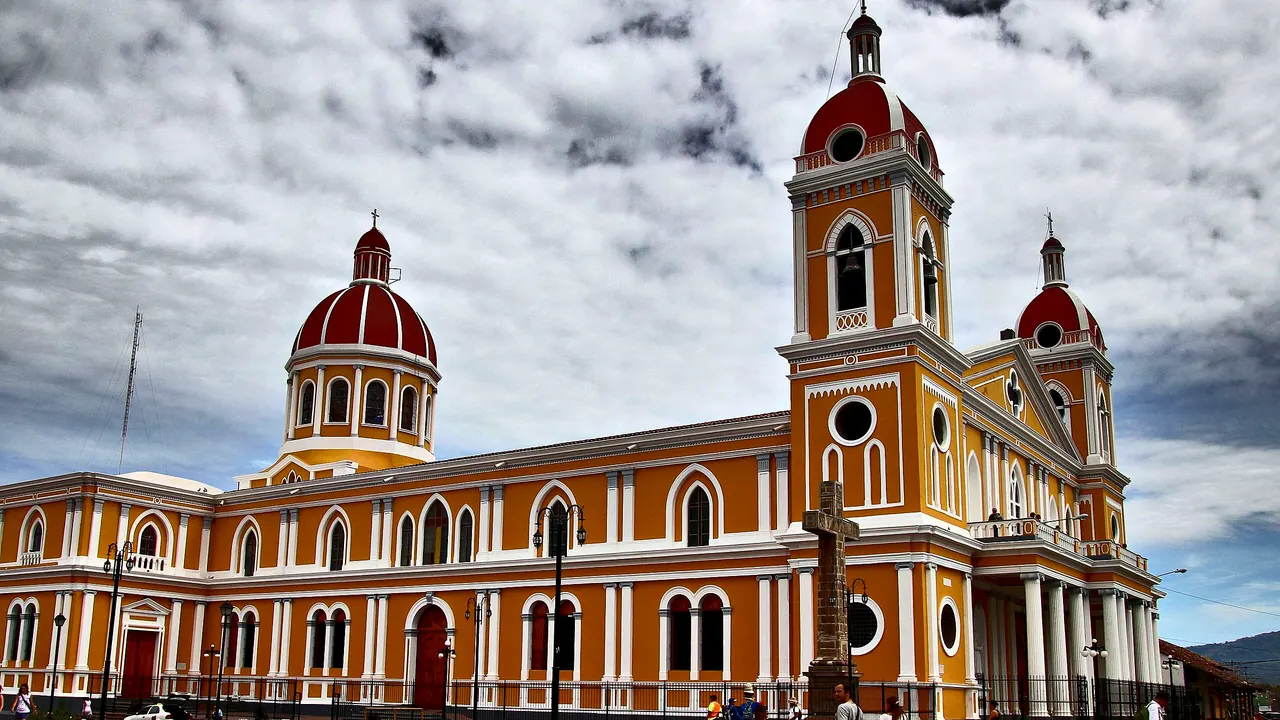
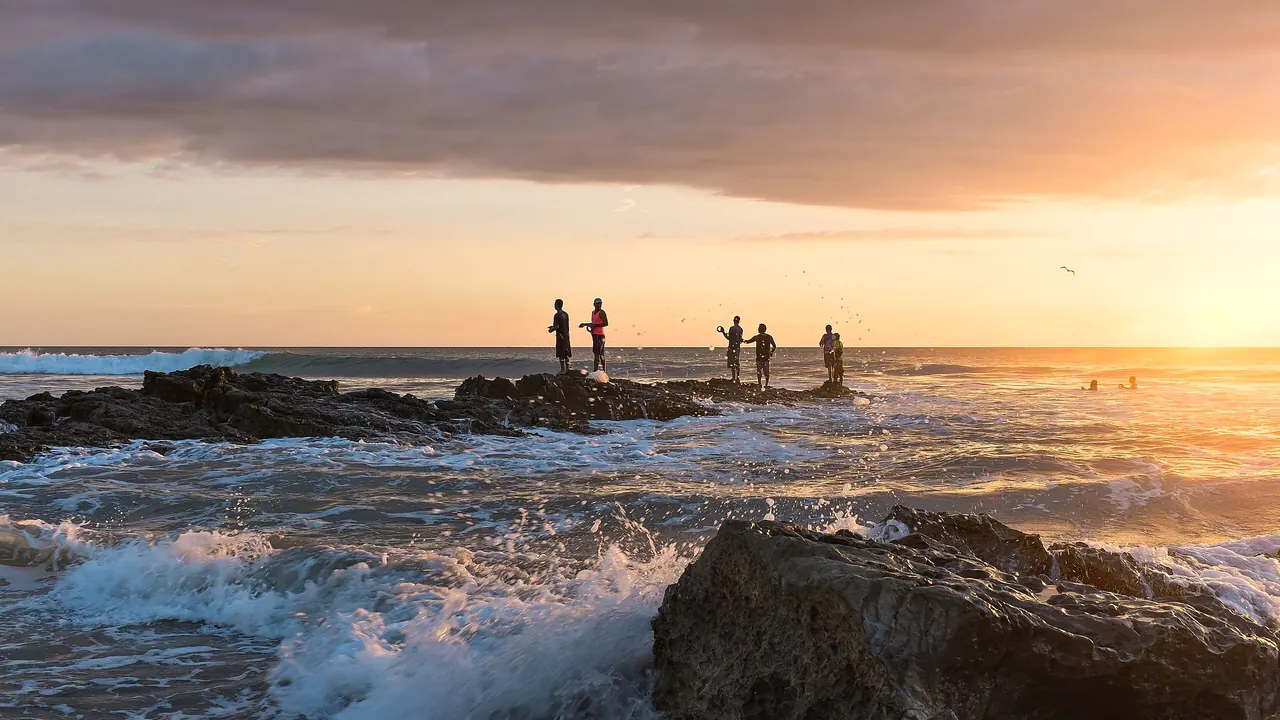
Photos: Granada, Nicaragua by Guillaume Baviere from Uppsala, Sweden, CC BY-SA 2.0, cropped; Santa Teresa, Costa Rica by Christopher Crouzet, CC BY-SA 4.0, cropped.
Granada, Nicaragua or Santa Teresa, Costa Rica?
Our verdict in twelve categories, each scored against the same fixed benchmark cities, and the climate month by month, so you can choose for your trip.
Choose Granada, Nicaragua for
- prices
- culture and sights
- day trips
Granada is the better pick for travellers who want a town to explore. Its colonial streets, churches and courtyard houses are easy to walk, the volcanoes, crater lake and craft towns around it make good short outings, and it costs very little to stay, eat and get about. It suits a first look at Central America, a culture-minded trip or a tight budget, provided you don't need a proper beach on the doorstep.
Choose Santa Teresa, Costa Rica for
- beaches
- wellness
- nature and the outdoors
Santa Teresa is for people who want the Pacific and not much else. Days run around surf, tides and sunset on a long, wild beach, with yoga shalas in the forest and monkeys in the trees. It costs a lot, it is hard to reach and awkward to get around without a quad, and there is nothing to sightsee. For a week of surfing, swimming in rock pools and slowing down, though, Granada has nothing like it.
Scoreboard
Twelve categories on one fixed scale from 0 to 100. The shaded stretch is the gap between the two.
Your match
Pick a travel style or drag the sliders, and both match scores follow your weighting.
Wins on prices and culture and sights with your weighting.
Wins on beaches and wellness with your weighting.
What matters to you?
Category by category
What the scores mean for a trip.
Beaches & swimming
Granada has a lakeside promenade but nowhere to swim in town. Swimming days are spent at Laguna de Apoyo, a calm, clear crater lake about half an hour away, with docks and lodges. That makes for a lovely lazy day, but it isn't the sea, and the Pacific sand around San Juan del Sur is a separate trip two hours south.
In Santa Teresa the beach is the whole point: a long stretch of pale sand running into Playa Carmen and Mal País, with forest reaching almost to the tideline. The catch is the surf, because rip currents make open swimming risky on many days, so careful swimmers stick to the Mal País rock pools at low tide or the sheltered corners near the points.
Food & drink
Neither town is somewhere you would travel to for the food, but they eat in very different ways. Granada is about cheap street food and local dishes: vigorón on a banana leaf by the central park, nacatamales, fritanga grills in the evening and fresh cacao drinks. The restaurants on La Calzada are hit and miss.
Santa Teresa has almost no street food or market. What it has instead is an international strip of thatched cafés serving wood-fired pizza, poke, Israeli plates and good coffee, along with local sodas for a casado with the fish of the day.
Culture & sights
Granada is a place where the streets are the main sight. Most of a day goes on wandering: catching a courtyard through an open doorway, climbing a church tower for the view over the rooftops, walking from Xalteva to the little La Pólvora fortress to see how a Spanish colonial grid was laid out. It suits people who enjoy looking around a town at their own pace. If you are after major museums, you will find the town's few highlights easy to fit into a long weekend.
In Santa Teresa, a sightseer will find nothing to put on a list: no old buildings, no landmarks, no collections. The interest is in how people live there, a surf village shaped by people who arrived from around the world and stayed, set against the forest and the open coast. If history and architecture matter on your trip, plan them for another stop and let Santa Teresa be the part where you put the guidebook away.
Nightlife
Both are small and easy-going after dark, but the evenings feel different. In Granada, nights mean tables out on La Calzada, cheap rum, hostel bars and some salsa and reggaeton at weekends. You can walk it all, and it goes quiet early on weeknights.
Santa Teresa begins with sunset drinks on the sand, then follows a party circuit that moves between a few venues during the week, with DJ nights and jungle parties that can run late. Getting home means a quad or a taxi on unlit roads, and plenty of surfers are in bed early anyway.
Nature & outdoors
Santa Teresa has a slight edge for outdoor days, mainly because of the water. It has dependable surf from beginner breaks at Playa Carmen to reef and point waves, snorkelling trips to Isla Tortuga, the forest trail through Cabo Blanco reserve to a remote beach, and Montezuma's waterfalls close by. Howler monkeys and coatis often turn up in the dry forest behind the beach.
Granada's strength is volcanic scenery, which the flat Nicoya coast doesn't have. You can walk Mombacho's cloud forest among orchids and misty craters, drive to the steaming rim of Masaya's active crater, and kayak around Las Isletas past herons and fishing villages.
Day trips
Granada is much the better base for outings. Masaya's craft market and the Monimbó quarter are half an hour away, the Pueblos Blancos offer pottery workshops at San Juan de Oriente and the Catarina lookout over Apoyo, and Managua and the Pacific coast are both manageable in a day.
Santa Teresa sits near the remote tip of the Nicoya Peninsula. Apart from an afternoon in Montezuma, nearly every excursion goes to a reserve, an island or a waterfall rather than another town, and anything further away means a ferry and a long day.
Good for families
Both work best for outdoorsy families with older children, and both have basic medical care and no attractions built for children. Granada's highlights are a carriage ride around the centre, the boat to the islet where monkeys live, a calm swim at Apoyo and peering into Masaya's crater, but the narrow broken pavements and constant heat are hard work with toddlers.
Santa Teresa offers monkeys in the trees, rock pools and surf lessons in the gentle white water. On the other hand, the open sea is often too rough for young swimmers, and the main road has no pavements and a steady stream of quads.
Getting around
Getting around is far easier in Granada. The compact grid means the cathedral, Xalteva and the lakefront are all a few minutes' walk apart, with cheap taxis or a horse carriage when the afternoon gets too hot. Going further afield by painted school bus takes some working out, which is why most visitors use shuttles or drivers.
In Santa Teresa everything is strung along one rough road with no pavements and no local transport, so most visitors rent a quad or scooter. Even getting there takes effort, by car ferry to Paquera or a small plane to Tambor.
Shopping & style
Granada is the better place to shop, as long as you want crafts. Hammocks, Pueblos Blancos pottery, rocking chairs, cigars, coffee and rum are sold around the park and on La Calzada, and the artisan market in Masaya has a wider choice. Santa Teresa's boutiques are fine for swimwear, linen and a new surfboard, but there is little local craft to take home.
Affordability
Granada is far cheaper. Courtyard guesthouses, street food, taxis, buses and volcano or island tours all cost little, and even the boutique hotels in restored mansions seem reasonable to visitors from Europe or North America.
Santa Teresa is expensive even by Costa Rican standards. Villas, boutique hotels and international cafés charge close to North American prices, and the journey there, quad hire, surf lessons and boat trips all add to the bill. You can keep costs down with hostels, shared surf houses and the sodas, but it never becomes a budget destination.
Live music & performing arts
Neither town has a theatre or concert season, but Granada has a little more on. Marimba players and folkloric dancers perform around the park and on La Calzada, and processions and patron saint festivities bring out music and costumed dances. In Santa Teresa, live music means an acoustic set in a beach bar, fire dancing and drumming at sunset, or a DJ at the weekly parties.
Wellness & relaxation
Santa Teresa is the place for a restorative trip. Yoga shalas sit in the forest above the beach, retreat centres run week-long programmes, and breathwork and massage are easy to find. Days settle into a calm pattern of surf, rest and sunset, which is most peaceful if you stay up the hill away from the dusty main road.
Granada offers a slow pace rather than a wellness scene: a rocking chair in a shaded courtyard, a dip in the hotel pool and an evening walk once the heat lifts. For yoga and massage you go to the lodges at Laguna de Apoyo.
When should you go?
Pick your month. The climate figures are measured averages, not a forecast.
Granada, Nicaragua in July
Santa Teresa, Costa Rica in July
Daytime high, °C
Rainfall in the month, mm
Where the figures come from
Granada, Nicaragua's temperatures are measured 34 km from the centre, at Managua A. C. Sandino.
Granada, Nicaragua has no rain gauge within 25 km of the centre, so its rainfall comes from a gridded climate dataset read at the city rather than from a gauge further away.
Santa Teresa, Costa Rica's temperatures are measured 52 km from the centre, at Puntarenas.
Santa Teresa, Costa Rica has no rain gauge within 25 km of the centre, so its rainfall comes from a gridded climate dataset read at the city rather than from a gauge further away.
Temperature and rainfall are climate normals, averaged over the years shown. Granada, Nicaragua: 1961-1990 (sunshine 1991-2020, rainfall 1991-2020) normals, Managua A. C. Sandino (33.7 km from centre). Santa Teresa, Costa Rica: 1961-1990 (sunshine 1981-2010, rainfall 1991-2020) normals, Puntarenas (51.5 km from centre).
Both places follow the same Central American pattern, dry from December to April and wet from May to October, and both stay hot all year. Granada hardly sees rain in the first months of the year. December to February are the most comfortable months for walking the colonial grid, before the heat builds to about 35°C in April. The rains arrive in May and peak in October at around 329mm, but Granada keeps more sunshine through the wet months than the coast does, and the water at Apoyo stays warm in any season.
Santa Teresa's beach season is the same dry stretch, with bright water and almost no rain from December to April, though the middays are fierce. Its green season is wetter than Granada's, reaching about 401mm in September and still raining heavily into November, when the roads turn to mud. The sea holds at around 29°C all year, so the rainy months still work for surfers who don't mind the bigger swell and the grey afternoons.
Which traveller are you?
On a beach and sun trip, Santa Teresa is the clear choice. It has a long sandy Pacific shore, warm water and surf breaks for every level. Granada's own lakefront isn't for swimming, so beach days there mean a crater lake or a two-hour trip to the coast.
For a culture and arts trip, choose Granada. It is one of the oldest colonial cities on the mainland, with painted houses, the cathedral, La Merced's bell tower and the convent's pre-Columbian statues, and Masaya and the Pueblos Blancos nearby. Santa Teresa has no sights at all.
On a trip with a tight budget, Granada goes much further. Courtyard guesthouses, vigorón from the park kiosks, taxis and volcano tours all cost little. In Santa Teresa the hotels and cafés charge close to North American prices, and quad hire and surf lessons add up quickly.
Before you go
| Measure | Granada, Nicaragua | Santa Teresa, Costa Rica |
|---|---|---|
| Official language | Spanish | Spanish |
| Currency | Cordoba Oro (NIO) | Costa Rican Colon (CRC) |
| Sockets | AB120 V, 60 Hz | AB120 V, 60 Hz |
| Driving side | Right | Right |
| Time zone | UTC-6 | UTC-6 |
| Emergency number | Police 118, ambulance 128, fire 115/120 | 911 |
| Elevation | 73 m | 19 m |
| Main airport | Augusto C. Sandino (Managua) International Airport (MGA)33 km from centre11 non-stop destinations | Daniel Oduber Quirós International Airport (LIR)113 km from centre30 non-stop destinations |
| Public holidays this year | 12 days | 11 days |
By the numbers
| Measure | Granada, Nicaragua | Santa Teresa, Costa Rica |
|---|---|---|
| City population | 105,171 | - |
| People per km² | 178 | - |
| Museums within 10 km | 1 | 0 |
| UNESCO World Heritage sites within 50 km | 0 | 0 |
| Swim season, months above 21 °C | 12 months | 12 months |
Where else could you go?
Every comparison below shares a destination with this one, so you can follow Granada, Nicaragua or Santa Teresa, Costa Rica somewhere new.
- Tamarindovs Santa Teresa, Costa Rica
- Leon, Nicaraguavs Granada, Nicaragua
- San Jose, Costa Ricavs Santa Teresa, Costa Rica
- Tamarindovs Granada, Nicaragua
- San Jose, Costa Ricavs Granada, Nicaragua
- Leon, Nicaraguavs Santa Teresa, Costa Rica