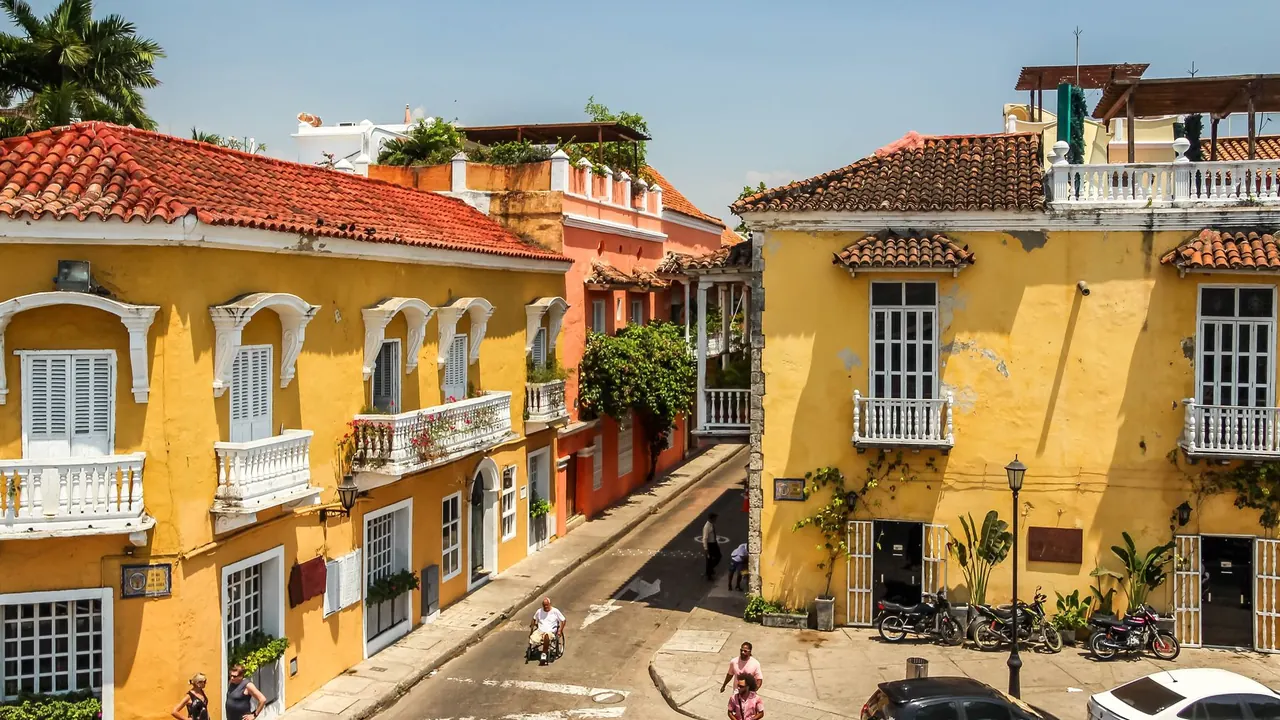
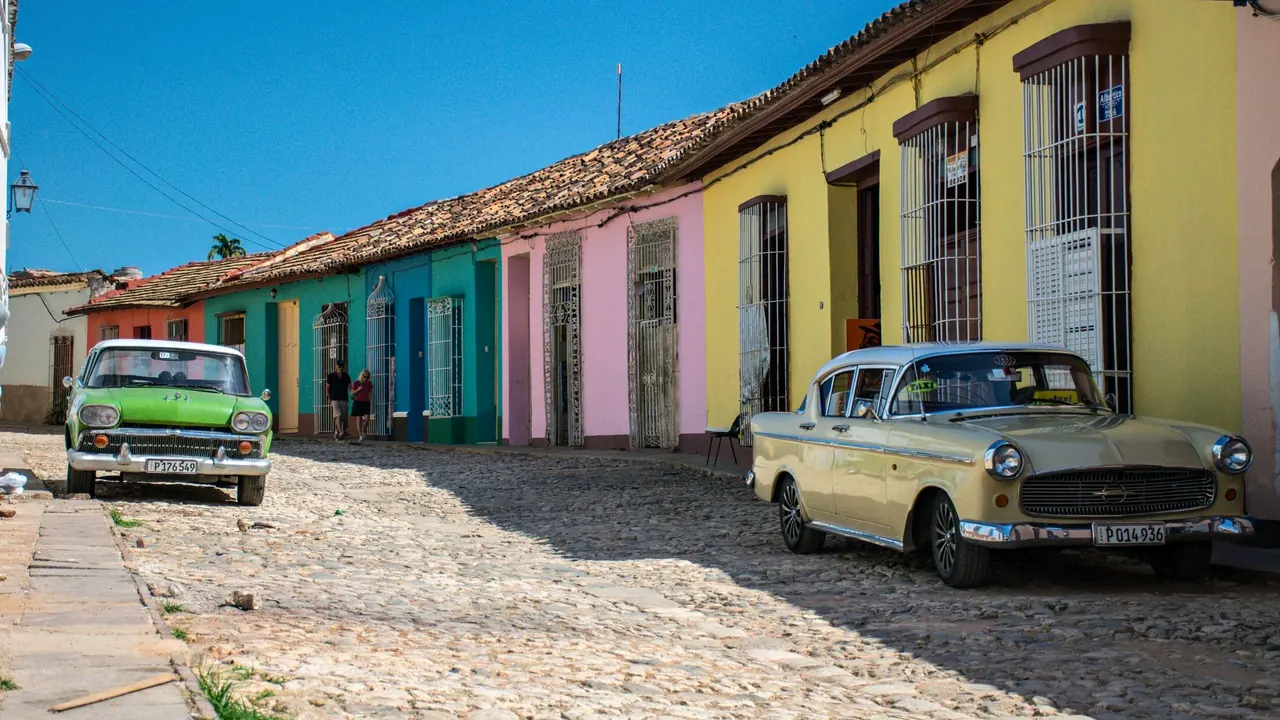
Photos: Cartagena by Dr. Thomas Liptak, CC BY-SA 4.0, cropped; Trinidad, Cuba by Ákos Helgert, Pexels License.
Cartagena or Trinidad, Cuba?
Our verdict in twelve categories, each scored against the same fixed benchmark cities, and the climate month by month, so you can choose for your trip.
Choose Cartagena for
- food and drink
- nightlife
- shopping
Cartagena suits travellers who want a city as much as a coast. The walled city and Getsemaní give you a wider spread of places to eat, dancing that runs from salsa bars to rooftop cocktails and late clubs, and craft and designer shopping, all within a short walk. Boat days to the Rosario Islands bring in the clear water. It is the better pick for couples, groups of friends and anyone who wants their evenings to vary.
Choose Trinidad, Cuba for
- day trips
- nature and the outdoors
- live music and the arts
Trinidad is a slower, smaller and more rural trip. The old town has no real nightlife district, and food is limited by Cuba's patchy supplies. What it has instead is nightly son and Afro-Cuban music, the Escambray mountains just behind the rooftops and the ruined sugar estates of the Valle de los Ingenios on the edge of town. It rewards travellers who want to hike, ride, take day trips and live with a family in a casa particular.
Scoreboard
Twelve categories on one fixed scale from 0 to 100. The shaded stretch is the gap between the two.
Your match
Pick a travel style or drag the sliders, and both match scores follow your weighting.
Wins on food and drink and nightlife with your weighting.
Wins on day trips and nature and the outdoors with your weighting.
What matters to you?
Category by category
What the scores mean for a trip.
Beaches & swimming
The beaches are equally strong but work in different ways. In Cartagena, the city's own sand at Bocagrande is dark, crowded with vendors and faces cloudy water. The clear turquoise water is at Playa Blanca and the Rosario Islands, an hour or so away by boat, so a good beach day takes some planning and can include a night on an island.
Trinidad has an easier routine. Playa Ancon's pale sand and calm, clear water are about 15 minutes away by bike or taxi, with snorkelling off the reef. The trade-off is that you only have Ancon and the small local shore at La Boca to choose from.
Food & drink
Cartagena is far better for eating. It has a real street-food culture, with ceviche carts, arepas de huevo, Palenquera fruit sellers and the sweet stalls at the Portal de los Dulces. On top of that come polished modern Colombian restaurants inside the walls and cheaper spots in Getsemaní.
Trinidad's best meals are often the home-cooked dinners in your casa particular: roast pork, ropa vieja and lobster, with a canchanchara in a clay cup. Pleasant as it is, Cuban supply shortages keep menus short and repetitive, and there is no market or street food to explore.
Culture & sights
Both are UNESCO colonial towns made for wandering, with small museums and enough to fill two or three days, and Cartagena has a slight edge. Its 11km of walkable ramparts and the huge Castillo San Felipe add a military grandeur that Trinidad lacks, and the Palace of the Inquisition gives the visit some weight.
Trinidad is quieter and more intimate: single-storey pastel houses, the Plaza Mayor framed by planters' mansions, and views from the Palacio Cantero tower to the mountains. Its UNESCO listing also covers the sugar valley next to the town, which links the town to the plantation history around it.
Nightlife
Cartagena has much more range after dark. You can move from the street party on Plaza de la Trinidad to salsa bars in Getsemaní, rooftop cocktails over the domes, reggaetón clubs near the Torre del Reloj and chivas with a band on board. Expect touts and a crowd that is mostly tourists.
Trinidad's nights are friendlier but repeat themselves: rum and salsa on the steps by the Plaza Mayor, a few courtyard bars and a club in a cave on the hill. After a few evenings you will have seen it all.
Nature & outdoors
Trinidad is much the better base for time outdoors. The Escambray mountains rise just behind it, with trails in Topes de Collantes down to the Salto del Caburni and the cascades of El Nicho. There are horse rides across the Valle de los Ingenios and reef snorkelling off Ancon as well.
In Cartagena almost everything happens on the water: the coral of Corales del Rosario, though boat traffic has worn it, mangrove canoe trips at La Boquilla and kitesurfing in the dry months. Inland the country is flat and farmed, and the Totumo mud volcano is about the only outing.
Day trips
Trinidad is far easier to explore from. The sugar mills and the Manaca Iznaga tower start at the edge of town, and grand neoclassical Cienfuegos, old Sancti Spiritus and Santa Clara with its Che memorial are all close enough for a day out. You will need a shared taxi, a hired car or a tour to reach them.
From Cartagena the good choices run out quickly. San Basilio de Palenque makes a rewarding half day, but Barranquilla has few sights, and Mompox and Santa Marta need an overnight stay. Most outings here are really boat trips to the islands.
Good for families
Neither is set up for children, and Cartagena is slightly easier. Hotel pools, horse carriages and the shaded plazas help, the calm island beaches are a treat, and the National Aviary on the Baru road gives a day out a focus.
Trinidad's shallow water at Ancon is lovely, and older children enjoy the horse rides and waterfall pools. The large cobbles defeat pushchairs, though, and power cuts and gaps in familiar food and medicine add real strain with small children.
Getting around
In both places the historic centre is compact and best seen on foot. Cartagena's advantage is everything beyond it: taxis are plentiful and cheap, Bocagrande is a short ride away and island boats leave from a central terminal. The heat and narrow pavements are the main nuisance.
In Trinidad the cobbles are rough and the streets slope. Beyond the old town you depend on taxis, shuttles or hired bikes, with no public transport a visitor can rely on, and the coaches to other cities are slow and infrequent.
Shopping & style
Cartagena gives you more to browse. Las Bóvedas, the vaulted chambers in the walls, sell Wayuu mochilas and sombreros vueltiaos, jewellers around Plaza de Bolívar sell emeralds, and boutiques in the walled city stock Colombian linen and swimwear. For anything bigger there are the malls in Bocagrande.
Trinidad has a narrower but distinctive craft offer: hand embroidery and crochet hanging in the market lanes, family pottery workshops and small galleries. The stalls soon start to repeat, and there are no shops beyond them.
Affordability
Trinidad comes out a little cheaper, mainly because a room in a casa particular, often with breakfast, keeps the basic cost low and the music in the squares is nearly free. Paladar meals, tours and beach taxis are priced for visitors, and you will need cash.
Cartagena depends more on how you travel. Boutique mansions and smart restaurants inside the walls approach European levels, especially at Christmas and Easter. Getsemaní hostels, set lunches and cheap taxis, on the other hand, make a modest budget work. In both places, agree prices before boat trips and taxis.
Live music & performing arts
Music is more central in Trinidad. Every night bands play son and bolero at the Casa de la Trova and the Casa de la Musica, and the Palenque de los Congos Reales stages Afro-Cuban drumming and rumba, all at a high standard with locals dancing too.
Cartagena does have a formal stage, the ornate Teatro Adolfo Mejía, and a classical festival in January, which Trinidad lacks. Most of the year, though, live music there means salsa bands, champeta sound systems and cumbia dancers in the plazas.
Wellness & relaxation
Neither is a spa destination, but Cartagena gives you more ways to switch off. Its colonial-house hotels have plunge pools, quiet courtyards and small spas, massages are easy to find and cheap, and a few nights on the Rosario Islands slow everything right down.
In Trinidad, rest means rocking chairs and family courtyards, with massages limited to a few beach resorts. Roosters at dawn, horse carts, late music and power cuts that stop the fans make it harder to relax.
When should you go?
Pick your month. The climate figures are measured averages, not a forecast.
Cartagena in July
Trinidad, Cuba in July
Daytime high, °C
Rainfall in the month, mm
Where the figures come from
Trinidad, Cuba's temperatures are measured 59 km from the centre, at Cienfuegos, Las Villas.
Trinidad, Cuba has no rain gauge within 25 km of the centre, so its rainfall comes from a gridded climate dataset read at the city rather than from a gauge further away.
Temperature and rainfall are climate normals, averaged over the years shown. Cartagena: 1991-2020 normals, Cartagena / Rafael Nunez (3.1 km from centre). Trinidad, Cuba: 2014-2025 (rainfall 1991-2020) normals, Cienfuegos, Las Villas (59.3 km from centre).
Both cities are hot all year and both have a dry season and a wet one, but the seasons don't line up exactly. Cartagena barely changes temperature, with daytime highs of 30°C to 31°C in every month, so there is no cooler season for walking and the early mornings and evenings are always the best time to explore. January to March are almost completely dry and are its sunniest months. Rain builds from May and peaks in October at around 241mm, then eases through November and December before the dry spell returns in January. The sea is warm enough for swimming all year.
Trinidad has more of a winter. Highs of 29°C in December and January make walking the cobbles pleasant, and November to April are largely dry and comfortable, which is also the best time for hiking in the hills. From May to October the rain is heavy and the heat climbs to 34°C in July, which makes midday sightseeing hard going. Its sea is also warm all year and warmest in late summer. The months that suit both cities are January to March, when both are dry and Trinidad is at its mildest.
Which traveller are you?
On a food and nightlife trip, Cartagena is the clear choice. It has street ceviche and arepas, colonial-house restaurants, salsa bars in Getsemaní, rooftop bars and late clubs. Trinidad has one sociable plaza scene and menus that repeat from one place to the next.
For an outdoors trip, Trinidad wins easily. Forest trails lead to waterfalls in Topes de Collantes, and you can ride on horseback through the sugar valley or snorkel the reef off Ancon. Around Cartagena the land is flat farmland, so time outdoors there mostly means the water.
For a short city break, Cartagena makes more sense. The airport is right beside the city, the walled city, San Diego and Getsemaní are all a few minutes' walk apart, and taxis are cheap. Trinidad means slow coaches or long taxi rides from Havana before the trip even starts.
Before you go
| Measure | Cartagena | Trinidad, Cuba |
|---|---|---|
| Official language | Spanish | Spanish |
| Currency | Colombian Peso (COP) | Cuban Peso (CUP) |
| Sockets | AB110 V, 60 Hz | AB110 V, 60 Hz |
| Driving side | Right | Right |
| Time zone | UTC-5 | UTC-5, UTC-4 in summer |
| Emergency number | 123 | Police 106, ambulance 104, fire 105 |
| Elevation | 2 m | 60 m |
| Main airport | Rafael Nuñez International Airport (CTG)2 km from centre27 non-stop destinations | Abel Santamaria International Airport (SNU)77 km from centre1 non-stop destination |
| Public holidays this year | 19 days | 9 days |
By the numbers
| Measure | Cartagena | Trinidad, Cuba |
|---|---|---|
| City population | 914,552 | 51,994 |
| People per km² | 1,599 | 45 |
| Museums within 10 km | 2 | 4 |
| UNESCO World Heritage sites within 50 km | 1 | 1 |
| Swim season, months above 21 °C | 12 months | 12 months |
Where else could you go?
Every comparison below shares a destination with this one, so you can follow Cartagena or Trinidad, Cuba somewhere new.
- Santa Martavs Cartagena
- Varaderovs Trinidad, Cuba
- Havanavs Trinidad, Cuba
- Negrilvs Trinidad, Cuba
- Montego Bayvs Trinidad, Cuba
- Medellinvs Cartagena