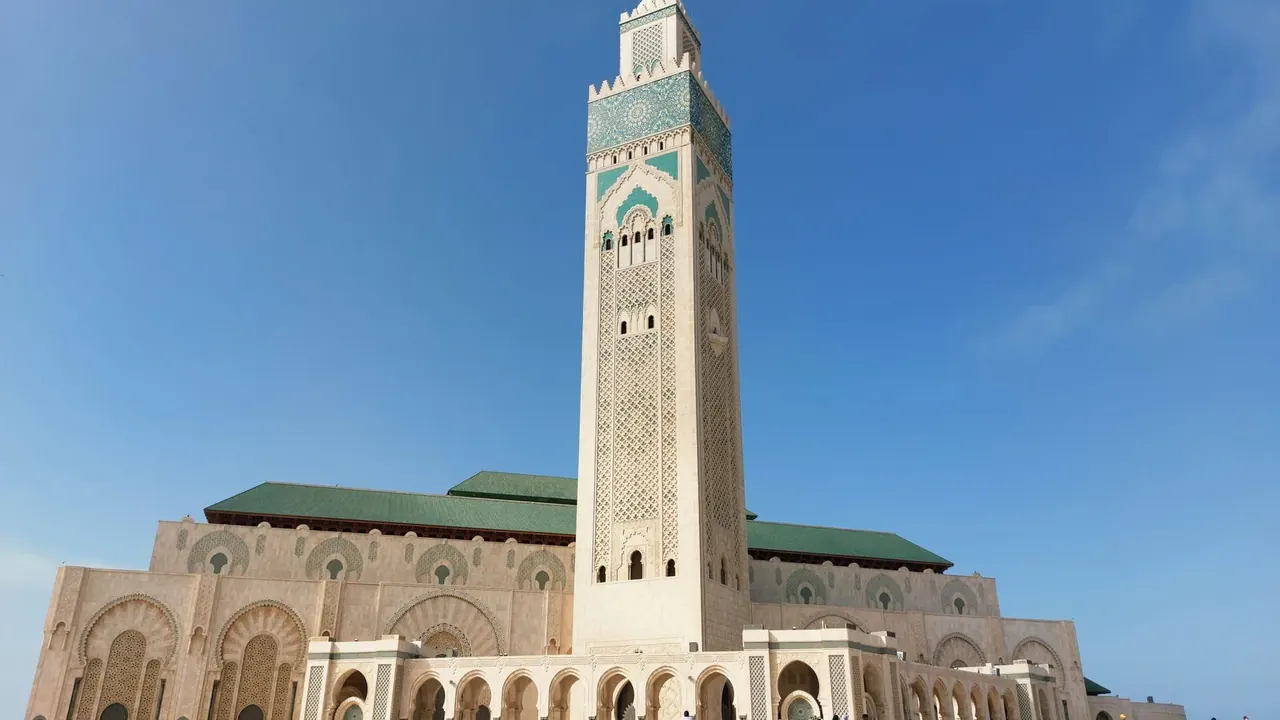
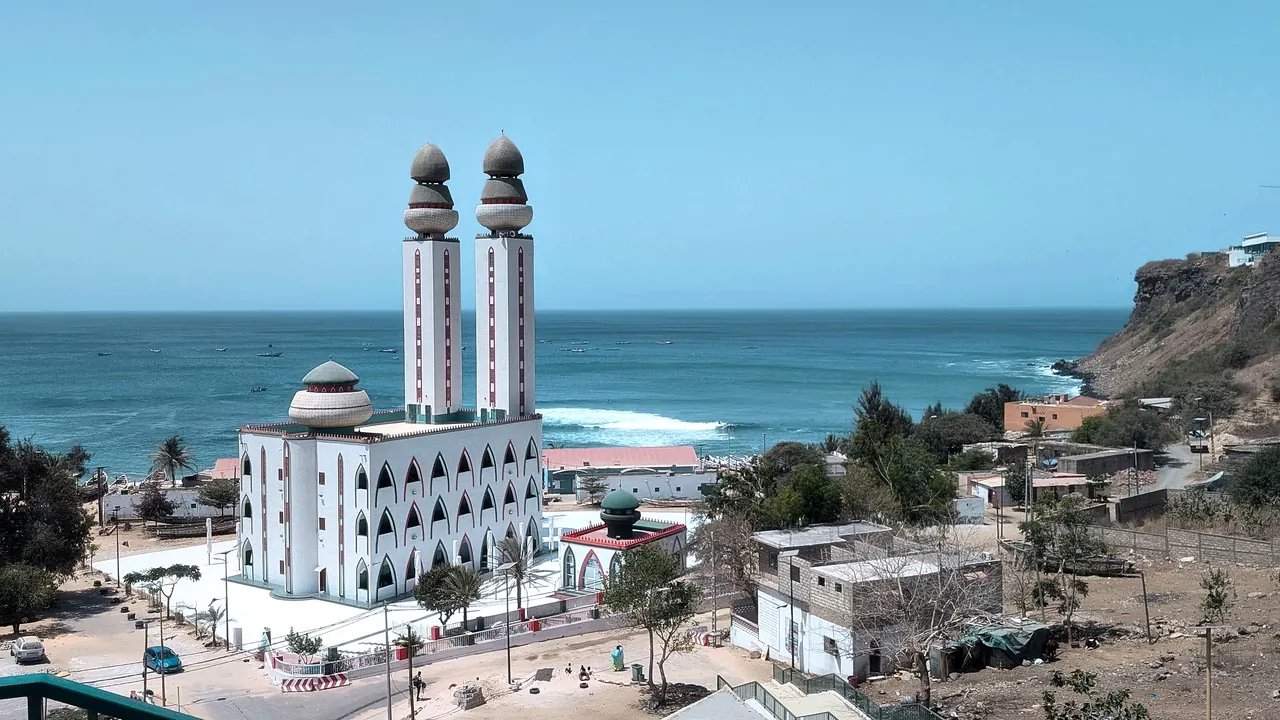
Photos: Casablanca by Samir Bakkah, Pexels License; Dakar by Issathiome, CC BY-SA 4.0, cropped.
Casablanca or Dakar?
Our verdict in twelve categories, each scored against the same fixed benchmark cities, and the climate month by month, so you can choose for your trip.
Choose Casablanca for
- wellness
- day trips
- prices
Casablanca suits a traveller who wants an easy, practical start to Morocco. Trains reach Rabat in about an hour and carry on to the rest of the country, the tram runs from downtown to the ocean, and the daily cost of a stay is lower. It also has a real hammam culture and the country's best modern shopping. The trade-off is a quieter evening scene and a city whose sights you can see in a couple of days.
Choose Dakar for
- live music and the arts
- nightlife
- nature and the outdoors
Dakar is the better choice if you want music, late nights and the sense of being somewhere quite different. Live mbalax, dance floors that fill after midnight, Gorée Island and the surf breaks along a rocky coastline give it more character after dark and outdoors. You give up rest and convenience in return, because the city is hard work to get around and there is little calm in it.
Scoreboard
Twelve categories on one fixed scale from 0 to 100. The shaded stretch is the gap between the two.
Your match
Pick a travel style or drag the sliders, and both match scores follow your weighting.
Too close to call, 2 points apart
Wins on wellness and day trips with your weighting.
Wins on live music and the arts and nightlife with your weighting.
What matters to you?
Category by category
What the scores mean for a trip.
Beaches & swimming
Neither city is a beach destination in its own right, but Dakar's shoreline is more woven into the city. Casablanca has one main strip, the long sand at Ain Diab. The swell there is heavy enough that many people swim in beach-club pools rather than the sea, and the better sands are a drive away at Dar Bouazza or Bouznika.
Dakar has beaches all around the peninsula, from N'Gor and Yoff to the sheltered cove at Anse Bernard. The short pirogue ride to car-free N'Gor island gives you calmer water than anything on Casablanca's city front. Its sea also gets several degrees warmer in late summer, although that warmth comes with the rains.
Food & drink
Both cities are good places to eat, and seafood is the highlight in both, but the cooking is quite different. Casablanca serves Moroccan home food (tagines, Friday couscous, harira), fish you choose at the Marché Central and have grilled next door, and a solid French-style brasserie and pâtisserie scene in Maarif and Gauthier.
Dakar's food is West African and more filling: thieboudienne, yassa and mafé, mutton from the dibiteries in the evening, and café Touba and attaya on the street. Lebanese mezze and French bread round it out. Casablanca has more choice for a polished dinner with wine.
Culture & sights
There is about the same amount to see in each, but very different things. Casablanca's sightseeing is one great monument, the Hassan II Mosque, which non-Muslims can tour, plus a twentieth-century city of Art Deco and neo-Moorish boulevards around Place Mohammed V and the tidy 1930s Habous quarter.
Dakar's sights carry more historical weight. The House of Slaves on Gorée Island is a moving memorial, and the Museum of Black Civilisations and IFAN hold masks and textiles from across Africa. The Village des Arts and the Dak'Art biennale add a living art scene that Casablanca does not have. Allow a day or so longer in Dakar.
Nightlife
Dakar has the stronger nightlife by some distance. Bars only fill around midnight, clubs often run until dawn from Thursday to Saturday, and the local dance floors in Point E and Mermoz are about dancing to Senegalese pop and Afrobeats. The beach bars of Almadies and Ngor add evenings by the ocean.
Casablanca goes out more than any other Moroccan city, but in a more polished, contained way. The lounges and clubs on the Ain Diab Corniche are busy mainly at weekends, and downtown has hotel bars and a few old protectorate-era bars. In both cities you take taxis between venues, and neither has street-drinking culture.
Nature & outdoors
Dakar has the more dramatic setting. It has basalt cliffs, the Mamelles hills with their lighthouse, the westernmost tip of mainland Africa at the Almadies, and reef and point breaks for experienced surfers. Within reach you also have the Madeleine Islands' seabirds, the pink Lac Rose among dunes and the giraffes and rhinos at Bandia.
Casablanca sits on a flat plain and offers less. You can walk or run on the Corniche towards El Hank, take surf lessons at Ain Diab and Dar Bouazza, and find shade in the eucalyptus of the Bouskoura forest. Real mountain scenery is too far inland for a day out.
Day trips
Casablanca has the better day trips, largely thanks to the railway. Rabat is about an hour away by train, with the Kasbah des Oudayas, the Chellah ruins and the Hassan Tower. The Portuguese cistern at El Jadida, whitewashed Azemmour and the oyster lagoon at Oualidia all make good days along the coast.
From Dakar the options are shorter and more modest: Toubab Dialaw, Somone and the pirogue landings at Mbour along the Petite Côte. The most rewarding are the shell island of Joal-Fadiouth and the Great Mosque at Touba, but both make long days by road.
Good for families
Neither city is easy with children, though Casablanca has a little more built for them. On the Corniche you will find a mall with a large aquarium and indoor rides, an old amusement park and zoo at Ain Diab, and calm beach-club pools that are safer than the surf.
Dakar's family outings are more outdoors: the island of N'Gor for calm water, the ferry to Gorée and a drive among giraffes at Bandia. Heat, dust and the need for malaria precautions make it more demanding. Both welcome children warmly, and in both, traffic and broken pavements are the hard part.
Getting around
Casablanca is the easier city to get around. Its tram links downtown, the main stations and the Corniche in a single ride, the walkable centre around the Marché Central and the Art Deco boulevards is compact, and fast trains go out of the city. Petits taxis fill the gaps, but expect shared rides and the odd ignored meter.
Dakar stretches along a peninsula, with the Plateau a long ride from Almadies and Ngor. The TER railway and the rapid bus serve only the main corridors, so most journeys are by taxi, with the fare agreed before you set off, or by ride-hailing app. Peak-hour congestion is severe.
Shopping & style
The two are fairly close, but you would shop for different things in each. Casablanca is for modern retail: a large mall with international and some luxury brands, the fashion streets of Maarif, and craft shops in the Habous quarter where sellers press you less than in older medinas. Carpets and traditional crafts are thin, though.
Dakar's speciality is cloth. You choose wax prints or bazin at the HLM market and have a tailor make a shirt or boubou within a few days. Soumbédioune adds carvings, drums and silver, and bargaining is expected everywhere, from Kermel to chaotic Colobane.
Affordability
Casablanca is the cheaper of the two, even though both work on a similar pattern: cheap streets and expensive rooms. In Casablanca, corporate hotels push up room prices and Corniche cocktails are expensive, but taxis, the tram, market fish and café terraces barely dent a budget.
Dakar is pricier than its region would suggest. Comfortable hotels in Almadies and the Plateau charge close to southern European rates, decent budget rooms are scarce, and imported food and wine are expensive. Eating thieboudienne at local lunch spots keeps costs down, but the bed is where the money goes.
Live music & performing arts
Dakar is one of Africa's great music cities, and Casablanca cannot match it on an ordinary week. Mbalax bands play late in clubs, sometimes with big hometown names, sabar drumming breaks out at weddings and wrestling matches, and the Sorano National Theatre stages the national ballet.
Casablanca's live culture centres on fewer, bigger moments: a long-running jazz festival, a festival of urban music and hip-hop, and the large theatre on Place Mohammed V. Chaabi and gnawa are part of the city's sound, but most weeks you need to check the listings to find something on.
Wellness & relaxation
Casablanca is the clear choice for rest. The hammam is a daily habit in every neighbourhood: a black-soap scrub with the kessa glove in a public steam bath, or the same ritual with massage in a spa in Maarif. Thalassotherapy centres on the Corniche use Atlantic seawater.
Dakar has no bathing tradition of its own, only hotel spas and some yoga. The harmattan brings dust in addition to the noise. The quiet you can find there is on N'Gor island or further away on the Petite Côte.
When should you go?
Pick your month. The climate figures are measured averages, not a forecast.
Casablanca in July
Dakar in July
Daytime high, °C
Rainfall in the month, mm
Temperature and rainfall are climate normals, averaged over the years shown. Casablanca: 1991-2020 normals, Casablanca (5.6 km from centre). Dakar: 1991-2020 normals, Dakar / Yoff (10 km from centre).
Casablanca stays mild all year. It is never really hot, with highs of about 27°C in August, and never cold enough to keep you off the streets, though winter days are cool and grey spells are common. The dry, sunny stretch runs from May to September. That is also the only time the Atlantic gets close to swimmable, peaking around 23°C. The rain comes from October to January and is heaviest in November at about 78mm, so spring and early autumn are the best months for walking the city.
Dakar is warm in every month, and the calendar there turns on rain rather than temperature. From November to June it is almost completely dry and sunny, with pleasant highs. The sea stays cool until about May because of upwelling. In July the rainy season starts and peaks in August at around 162mm, with heavy, humid heat. Those are the months when the sea warms to about 28°C, so beach swimmers and dry-weather sightseers want different seasons. For walking the city, November to February is the sweet spot, and that is also when Casablanca is at its wettest.
Which traveller are you?
On a relaxing and wellness trip, Casablanca is the clear pick. A long scrub at a neighbourhood hammam, an upscale spa in Maarif or seawater treatments on the Corniche give it a real tradition of unwinding. Dakar offers little beyond hotel spas.
For a food and nightlife trip, choose Dakar. Thieboudienne at lunch and fish grilled at Soumbédioune at dusk are as good as Casablanca's seafood, and the nights go much further, with live mbalax and clubs in Point E and Almadies running until dawn.
On a trip with a tight budget, Casablanca stretches money further. In both cities taxis, market fish and local meals cost little, but Dakar's decent rooms are priced close to southern Europe, and cheap trains from Casablanca make Rabat an inexpensive extra day.
Before you go
| Measure | Casablanca | Dakar |
|---|---|---|
| Official language | Arabic, Standard Moroccan Tamazight | French, Wolof, Balanta, Badyara |
| Currency | Moroccan Dirham (MAD) | CFA Franc BCEAO (XOF) |
| Sockets | CE50 Hz | CEK230 V, 50 Hz |
| Driving side | Right | Right |
| Time zone | UTC+1 | UTC |
| Emergency number | Police 19/112, ambulance 15, fire 15 | Police 17, fire 18 |
| Elevation | 115 m | 10 m |
| Main airport | Mohammed V International Airport (CMN)26 km from centre112 non-stop destinations | Blaise Diagne International Airport (DSS)39 km from centre32 non-stop destinations |
| Public holidays this year | 11 days | 9 days |
By the numbers
| Measure | Casablanca | Dakar |
|---|---|---|
| City population | 3,215,935 | 1,438,725 |
| People per km² | 8,375 | 18,029 |
| Museums within 10 km | 3 | 8 |
| UNESCO World Heritage sites within 50 km | 0 | 1 |
| Swim season, months above 21 °C | 5 months | 8 months |
Where else could you go?
Every comparison below shares a destination with this one, so you can follow Casablanca or Dakar somewhere new.
- Rabatvs Casablanca
- Marrakechvs Casablanca
- Fesvs Casablanca
- Chefchaouenvs Casablanca
- Tangiervs Casablanca
- Essaouiravs Casablanca