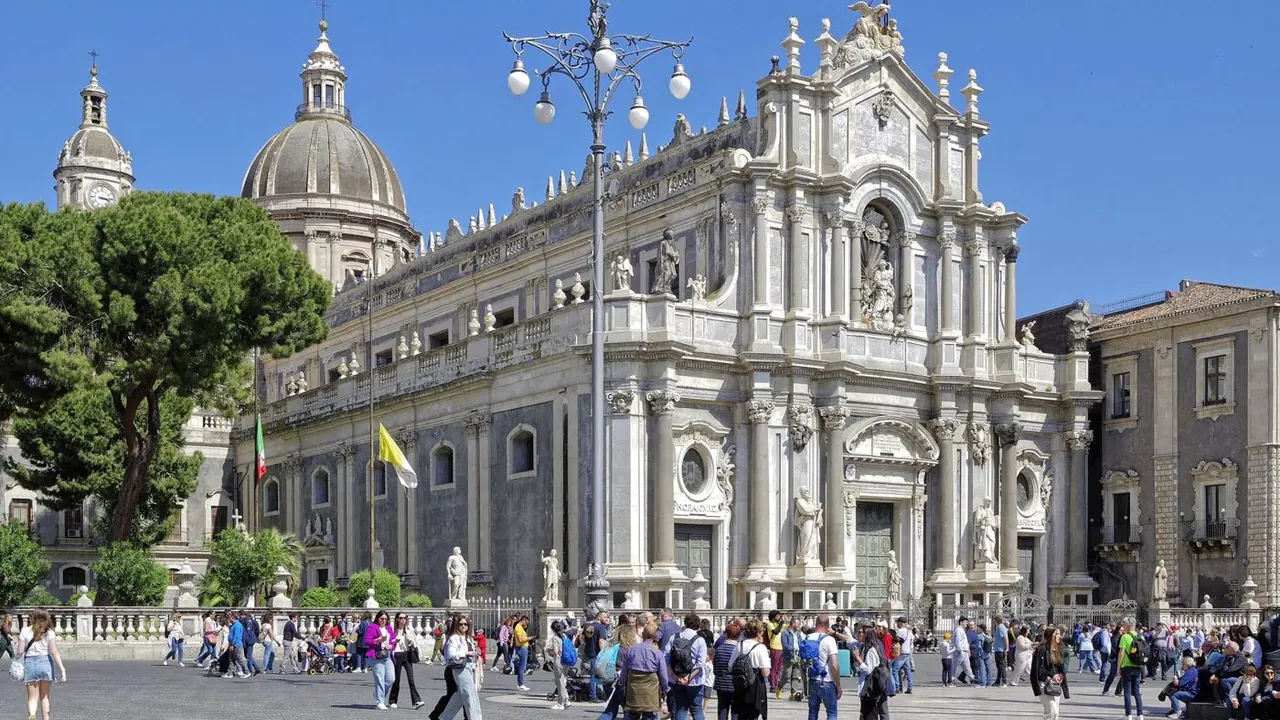
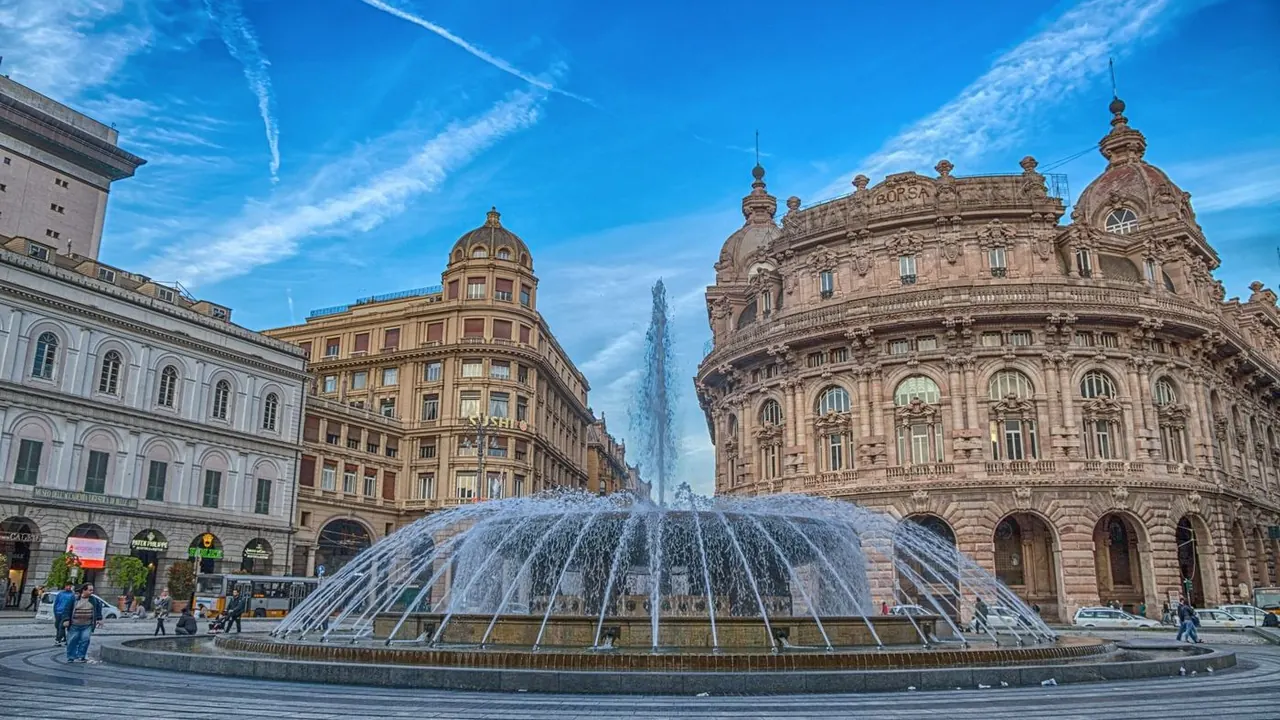
Photos: Catania by Berthold Werner, CC BY-SA 4.0, cropped; Genoa by Faber1893, CC BY-SA 4.0, cropped.
Catania or Genoa?
Our verdict in twelve categories, each scored against the same fixed benchmark cities, and the climate month by month, so you can choose for your trip.
Choose Catania for
- nightlife
- beaches
- food and drink
Catania suits a traveller who wants heat, the sea and a volcano close at hand, with late nights and street food in between. It is the better pick for a summer of beach days and Etna excursions, for eating well and cheaply at market counters, and for evenings drinking outside around Piazza Bellini. The price is a city that is hard to get around, with heavy traffic and little for small children.
Choose Genoa for
- getting around
- culture and sights
- families
Pick Genoa if the city itself is the point. Its medieval caruggi and the palace museums of the Strade Nuove give you more to see over several days. The aquarium and funiculars make it easier with children, and the coastal railway reaches the Riviera and the Cinque Terre without a car. Nights are quieter and the swimming is pebbly, so Genoa rewards walking and looking more than lying on sand.
Scoreboard
Twelve categories on one fixed scale from 0 to 100. The shaded stretch is the gap between the two.
Your match
Pick a travel style or drag the sliders, and both match scores follow your weighting.
Too close to call, 1 point apart
Wins on nightlife and beaches with your weighting.
Wins on getting around and culture and sights with your weighting.
What matters to you?
Category by category
What the scores mean for a trip.
Beaches & swimming
Catania has two kinds of swimming within the city. To the south is the long sand of La Playa. To the north, at Aci Castello and Aci Trezza, you climb down ladders from lava platforms into clear water beside the basalt sea stacks. The season also runs on into October.
Genoa's swimming in town is on a smaller scale: a pebble cove at Boccadasse and bathing establishments built over the rocks along Corso Italia and at Nervi. The prettier beaches are a train ride away on the Riviera. Most are pebble or coarse sand and packed with loungers at weekends, which works for an afternoon swim but less well for a beach vacation.
Food & drink
Both are serious eating cities where the best food is casual and fine dining is thin, but they taste very different. Catania's food is fried, rich and sweet: ragù-filled arancini, horse meat grilled over smoke on Via Plebiscito, pasta alla Norma and granita with brioche. La Pescheria is at the centre of it, and Etna's volcanic reds are in the glass.
Genoa cooks lighter and greener, with pesto, olive oil and chickpeas. You get focaccia at breakfast, farinata and panissa from the old friggitorie, pansoti in walnut sauce, and Vermentino or Pigato with the fish. Its Mercato Orientale, in a former cloister, is a calmer place to browse than the theatre of La Pescheria.
Culture & sights
Genoa has more to fill the days. Its caruggi make up one of Europe's largest medieval quarters. Above them, the Rolli palaces of Via Garibaldi and Via Balbi hold Van Dyck and Rubens in painted halls, and there is also San Lorenzo, the Palazzo Ducale and the marble sculpture of Staglieno.
Catania is a single late-baroque set piece in black lava and pale limestone, from the elephant fountain to Via dei Crociferi and the vast San Nicolò monastery, with Roman remains beneath it. Its museums are modest, though, and two or three days covers the centre.
Nightlife
Catania is the livelier place after dark. Its large student population keeps the lanes around Piazza Bellini and Via Gemmellaro full until well past midnight, and in summer the beach clubs on La Playa become open-air dance floors.
Genoa is more reserved, with aperitivo around Piazza delle Erbe, waterfront bars at the Porto Antico and Foce, and quiet weeknights. Neither has much club culture. Genoa is for a late glass of wine in a medieval square, Catania for staying out.
Nature & outdoors
Both are excellent for the outdoors, in very different ways. Catania's is one enormous, often smoking volcano. A cable car and off-road vehicles climb from the Rifugio Sapienza towards the summit craters, trails cross old lava flows, there is skiing with a sea view in winter, and the Alcantara Gorge is there to wade through.
Genoa has coastal and ridge walking instead. There is the fortress trail above Righi, the cliff paths of the Portofino promontory down to San Fruttuoso, the Cinque Terre terraces by train, and boat trips to see whales and dolphins in the Pelagos Sanctuary. Its milder summers also make walking easier than in Catania's lowland heat.
Day trips
Catania opens up Greek and baroque Sicily. Ortigia in Siracusa and the ancient theatre at Taormina are each about an hour away, Noto, Modica and Ragusa Ibla take longer to reach, and the Piazza Armerina mosaics lie inland. Buses link the main towns, but the baroque towns are far simpler to string together by car.
Genoa's trips are mostly by rail along the coast. Trains reach Camogli, Santa Margherita, Sestri Levante and the Cinque Terre, and Portofino is a short bus or boat ride on from Santa Margherita. To the west, Noli and Finale Ligure Borgo take a train to Spotorno-Noli or Finale Ligure Marina and then a short bus ride or walk. Milan and Turin are about an hour and a half away on inland lines, so none of it needs a car.
Good for families
Genoa is easier with children, mainly thanks to the Porto Antico. The aquarium, the science centre, the biosphere and the Galata museum's walk-through submarine are all together there, and the funiculars and public lifts are a ride in themselves. The stairs and dark lanes of the old town are hard going with a pushchair.
What Catania offers families is mostly outside the city: the gently shelving sand of La Playa, walks on Etna's craters for older children, and Etnaland on a hot day. In the centre there is heavy traffic, narrow pavements, little shade and not much aimed at children.
Getting around
Genoa is the easier city without a car. The coastal railway reaches Nervi and the Riviera towns, and funiculars, a rack railway and public lifts deal with the hills. The slopes and the maze of lanes still take some effort on foot.
Catania's centre around Via Etnea and Piazza del Duomo is compact and easy to walk, but beyond it the single metro line and slow buses help little, and you need to take care crossing streets. Regional buses and the slow Circumetnea railway do exist, yet many visitors end up hiring a car and then struggling to park it.
Shopping & style
Neither is a shopping destination, but Genoa has a little more to offer: the arcades of Via XX Settembre, smarter Italian labels on Via Roma and in the Galleria Mazzini, and old-town workshops making silver filigree and coral. Catania's Via Etnea is mostly chains, and the fun is in its markets, La Fiera and La Pescheria, and in edible souvenirs such as Bronte pistachio cream and Etna wine.
Affordability
Both are fair value by Italian standards, and in each the cheapest meals are street food: arancini and crispelle in Catania, focaccia and farinata in Genoa. Where the money goes differs. In Catania it is guided trips to Etna's summit and the hire car the baroque towns almost demand, while in Genoa the trains keep day trips cheap but the Riviera resorts and their loungers are expensive in summer.
Live music & performing arts
Each city has a proper opera house and a composer to claim: Bellini at Catania's Teatro Massimo Bellini, and Paganini in Genoa, home of the Teatro Carlo Felice on Piazza De Ferrari. Catania adds opera dei pupi marionette theatre and summer concerts in ancient theatres. Genoa has the established Teatro Nazionale, which performs in Italian, and small clubs that keep its singer-songwriter tradition going.
Wellness & relaxation
Neither city is restful, and neither has a bathing tradition of its own, so a spa means a hotel. Genoa has the easier escape, with Nervi's villa gardens and seafront promenade, and thermal waters at Acqui Terme a little over an hour away. In Catania the calm comes from the pace of the day, long lunches and a slow morning granita, or from staying in a quieter village on Etna's slopes.
When should you go?
Pick your month. The climate figures are measured averages, not a forecast.
Catania in July
Genoa in July
Daytime high, °C
Rainfall in the month, mm
Where the figures come from
Catania's sunshine is measured 88 km from the centre, at Messina.
Genoa has no rain gauge within 25 km of the centre, so its rainfall comes from a gridded climate dataset read at the city rather than from a gauge further away.
Genoa's sunshine is measured 80 km from the centre, at Capo Mele.
Temperature and rainfall are climate normals, averaged over the years shown. Catania: 1991-2020 normals, Catania / Fontanarossa (5.2 km from centre). Genoa: 1991-2020 normals, Genova / Sestri (6.7 km from centre).
Catania is the hotter, drier and sunnier of the two, and its summer is fierce. July and August reach about 35°C, too hot for walking the streets in the afternoon, though the sea is at its warmest. May is lovely for sightseeing, warm and almost dry, but the sea is still only around 18°C. The best months for both beaches and streets are June and from September into early October. The rains come in November and last through a mild winter.
Genoa is milder all year. August highs of about 28°C make summer sightseeing much more comfortable, but the swimming season is shorter, running from June to September. Spring is pleasant apart from some April showers. Autumn is far wetter than in Catania, with around 195mm of rain in November, and winter days are cooler, with highs near 12°C.
Which traveller are you?
For a food and nightlife trip, Catania lets one run straight into the other. You eat standing at a counter and then stay out late with the students. Genoa feeds you just as well, but its evenings end earlier and more quietly.
On a culture and arts trip, Genoa rewards a longer stay, with enough in its old town and palaces to fill most of a week, and the milder summers help on long days on foot. Catania's baroque centre is handsome but soon seen.
On a family trip with children, Genoa makes the days easier, with its main attractions grouped by the harbour and swimming within reach without a car. Catania suits older children keen to climb a volcano, but the city itself is tiring with small ones.
Before you go
| Measure | Catania | Genoa |
|---|---|---|
| Official language | Italian | Italian |
| Currency | Euro (EUR) | Euro (EUR) |
| Sockets | CFL230 V, 50 Hz | CFL230 V, 50 Hz |
| Driving side | Right | Right |
| Time zone | UTC+1, UTC+2 in summer | UTC+1, UTC+2 in summer |
| Emergency number | 112 | 112 |
| Elevation | 7 m | 20 m |
| Main airport | Catania-Fontanarossa Airport (CTA)4 km from centre96 non-stop destinations | Genoa Cristoforo Colombo Airport (GOA)7 km from centre25 non-stop destinations |
| Public holidays this year | 13 days | 13 days |
By the numbers
| Measure | Catania | Genoa |
|---|---|---|
| City population | 311,584 | 558,745 |
| People per km² | 1,704 | 2,325 |
| Museums within 10 km | 25 | 51 |
| UNESCO World Heritage sites within 50 km | 3 | 1 |
| Swim season, months above 21 °C | 5 months | 4 months |
Where else could you go?
Every comparison below shares a destination with this one, so you can follow Catania or Genoa somewhere new.