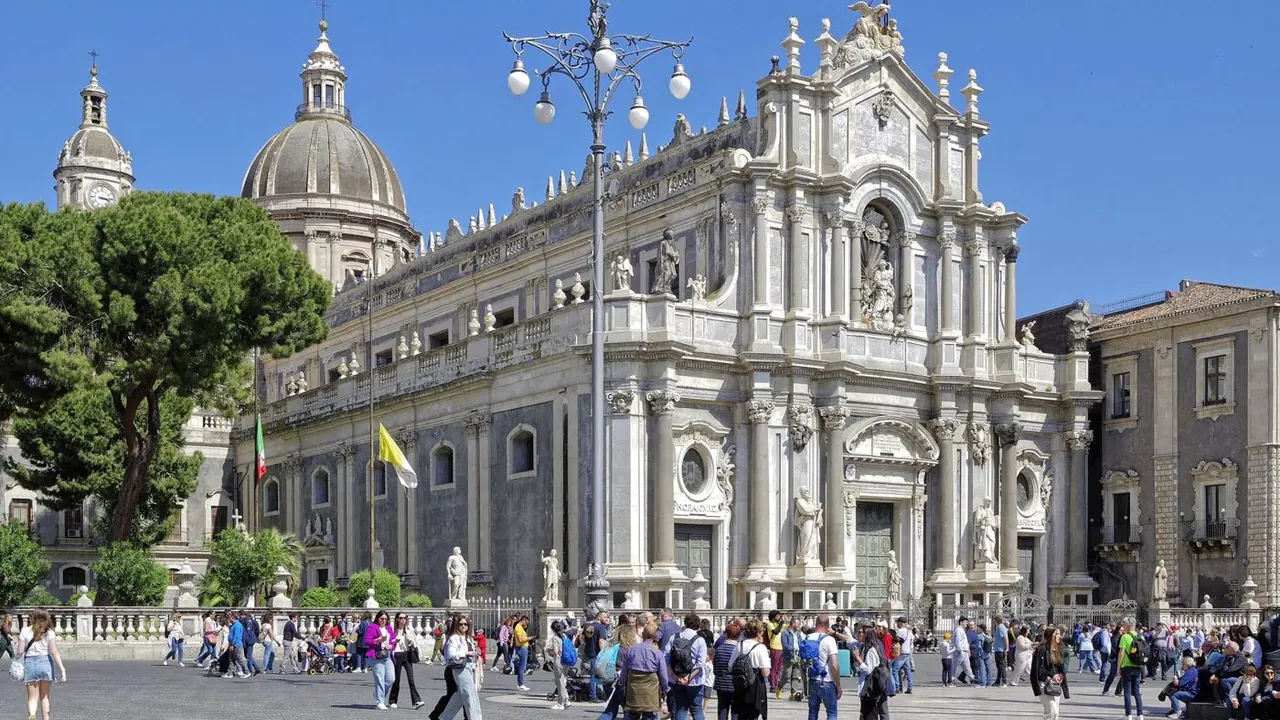
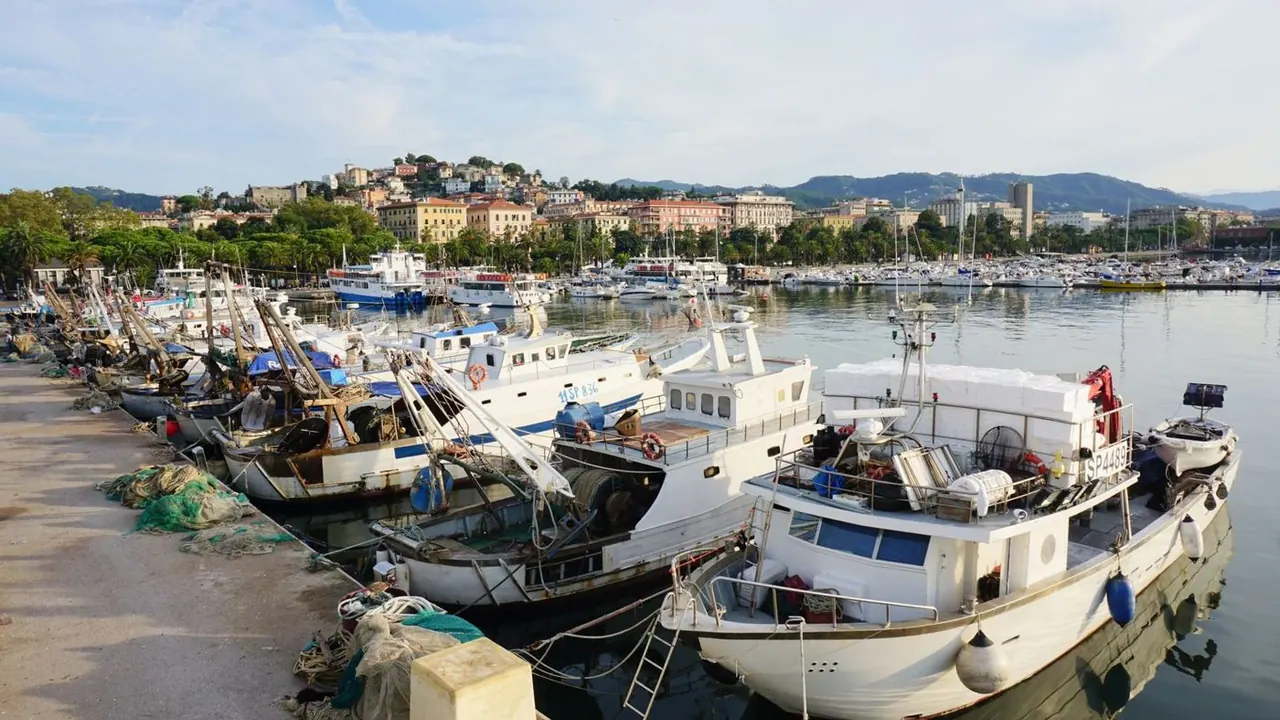
Photos: Catania by Berthold Werner, CC BY-SA 4.0, cropped; La Spezia by Irina Balashova, Pexels License.
Catania or La Spezia?
Our verdict in twelve categories, each scored against the same fixed benchmark cities, and the climate month by month, so you can choose for your trip.
Choose Catania for
- nightlife
- live music and the arts
- culture and sights
Catania suits travellers who want a city with appetite and noise. Its street food and fish market, late nights around the university quarter, a working opera house and a baroque centre built from black lava give it far more to do after dark and between meals. Add Etna on the doorstep and a sandy beach in town, and it rewards a trip that mixes eating, going out and a day on the volcano, as long as you are happy to hire a car for the wider region.
Choose La Spezia for
- getting around
- day trips
- wellness
Choose La Spezia if the trip is really about the coast around it. The town is quieter, plainer and earlier to bed, but it is a practical, flat base where trains run you out to the Cinque Terre villages in minutes and buses and boats cover Portovenere and Lerici. Walkers, people who would rather not drive, and anyone happy to spend evenings over an aperitivo rather than in bars will find it fits better.
Scoreboard
Twelve categories on one fixed scale from 0 to 100. The shaded stretch is the gap between the two.
Your match
Pick a travel style or drag the sliders, and both match scores follow your weighting.
Wins on nightlife and live music and the arts with your weighting.
Wins on getting around and day trips with your weighting.
What matters to you?
Category by category
What the scores mean for a trip.
Beaches & swimming
Catania has swimming on its own doorstep, and of two kinds: the long sand of La Playa with its beach clubs to the south, and the lava platforms and ladders of the Riviera dei Ciclopi to the north, where you drop into clear water beside basalt sea stacks.
La Spezia's own waterfront is a port, so every swim is a trip out by bus, boat or train. The coves at Lerici, Tellaro and Palmaria are pretty and Monterosso has proper sand, but most beaches are small, often pebbly and largely taken by paid establishments, so swimming is an outing rather than part of the daily routine.
Food & drink
Catania eats better and more boldly. The tavola calda counters, horse-meat grills on Via Plebiscito, pasta alla Norma, pistachio granita with brioche and the theatre of La Pescheria make simply walking around a way to eat, and Etna's volcanic reds and whites are among Italy's more interesting wines.
La Spezia's cooking is good but narrower: farinata from wood ovens, mesciua, pesto on trofie and testaroli, and the gulf's rope-grown mussels, with crisp Cinque Terre whites alongside. It is steady, honest provincial food, and it will not fill a week the way Catania's will.
Culture & sights
Catania is a sightseeing city in its own right: a UNESCO-listed late-baroque centre in black lava and pale limestone, Via dei Crociferi's run of churches, the San Nicolò l'Arena monastery and Roman remains surfacing under the streets. The museums are modest, but the streets themselves carry it.
La Spezia's centre is a nineteenth-century naval town of arcades and Liberty facades, with no medieval core. The Museo Amedeo Lia and the Lunigiana stele statues in Castello San Giorgio are worth an afternoon, but the region's history mostly lies out in Portovenere, Sarzana and Luni.
Nightlife
This is the widest gap between the two. Catania, with its big student population, stays out late in the bars around Piazza Bellini and Via Gemmellaro, and in summer the La Playa beach clubs turn into open-air dance floors.
La Spezia's evening is the aperitivo on Via del Prione or the seafront, then a gentle wind-down. Most visitors are asleep early before a day on the trails, and late bars or club nights are rare.
Nature & outdoors
Both are excellent bases for the outdoors, but the landscapes could hardly differ more. Catania has a smoking volcano of about 3,300m within an hour, with cable car and jeep trips towards the summit craters, walks across lava flows, winter skiing with a sea view and the Alcantara Gorge to wade.
La Spezia's draw is the terraced cliffs of the Cinque Terre, with village-to-village footpaths, the Palmaria loop and the Montemarcello promontory, plus marble peaks in the Apuan Alps inland. Both coasts are good for kayaking and diving.
Day trips
Both put a remarkable amount within reach, and what changes is how you get there. From La Spezia, the Cinque Terre villages are minutes away by train, Portovenere by bus or boat, and Pisa and Lucca about an hour by rail, so a car is never needed.
Catania's list is just as strong but more spread out. Siracusa and Taormina are each about an hour, while Noto, Modica, Ragusa Ibla and the Piazza Armerina mosaics lie further and are far easier by car.
Good for families
Neither is an easy family city, and the reasons differ. Catania has the gentle sand at La Playa, Etna's craters for older children and the Etnaland water park, but its streets are trafficked, uneven and shadeless in the summer heat.
La Spezia's flat centre and seafront gardens are calmer with a pushchair, and boat trips and the sheltered beaches at San Terenzo and Lerici work well. It has no theme park, though, and the steep villages and crowded trains suit older children better than toddlers.
Getting around
La Spezia is much the simpler base. Its flat centre is walkable, and the station sends regional trains through the Cinque Terre and on towards Genoa, Pisa and Florence, with buses and seasonal ferries around the gulf. A car is more nuisance than help, and the only real snag is packed summer trains.
Catania's old centre is easy on foot, but beyond it the single metro line and slow buses struggle in heavy traffic. Many visitors end up hiring a car for Etna and the baroque towns, and then face the city's parking.
Shopping & style
Catania's markets give it the edge. La Fiera, around Piazza Carlo Alberto, is a big, noisy daily market, La Pescheria is worth walking through even if you buy nothing, and Caltagirone ceramics and lava-stone pieces are crafts with real local roots. Via Etnea covers the chain stores.
La Spezia's shopping is plainer and more everyday: clothing chains and a few independent boutiques on Via del Prione and Corso Cavour, and produce and fish at the Piazza Cavour market. In both places the best things to bring home are edible, Bronte pistachio cream and Etna wine from one, pesto, olive oil and Sciacchetrà from the other. Neither suits a trip built around fashion or design.
Affordability
Catania goes further on a budget, chiefly because street food makes a full meal for very little and rooms in the old centre are reasonable for much of the year. The big extras are guided summit trips on Etna and a hire car.
La Spezia is mid-priced: cheaper than sleeping in the Cinque Terre villages, which is why many stay here, but with summer rooms at ordinary Western European levels. Trail passes, boat trips and bathing establishments add up, and spring and autumn are kinder to the wallet.
Live music & performing arts
Catania has a real stage to offer: the grand Teatro Massimo Bellini in Bellini's home town, with an opera and symphonic season visitors can attend, plus the Sicilian puppet theatre of the opera dei pupi.
La Spezia has the Teatro Civico for touring theatre and concerts and a long-running summer jazz festival, but most of the year is quiet and there is no opera without a trip to Genoa or Pisa.
Wellness & relaxation
In Catania, rest comes from the pace of the day, and in La Spezia from the places around it. Catania's centre is noisy and full of traffic, so calm comes from long lunches, a slow breakfast granita and the evening passeggiata, or from moving out to a hotel spa on the coast or a quieter village on Etna's lower slopes.
La Spezia has the small thermal baths at Equi Terme, about an hour inland in the Lunigiana. Off-season you also get the quiet of Palmaria or an unhurried lunch in Tellaro. In summer, though, the crowds on the Cinque Terre trails undo much of that calm.
When should you go?
Pick your month. The climate figures are measured averages, not a forecast.
Catania in July
La Spezia in July
Daytime high, °C
Rainfall in the month, mm
Where the figures come from
Catania's sunshine is measured 88 km from the centre, at Messina.
La Spezia's temperatures are measured 65 km from the centre, at Pisa / S. Giusto.
La Spezia has no rain gauge within 25 km of the centre, so its rainfall comes from a gridded climate dataset read at the city rather than from a gauge further away.
Temperature and rainfall are climate normals, averaged over the years shown. Catania: 1991-2020 normals, Catania / Fontanarossa (5.2 km from centre). La Spezia: 1991-2020 normals, Pisa / S. Giusto (64.8 km from centre).
Catania is the hotter, drier and sunnier of the two. Rain almost disappears from May to August and the sea warms to about 26°C by August, so swimming is comfortable from June into October. The catch is the heat: highs around 31°C in July and August make midday walking in the streets hard going, so spring and autumn suit sightseeing and Etna better. Winter stays mild by day, though the rain builds to about 83mm in December.
La Spezia is several degrees cooler all year and tops out around 30°C in high summer. The sea is slightly cooler too, but still pleasant for swimming from June to September. Its wet season starts early. September is already one of the wettest months, and the rain peaks at about 151mm in November. The best time for the Cinque Terre trails is late spring and early summer, roughly May and June, when it is warm and fairly dry without the full heat of July and August. Winter is cool and grey, and the coast loses most of its appeal.
Which traveller are you?
On a food and nightlife trip, Catania is the clear pick. Arancini and granita by day, the fish market at La Pescheria, Etna wines and lanes around Piazza Bellini full until well past midnight beat La Spezia's aperitivo hour and early nights.
For a culture and arts trip, Catania again offers more. Its UNESCO-listed baroque streets, Roman theatre and vast Benedictine monastery outweigh La Spezia's naval-era grid, and the Teatro Massimo Bellini gives you opera evenings that La Spezia can only send you to Genoa for.
On an outdoors trip built around walking, La Spezia fits better. You can step off a train onto the Cinque Terre footpaths, loop Palmaria or head for the Apuan Alps without a car, whereas Catania's great outdoor draw, Etna, usually means a drive or a guided excursion.
Before you go
| Measure | Catania | La Spezia |
|---|---|---|
| Official language | Italian | Italian |
| Currency | Euro (EUR) | Euro (EUR) |
| Sockets | CFL230 V, 50 Hz | CFL230 V, 50 Hz |
| Driving side | Right | Right |
| Time zone | UTC+1, UTC+2 in summer | UTC+1, UTC+2 in summer |
| Emergency number | 112 | 112 |
| Elevation | 7 m | 3 m |
| Main airport | Catania-Fontanarossa Airport (CTA)4 km from centre96 non-stop destinations | Pisa International Airport (PSA)65 km from centre82 non-stop destinations |
| Public holidays this year | 13 days | 13 days |
By the numbers
| Measure | Catania | La Spezia |
|---|---|---|
| City population | 311,584 | 92,119 |
| People per km² | 1,704 | 1,792 |
| Museums within 10 km | 25 | 12 |
| UNESCO World Heritage sites within 50 km | 3 | 2 |
| Swim season, months above 21 °C | 5 months | 4 months |
Where else could you go?
Every comparison below shares a destination with this one, so you can follow Catania or La Spezia somewhere new.