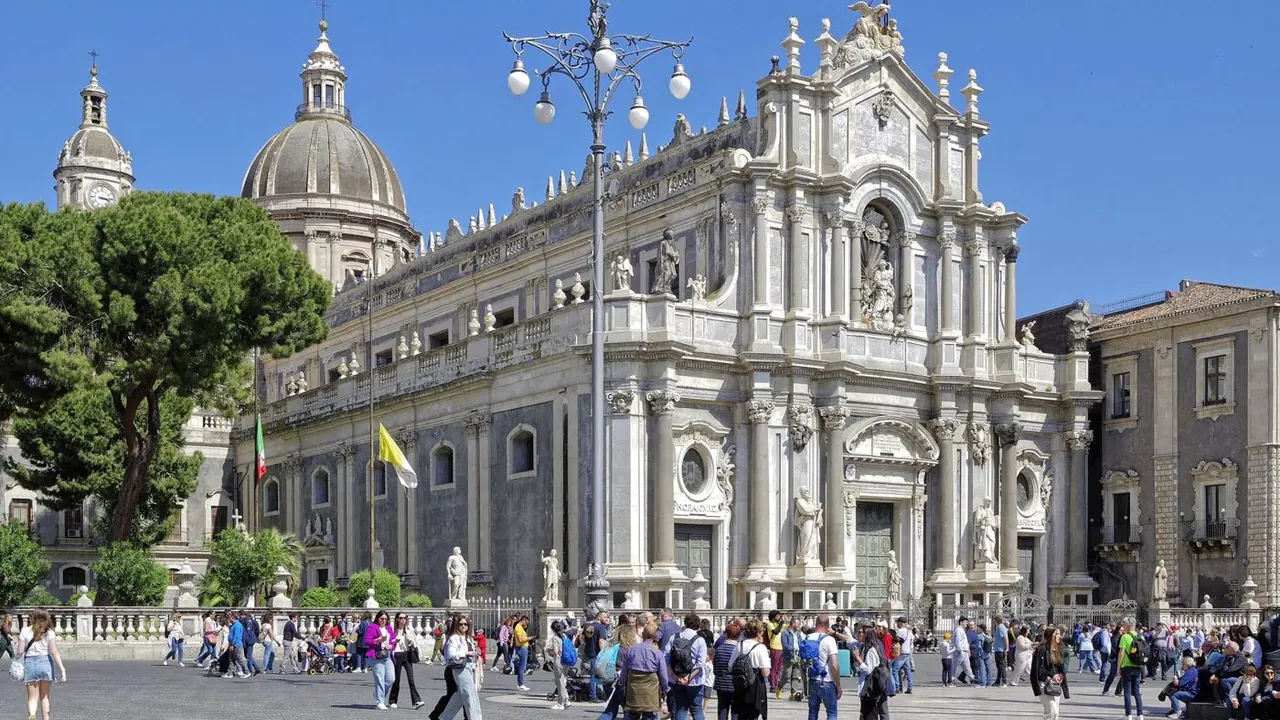
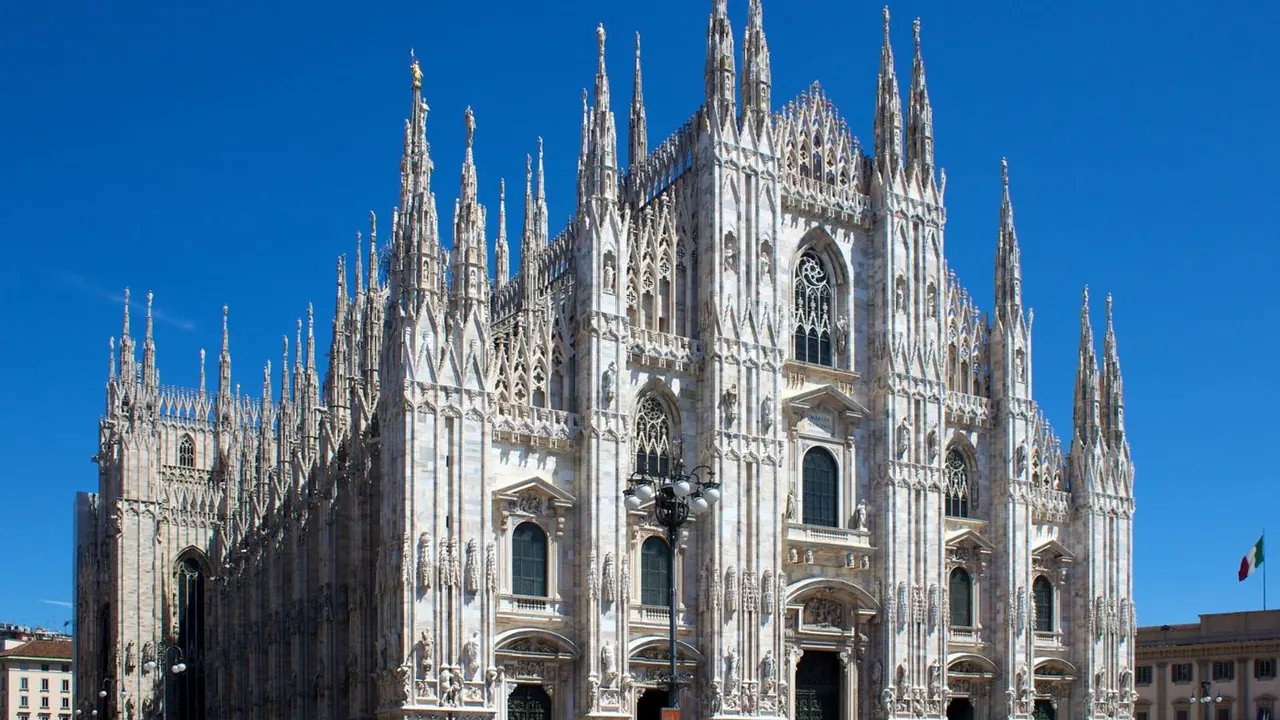
Photos: Catania by Berthold Werner, CC BY-SA 4.0, cropped; Milan by Jiuguang Wang, CC BY-SA 3.0, cropped.
Catania or Milan?
Our verdict in twelve categories, each scored against the same fixed benchmark cities, and the climate month by month, so you can choose for your trip.
Choose Catania for
- beaches
- prices
- nature and the outdoors
Catania is the choice for a warm-weather trip that mixes sea, volcano and street food. You can swim off lava rocks in the morning, walk old craters on Etna in the afternoon and eat arancini at a market counter for supper, all without spending much. It suits travellers who don't mind some noise and rough edges, and who are happy to hire a car for the baroque towns.
Choose Milan for
- shopping
- getting around
- live music and the arts
Milan rewards a different traveller: someone who wants famous art, opera at La Scala and the best shopping in Italy, and who likes to get around by metro and fast train rather than by car. It costs more and has no sea, but as a base for culture, style and easy rail trips to the lakes and northern cities it has no real rival on this page.
Scoreboard
Twelve categories on one fixed scale from 0 to 100. The shaded stretch is the gap between the two.
Your match
Pick a travel style or drag the sliders, and both match scores follow your weighting.
Wins on beaches and prices with your weighting.
Wins on shopping and getting around with your weighting.
What matters to you?
Category by category
What the scores mean for a trip.
Beaches & swimming
Catania has a real choice of coast. La Playa is the easy option, a long sandy beach lined with clubs. The more striking option is the black lava shore around Aci Castello and Aci Trezza, where you climb down ladders into clear water facing the basalt sea stacks.
Milan is landlocked, and summer swimming means the Idroscalo basin, the city's open-air pools or a train to the pebbly lidos of Lake Como and Lake Maggiore. The lakes are lovely, but a swim there is an occasional day out, never part of daily life as it is in Catania.
Food & drink
Both are excellent places to eat, but in opposite ways. Catania is at its best in the street and the market: cone-shaped arancini, horse meat grilled on Via Plebiscito, granita with brioche for breakfast and the morning's catch from La Pescheria, with Etna's volcanic wines to drink alongside.
Milan eats richer and more formally, with saffron risotto, ossobuco and cotoletta, a serious fine-dining tier and good cooking from every Italian region. The ritual to plan around is aperitivo in the Navigli, Brera or Isola. Here, cheap eating is the weaker side.
Culture & sights
Milan has the bigger cultural sights. Leonardo's Last Supper, the marble Duomo with its rooftop among the spires, the paintings of the Brera and Michelangelo's Rondanini Pietà at the Castello would each justify a trip on their own. The catch is that they come in clusters within a largely modern city.
Catania offers an unbroken late-baroque townscape of dark lava stone, part of the UNESCO-listed Val di Noto group, with Via dei Crociferi and the vast San Nicolò l'Arena monastery. Its museums are modest, though, and two or three days see the centre.
Nightlife
Milan has the wider and more polished night out. Aperitivo along the Navigli leads on to Brera's smarter bars, the relaxed and gay-friendly streets of Porta Venezia, and clubs ranging from dressy Corso Como to warehouse nights on the edge of town.
Catania goes out late and loudly in its own informal way, with students drinking outside small bars around Piazza Bellini and Via Gemmellaro. In summer the party moves to dance floors at the beach clubs of La Playa, just when Milan empties out for August.
Nature & outdoors
Etna gives Catania the stronger outdoors. You can ride the cable car from the Rifugio Sapienza, walk across lava flows and extinct side craters, or ski within sight of the sea in winter. The Alcantara Gorge and snorkelling around the sea stacks add more.
Milan itself sits on the flat Po plain, with parks and canal towpaths for cycling. The real scenery begins about an hour north, at the lakes and on the Grigne ridges, and you reach it by train.
Day trips
Both are fine bases, but Milan's rail links give it the edge. Verona, Turin, Bergamo's upper town and Lake Como's villages are each about an hour away by train, so a different city every day is realistic without a car.
Catania's list is just as tempting, with Ortigia in Siracusa, Taormina's theatre and the baroque towns of Noto, Modica and Ragusa. Buses cover the main towns, but the baroque circuit and the Piazza Armerina mosaics are far easier with a hire car.
Good for families
Neither city is built around children, and the appeal differs in kind. Catania works best outdoors, with gently shelving sand at La Playa, crater walks on Etna and Etnaland on a hot day. The city streets are hard going with a pushchair, though.
Milan is easier to move around with its flat centre and trams. For a rainy day there is the science and technology museum with its submarine, and Leolandia and Gardaland are within reach for older children.
Getting around
Milan is far easier. Five colour-coded metro lines and a dense tram network cover the city, you can tap a contactless card at the gates, and trains run straight from Centrale or Cadorna to the lakes, so no car is needed.
Catania's centre along Via Etnea is walkable, but beyond it you have one metro line, slow buses and drivers who don't always stop for pedestrians. Many visitors end up hiring a car, and then struggle to park it.
Shopping & style
For shopping there is no contest. Milan is a world fashion capital, from the flagships around Via Montenapoleone to La Rinascente and the Galleria, with design showrooms, Brera boutiques and Navigli antique markets as well.
Catania offers chain stores on Via Etnea and the noisy La Fiera market. What you take home from Catania is mostly edible, such as Bronte pistachio or Etna wine, plus Caltagirone ceramics.
Affordability
Catania is clearly the cheaper trip, but its costs fall in different places from Milan's. Day-to-day life in the city is inexpensive, buses and the metro included. What pushes the bill up is the extras. Rooms cost more in July and August, beach-club sunbeds add up over a week, a guided ascent to Etna's summit craters is a real expense, and the hire car most visitors need for Noto, Modica and Ragusa makes a big difference.
In Milan the base cost is the problem. Hotels are dear all year and very hard to find at fair rates during trade fairs and fashion weeks, and dinner in Brera or a cocktail in a stylish bar is priced to match. Getting about is the cheap part, since fairly priced trains and metro replace the car. Office-worker set lunches and an aperitivo spread in place of supper also help.
Live music & performing arts
Milan has La Scala, one of the world's great opera houses, with gallery seats within reach of a determined visitor. Around it are the Piccolo Teatro, a fine symphony orchestra, jazz rooms and big summer concerts at San Siro.
Catania has a real but smaller offering. Bellini's grand opera house holds a season you can actually attend, and opera dei pupi marionette shows are something Milan has no equivalent for. Even so, it won't fill a week of evenings.
Wellness & relaxation
Neither is a restful city, but Milan offers a little more within its limits. It has a thermal spa complex with outdoor pools and saunas, and the 1930s open-air Bagni Misteriosi in summer. The calm villas of the lakes are an hour away.
Catania has no bathing tradition, and its spas are in hotels on the coast or on Etna. Its rest comes from the pace of the day: long lunches, the evening passeggiata, or a stay in a quiet village on the volcano.
When should you go?
Pick your month. The climate figures are measured averages, not a forecast.
Catania in July
Milan in July
Daytime high, °C
Rainfall in the month, mm
Where the figures come from
Catania's sunshine is measured 88 km from the centre, at Messina.
Milan has no rain gauge within 25 km of the centre, so its rainfall comes from a gridded climate dataset read at the city rather than from a gauge further away.
Milan's sunshine is measured 41 km from the centre, at Novara / Cameri.
Temperature and rainfall are climate normals, averaged over the years shown. Catania: 1991-2020 normals, Catania / Fontanarossa (5.2 km from centre). Milan: 1991-2020 normals, Milano / Linate (8 km from centre).
Catania has a long, hot southern summer. The sea is warm enough for swimming from June into October and peaks at about 26°C in August, but July and August also reach 35°C, which makes the streets hard going in the middle of the day. Late spring and early autumn are the best balance: sunny, warm and good for sightseeing, with the sea still pleasant in September and October. Rain comes in autumn and builds to its peak in December at about 83mm, though winter stays mild and fairly bright.
Milan has a sharper year. Winter highs sit near 7°C, with grey skies and little sun, and summer is warm and humid rather than scorching. May, June and September have the most comfortable temperatures for walking the city, but May and September are among its wettest months, so pack for showers. The heaviest rain falls in autumn, peaking at about 128mm in November, while the drier months are the cold ones in midwinter. In winter Catania is much the milder and sunnier city. In summer Milan is easier for walking, and only Catania has the sea.
Which traveller are you?
On a beach and sun trip, Catania wins outright. It has the long sand of La Playa and clear water off the lava rocks of the Riviera dei Ciclopi. Milan is landlocked, so a swim there means a train ride out to the lakes.
For a shopping trip, Milan is in a different league. It has the fashion houses of the Quadrilatero, the Galleria, design showrooms and the vintage shops of Brera and Porta Ticinese. In Catania the best things to buy are pistachio cream, Etna wine and ceramics.
On a trip with a tight budget, Catania stretches the money much further. Street food makes a full meal, rooms in the old centre are reasonable and the baroque streets cost nothing to walk. In Milan, hotels and smart bars quickly eat into a budget.
Before you go
| Measure | Catania | Milan |
|---|---|---|
| Official language | Italian | Italian |
| Currency | Euro (EUR) | Euro (EUR) |
| Sockets | CFL230 V, 50 Hz | CFL230 V, 50 Hz |
| Driving side | Right | Right |
| Time zone | UTC+1, UTC+2 in summer | UTC+1, UTC+2 in summer |
| Emergency number | 112 | 112 |
| Elevation | 7 m | 138 m |
| Main airport | Catania-Fontanarossa Airport (CTA)4 km from centre96 non-stop destinations | Milan Malpensa International Airport (MXP)40 km from centre208 non-stop destinations |
| Public holidays this year | 13 days | 13 days |
By the numbers
| Measure | Catania | Milan |
|---|---|---|
| City population | 311,584 | 1,354,196 |
| People per km² | 1,704 | 7,453 |
| Museums within 10 km | 25 | 88 |
| UNESCO World Heritage sites within 50 km | 3 | 4 |
| Swim season, months above 21 °C | 5 months | - |
Where else could you go?
Every comparison below shares a destination with this one, so you can follow Catania or Milan somewhere new.