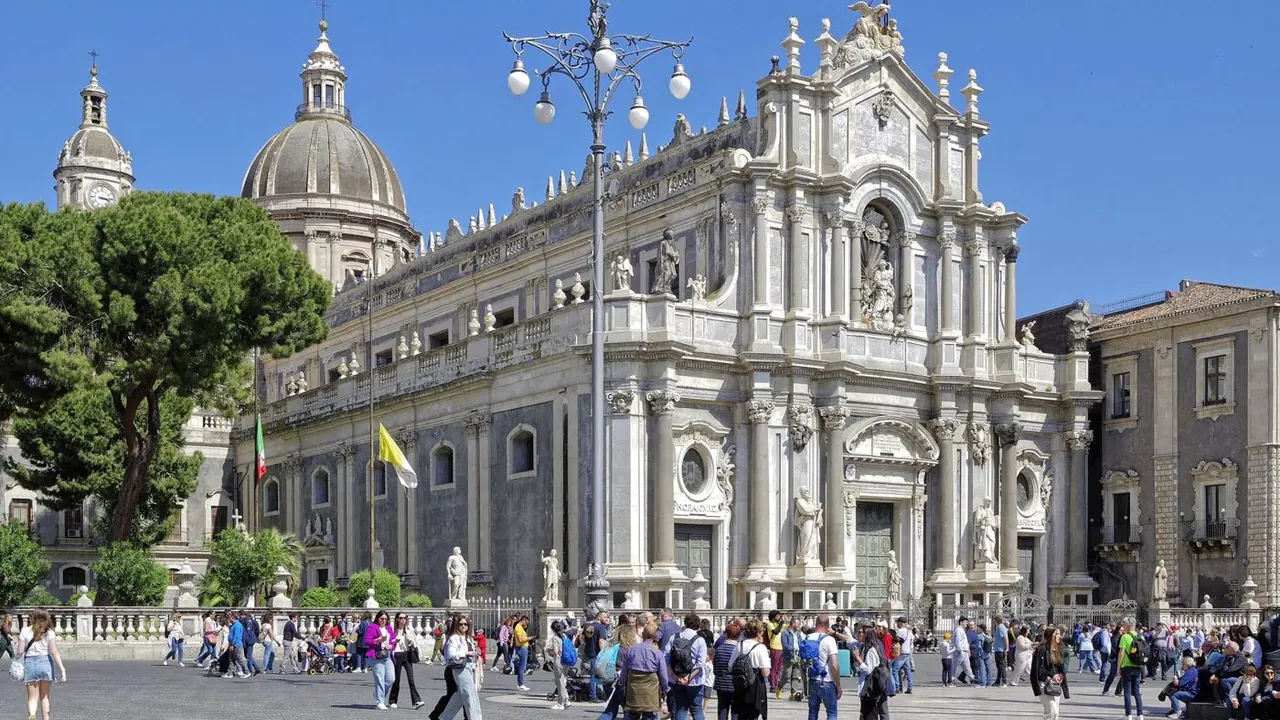
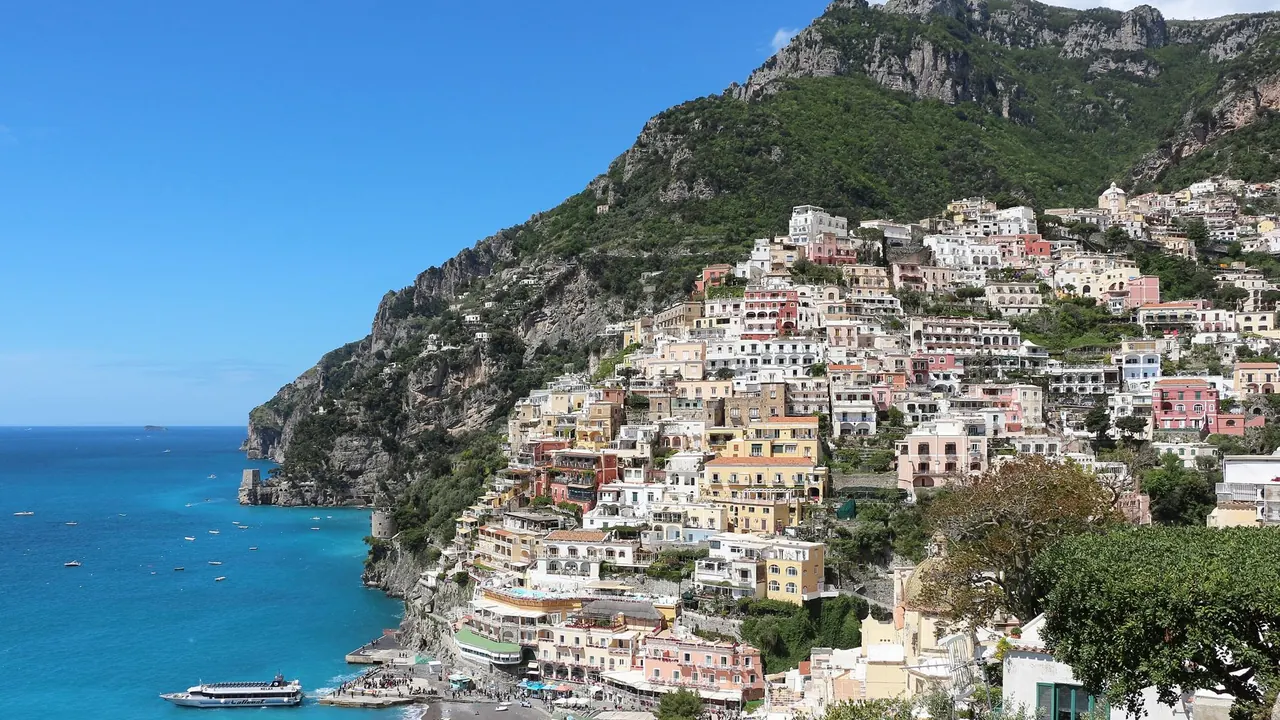
Photos: Catania by Berthold Werner, CC BY-SA 4.0, cropped; Positano by Bernard Gagnon, CC BY 4.0, cropped.
Catania or Positano?
Our verdict in twelve categories, each scored against the same fixed benchmark cities, and the climate month by month, so you can choose for your trip.
Choose Catania for
- prices
- culture and sights
- live music and the arts
Catania suits travellers who want a real Sicilian city with a volcano behind it. You get street food and the fish market, late-baroque streets of lava stone, an opera house that stages full seasons, and lanes full of people drinking outside until late. It is also the obvious base for eastern Sicily, and it costs far less than the Amalfi Coast.
Choose Positano for
- wellness
- beaches
- day trips
Positano is the better choice for a slower, scenic stay where the setting matters more than anything there is to do. It is built for couples and for anyone who wants to swim in deep blue water, walk the cliff paths and take boats to Capri and Amalfi. Come for the view from a terrace and a calm evening, and set aside a generous budget.
Scoreboard
Twelve categories on one fixed scale from 0 to 100. The shaded stretch is the gap between the two.
Your match
Pick a travel style or drag the sliders, and both match scores follow your weighting.
Wins on prices and culture and sights with your weighting.
Wins on wellness and beaches with your weighting.
What matters to you?
Category by category
What the scores mean for a trip.
Beaches & swimming
The two are close here, and Positano's sea is a little more of an attraction because the beaches sit right below the town. Spiaggia Grande and Fornillo are steps from your room, and boats run to coves you can't reach on foot. The shore is coarse grey sand and pebbles that drops off steeply, and it fills up early in summer.
Catania's beaches lie outside the centre and come in two kinds. La Playa is long, easy sand with beach clubs, and the Riviera dei Ciclopi has black lava platforms where you climb down ladders into clear water beside the sea stacks of Aci Trezza.
Food & drink
Catania is far stronger here. It is a true street-food city of horse-meat grills on Via Plebiscito, tavola calda counters, pistachio from Bronte and the noisy Pescheria behind the cathedral, with Etna's volcanic reds and whites to go with it all.
Positano's strength is a long lunch over the sea with clams, grilled fish and lemon desserts. Most menus repeat the same coastal dishes, though, and there are no markets or everyday cheap eating. Many kitchens also close in winter.
Culture & sights
Catania gives you a whole UNESCO-listed baroque city to explore. You have the cathedral and the elephant fountain, the churches along Via dei Crociferi, the huge Benedictine monastery and Roman ruins showing between the streets, and two or three days are well spent. In February, the Feast of Sant'Agata brings one of Italy's largest religious processions.
In Positano the sight is the view of the town itself. The majolica dome of Santa Maria Assunta and the Roman villa under it take a couple of hours.
Nightlife
If you want a night out, go to Catania. Its large student population keeps the lanes around Piazza Bellini and the Teatro Massimo busy with outdoor drinkers past midnight. In summer, the beach clubs on La Playa turn into open-air dance floors.
Evenings in Positano mean aperitivo and a long dinner. There are a few bars by the beach and one dressy club in a cave, and even that winds down when the season ends.
Nature & outdoors
Both are excellent and evenly matched, but the landscapes are very different. At Catania everything turns on Etna. You can take the cable car up from the Rifugio Sapienza, walk across recent lava flows, ski with a view of the sea in winter or wade through the basalt Alcantara Gorge.
Positano's drama is the meeting of mountain and sea. The Path of the Gods runs high above terraced lemon groves, woodland trails climb to ridges over 1,000m, and kayaks follow the cliffs to grottoes and the Li Galli islets.
Day trips
Both have a long list of places within reach, and the difference lies in how you get there and what you see. From Catania you can reach Siracusa's Ortigia, Taormina's theatre, the baroque towns of Noto, Modica and Ragusa and the mosaics at Piazza Armerina, and a hire car makes the circuit easiest.
From Positano you travel by boat to Amalfi, Ravello and Capri, and to Pompeii and Herculaneum via Sorrento. That works well in season, but in winter most ferries stop and the slow coast buses take over.
Good for families
Catania is the easier choice with children, if not an ideal one. La Playa's sand shelves gently, older children usually love walking on Etna's craters, and Etnaland fills a hot day. The city streets, though, are busy and short of shade.
Positano is built almost entirely of stairs, so a pushchair is useless, and its beaches are pebbly and drop off fast. Teenagers who like boats will be happy there, while toddlers struggle.
Getting around
Neither is effortless, but Catania is easier. Its historic centre is small enough to cover on foot, from Via Etnea down to Piazza del Duomo and Castello Ursino. Regional buses do the longer runs to Siracusa, Taormina and the Etna refuge, and the slow Circumetnea railway circles the volcano. The single metro line only helps along its own route, and a hire car still makes the baroque towns easier.
In Positano almost every walk means hundreds of steps. Ferries are the easiest way along the coast but run mostly in season, and the single narrow road makes a car more trouble than help.
Shopping & style
Neither is a major shopping trip, and they appeal in different ways. Catania is about markets and things to eat: La Fiera's daily market, pistachio creams, Etna wines and Caltagirone ceramics, plus chain stores along Via Etnea.
In Positano the shopping comes as a single look. Its lanes are lined with white linen and printed resort wear, and sandal makers will cut a pair to fit while you wait.
Affordability
This is where the two differ most. Catania is easy on the budget, with filling street food, fairly priced trattorias, reasonable rooms in the old centre and churches you can visit free. The main extra costs are high summer, sunbeds and guided trips to Etna's summit.
Positano is among the most expensive places to stay in Italy, from sea-view rooms to loungers, boat trips and terrace dinners. Staying in Praiano or Sorrento saves a great deal.
Live music & performing arts
Catania was Bellini's birthplace, and you can get tickets for the opera and symphony seasons at the grand Teatro Massimo Bellini. The city also keeps up the opera dei pupi, the Sicilian puppet theatre of knights and Saracens, and in summer concerts move into courtyards and ancient theatres.
Positano itself has only occasional church concerts. The best evening option is Ravello's summer festival of classical music further along the coast.
Wellness & relaxation
Positano is the more restful choice. Its upscale hotels have spas and cliffside pools, and an afternoon on a terrace above the sea is restful in itself, especially in May, June and late September, when the crowds thin.
Catania's centre is noisy, and its spas are found mainly in hotels on the coast and on Etna's lower slopes. The slow rhythm of granita, a long lunch and the evening passeggiata, or a stay in a village on the volcano, is the city's way of resting.
When should you go?
Pick your month. The climate figures are measured averages, not a forecast.
Catania in July
Positano in July
Daytime high, °C
Rainfall in the month, mm
Where the figures come from
Catania's sunshine is measured 88 km from the centre, at Messina.
Positano's temperatures are measured 25 km from the centre, at Capri.
Positano has no rain gauge within 25 km of the centre, so its rainfall comes from a gridded climate dataset read at the city rather than from a gauge further away.
Positano's sunshine is measured 59 km from the centre, at Grazzanise.
Temperature and rainfall are climate normals, averaged over the years shown. Catania: 1991-2020 normals, Catania / Fontanarossa (5.2 km from centre). Positano: 2005-2025 (sunshine 1991-2020, rainfall 1991-2020) normals, Capri (25.3 km from centre).
Both cities are warm enough for the beach from June to early October, and the sea in each reaches about 26°C in August. Catania is the hotter and drier of the two. Its summers peak around 32°C with almost no rain, which makes midday walking in the city hard work in July and August. Positano stays a few degrees cooler, and the sea breeze on its terraces helps, but its stairways are tiring in the heat as well.
The two differ most outside summer. Catania stays fairly dry well into spring, and May is warm, sunny and good for both sightseeing and Etna. Positano has noticeably more rain in spring, and from October the coast turns wet, with about 127mm in November. Catania's winters are milder too, so it makes the better choice between November and March. Positano is at its best in late May, June and September.
Which traveller are you?
On a food and nightlife trip, Catania is the clear pick. Graze from granita to fried crispelle and market swordfish, then join the students drinking outside past midnight. Positano offers aperitivo, long dinners and a small summer bar scene.
For a trip on a tight budget, Catania lets a week run on without much worry about money. Lunch can be eaten standing at a counter, and a regional bus takes you to Siracusa or Taormina for the day. In Positano, every coffee and boat ride makes you check the cost.
For a relaxing and wellness trip, Positano is the place to do very little. Book a room with a view and let the days go between a swim, a slow lunch and an evening drink. Catania is a city for exploring rather than switching off.
Before you go
| Measure | Catania | Positano |
|---|---|---|
| Official language | Italian | Italian |
| Currency | Euro (EUR) | Euro (EUR) |
| Sockets | CFL230 V, 50 Hz | CFL230 V, 50 Hz |
| Driving side | Right | Right |
| Time zone | UTC+1, UTC+2 in summer | UTC+1, UTC+2 in summer |
| Emergency number | 112 | 112 |
| Elevation | 7 m | 142 m |
| Main airport | Catania-Fontanarossa Airport (CTA)4 km from centre96 non-stop destinations | Naples International Airport (NAP)33 km from centre131 non-stop destinations |
| Public holidays this year | 13 days | 13 days |
By the numbers
| Measure | Catania | Positano |
|---|---|---|
| City population | 311,584 | 3,729 |
| People per km² | 1,704 | 429 |
| Museums within 10 km | 25 | 10 |
| UNESCO World Heritage sites within 50 km | 3 | 5 |
| Swim season, months above 21 °C | 5 months | 5 months |
Where else could you go?
Every comparison below shares a destination with this one, so you can follow Catania or Positano somewhere new.