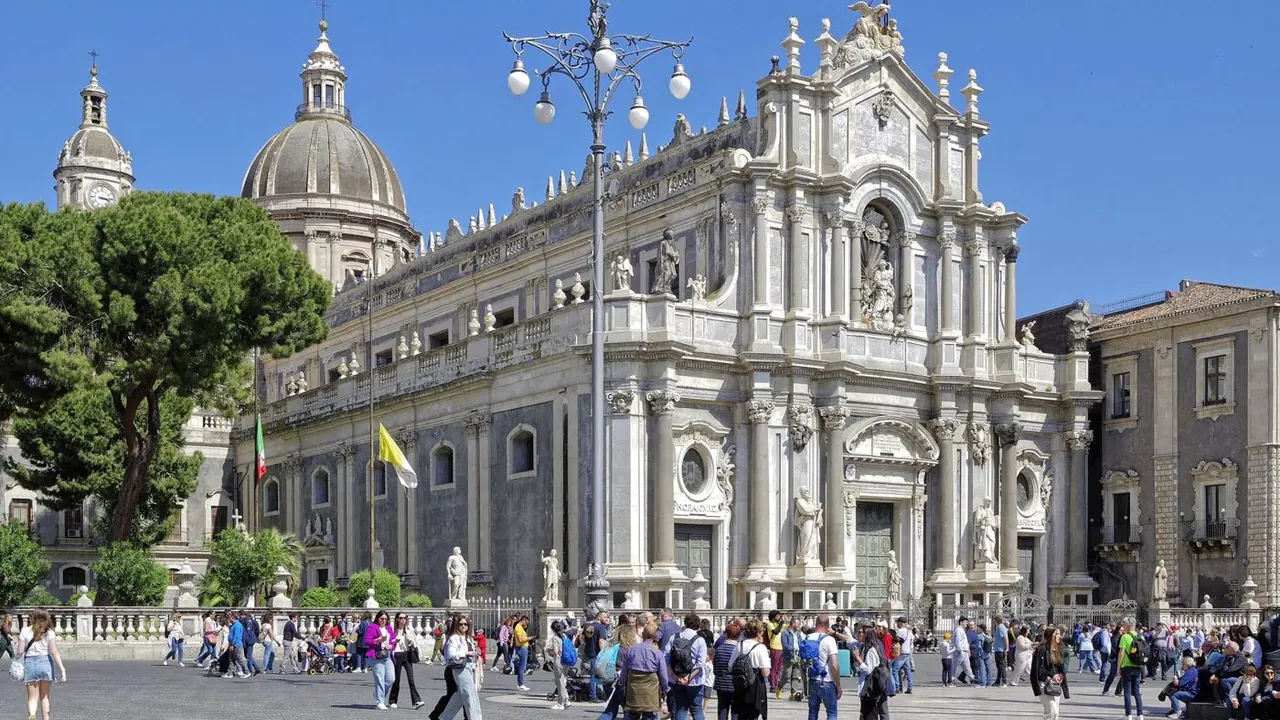
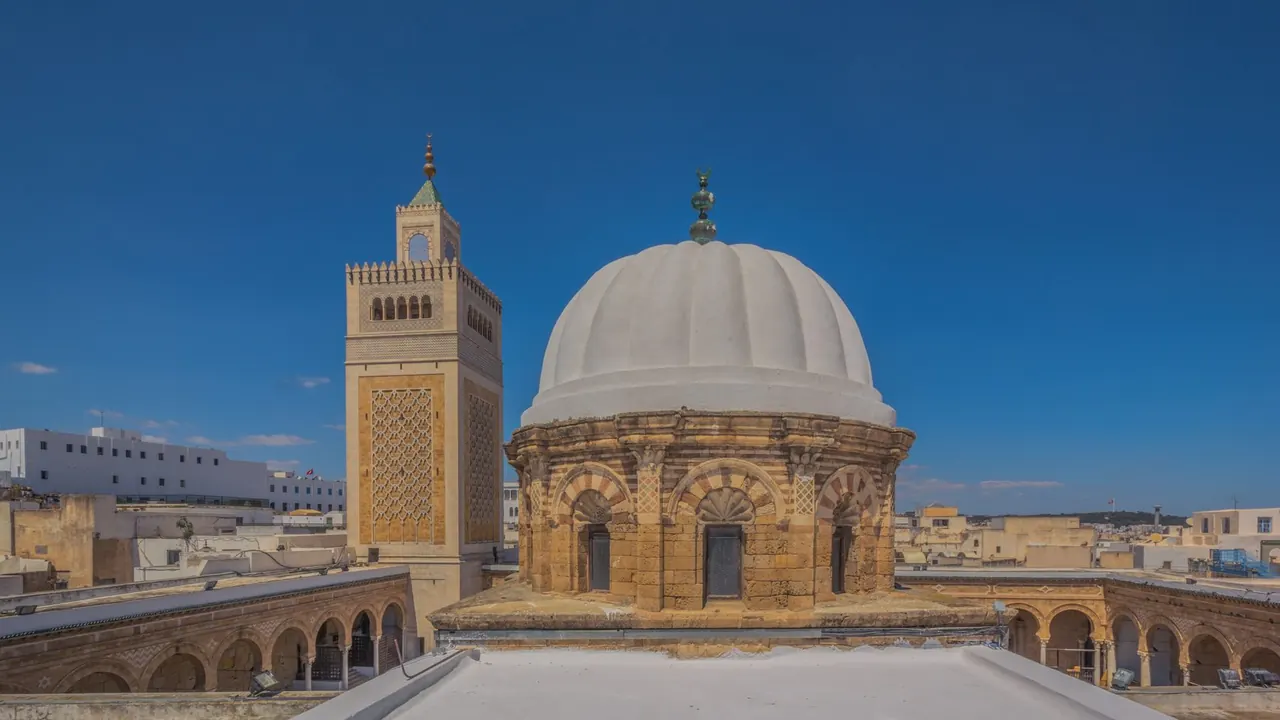
Photos: Catania by Berthold Werner, CC BY-SA 4.0, cropped; Tunis by IssamBarhoumi, CC BY-SA 4.0, cropped.
Catania or Tunis?
Our verdict in twelve categories, each scored against the same fixed benchmark cities, and the climate month by month, so you can choose for your trip.
Choose Catania for
- nature and the outdoors
- nightlife
- food and drink
Catania suits travellers who want an active, sociable trip with a lot of landscape. Etna is close enough for a morning on the craters and an evening back in town, the lava coast at Aci Trezza is made for swimming and snorkelling, and the street food and late bar crowd around Piazza Bellini fill the nights. It is also the easier base for day trips, with Siracusa and Taormina each about an hour away.
Choose Tunis for
- wellness
- prices
- culture and sights
Tunis is the better pick if history and a budget that stretches matter more than late nights. The intact medina, the Bardo's Roman mosaics and the ruins of Carthage add up to the richer set of sights, and the city costs far less than Sicily. Its evenings are quieter and centred on cafés, but steam in a medina hammam or a seawater spa in Gammarth gives it a restful side that Catania lacks.
Scoreboard
Twelve categories on one fixed scale from 0 to 100. The shaded stretch is the gap between the two.
Your match
Pick a travel style or drag the sliders, and both match scores follow your weighting.
Wins on nature and the outdoors and nightlife with your weighting.
Wins on wellness and prices with your weighting.
What matters to you?
Category by category
What the scores mean for a trip.
Beaches & swimming
Catania has the better swimming within the city itself, and it comes in two kinds. La Playa to the south is a long sandy beach lined with beach clubs. To the north, at Aci Castello and Aci Trezza, you climb down ladders from lava-rock platforms into very clear water, with basalt stacks just offshore.
In Tunis the swimming is a train ride away, on the sandy beaches of La Marsa and Gammarth, because the water near the port and lagoon is less clean. For a fuller beach day, each city sends you somewhere else: Taormina's Isola Bella for coves, or Hammamet's wide, calm beaches.
Food & drink
Catania is the stronger food city. Its street food runs from ragù arancini and fried crispelle to horse meat grilled on Via Plebiscito, and La Pescheria supplies the trattorias around it. Etna's volcanic wines and Bronte pistachio granita add a local depth that Tunis cannot match.
Tunis is cheap, spicy and very good at the quick end: brik with a runny egg, lablabi for breakfast, harissa on almost everything, and pastries from the medina's sweet shops. Beyond the seafood places of La Goulette and La Marsa, though, sit-down options are thin, and wine is limited to licensed restaurants and hotels.
Culture & sights
Tunis has the deeper set of sights. Its UNESCO-listed medina is a complete working old city of souks, madrasas and carved doorways around the Zitouna Mosque, and the French-built boulevards beyond it show a second chapter of history. The Bardo holds one of the world's great collections of Roman mosaics, and Carthage and Sidi Bou Said fill several more days.
Catania offers a single, coherent look: late-baroque streets of dark lava stone, rebuilt after 1693, with Via dei Crociferi and the vast San Nicolò monastery as highlights. It has Roman remains too, but its museums are modest and the centre takes two or three days. The Feast of Sant'Agata in February is its great spectacle.
Nightlife
Catania is the place to go out. A large student population keeps the small bars around Piazza Bellini and the Teatro Massimo busy until well past midnight, with drinkers spilling into the lanes. In summer, the beach clubs along La Playa turn into open-air dance floors.
In Tunis, evenings mostly mean coffee, mint tea and shisha in cafés. The downtown beer bars are rough and largely male. A mixed late-night scene exists only in the lounges and beach clubs of La Marsa and Gammarth on summer weekends.
Nature & outdoors
Etna gives Catania a huge advantage. A smoking volcano of about 3,300m sits within an hour of the city, with a cable car up from the Rifugio Sapienza, trails across lava fields and beech woods, and even small ski areas in winter. Add the Alcantara Gorge and the dive and kayak waters of the Riviera dei Ciclopi, and few Mediterranean cities have more outdoors on the doorstep.
Tunis's surroundings are gentle by comparison. You can watch flamingos on the lagoon, take short hikes on Bou Kornine and walk the clifftops at Sidi Bou Said. Ichkeul's wetlands are a real draw for birdwatchers, but trails and outfitters are scarce.
Day trips
Both make good bases, but Catania's best trips are closer and more varied. Siracusa's Ortigia and Taormina's Greek theatre are each about an hour away. The baroque towns of Noto, Modica and Ragusa, plus the mosaics at Piazza Armerina, complete the list. A hire car makes the baroque circuit much easier.
From Tunis, the main trips take longer. The Roman town of Dougga and the holy city of Kairouan are each about two hours away, and most visitors use a driver or a shared louage. What they offer is a world Sicily cannot: Roman Africa among olive groves, the Great Mosque of the Maghreb's holiest city, and Testour's Andalusian heritage.
Good for families
Catania gives children more to do. There are the gently shelving sands of La Playa, walks on old craters up Etna and the Etnaland theme and water park for a hot day. Its streets are still hard going, with heavy traffic, narrow pavements and little shade.
Tunis welcomes children just as warmly, and Belvedere Park's small zoo and the open ruins of Carthage make good outings. Beyond those, very little is built for children, and a pushchair is a struggle in the medina. Many families stay at a beach hotel and visit the city for the day.
Getting around
Getting around is about equally easy in both cities, but in different ways. Catania's sights cluster along Via Etnea and around Piazza del Duomo, so the centre is easily walked. Beyond it the single metro line and slow buses help little, so most visitors hire a car for Etna and the baroque towns, and then struggle to park it.
Tunis works better without a car. The TGM suburban railway runs across the lagoon to Carthage, Sidi Bou Said and La Marsa, and metered yellow taxis are plentiful. Longer trips rely on louage minibuses or a hired driver.
Shopping & style
Tunis has the more rewarding shopping, as long as you enjoy souks. Its covered medina lanes are still partly arranged by trade, with chechia makers, perfumers, kilims, brass and leather, and patient bargaining deeper in pays off.
Catania's main street, Via Etnea, is mostly Italian chains, and La Fiera sells everyday goods rather than crafts. Its best buys are edible, such as pistachio cream, almond pastries and Etna wine, along with Caltagirone ceramics. Neither city offers much luxury shopping.
Affordability
Tunis is much the cheaper city. Meals where locals eat, café stops, taxis and train rides cost very little, and restored medina guesthouses cost a fraction of their Mediterranean equivalents. Only Gammarth's smart hotels, imported alcohol and organised tours approach European prices.
Catania is good value by Western European standards, with cheap street food and fairly priced trattorias. However, summer rooms, beach-club sunbeds, guided trips to Etna's summit and a hire car for the baroque towns all add noticeably to the bill.
Live music & performing arts
Catania has more for an evening out. The Teatro Massimo Bellini, in the composer's birthplace, runs a full opera and symphonic season that a visitor can easily book into, and small companies still stage the Sicilian puppet theatre of knights and Saracens.
Tunis comes into its own in particular seasons. The Carthage festival fills the Roman theatre with concerts in summer, and Ennejma Ezzahra in Sidi Bou Said hosts malouf recitals. On an ordinary weeknight, however, choice is thin, and plays at the Municipal Theatre are mostly in Arabic or French.
Wellness & relaxation
Tunis is clearly better for rest and treatments. Medina hammams still serve their neighbourhoods, Gammarth's resorts offer full thalassotherapy, and the Roman-era springs of Korbous are an hour away on Cap Bon.
Catania has no bathing tradition, and its spas are mostly in hotels on the coast or on Etna's slopes. In Catania, calm comes from the pace of the day: a long lunch, the evening passeggiata, or a stay in a quiet village on the volcano.
When should you go?
Pick your month. The climate figures are measured averages, not a forecast.
Catania in July
Tunis in July
Daytime high, °C
Rainfall in the month, mm
Where the figures come from
Catania's sunshine is measured 88 km from the centre, at Messina.
Temperature and rainfall are climate normals, averaged over the years shown. Catania: 1991-2020 normals, Catania / Fontanarossa (5.2 km from centre). Tunis: 1991-2020 normals, Tunis-Carthage (6 km from centre).
The sea behaves almost identically in both cities. It is warm enough for swimming from June into October and reaches about 26°C in August. On land Tunis runs hotter. Its August highs of around 35°C make long walks through the medina hard work from June to August, while Catania peaks a few degrees lower at about 32°C, which is still fierce in the shadeless streets. Both have dry summers, and the rain returns in September.
For sightseeing on foot, April, May and October are the best months in both cities. Winters are mild in both, but Catania is wetter and duller, with about 83mm of rain in December. Tunis gets noticeably more sunshine in every month, so a winter trip there feels brighter.
Which traveller are you?
On an outdoors trip, choose Catania and go in May or October, when the heat no longer makes low trails hard work. Alternate days on the volcano with days in the water along the lava coast. Tunis offers only gentler walks.
For a trip on a tight budget, Catania is fine in spring or autumn but never cheap. Tunis lets the money go further: sleep in a medina guesthouse, eat where locals eat and take a louage to Dougga rather than a tour.
On a relaxing and wellness trip, Tunis is gentler than traffic-bound Catania. Start in a medina courtyard guesthouse with slow mint tea at Sidi Bou Said, then move out to Gammarth for a few nights of seawater spa treatments.
Before you go
| Measure | Catania | Tunis |
|---|---|---|
| Official language | Italian | Arabic |
| Currency | Euro (EUR) | Tunisian Dinar (TND) |
| Sockets | CFL230 V, 50 Hz | CE230 V, 50 Hz |
| Driving side | Right | Right |
| Time zone | UTC+1, UTC+2 in summer | UTC+1 |
| Emergency number | 112 | Police 197, ambulance 190, fire 198 |
| Elevation | 7 m | 4 m |
| Main airport | Catania-Fontanarossa Airport (CTA)4 km from centre96 non-stop destinations | Tunis Carthage International Airport (TUN)7 km from centre56 non-stop destinations |
| Public holidays this year | 13 days | 8 days |
By the numbers
| Measure | Catania | Tunis |
|---|---|---|
| City population | 311,584 | 602,560 |
| People per km² | 1,704 | 2,834 |
| Museums within 10 km | 25 | 16 |
| UNESCO World Heritage sites within 50 km | 3 | 3 |
| Swim season, months above 21 °C | 5 months | 5 months |
Where else could you go?
Every comparison below shares a destination with this one, so you can follow Catania or Tunis somewhere new.