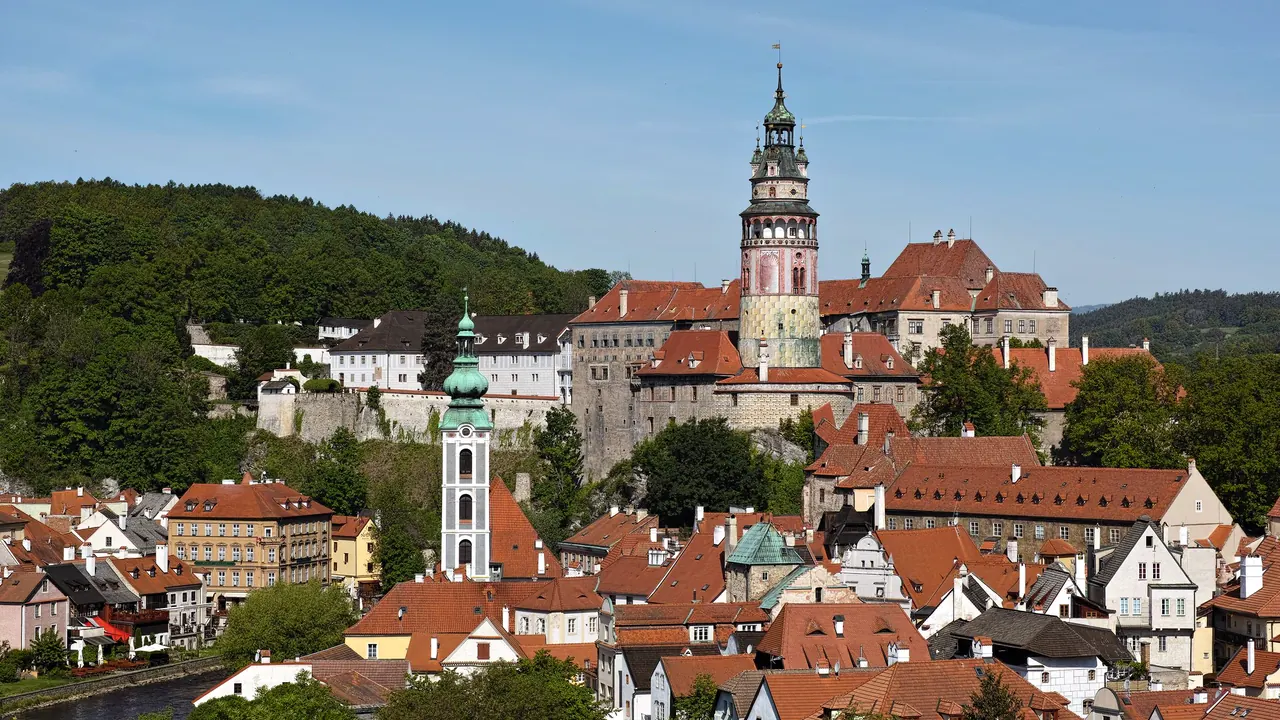
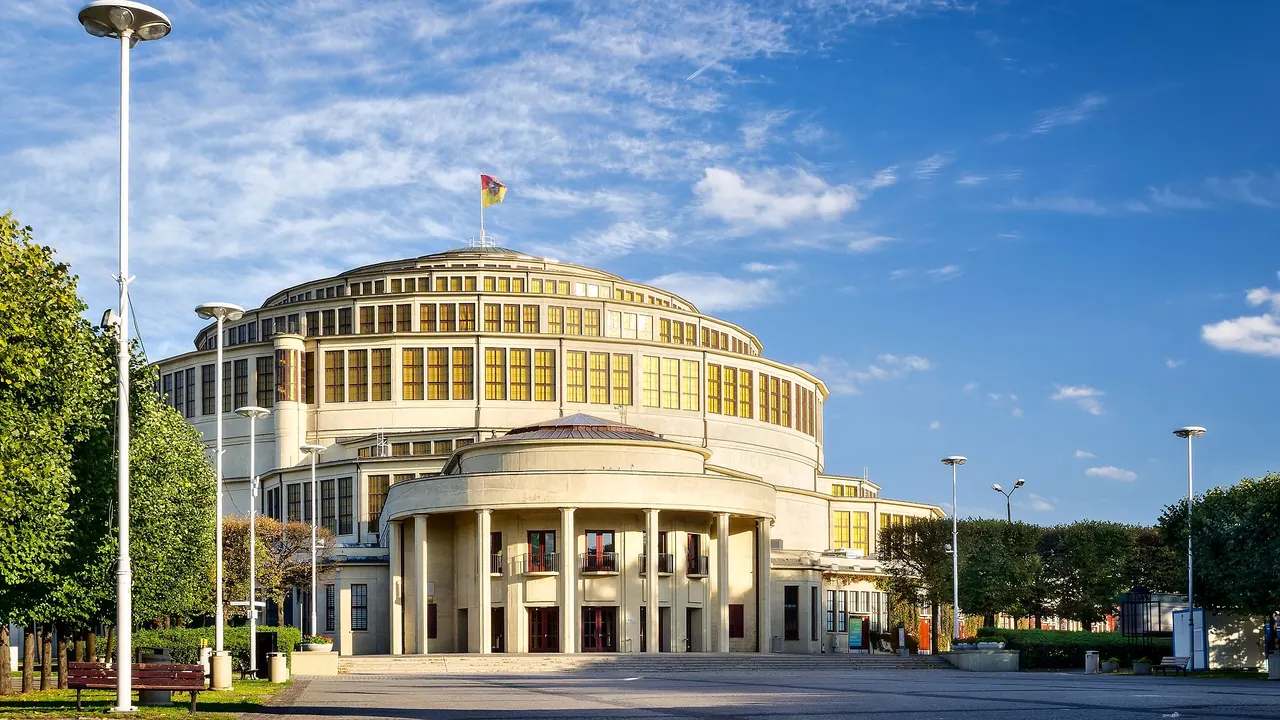
Photos: Cesky Krumlov by Xth-Floor, CC BY-SA 4.0, cropped; Wroclaw by Jar.ciurus, CC BY-SA 3.0 PL, cropped.
Cesky Krumlov or Wroclaw?
Our verdict in twelve categories, each scored against the same fixed benchmark cities, and the climate month by month, so you can choose for your trip.
Choose Cesky Krumlov for
- beaches
- nature and the outdoors
Cesky Krumlov suits a short, slow trip built around one beautiful place: a castle above a tight river bend, a UNESCO old town best walked early and late, and a day spent drifting down the Vltava by canoe or raft. It is the one to pick if you want the Bohemian Forest and Lipno close at hand and are happy for evenings to end with a beer by the river.
Choose Wroclaw for
- nightlife
- live music and the arts
- food and drink
For a fuller stay with more going on, Wroclaw is the stronger choice. It has a real night out, a proper season of concerts and opera, a zoo and dwarf-hunting to keep children busy, and trams to get about, and day to day it costs less. Its castles and mountains are further out, but there are more of them, and the city itself fills several days.
Scoreboard
Twelve categories on one fixed scale from 0 to 100. The shaded stretch is the gap between the two.
Your match
Pick a travel style or drag the sliders, and both match scores follow your weighting.
Wins on beaches and nature and the outdoors with your weighting.
Wins on nightlife and live music and the arts with your weighting.
What matters to you?
Category by category
What the scores mean for a trip.
Beaches & swimming
Cesky Krumlov has the better swimming, though only by car and only in summer. Lipno reservoir is about half an hour south, with sandy and grassy shores and water around 20°C in July and August.
Wroclaw's sandy spots along the Oder are for lounging in deckchairs, not for getting in the water. Swimmers use pools or lakes out in the countryside, and the Baltic is most of a day away. Neither is a beach destination.
Food & drink
Wroclaw gives you more choice. Beyond pierogi, żurek in a bread bowl and roast duck, it has old-style milk bars for cheap lunches, bistros off the Market Square that cook Polish food with a lighter touch, and brewpubs in historic cellars.
Cesky Krumlov serves a narrower range of South Bohemian roasts with dumplings, river trout and game, mostly in cellars and on riverside terraces, and many menus are aimed at day-trippers. In both places the beer is the highlight, and neither is worth travelling to just for the food.
Culture & sights
The two are about equally rewarding, but in different ways. Cesky Krumlov is one intact Renaissance and Baroque townscape gathered under one of the country's largest castles. The Cloak Bridge, the painted tower and the rare Baroque castle theatre are the high points, and you can see them all in a day or two.
Wroclaw spreads its sights across a much larger city. There is the Gothic Town Hall on the Market Square, the red-brick churches of Ostrów Tumski, the gilded Aula Leopoldina, the Centennial Hall and the Racławice Panorama. Much of its centre was rebuilt after 1945, so it is a story of reconstruction rather than survival, and its museums go deeper.
Nightlife
This is one of the clearest differences between the two. Wroclaw's large student population keeps the cellars and courtyards around the Market Square busy, with shot bars, craft beer and cocktails side by side, and weekends go on past 2am. Clubs are few, and the city quietens between university terms.
Cesky Krumlov has a handful of pubs and cellar bars, terraces by the river in summer, and no clubs at all. Outside peak season the lanes empty early.
Nature & outdoors
Cesky Krumlov puts the countryside on your doorstep. You can paddle the wooded meanders of the Vltava straight from town, the Bohemian Forest's spruce woods and peat bogs begin half an hour away, and Klet offers views towards the Alps.
Wroclaw sits on a flat plain, and its green spaces are inside the city: river islands, Szczytnicki Park and the Japanese Garden. For proper hiking you drive an hour to Ślęża or two hours to the Karkonosze and the Table Mountains. These are more dramatic than anything near Cesky Krumlov, but much further away.
Day trips
Both are good bases for exploring their regions, but distances differ. Around Cesky Krumlov the trips are short: Zlatá Koruna is minutes along the river, and České Budějovice, Hluboká castle and the Baroque village of Holašovice are close by. Třeboň's fish ponds and Linz across the Austrian border stretch further.
Wroclaw's Lower Silesia means longer drives, of one to two hours. In return you get bigger sights: Książ castle above its gorge, the wooden Churches of Peace, Krzeszów abbey and the palaces of the Jelenia Góra valley. Trains reach more of these places than buses do around Cesky Krumlov.
Good for families
Wroclaw is the easier city with children. It has a big zoo with the Afrykarium's shark tunnel, a hands-on water science centre, summer fountain shows and flat, largely car-free streets where children can hunt for the dwarf statues.
Cesky Krumlov's highlights are the bears in the castle moat, the tower climb and a gentle raft trip, with Lipno's treetop walk nearby. Beyond those there is less to do, and the steep cobbles and adult-oriented interior tours make it harder with small children.
Getting around
Cesky Krumlov's old town takes a quarter of an hour to cross on foot, though the cobbles and the climb up to the castle take some effort. Once you leave town, regional buses and trains are sparse, and a car or a tour becomes almost essential.
Wroclaw is flat and its centre is easy to walk, with a large tram network, bike lanes along the river and city bikes for anything further. Direct trains from the main station also make regional trips without a car more realistic.
Shopping & style
Wroclaw has more to offer, though shopping is not a strong reason to visit either place. It has malls for the international chains, the 1930s Renoma department store, a riverside market hall full of cured meats and pickles, and a few design and vintage shops in Nadodrze. Bolesławiec stoneware and amber are the souvenirs to look for.
Cesky Krumlov is almost entirely souvenir shopping: Bohemian glass, garnets, marionettes and green moldavite from the region.
Affordability
Both are cheap by Western European standards, but Wroclaw goes further. Central hotels cost a fraction of what Western capitals charge, milk bar lunches are very cheap, and trams, museums and the zoo are all modestly priced.
Cesky Krumlov is good value, but its small size means premium views are hard to avoid, and every castle tour is charged separately. Staying outside the centre or coming out of summer helps.
Live music & performing arts
Wroclaw has a full year-round programme. The National Forum of Music hosts orchestral and chamber concerts in a fine hall, the opera house stands near the old moat, and festivals such as Wratislavia Cantans and Jazz on the Oder add more. The theatre, with its roots in Grotowski's experimental work, is mostly in Polish.
Cesky Krumlov's offering is mainly in summer: plays and opera in the revolving open-air theatre in the castle garden, and a classical music festival in the castle and churches. For the rest of the year there is little to see.
Wellness & relaxation
Neither town has a bathing tradition, and on that score they are much the same. What differs is the kind of rest each offers. Cesky Krumlov gives you stillness once the day visitors leave, a few beer baths, and Třeboň's peat baths within a day's reach.
Wroclaw has more facilities: an indoor aquapark with saunas, hotel spas and slow afternoons on the river islands. The pump rooms and spa parks of Szczawno-Zdrój are about an hour away.
When should you go?
Pick your month. The climate figures are measured averages, not a forecast.
Cesky Krumlov in July
Wroclaw in July
Daytime high, °C
Rainfall in the month, mm
Where the figures come from
Cesky Krumlov's temperatures are measured 50 km from the centre, at Grainet-Rehberg.
Cesky Krumlov has no rain gauge within 25 km of the centre, so its rainfall comes from a gridded climate dataset read at the city rather than from a gauge further away.
Temperature and rainfall are climate normals, averaged over the years shown. Cesky Krumlov: 1991-2020 normals, Grainet-Rehberg (50.3 km from centre). Wroclaw: 1991-2020 (rainfall 1961-1990) normals, Wroclaw Copernicus Airport (10.5 km from centre).
Both towns are at their best from late May to September and both are cold from December to February, when daytime highs hover just above freezing. Wroclaw is the warmer of the two in summer, reaching about 26°C in July against about 23°C in Cesky Krumlov. That makes Wroclaw better for long evenings outdoors, and Cesky Krumlov more comfortable for climbing to the castle on a hot afternoon. The only swimming either offers is in July and August, at Lipno for Cesky Krumlov and in countryside lakes for Wroclaw.
Cesky Krumlov is clearly the wetter place. Its rain peaks in July at about 111mm, and Wroclaw gets less rain in every month. Wroclaw also has more sunshine from spring to early autumn, so a May or September city break there is more likely to be bright. In Cesky Krumlov, late spring and early autumn are good months for walking and river trips without the wettest weeks.
Which traveller are you?
On a food and nightlife trip, Wroclaw wins easily. It has pierogi, milk bars and lighter modern bistros, and its student crowd fills cellar bars and the Ruska Street courtyard until late. Cesky Krumlov has hearty roasts, good beer and quiet evenings.
For an outdoors trip, Cesky Krumlov is the better base. You can float the Vltava straight from town, the Bohemian Forest's walking and cycling routes start half an hour away, and there is sailing on Lipno. Wroclaw's real hills are one to two hours away.
On a family trip with children, Wroclaw is easier. Its centre is flat and largely free of cars, and it has a large zoo with a shark tunnel, a water science centre and statues to find on every corner. Cesky Krumlov's steep cobbles are hard work with a pushchair.
Before you go
| Measure | Cesky Krumlov | Wroclaw |
|---|---|---|
| Official language | Czech | Polish |
| Currency | Czech Koruna (CZK) | Zloty (PLN) |
| Sockets | CE230 V, 50 Hz | CE50 Hz |
| Driving side | Right | Right |
| Time zone | UTC+1, UTC+2 in summer | UTC+1, UTC+2 in summer |
| Emergency number | 112 | 112 |
| Elevation | 492 m | 111 m |
| Main airport | Václav Havel Airport Prague (PRG)143 km from centre178 non-stop destinations | Copernicus Wrocław Airport (WRO)11 km from centre84 non-stop destinations |
| Public holidays this year | 13 days | 14 days |
By the numbers
| Measure | Cesky Krumlov | Wroclaw |
|---|---|---|
| City population | 12,797 | 673,531 |
| People per km² | 576 | 2,299 |
| Museums within 10 km | 4 | 42 |
| UNESCO World Heritage sites within 50 km | 2 | 2 |
Where else could you go?
Every comparison below shares a destination with this one, so you can follow Cesky Krumlov or Wroclaw somewhere new.
- Praguevs Cesky Krumlov
- Salzburgvs Cesky Krumlov
- Hallstattvs Cesky Krumlov
- Viennavs Cesky Krumlov
- Brnovs Cesky Krumlov
- Grazvs Cesky Krumlov