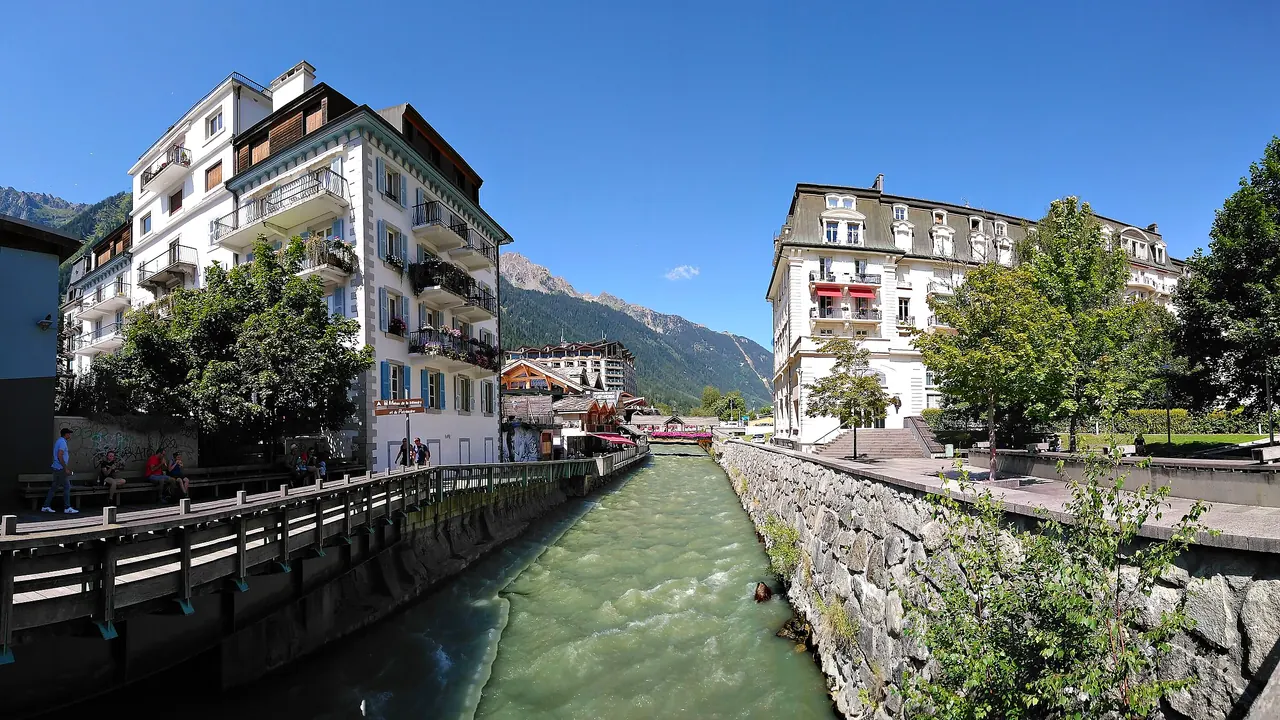
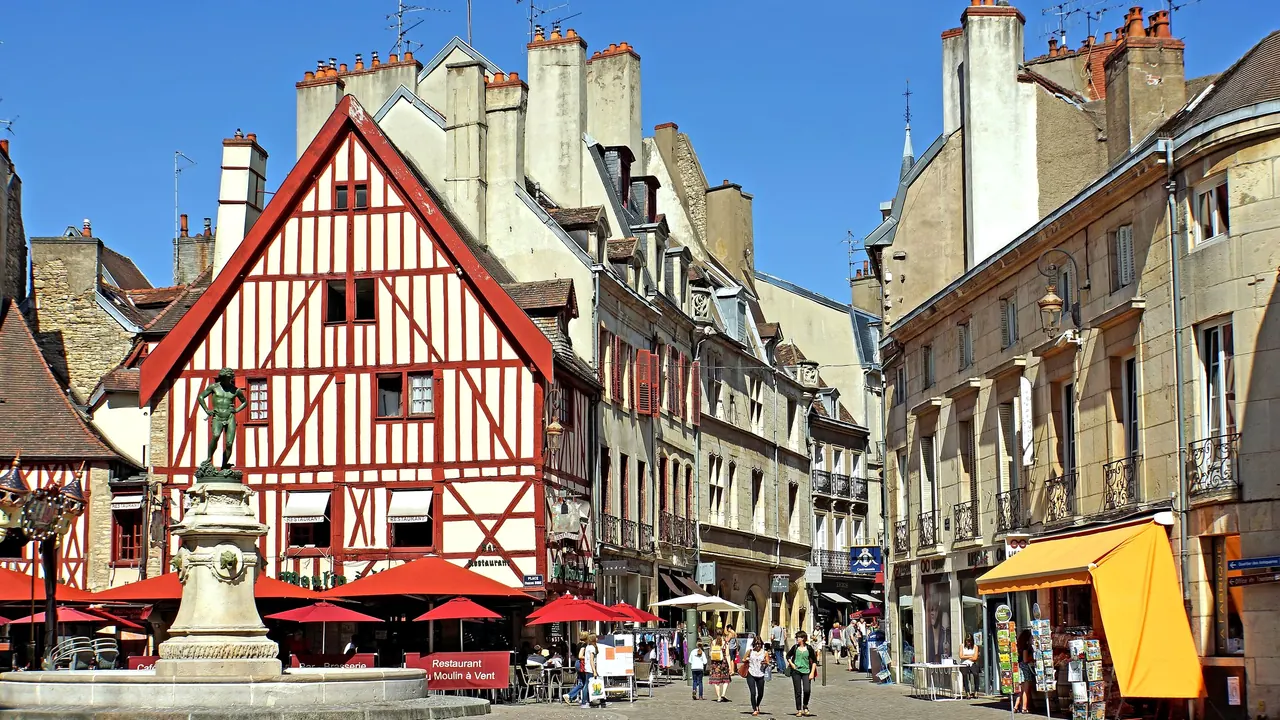
Photos: Chamonix by Tiia Monto, CC BY-SA 3.0, cropped; Dijon by Dennis G. Jarvis, CC BY-SA 2.0, cropped.
Chamonix or Dijon?
Our verdict in twelve categories, each scored against the same fixed benchmark cities, and the climate month by month, so you can choose for your trip.
Choose Chamonix for
- nature and the outdoors
- wellness
- families
Chamonix is for travellers who want their days spent high up. Cable cars lift you from the town centre into glacier country, the trails to Lac Blanc and the Grand Balcon start from the valley floor, and winter brings steep skiing and the Vallée Blanche. Families who like being outdoors do well here too, and after a hard day the outdoor thermal pools under the glaciers help. Be ready for resort prices, though, and for a town where the museums take half a day.
Choose Dijon for
- culture and sights
- prices
- live music and the arts
Dijon suits a slower trip built around the table and the past. The palace of the Dukes of Burgundy, the ducal tombs and the half-timbered old centre fill two or three days. Les Halles and the wine bars show off Burgundian cooking at its source, and the Route des Grands Crus starts just past the city's southern edge. It costs noticeably less than Chamonix, has a proper opera and concert season, and works best for couples and friends who would rather taste and wander than climb.
Scoreboard
Twelve categories on one fixed scale from 0 to 100. The shaded stretch is the gap between the two.
Your match
Pick a travel style or drag the sliders, and both match scores follow your weighting.
Wins on nature and the outdoors and wellness with your weighting.
Wins on culture and sights and prices with your weighting.
What matters to you?
Category by category
What the scores mean for a trip.
Beaches & swimming
Neither is a place for a beach vacation, and the swimming differs only in setting. Chamonix has the mountain lake at Passy, which faces Mont Blanc and is warm enough in July and August, and Lake Annecy is within a day out.
Dijon's option is Lac Kir on the edge of town, a supervised reservoir beach used by local families on hot afternoons. It is closer to hand but plainer than the Alpine lakes.
Food & drink
Dijon is the stronger place to eat. It sits at the head of Burgundy's wine country and offers boeuf bourguignon, jambon persillé, Époisses and mustard at the source. Les Halles works as the city's kitchen, and its wine bars pour village Burgundies by the glass.
Chamonix eats well within a narrower range. Fondue, raclette and tartiflette are best on a refuge terrace facing the glaciers. Away from the slopes, though, town menus repeat themselves, and many kitchens close between seasons.
Culture & sights
This is where Dijon pulls clearly ahead. It was capital of a medieval duchy, and its palace, the Valois tombs, Renaissance mansions, a Romanesque crypt and Sluter's Well of Moses repay several days of looking. The centre is also part of a UNESCO listing.
Chamonix's heritage is the story of alpinism: the 1786 first ascent, the 1924 Winter Olympics, the Musée Alpin and the guides' quarter. It is interesting, but you can see it in half a day, and the real sight is the massif above town.
Nightlife
Both are small scenes, and Chamonix's winter evenings are the louder of the two. Après-ski starts at the foot of the slopes, the bars on the old-town lane fill with guides, seasonal workers and a young English-speaking crowd, and a couple of clubs run late.
Dijon goes out more quietly, at wine bars and pubs on Rue Berbisey and terraces near Place Émile Zola, with student life during term. It is better for a long dinner and a glass of Burgundy than a night of dancing.
Nature & outdoors
Few places anywhere match Chamonix for scenery. The summit of Western Europe rises almost 4km above the valley, with hanging glaciers and granite needles, and lifts put you in high-mountain terrain within minutes. Summer brings climbing, via ferrata and trail running, and winter brings ski touring and glacier descents.
Dijon's countryside is pleasant but gentle. There are walks and rock climbing in the combes west of town, a flat canal towpath and the vineyard cycle route to Beaune, and the Morvan hills are the wildest country within reach.
Day trips
Dijon makes the better base for excursions. The Grands Crus villages, Vougeot's château and walled Beaune are all close by, and Fontenay Abbey, Semur-en-Auxois, Alésia and Vézelay fill further days. Besançon is about an hour away by train.
From Chamonix, the draw is how close the borders are. You can reach Courmayeur and Roman Aosta through the tunnel, Martigny by the Mont Blanc Express, and Annecy and Geneva by road. After those, mostly other resorts lie within reach, and mountain roads slow every trip.
Good for families
Chamonix gives children more to do, as long as the family enjoys being outdoors. There are nursery slopes and sledging in winter, and the summer luge, treetop courses, the little red train and the marmots at Merlet in summer. Toddlers should skip the highest cable cars, and rainy days are hard to fill.
Dijon is calm and safe, with a pedestrian centre, a planetarium at the Arquebuse and lawns at the Colombière. Its wine tastings and fine-art museums will hold the adults' interest more than the children's.
Getting around
Both are easy without a car, in different ways. In Chamonix you use valley buses and the Mont Blanc Express, free with the guest card, and the main lift stations are in town. Winter ski buses can be crowded, though, and evening services thin out.
Dijon has a compact walking centre, two tram lines and trains to Beaune and Paris. A car or bike matters only for wine villages away from the railway.
Shopping & style
Dijon has a little more range. Its food shopping is excellent, with mustard, cassis, pain d'épices and Burgundy from the cellars, and Rue de la Liberté adds a department store and independent shops.
Chamonix is specialist rather than broad. Its outdoor and climbing shops, some run by the same families for generations, are worth saving a big gear purchase for. Apart from cheese, génépi and crystals from the massif, though, it is mostly souvenirs.
Affordability
Dijon is clearly the cheaper stay. It has the prices of a provincial French city, with moderate rooms, good-value bistro lunches and inexpensive wine by the glass. Costs only climb if you add serious restaurants and wine tours.
Chamonix charges famous-resort prices, especially at Christmas, in February and in midsummer. On top of that come lift passes, guides and paragliding. Self-catering, free valley transport and trails from the valley floor soften the bill, and so do the shoulder seasons.
Live music & performing arts
Dijon has a real season. The Opéra de Dijon plays in the nineteenth-century Grand Théâtre and the acoustically admired Auditorium, and there is a national drama centre and a venue for touring bands, mostly during the academic year.
Chamonix has little beyond a summer jazz festival, with some sets played high in the mountains, plus church concerts and mountain film nights. For opera, you would go to Geneva.
Wellness & relaxation
Chamonix is the better place to soak tired muscles. Its large day spa has hot outdoor pools facing the glaciers, many chalets have their own saunas, and Saint-Gervais has warm springs in a wooded gorge. Crowds and early starts in high season make the town itself less peaceful.
Dijon offers rest of a different kind: long lunches, quiet squares and slow afternoons among the vines, with only a few hotel spas and grape-based treatments.
When should you go?
Pick your month. The climate figures are measured averages, not a forecast.
Chamonix in July
Dijon in July
Daytime high, °C
Rainfall in the month, mm
Where the figures come from
Chamonix's temperatures are measured 35 km from the centre, at Bourg-St-Maurice.
Chamonix has no rain gauge within 25 km of the centre, so its rainfall comes from a gridded climate dataset read at the city rather than from a gauge further away.
Temperature and rainfall are climate normals, averaged over the years shown. Chamonix: 1999-2020 (rainfall 1991-2020) normals, Bourg-St-Maurice (34.9 km from centre). Dijon: 1991-2020 normals, Dijon (7 km from centre).
The two towns follow almost the same temperature curve. Both reach about 27°C in July and drop back into single figures from December to February. What sets them apart is rain. Chamonix is wet in every month, wettest in December at 169mm, and even midsummer brings regular showers. Up in the massif, that often means cloud sitting on the peaks or a sudden change in the weather. Winter is the ski season. June to September is the time for hiking and climbing, but the lake at Passy is only warm enough to swim in July and August. Spring and late autumn are damp seasons in between.
Dijon gets roughly half as much rain as Chamonix. From May to August its days are long and bright, with about 250 hours of sunshine in July, which is good weather for cycling through the vineyards. Spring and September are the most comfortable months for walking the old streets. Midsummer afternoons can feel hot on the stone squares, and November to January bring short, grey days that are better spent at the table or in museums.
Which traveller are you?
For an outdoors trip, Chamonix wins easily. Cable cars reach the Aiguille du Midi and the Mer de Glace, the Tour du Mont Blanc starts in town, and there is guided mountaineering, climbing and paragliding. Dijon offers gentle combes and towpaths in comparison.
On a culture and arts trip, choose Dijon. You get the ducal palace with its Musée des Beaux-Arts, Notre-Dame's gargoyles and owl, the Well of Moses at Champmol, and a winter of opera and concerts. Chamonix's mountaineering museums take only an afternoon.
On a trip with a tight budget, Dijon is the easier city. Rooms are moderate, bistros serve fair-priced set lunches and the walkable centre costs nothing to get around. In Chamonix, lift passes, guides and peak-season chalets push costs up, even with free valley buses.
Before you go
| Measure | Chamonix | Dijon |
|---|---|---|
| Official language | French | French |
| Currency | Euro (EUR) | Euro (EUR) |
| Sockets | CE230 V, 50 Hz | CE230 V, 50 Hz |
| Driving side | Right | Right |
| Time zone | UTC+1, UTC+2 in summer | UTC+1, UTC+2 in summer |
| Emergency number | 112 | 112 |
| Elevation | 995 m | 220 m |
| Main airport | Geneva International Airport (GVA)68 km from centre150 non-stop destinations | Lyon Saint-Exupéry Airport (LYS)178 km from centre141 non-stop destinations |
| Public holidays this year | 11 days | 11 days |
By the numbers
| Measure | Chamonix | Dijon |
|---|---|---|
| City population | 8,705 | 161,830 |
| People per km² | 75 | 3,890 |
| Museums within 10 km | 3 | 8 |
| UNESCO World Heritage sites within 50 km | 0 | 1 |
Where else could you go?
Every comparison below shares a destination with this one, so you can follow Chamonix or Dijon somewhere new.
- Annecyvs Chamonix
- Genevavs Chamonix
- Lausannevs Chamonix
- Turinvs Chamonix
- Interlakenvs Chamonix
- Bernvs Chamonix