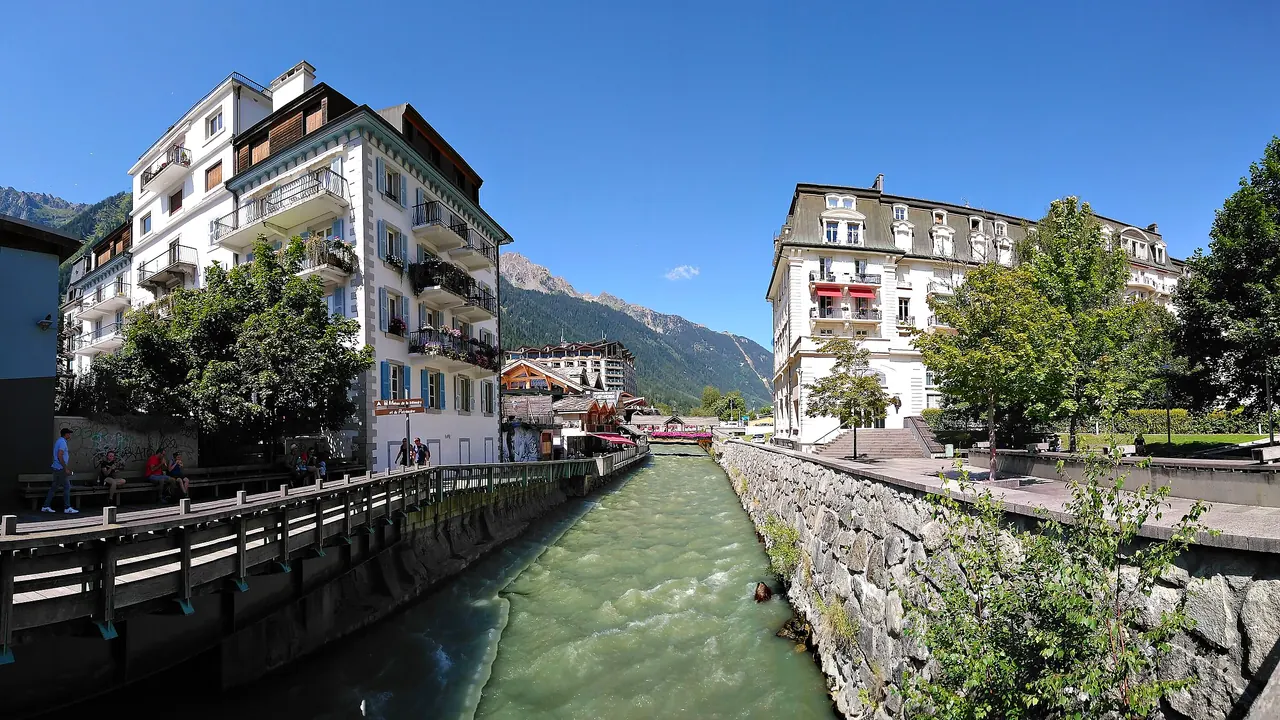
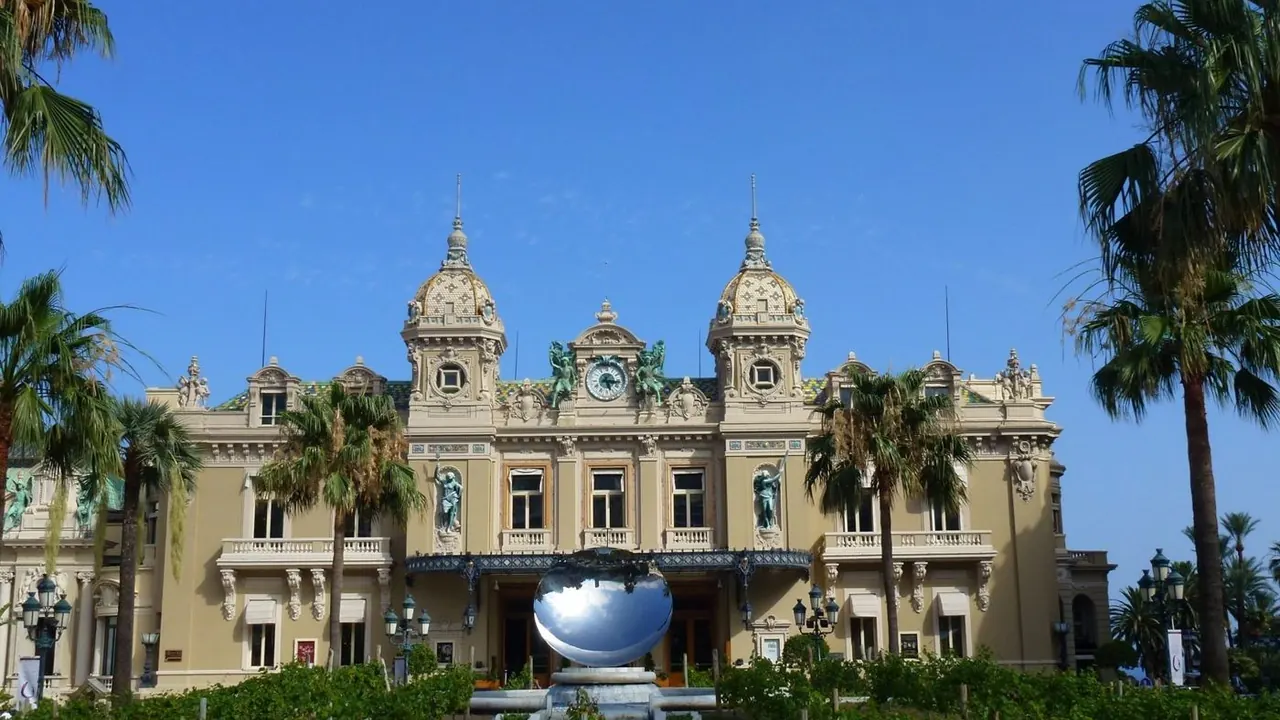
Photos: Chamonix by Tiia Monto, CC BY-SA 3.0, cropped; Monaco by otterboris, CC BY 3.0, cropped.
Chamonix or Monaco?
Our verdict in twelve categories, each scored against the same fixed benchmark cities, and the climate month by month, so you can choose for your trip.
Choose Chamonix for
- nature and the outdoors
- prices
Chamonix is for travellers who want to spend their days outdoors. In winter that means skiing the steep areas along the valley or the Vallée Blanche. In summer it means riding the Aiguille du Midi, walking the Grand Balcon to Lac Blanc or climbing with a guide. Evenings are fondue and a drink in the old town lane, and the town's culture is really the story of alpinism. Pick it when the mountain is the reason for the trip.
Choose Monaco for
- beaches
- live music and the arts
- culture and sights
Monaco suits a shorter and more polished stay by the sea. You get the palace and lanes of the Rock, the Oceanographic Museum, an opera night in the Salle Garnier and dinner on a harbour terrace. Its biggest advantage is where it sits: Nice, Menton, Èze and the Italian border are all a train or bus ride away, so it works well as a base for the Riviera. Be ready to pay heavily for all this, even more than in an expensive Alpine resort.
Scoreboard
Twelve categories on one fixed scale from 0 to 100. The shaded stretch is the gap between the two.
Your match
Pick a travel style or drag the sliders, and both match scores follow your weighting.
Wins on nature and the outdoors and prices with your weighting.
Wins on beaches and live music and the arts with your weighting.
What matters to you?
Category by category
What the scores mean for a trip.
Beaches & swimming
Chamonix has no real swimming of its own. The best you can do is Lac de Passy down the valley in July and August, a day out at Lake Annecy, or the outdoor basin at the municipal pool.
Monaco is far better, though it is no long-beach resort either. Larvotto is short, groomed and sheltered by breakwaters, with warm, clear water in summer. There are rocky coves at Cap d'Ail, and Menton and Nice add proper stretches of beach a few minutes away by train.
Food & drink
Monaco eats better, but only at the top end. It has a striking number of starred and grand hotel dining rooms cooking Riviera and Ligurian food. The Condamine market sells local snacks such as barbagiuan and socca. The weak point is everyday eating, which is scarce and formal.
Chamonix's strength is Savoyard cheese cooking, especially on a refuge terrace facing the glaciers. Its cheese shops and bakeries also make picnics easy. Beyond that, menus repeat the usual resort mix, and many kitchens close between the two main seasons.
Culture & sights
Chamonix's heritage is about one subject: the first ascent of Mont Blanc and the birth of alpinism. The Musée Alpin, the guides' quarter and the climbers' cemetery cover it well, and a curious visitor will finish them in half a day.
Monaco offers much more to see, although it is still a compact place. On the Rock are the palace guard ceremony, the cathedral with Grace Kelly's tomb and the Oceanographic Museum on its cliff. Across the harbour are the Casino, the Belle Époque hotels and the national museum's villas. That fills a day or two.
Nightlife
Monaco has more going on after dark, but you dress up for it. Evenings mean the Casino square, the hotel bars and the glossy clubs along Larvotto and the port. It peaks in summer and on Grand Prix weekend, and the rest of the year it goes to bed early.
Chamonix is the opposite in style. Après-ski starts at the foot of the slopes, then moves to a lane of pubs in the old town, and a couple of small clubs stay open late, mostly with a young, English-speaking crowd. It is loud and friendly but small, and it goes quiet in summer and the shoulder seasons.
Nature & outdoors
Chamonix sits at the foot of the highest mountain in Western Europe. The Aiguille du Midi takes you to 3,842m in minutes, the rack railway climbs to the Mer de Glace, and the valley's skiing, climbing and paragliding are among the best anywhere. The one catch is that the high-mountain weather can change quickly.
Monaco's natural side is its setting: limestone cliffs behind the town, the Tête de Chien viewpoint and the old mule path up to Èze. Below are the clear sea for snorkelling and the coastal paths round Cap Martin. It is attractive, but it is a backdrop to the trip rather than the reason for it.
Day trips
Monaco is the better base for day trips. Villefranche, Nice and Menton are all a short train ride along the coast, and Èze and La Turbie are just up the hill. Antibes, Saint-Paul-de-Vence, Grasse and the Italian towns of Sanremo and Dolceacqua are also within reach, and you need no car for any of it.
Chamonix also has three countries around it. Courmayeur and Roman Aosta are through the tunnel, Martigny is on the Mont Blanc Express, and Annecy and Geneva are each just over an hour away. Past those, most places nearby are other ski resorts on slow mountain roads.
Good for families
Both work equally well for children, in very different ways. Chamonix is the active choice: nursery slopes and sledging in winter, and in summer the luge, the treetop courses, the marmots at the Merlet park and the little red train to the Mer de Glace. The high cable cars are not for small children, though, and there is little to do on wet days.
Monaco is the gentler choice, with the aquarium's sharks and turtles, sheltered water at Larvotto and the guard ceremony at the palace. After a couple of days it runs out of things for children, and its formal restaurants are designed for adults.
Getting around
Chamonix is flat where Monaco is steep. Chamonix's small centre is easy on the legs, the Aiguille du Midi and Montenvers stations are right in town, and the buses and Mont Blanc Express along the valley are free with the guest card. Winter is the weak spot: the ski areas are spread out, so you spend time on packed ski buses, and evening services thin out.
Monaco still comes out easier, even though it rises in steep levels from the sea. The whole principality is only about 3km end to end, free public lifts and escalators handle most of the climbing, and a small solar ferry crosses the harbour. From the station dug into the hillside, the rest of the Riviera is easy to reach without a car.
Shopping & style
The difference is specialist mountain gear against luxury fashion houses. Chamonix's pedestrian streets are lined with climbing and ski shops, some run by the same families for generations, and serious mountaineers save their big purchases for a visit here. Apart from those, you can buy Savoyard cheeses, génépi and rock crystals, but for anything else you have to go to Geneva or Annecy.
Monaco offers the wider choice, though almost all of it is expensive. The fashion houses, jewellers and watchmakers of the Carré d'Or are all within a short walk of the Casino, and a covered mall adds a few mainstream labels. There are no real high-street chains or flea markets, so for more ordinary shopping people go to Nice.
Affordability
Neither place is cheap, but Chamonix is easier to manage on a budget. The guest card makes valley transport free, apartments and supermarkets make self-catering simple, and many trails start without a lift pass. Late spring and autumn cost noticeably less than the peak weeks.
Monaco is priced for the very wealthy, from hotel rooms to a café coffee, and event weekends push rates higher still. Walking the Rock and the gardens costs nothing. Many visitors save money by staying in Beausoleil, Menton or Nice and coming in for the day.
Live music & performing arts
Monaco is much stronger here. The Monte-Carlo Opera performs in the gilded Salle Garnier, the city has a philharmonic orchestra and a ballet company with international reputations, and the Printemps des Arts festival runs in spring. The winter-to-spring season is the time to go for opera and ballet.
Chamonix has no theatre or concert season. You get its summer jazz festival, with some sets played high in the mountains, plus the odd church concert and mountain film nights. For anything more you have to go to Geneva.
Wellness & relaxation
The two are about equal for unwinding, but they offer different things. In Chamonix you soak in hot outdoor pools facing the glaciers after a day on the slopes, and Saint-Gervais has warm springs in a wooded gorge down the valley. The town itself starts early and fills up in high season.
Monaco offers seawater thalassotherapy beside the Casino and treatment days in the grand hotel spas. Between treatments you can take a quiet morning in the Japanese Garden, except in Grand Prix week.
When should you go?
Pick your month. The climate figures are measured averages, not a forecast.
Chamonix in July
Monaco in July
Daytime high, °C
Rainfall in the month, mm
Where the figures come from
Chamonix's temperatures are measured 35 km from the centre, at Bourg-St-Maurice.
Chamonix has no rain gauge within 25 km of the centre, so its rainfall comes from a gridded climate dataset read at the city rather than from a gauge further away.
Temperature and rainfall are climate normals, averaged over the years shown. Chamonix: 1999-2020 (rainfall 1991-2020) normals, Bourg-St-Maurice (34.9 km from centre). Monaco: 1991-2020 normals, Nice (19.9 km from centre).
Chamonix has two good seasons. From June to September the valley is warm enough for walking and climbing, with highs around 27°C in July, and the lifts take you up to where it is much colder. Winter is cold and snowy in the valley, which is what skiers come for. There is no dry season: rain or snow comes every month, peaking at 169mm in December, and late spring and November are both wet and dull.
Monaco is mild all year, with winter days in the low teens that are fine for walking the Rock and the gardens. The beach season runs from June to early October. July reaches 28°C, July is almost dry at 13mm, and the sea warms to 25°C in August. Summer is also the sunniest time by a long way. The rain comes in autumn, building to 138mm in November, so late spring and September are the best months for long walks on the coast.
Which traveller are you?
For an outdoors trip, Chamonix wins easily. Cable cars take you straight into glacier country, the trails to Lac Blanc and the Tour du Mont Blanc start in town, and climbing, paragliding and steep skiing fill every season. Monaco's coastal paths are pleasant, but nowhere near this.
On a beach and sun trip, choose Monaco. Larvotto has calm, clear water, there are coves at Cap d'Ail, and the beaches of Menton and Nice are a short train ride away. Summers are dry and sunny. Chamonix only offers a mountain lake and the town pool.
On a culture and arts trip, Monaco is the clear choice. It has the Prince's Palace, the Oceanographic Museum, the Casino and an opera house where Puccini had a première, plus a ballet company and a philharmonic orchestra. Chamonix's mountaineering museums take half a day.
Before you go
| Measure | Chamonix | Monaco |
|---|---|---|
| Official language | French | French |
| Currency | Euro (EUR) | Euro (EUR) |
| Sockets | CE230 V, 50 Hz | CEF230 V, 50 Hz |
| Driving side | Right | Right |
| Time zone | UTC+1, UTC+2 in summer | UTC+1, UTC+2 in summer |
| Emergency number | 112 | 112 |
| Elevation | 995 m | 68 m |
| Main airport | Geneva International Airport (GVA)68 km from centre150 non-stop destinations | Nice-Côte d'Azur Airport (NCE)18 km from centre130 non-stop destinations |
| Public holidays this year | 11 days | 12 days |
By the numbers
| Measure | Chamonix | Monaco |
|---|---|---|
| City population | 8,705 | 38,857 |
| People per km² | 75 | 18,503 |
| Museums within 10 km | 3 | 14 |
| UNESCO World Heritage sites within 50 km | 0 | 2 |
| Swim season, months above 21 °C | - | 4 months |
Where else could you go?
Every comparison below shares a destination with this one, so you can follow Chamonix or Monaco somewhere new.