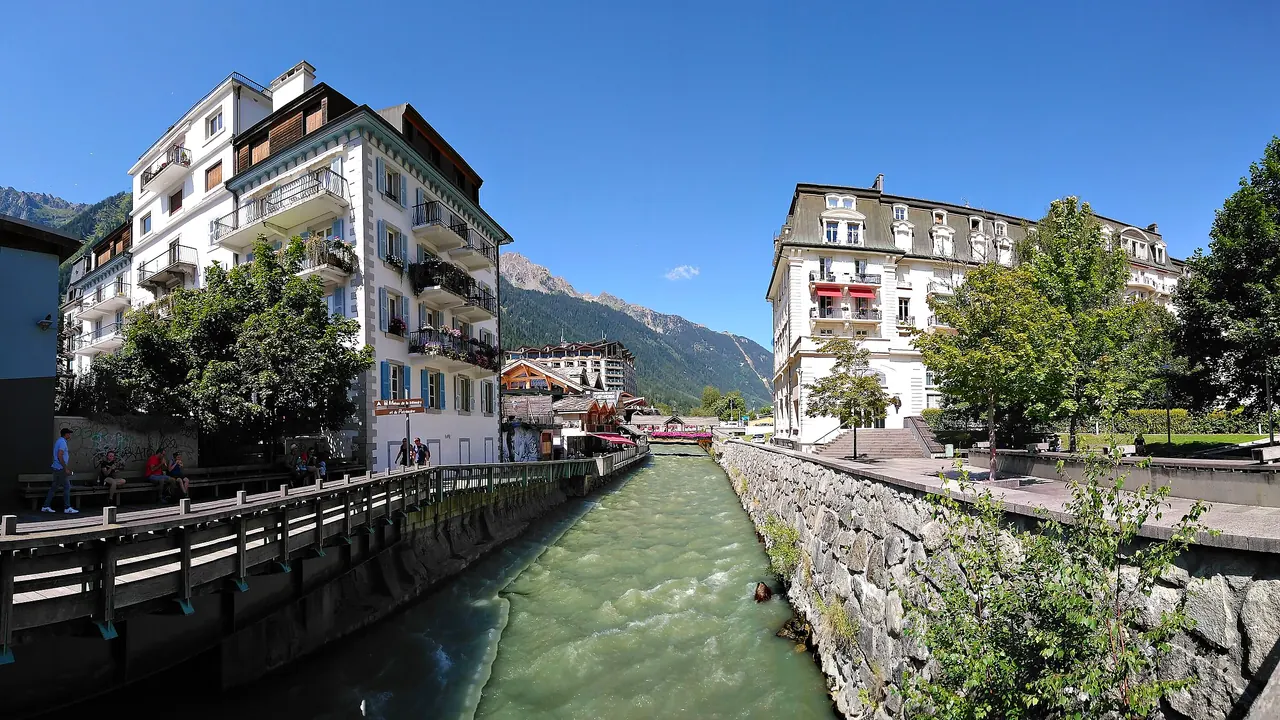
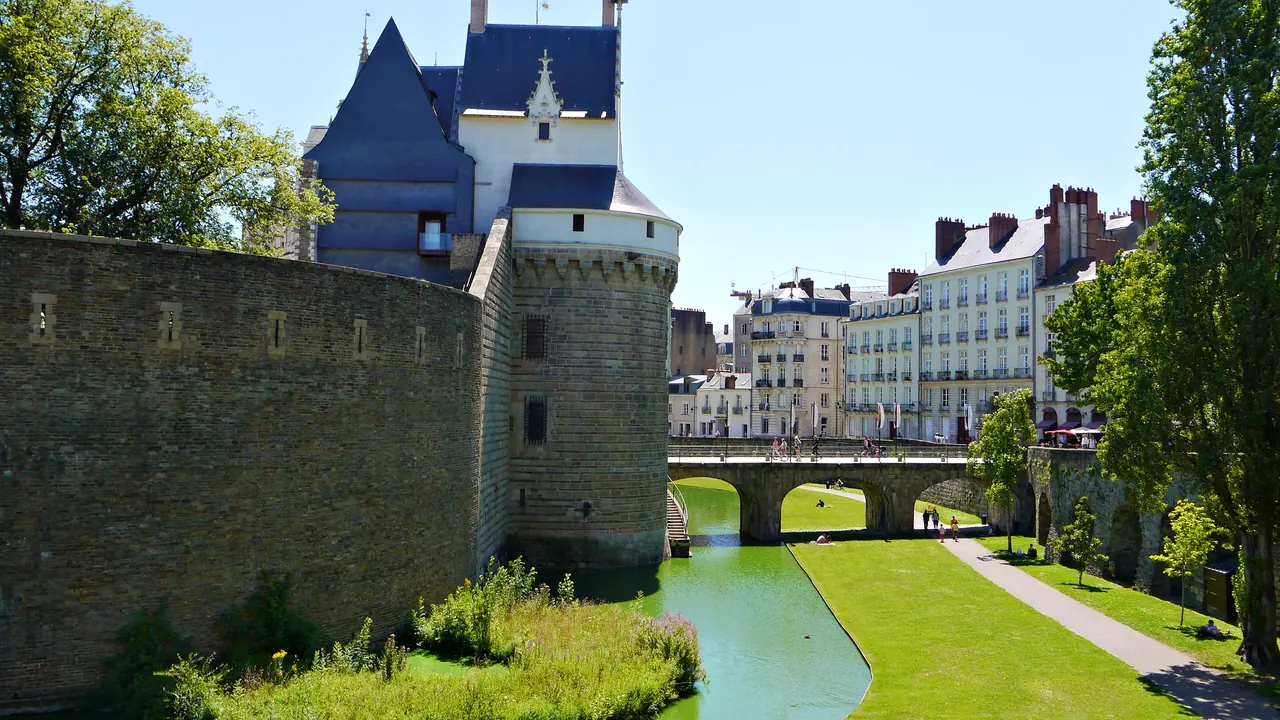
Photos: Chamonix by Tiia Monto, CC BY-SA 3.0, cropped; Nantes by Carole44, CC BY-SA 3.0, cropped.
Chamonix or Nantes?
Our verdict in twelve categories, each scored against the same fixed benchmark cities, and the climate month by month, so you can choose for your trip.
Choose Chamonix for
- nature and the outdoors
- wellness
Chamonix is for travellers whose vacation happens outdoors. The Mont Blanc massif rises straight from the valley floor, cable cars lift you onto glaciers within minutes, and skiing, climbing, hiking and paragliding fill the days. Evenings are for fondue, après-ski or a hot outdoor pool under the peaks. Expect to pay resort prices, and don't come for museums, theatre or a beach.
Choose Nantes for
- live music and the arts
- culture and sights
- beaches
Nantes suits a slower, rounder city trip. You get a moated ducal castle, a serious art museum, an opera house and a winter classical festival, plus Muscadet and beurre blanc at bistro prices. Trams make the city easy, the Atlantic coast and the Loire Valley are within reach, and the bill stays much lower. The landscape is gentle, though, and nothing in it will take your breath away the way the Alps do.
Scoreboard
Twelve categories on one fixed scale from 0 to 100. The shaded stretch is the gap between the two.
Your match
Pick a travel style or drag the sliders, and both match scores follow your weighting.
Wins on nature and the outdoors and wellness with your weighting.
Wins on live music and the arts and culture and sights with your weighting.
What matters to you?
Category by category
What the scores mean for a trip.
Beaches & swimming
Neither city is a beach destination, but Nantes at least has the sea within reach. Trains take about an hour to the wide sandy bay at La Baule and the coves around Pornic, where the beaches are calm and suit families, even if the Atlantic stays cool.
From Chamonix, swimming means Lac de Passy down the valley, with Mont Blanc behind it, or a drive of just over an hour to Lake Annecy. In town there is the municipal pool. Either way it's an afternoon off from the mountains, not a beach day.
Food & drink
Nantes eats better and more widely. There is pike-perch with beurre blanc, a sauce invented in the city, plus oysters from the coast, galettes and Muscadet from vineyards just outside town. The Talensac market and the bistros of Bouffay and Graslin give real choice at fair prices.
Chamonix serves Savoyard comfort food: fondue, raclette and tartiflette made with Reblochon and Beaufort, often eaten on a slope-side terrace facing the glaciers. It tastes right after a day in the cold, but resort menus repeat themselves and many kitchens close between seasons.
Culture & sights
Here Nantes is far ahead. The Château des Ducs de Bretagne and its frank museum of the city's slave-trade past, the cathedral with the tomb of Francis II, the 18th-century façades of the Ile Feydeau and the Jules Verne museum make a proper sightseeing city.
Chamonix's heritage is the story of alpinism, from the first ascent of Mont Blanc to the first Winter Olympics. The Musée Alpin and the climbers' cemetery tell it well, but half a day covers the town. The mountains are the real sight.
Nightlife
Nantes has the fuller night out, thanks to its students. The evening starts in the bars and terraces of the medieval Bouffay lanes and moves on to clubs in the old warehouses on the Ile de Nantes. Graslin is the place for a quieter glass of wine.
Chamonix's scene is seasonal and compact. Winter après-ski runs into a single lane of pubs full of guides, seasonal workers and English-speaking visitors, with a couple of small clubs for late nights. It's noisy and fun in February and much quieter in summer.
Nature & outdoors
This is Chamonix's strength, and one of the best in Europe. Glaciers and granite needles rise almost 4km above the town, and lifts reach the Aiguille du Midi and the Mer de Glace. The Tour du Mont Blanc starts from the valley, and there is skiing, mountaineering, via ferrata and paragliding.
Nantes has gentler pleasures. You can paddle or follow the towpath along the wooded Erdre, cycle the Loire à Vélo route, watch birds in the Brière marshes and walk the Côte Sauvage cliffs. It's lovely countryside, but flat, and there's nothing to climb.
Day trips
Nantes has more places to choose from. Walled Guérande and its salt marshes, Angers and the Apocalypse Tapestry, Vannes on the Gulf of Morbihan, Clisson in the Muscadet vineyards and the châteaux of the Loire Valley are all within an hour or two, many of them by train.
Chamonix's day trips cross borders instead. You can go through the tunnel to Courmayeur and Roman Aosta, take the Mont Blanc Express to Martigny in Switzerland, or drive to Annecy and Geneva. After those, mostly other resorts lie within reach, along slow mountain roads.
Good for families
Both work for families, and Nantes edges ahead because it is easier on all ages. Children can ride the mechanical elephant at the Machines de l'Ile, a buggy is simple on the trams, and the safari park, Puy du Fou and calm sandy beaches are all within reach.
Chamonix rewards active families more. There are nursery slopes and sledging in winter, and in summer the summer luge, the Merlet park's ibex and marmots, and the little red train to the glacier. High altitude and wet days are harder on toddlers than on teenagers.
Getting around
Both are easy to get around without a car, but in different ways. Chamonix is a walkable village centre with free valley buses and the Mont Blanc Express, which get crowded with skiers in winter. Nantes has a proper city network of trams, a busway and river shuttles, and its central station puts Paris about two hours away.
Shopping & style
Nantes is the better place for general shopping. It has the three-level Passage Pommeraye, a department store and chain fashion around Rue Crébillon, and independent designers and vintage shops near Bouffay and Decré.
Chamonix is narrow but excellent at what it does. Its long-established outdoor shops sell technical climbing and ski gear with expert advice. Beyond that it's cheese, génépi and rock crystals, and for anything else you go to Geneva or Annecy.
Affordability
Nantes is clearly cheaper. It costs what a French regional city costs, rooms are easy to find, and transport costs little. Dinners and drinks are the main expense, and set lunches soften even that.
Chamonix is a famous resort and charges accordingly. Peak-week rooms, lift passes, the big cable cars and guided outings all add up. Self-catering, picnics, free valley buses and trails that start from the valley floor help, as does going between seasons.
Live music & performing arts
Nantes has a real stage year-round. There is regional opera at the Théâtre Graslin, the national orchestra in its concert hall, contemporary work at the Lieu Unique, and La Folle Journée filling the city with short classical concerts each winter. The city is also known for giant street puppetry.
Chamonix offers a summer jazz festival with some sets played up in the mountains, plus the odd church concert or mountain film night. For opera or a symphony you'd have to drive to Geneva.
Wellness & relaxation
Chamonix is the better place to unwind, as long as you've earned it on the slopes. Its large thermal-style day spa has hot outdoor pools facing the glaciers, many chalets have saunas, and Saint-Gervais has old warm springs in a wooded gorge.
Nantes has no bathing tradition of its own. Its version of rest is a slow afternoon by the Erdre or in the Jardin des Plantes. The serious option is a thalassotherapy seawater cure at La Baule or Pornic, about an hour away.
When should you go?
Pick your month. The climate figures are measured averages, not a forecast.
Chamonix in July
Nantes in July
Daytime high, °C
Rainfall in the month, mm
Where the figures come from
Chamonix's temperatures are measured 35 km from the centre, at Bourg-St-Maurice.
Chamonix has no rain gauge within 25 km of the centre, so its rainfall comes from a gridded climate dataset read at the city rather than from a gauge further away.
Temperature and rainfall are climate normals, averaged over the years shown. Chamonix: 1999-2020 (rainfall 1991-2020) normals, Bourg-St-Maurice (34.9 km from centre). Nantes: 1991-2020 normals, Nantes (6.6 km from centre).
Chamonix has two seasons. From December to March the valley is cold, with daytime highs only in single figures in midwinter, and that is ski season. From June to September it warms to around 27°C in July, which is good weather for walking, climbing and the high lifts. Rain and snow fall steadily all year and peak in late autumn and early winter, reaching 169mm in December. That is why November and the spring weeks between the two seasons are the least appealing time to go.
Nantes is milder and much drier all year, with no real cold spell and summer highs of about 25°C. July and August bring the most sunshine and the warmest sea, but at about 19°C the Atlantic is bracing rather than warm. From October the rain picks up, passing 100mm in December, so for walking the city May to September is the best stretch. Spring and early autumn are pleasant too.
Which traveller are you?
On an outdoors trip, Chamonix is the clear choice. You can ski steep runs or the Vallée Blanche in winter, and in summer hike to Lac Blanc, climb with mountain guides or take the cable car to 3,842m. The flat marshes and riverbanks around Nantes can't compete with that.
On a culture and arts trip, choose Nantes. The castle's history museum, the Gothic cathedral, the Musée d'Arts and the merchant quarters fill two or three days. Evenings can go to the opera at Théâtre Graslin or the Lieu Unique. Chamonix has half a day of sights.
On a trip on a tight budget, Nantes stretches the money much further. Hotels are easy to find, set lunches are good value and the trams are cheap. In Chamonix, lift passes, guides and high-season rooms add up quickly, even with free valley transport.
Before you go
| Measure | Chamonix | Nantes |
|---|---|---|
| Official language | French | French |
| Currency | Euro (EUR) | Euro (EUR) |
| Sockets | CE230 V, 50 Hz | CE230 V, 50 Hz |
| Driving side | Right | Right |
| Time zone | UTC+1, UTC+2 in summer | UTC+1, UTC+2 in summer |
| Emergency number | 112 | 112 |
| Elevation | 995 m | 2 m |
| Main airport | Geneva International Airport (GVA)68 km from centre150 non-stop destinations | Nantes Atlantique Airport (NTE)8 km from centre97 non-stop destinations |
| Public holidays this year | 11 days | 11 days |
By the numbers
| Measure | Chamonix | Nantes |
|---|---|---|
| City population | 8,705 | 327,734 |
| People per km² | 75 | 5,027 |
| Museums within 10 km | 3 | 11 |
| UNESCO World Heritage sites within 50 km | 0 | 0 |
| Swim season, months above 21 °C | - | None |
Where else could you go?
Every comparison below shares a destination with this one, so you can follow Chamonix or Nantes somewhere new.
- Annecyvs Chamonix
- Genevavs Chamonix
- Lausannevs Chamonix
- Turinvs Chamonix
- Interlakenvs Chamonix
- Bernvs Chamonix