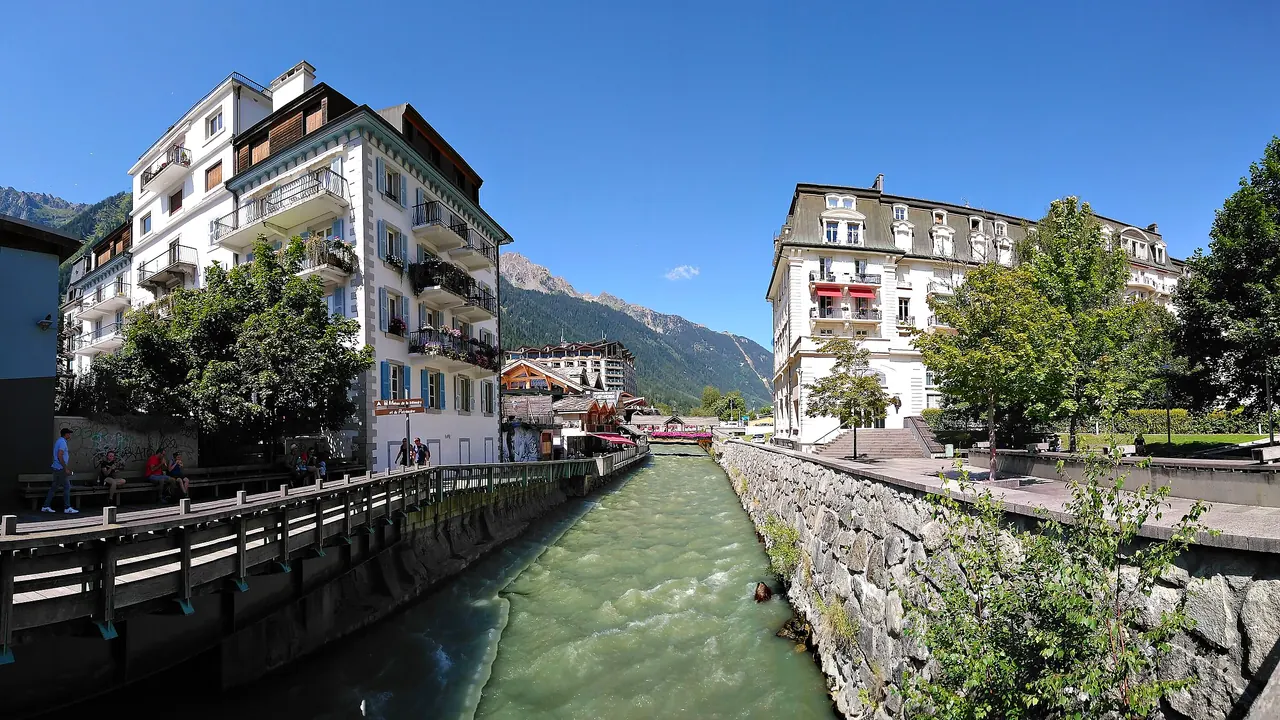
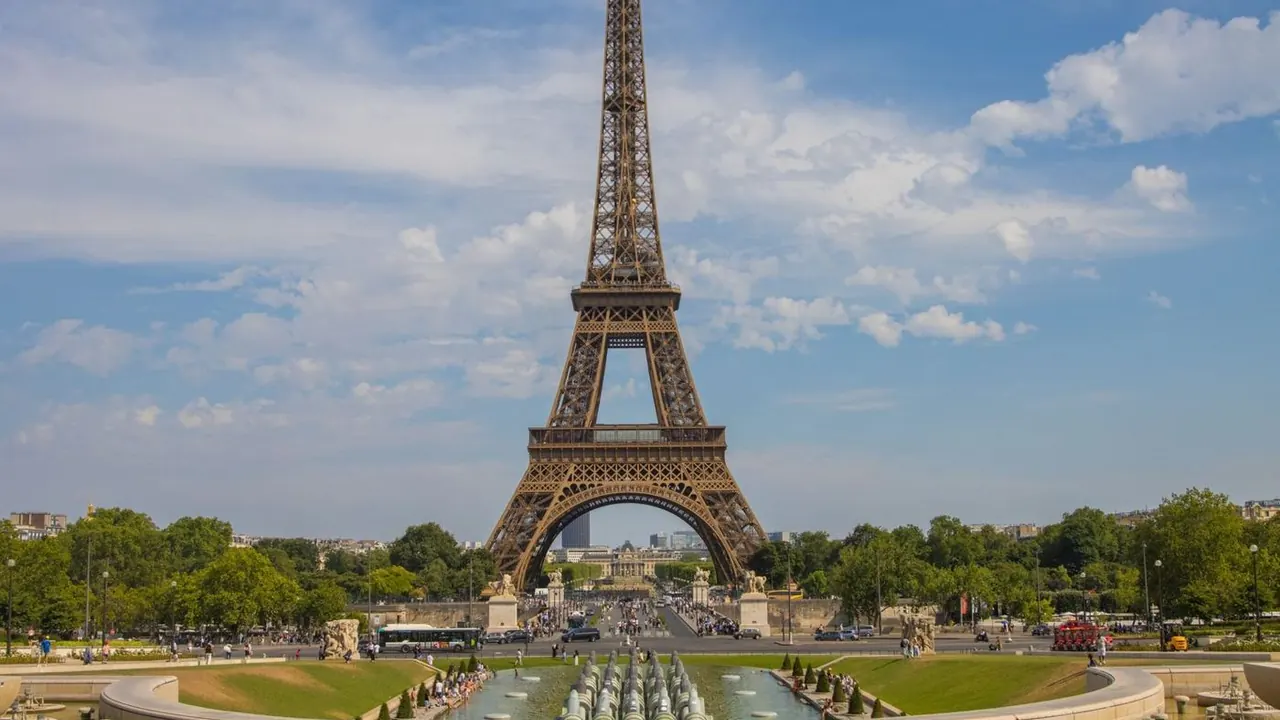
Photos: Chamonix by Tiia Monto, CC BY-SA 3.0, cropped; Paris by Efrem Efre, Pexels License.
Chamonix or Paris?
Our verdict in twelve categories, each scored against the same fixed benchmark cities, and the climate month by month, so you can choose for your trip.
Choose Chamonix for
- nature and the outdoors
- wellness
- beaches
Chamonix is for travellers whose vacation is the mountain itself. Cable cars lift you from a small, walkable town straight into glaciers and granite, and the valley gives you steep skiing in winter and climbing, hiking and paragliding in summer. Evenings are fondue, a few loud bars and a hot pool facing the ice. Anyone who wants museums, shops or a big night out will run out of things to do quickly.
Choose Paris for
- culture and sights
- live music and the arts
- shopping
Pick Paris if you want a city that fills every hour without needing a mountain. It has the great museums and Gothic churches, eating well at every price, two opera houses, fashion streets and flea markets, and a metro that reaches it all. Versailles, Chartres and Champagne country add easy day trips. What it can't give you is wild scenery: the outdoors here means formal gardens, riverside walks and forest at Fontainebleau.
Scoreboard
Twelve categories on one fixed scale from 0 to 100. The shaded stretch is the gap between the two.
Your match
Pick a travel style or drag the sliders, and both match scores follow your weighting.
Wins on nature and the outdoors and wellness with your weighting.
Wins on culture and sights and live music and the arts with your weighting.
What matters to you?
Category by category
What the scores mean for a trip.
Beaches & swimming
Neither place is for a beach vacation, and the water each offers is different in kind. Chamonix has mountain lakes: Lac de Passy has a small sandy strip and Mont Blanc as the view, and Lake Annecy, a little over an hour away, is clear and warm in high summer.
Paris swims in its river instead. In summer there are sand-dressed banks along the Seine, swimming at the Bassin de la Villette and handsome Art Deco pools. The cool Channel coast in Normandy is about two hours away by train.
Food & drink
Chamonix eats like the mountain resort it is. Fondue, raclette and tartiflette made with local Reblochon and Beaufort taste best on a refuge terrace facing a glacier, but menus repeat, and many kitchens close between the seasons.
Paris is one of the world's great food cities and gives you something every day of the year. There are neighbourhood boulangeries and markets, zinc-counter bistros, haute cuisine, natural wine bars, pho in the 13th and couscous in Belleville. Its patisserie alone justifies a walk across town.
Culture & sights
Chamonix's heritage is narrow but real. Alpinism was born here with the first ascent of Mont Blanc, and the Musée Alpin, the guides' quarter and the climbers' cemetery tell that story. Half a day covers it.
Paris is the opposite: you could spend a week in the Louvre alone. Add the Impressionists at the Orsay, Monet's water lilies at the Orangerie and Gothic Notre-Dame and Sainte-Chapelle, all in a Haussmann centre and a Marais that are sights in themselves. Book ahead for the biggest names.
Nightlife
Nights in Chamonix revolve around après-ski. Bars at the foot of the slopes fill in the late afternoon, and later the crowd moves to a single old-town lane of pubs and two or three small clubs. It is young, English-speaking and lively in winter, but quiet in summer and largely shut in between.
Paris gives you a whole city of choice. Unpretentious bars line Oberkampf and the Canal Saint-Martin, Pigalle has cocktail bars and the Marais has a gay scene, and house and techno clubs and summer barges run until dawn. It is chic rather than rowdy, and some doors are selective.
Nature & outdoors
This is Chamonix's great strength. The Mont Blanc massif rises almost 4km above the valley floor, and the Aiguille du Midi cable car puts you among hanging glaciers and granite needles in minutes. Trails to Lac Blanc, the Grand Balcon and the Tour du Mont Blanc start from town. In winter, skiers can take the Vallée Blanche glacier descent from the top of the Aiguille du Midi.
Paris has parks and gardens rather than wild landscape. You get the formal Luxembourg and Tuileries gardens, the cliffs of the Buttes-Chaumont and the big woods of Boulogne and Vincennes. The best outing is the forest of Fontainebleau, forty minutes away by train, which has gentle trails and well-known bouldering.
Day trips
Chamonix's day trips cross borders. Courmayeur and Roman Aosta are through the tunnel, Martigny is in Switzerland by rack railway, and Annecy and Geneva are each about an hour by road. After those, most places in reach are other ski resorts, and winding roads add time.
From Paris the list seems endless, and the trains are quick. Versailles, Fontainebleau and Chantilly are under an hour away, then come Chartres, Giverny and Provins. Fast trains reach Reims for Champagne, Rouen and Tours for the Loire châteaux, so a long stay never runs short.
Good for families
Chamonix suits active families: nursery slopes and sledging in winter, and in summer the luge, treetop courses, the red train to the Mer de Glace and marmots at the Merlet park. Toddlers can't go up the highest lifts, though, and on rainy days there is little to fall back on.
Paris has more for children to do, whatever the weather. There are Disneyland and Parc Astérix, hands-on science at La Villette, skeletons at the Jardin des Plantes, and carousels and toy boats in the Luxembourg. The cost is everyday hassle: metro stairs with a pushchair, small rooms and long queues.
Getting around
Chamonix is easy because it is small. The flat centre is an easy walk to the big lift stations, and the guest card makes the buses and the Mont Blanc Express free along the valley, though the ski buses are packed in winter and evening services thin out. You can manage without a car, but one makes it easier to get over the border to Italy or Switzerland.
Paris is the easier of the two to get around, and walking it is part of the sightseeing. The riverside route from the Louvre to the Eiffel Tower is often the best part of the day, the dense metro puts a station a few minutes from almost anywhere, and the RER runs out to Versailles and the airports. Expect stairs, crowded trains at rush hour and pickpockets, and don't bother with a car.
Shopping & style
Chamonix is a specialist's town for shopping. Long-established climbing and ski shops offer gear and expertise that serious mountaineers save up for. Beyond that, the choice is cheese, génépi, crystals and souvenirs.
Paris is a shopping destination in itself. The couture houses are on Avenue Montaigne, Galeries Lafayette and Le Bon Marché are sights in their own right, the Marais has independent designers, and you can browse the covered passages, the vast Saint-Ouen flea market and the bouquinistes along the Seine.
Affordability
Both are expensive, but Paris is a little easier to do on a budget. Chamonix's lift passes, cable cars, guides and peak-season chalets add up fast. The savings come from free valley transport, self-catering, picnics and trails that need no lift, and from coming outside the peak weeks.
Paris rooms are small and costly, and the big museums charge full price. Free city museum collections, cheap lunchtime set menus, bakeries and walking everywhere help more than in a resort. Staying in the outer arrondissements cuts costs further.
Live music & performing arts
Chamonix has no theatre or concert season to speak of. Its musical highlight is a summer jazz festival with some sets played high in the mountains, and for the rest of the year there are church concerts and mountain film nights.
Paris has one of the world's great calendars. The Opera Ballet dances at the Palais Garnier, opera fills the Bastille and orchestras play at the Philharmonie and the Maison de la Radio. Add candlelit concerts in the Sainte-Chapelle, cellar jazz around the rue des Lombards and cabaret in Pigalle. Most theatre is in French.
Wellness & relaxation
Chamonix does recovery better. Its large Italian-style day spa has hot outdoor pools that look up at the glaciers, many chalets have saunas, and Saint-Gervais has thermal springs in a wooded gorge, though the town itself starts early and gets crowded.
Paris has no spa tradition of its own. Its version is the tiled hammam of the Grande Mosquée with mint tea, along with hotel spas, and rest mostly means an hour on a terrace or a chair in the Luxembourg gardens.
When should you go?
Pick your month. The climate figures are measured averages, not a forecast.
Chamonix in July
Paris in July
Daytime high, °C
Rainfall in the month, mm
Where the figures come from
Chamonix's temperatures are measured 35 km from the centre, at Bourg-St-Maurice.
Chamonix has no rain gauge within 25 km of the centre, so its rainfall comes from a gridded climate dataset read at the city rather than from a gauge further away.
Temperature and rainfall are climate normals, averaged over the years shown. Chamonix: 1999-2020 (rainfall 1991-2020) normals, Bourg-St-Maurice (34.9 km from centre). Paris: 1991-2020 (sunshine 1961-1990) normals, Paris-Montsouris (4.6 km from centre).
The two places have similar summers. Both peak at around 26°C to 27°C in July and August, which suits Paris streets and Chamonix trails alike, and Lac de Passy is warm enough to swim in then. Winter is where they part. Chamonix stays cold from December to February at around 5°C on the valley floor, and that is the ski season. Paris is a little milder but grey, so it suits museums more than walking.
Rain makes the bigger difference. Chamonix is wet all year, with well over 100mm in every month and the most around Nov and Dec, and the high-mountain weather can change fast. Paris gets less than half that, and early spring is its driest time. For Chamonix, aim for June to September for hiking or midwinter for skiing. Paris works in any season, but May, June and September are the most comfortable for long days on foot.
Which traveller are you?
On an outdoors trip, Chamonix wins by a long way. The Aiguille du Midi, the Mer de Glace railway and trails to Lac Blanc all start from town, and you can ski, climb, ride via ferrata or fly a paraglider. Paris has parks and Fontainebleau's boulders, but nothing on this scale.
For a culture and arts trip, Paris is the only real choice. The Louvre, the Orsay and the Sainte-Chapelle come first, and the Palais Garnier, the Philharmonie and jazz cellars fill the evenings. In Chamonix, the mountaineering history and the Musée Alpin take about half a day.
On a food and nightlife trip, Paris has far more range. You get market mornings at Aligre, neo-bistros and wine bars in the 11th, and bars in Belleville and along the canal until 2am, then clubs. Chamonix gives you Savoyard cheese dishes and one lively lane of après-ski pubs.
Before you go
| Measure | Chamonix | Paris |
|---|---|---|
| Official language | French | French |
| Currency | Euro (EUR) | Euro (EUR) |
| Sockets | CE230 V, 50 Hz | CE230 V, 50 Hz |
| Driving side | Right | Right |
| Time zone | UTC+1, UTC+2 in summer | UTC+1, UTC+2 in summer |
| Emergency number | 112 | 112 |
| Elevation | 995 m | 27 m |
| Main airport | Geneva International Airport (GVA)68 km from centre150 non-stop destinations | Charles de Gaulle International Airport (CDG)22 km from centre277 non-stop destinations |
| Public holidays this year | 11 days | 11 days |
By the numbers
| Measure | Chamonix | Paris |
|---|---|---|
| City population | 8,705 | 2,103,778 |
| People per km² | 75 | 19,960 |
| Museums within 10 km | 3 | 251 |
| UNESCO World Heritage sites within 50 km | 0 | 5 |
Where else could you go?
Every comparison below shares a destination with this one, so you can follow Chamonix or Paris somewhere new.
- Annecyvs Chamonix
- Genevavs Chamonix
- Lausannevs Chamonix
- Turinvs Chamonix
- Interlakenvs Chamonix
- Bernvs Chamonix