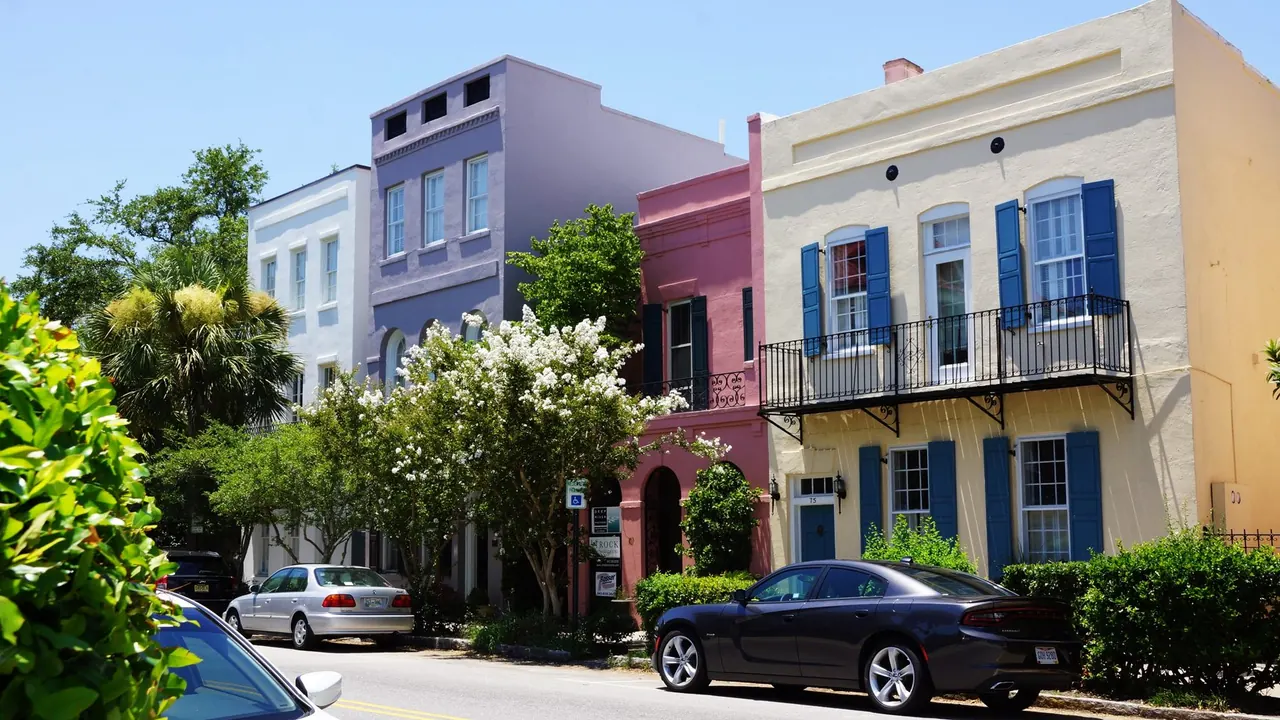
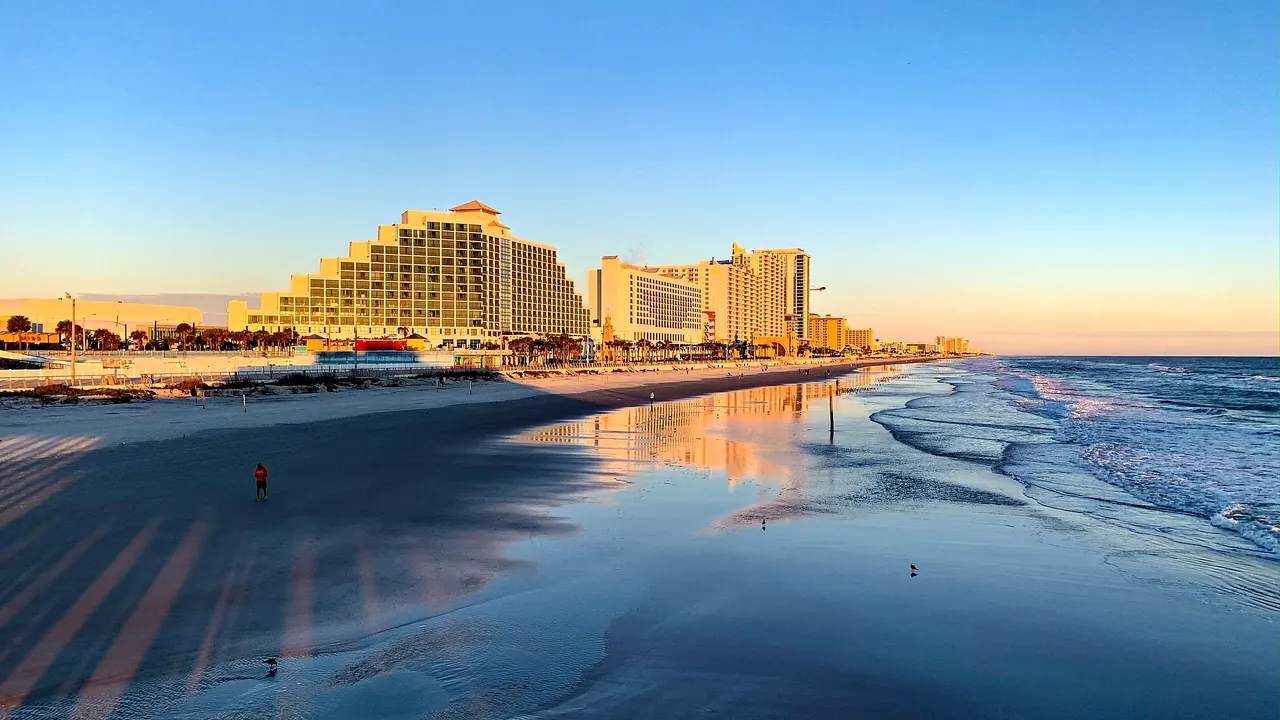
Photos: Charleston by NealVickers, CC BY-SA 4.0, cropped; Daytona Beach by Han Zheng, CC BY-SA 2.0, cropped.
Charleston or Daytona Beach?
Our verdict in twelve categories, each scored against the same fixed benchmark cities, and the climate month by month, so you can choose for your trip.
Choose Charleston for
- food and drink
- culture and sights
- getting around
Charleston is the choice for travellers who want a town to explore as much as a beach to lie on. Its historic peninsula, Lowcountry cooking and the history told in its houses, forts and museums give it far more depth, and the old centre can be walked. The beaches are a short drive out and make up half the trip rather than all of it. You pay more for that.
Choose Daytona Beach for
- prices
- beaches
- day trips
Pick Daytona Beach if the sand is the point. Its long, firm beach runs the length of the barrier island, rooms and meals cost less, and St Augustine, Kennedy Space Center and Orlando's theme parks are all an easy drive away. Expect a resort of motels and strip roads that you get around by car, with little to see in town and food that fills a gap rather than shapes the trip.
Scoreboard
Twelve categories on one fixed scale from 0 to 100. The shaded stretch is the gap between the two.
Your match
Pick a travel style or drag the sliders, and both match scores follow your weighting.
Wins on food and drink and culture and sights with your weighting.
Wins on prices and beaches with your weighting.
What matters to you?
Category by category
What the scores mean for a trip.
Beaches & swimming
Daytona Beach is built around its sand: one unbroken stretch of wide, firm beach along the barrier island, with the pier and boardwalk at the busy centre and quieter stretches towards Ormond Beach and Ponce Inlet. You can step out of a motel straight onto it, and cars are even allowed on marked sections.
Charleston's beaches are good but lie away from the town, a drive or a ride out to Folly Beach, Sullivan's Island or Isle of Palms, each with its own character. The water is much the same off both, greenish and tidal with rip currents, so the real difference is how much of the trip the beach takes up.
Food & drink
Both towns live on seafood, but Charleston turns it into a cuisine. Lowcountry dishes such as shrimp and grits, she-crab soup and Carolina Gold rice carry Gullah Geechee and West African roots, and they are cooked with real care in restored townhouses around King Street and the French Quarter. Add winter oyster roasts and whole-hog barbecue, and a Charleston trip can be planned around where you eat.
Daytona's seafood is plainer: a grouper sandwich or a basket of fried shrimp on a deck over the Halifax River or down by Ponce Inlet. Away from those old fish camps, the choice shrinks to chain restaurants along the main roads. The upside is ease. Charleston's best dining rooms have to be reserved long before you arrive and it has few cheap fallbacks, while in Daytona you can simply turn up.
Culture & sights
In Charleston the whole historic peninsula is the sight: Rainbow Row, the Battery, the single houses south of Broad Street, and house museums such as the Nathaniel Russell and Aiken-Rhett houses, which show both the grand rooms and the quarters of the enslaved. Fort Sumter and the International African American Museum give the city's history real weight.
Daytona's culture is about speed. The Speedway tour, the Museum of Arts and Sciences with its Cuban art, and the climb up the Ponce de Leon Inlet Lighthouse make a good day, but there is no old town to wander and a sightseer soon runs out of things to see.
Nightlife
Neither town is worth going to for its nights out, and both are about bars rather than clubs. Charleston's evenings centre on the rooftop bars, cocktail rooms and oyster bars of upper King Street, which are loud with students and groups at weekends, while the French Quarter has quieter wine bars and old taverns.
Daytona's bars are mostly tiki decks, sports bars and the biker saloons of Main Street, which only really fill up during Bike Week, Biketoberfest and race weeks. Go to Charleston for a cocktail and to Daytona for a beer among the motorcycles.
Nature & outdoors
Both towns sit on flat, watery coast with no hills, and both are best explored by kayak, with dolphins a likely sight in either. Charleston's landscape is spartina marsh, tidal creeks and live-oak forest, with alligators and birdlife in the ACE Basin and Francis Marion National Forest.
Daytona has a little more variety: the undeveloped dunes of Canaveral National Seashore, some of Florida's best birding at Merritt Island, manatees wintering at Blue Spring and surf near Ponce Inlet. In both places, summer heat makes early mornings or the cooler seasons the time to be outdoors.
Day trips
Both are good bases if you have a car, but the outings differ in kind. From Charleston they are mostly about Southern history: the Ashley River plantations such as Middleton Place and Drayton Hall, McLeod Plantation, Gullah culture around Beaufort and a full day among Savannah's squares.
Daytona's outings cover a wider range: colonial St Augustine to the north, the rockets of Kennedy Space Center to the south, and Orlando's theme parks or quieter Winter Park inland, each about an hour away.
Good for families
Both work for families, in different ways. Charleston suits school-age children who will enjoy the aquarium, climbing around the aircraft carrier at Patriots Point and the boat to Fort Sumter, with gentle beaches for the rest of the stay, though house tours will test small children.
Daytona is the simpler beach vacation, with arcades, rides and ice cream by the boardwalk, condos with kitchens and pools, and Orlando's theme parks within an hour. Its rip currents and crowded event weeks need some planning around.
Getting around
Charleston's historic peninsula is flat and compact enough to walk, with pedicabs and a free shuttle bus to fill the gaps, so the car can stay parked while you are in town. You still need one, or ride-hailing, for the beaches and plantations.
In Daytona you need a car almost from the start. Sights, hotels and restaurants are spread along wide roads on both sides of the river and buses are infrequent. Only the beach itself and the short stretch around the boardwalk work well on foot or by bike.
Shopping & style
Charleston has a proper shopping street in King Street, which runs from antiques and galleries at its lower end, through national fashion brands, to independent boutiques and design shops. The City Market is the place to buy a sweetgrass basket straight from a Gullah weaver.
Daytona has an outlet centre, a mall, beach shops selling swimwear and biker gear on Main Street, all useful rather than enjoyable. Neither has a luxury tier.
Affordability
Daytona Beach is the cheaper of the two. Older oceanfront motels and condo rentals mean plenty of rooms, and casual seafood places and diners keep meals reasonable, as long as you avoid the Daytona 500, Bike Week and other event weeks.
Charleston charges big-city rates for rooms on the peninsula and at its well-known restaurants, and paid house and plantation tours add to the bill. Its free pleasures, such as walking the old streets and the Battery, help, and staying in Mount Pleasant costs less but means driving in every day.
Live music & performing arts
Charleston has more on stage, above all in late spring, when Spoleto Festival USA and Piccolo Spoleto fill the city with opera, dance, theatre and jazz. For the rest of the year there are plays at the Dock Street Theatre, the symphony at the Gaillard Center, and Gullah storytelling and song.
In Daytona there is a calendar of events rather than a scene: a winter series of visiting orchestras, touring Broadway shows at the Peabody Auditorium and free summer concerts at the oceanfront bandshell. For more choice, people drive to Orlando.
Wellness & relaxation
Neither town has a bathing tradition, so rest comes mostly from the slow pace. Charleston is the gentler of the two, with shaded walled gardens, quiet church courtyards, porches and evenings at White Point Garden, plus resort spas out on Kiawah Island.
Daytona's calm is that of a beach town, with early walks on the hard sand and afternoons by a condo pool, but it disappears when the engines and crowds arrive for race weeks and Bike Week.
When should you go?
Pick your month. The climate figures are measured averages, not a forecast.
Charleston in July
Daytona Beach in July
Daytime high, °C
Rainfall in the month, mm
Temperature and rainfall are climate normals, averaged over the years shown. Charleston: 1991-2020 normals, Charleston Airport (16.1 km from centre). Daytona Beach: 1991-2020 normals, Daytona Beach / Mansfield Mobile Home Park (4.9 km from centre).
Charleston is at its best in spring and autumn, roughly April to May and October to early November, when the old streets are warm but still comfortable on foot. Summer brings highs of 33°C, heavy humidity and the wettest stretch of the year, with roughly 150 to 175mm of rain a month from June to September. The sea is warm enough for swimming from late May into October, but winter days are cool and the water too cold.
Daytona Beach stays a few degrees warmer through the cooler half of the year. January highs there are around 21°C, against 16°C in Charleston, so a winter or early spring trip feels mild, though the sea is still too cool for most swimmers. Its summer is just as hot and wet, with September the wettest month, and its swimming season lasts a little longer at both ends.
Which traveller are you?
For a short city break, Charleston is the clear pick. The historic peninsula can be walked in a couple of days, Lowcountry cooking makes every meal worth planning, and the houses, museums and Fort Sumter fill the hours, with the beach as an optional afternoon.
On a beach and sun trip, Daytona Beach is the better choice. The sand starts outside your door rather than a drive away, the wide, firm beach runs for miles, and milder winters lengthen the season, though rip currents mean staying near the lifeguards.
On a tight budget, your money goes further in Daytona Beach. Motels, condos with kitchens and casual seafood places cost less than Charleston's peninsula inns and well-known restaurants. Avoid race weeks and Bike Week, and budget for a car in either town.
Before you go
| Measure | Charleston | Daytona Beach |
|---|---|---|
| Currency | US Dollar (USD) | US Dollar (USD) |
| Sockets | AB120 V, 60 Hz | AB120 V, 60 Hz |
| Driving side | Right | Right |
| Time zone | UTC-5, UTC-4 in summer | UTC-5, UTC-4 in summer |
| Emergency number | 911 | 911 |
| Elevation | 6 m | 4 m |
| Main airport | Charleston International Airport (CHS)16 km from centre56 non-stop destinations | Daytona Beach International Airport (DAB)5 km from centre8 non-stop destinations |
| Public holidays this year | 12 days | 11 days |
By the numbers
| Measure | Charleston | Daytona Beach |
|---|---|---|
| City population | 150,227 | 72,647 |
| People per km² | 532 | 440 |
| Museums within 10 km | 19 | 6 |
| UNESCO World Heritage sites within 50 km | 0 | 0 |
| Swim season, months above 21 °C | 6 months | 9 months |
Where else could you go?
Every comparison below shares a destination with this one, so you can follow Charleston or Daytona Beach somewhere new.