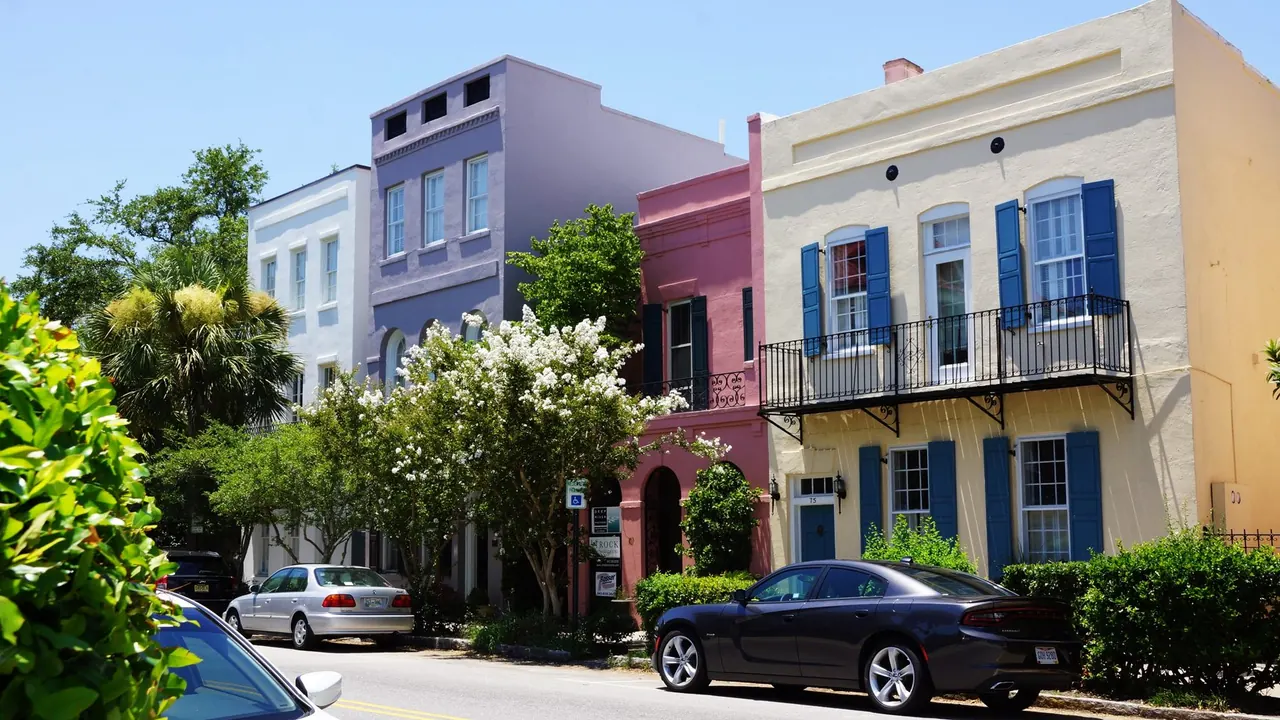
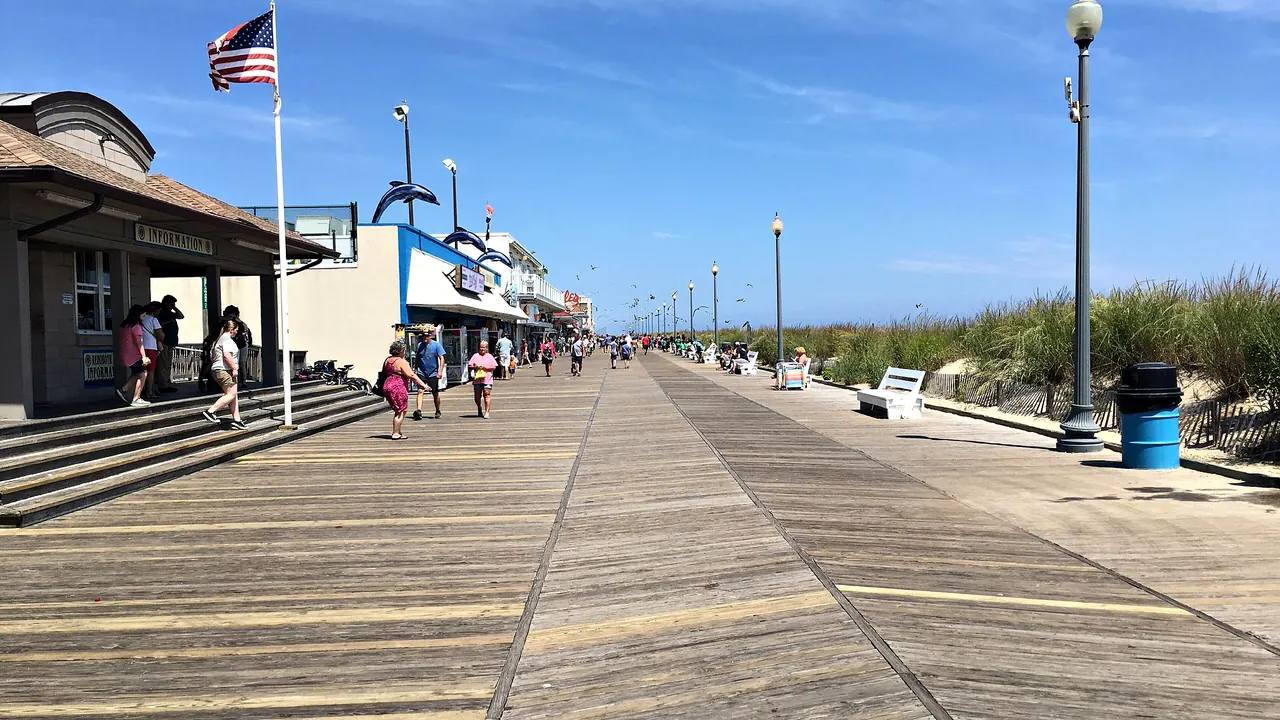
Photos: Charleston by NealVickers, CC BY-SA 4.0, cropped; Rehoboth Beach by Dough4872, CC BY-SA 4.0, cropped.
Charleston or Rehoboth Beach?
Our verdict in twelve categories, each scored against the same fixed benchmark cities, and the climate month by month, so you can choose for your trip.
Choose Charleston for
- culture and sights
- food and drink
- live music and the arts
Charleston suits travellers who want a city first and a beach second. The historic peninsula rewards days of walking, the Lowcountry cooking is worth planning meals around, and plantations and Savannah are within reach. Three barrier-island beaches fill the afternoons. It also works across more of the year, with a long swimming season and mild winters for sightseeing.
Choose Rehoboth Beach for
- families
- prices
- getting around
Rehoboth Beach is the better pick for a summer week built around the sand, especially with children. Funland, lifeguarded beaches steps from the rental houses and the easy trails of Cape Henlopen make the days simple, and the town is small enough to cross by bike. There is little to see beyond the shore, so come for the beach and the slow pace rather than for sights.
Scoreboard
Twelve categories on one fixed scale from 0 to 100. The shaded stretch is the gap between the two.
Your match
Pick a travel style or drag the sliders, and both match scores follow your weighting.
Wins on culture and sights and food and drink with your weighting.
Wins on families and prices with your weighting.
What matters to you?
Category by category
What the scores mean for a trip.
Beaches & swimming
Both have good Atlantic sand, but you use it differently. Charleston's beaches are on barrier islands about half an hour from the old town, each with its own character, from surfy Folly to the quiet dunes of Sullivan's Island. The water is warmer and stays warm for longer, though it is greenish and tidal. You have to drive there, so beach days are kept apart from sightseeing days.
In Rehoboth the beach is the town. Pale sand runs in front of the boardwalk, a short walk from every rental, and there are wilder stretches at Cape Henlopen and Delaware Seashore. The water is cooler, and swimming is limited to high summer.
Food & drink
Charleston is a real food destination. Lowcountry cooking, shaped by Gullah Geechee and West African traditions, runs from she-crab soup and Carolina Gold rice to whole-hog barbecue, and the dining rooms in restored townhouses take it seriously. The good tables book up well ahead.
Rehoboth eats better than most beach towns, thanks to its long role as a summer escape from Washington. It has steamed blue crabs, raw bars and strong craft beer. Much of the rest is boardwalk fries and taffy, though, and the choice thins out once summer ends.
Culture & sights
This is where the two differ most. Charleston's historic peninsula is a sight in itself, with Rainbow Row, the Battery and the single houses south of Broad Street. Its museums confront the slave trade directly, from the Aiken-Rhett House to the Old Slave Mart, and Fort Sumter is a boat ride across the harbour.
Rehoboth's history comes down to a Methodist camp meeting and some old cottages. The Rehoboth Art League is the main stop, and visitors interested in history usually head to Lewes.
Nightlife
Neither is a place for clubbing, and both wind down earlier than a big city. Charleston's evenings centre on the rooftop bars, oyster bars and sports pubs of upper King Street, with quieter taverns in the French Quarter, and they carry on all year. Rehoboth's nights are seasonal but have their own character: piano lounges and drag nights in one of the East Coast's best-known LGBTQ resorts, with the deck bars of Dewey Beach for a louder, younger crowd.
Nature & outdoors
Both sit on flat, low coast with no hills, so the outdoors means water and marsh. Charleston's Lowcountry feels wilder. You can kayak through spartina creeks among dolphins, and the Francis Marion National Forest and the ACE Basin have alligators, but summer brings heat and mosquitoes.
Rehoboth's version is gentler and closer to hand. The tall dunes of Cape Henlopen are at the edge of town, a bike trail runs through woods to Lewes and the inland bays suit paddling. Assateague's wild ponies are about an hour away.
Day trips
Charleston has the richer list. The plantations along the Ashley River, such as Middleton Place, Magnolia and Drayton Hall, plus McLeod on James Island, are about half an hour out and deal openly with slavery. Savannah and Beaufort make full days further afield.
Rehoboth's outings are pleasant but lighter. Historic Lewes is ten minutes away, the ferry crosses to the Victorian streets of Cape May, and Ocean City and Dover are reachable by road. Both cities need a car for all of these.
Good for families
Charleston suits children old enough to enjoy a bit of history. The aquarium and the Children's Museum of the Lowcountry share the downtown waterfront, Patriots Point turns an aircraft carrier into a giant climbing frame, and the boat to Fort Sumter makes a history lesson feel like an outing. Toddlers tire of the house tours quickly, though, and the sand is a drive away, so every beach day has to be planned.\n\nRehoboth is built around what younger children like.
A day can move from the beach to the boardwalk rides and back without anyone getting into a car, and the town is small enough that older children can be given some freedom. The cost is timing: Rehoboth works as a family resort only in high summer, when it is also at its fullest, while Charleston's indoor sights make a spring or autumn visit with children just as rewarding.
Getting around
Both are walkable at the centre and depend on cars beyond it. On Charleston's flat peninsula most sights lie within about 3km, with pedicabs and a free shuttle to fill the gaps, but the beaches and plantations mean driving or ride-hailing. Rehoboth's centre is smaller and full of bikes, with a seasonal trolley to Dewey Beach and a cycle trail to Lewes, but there is no train and the highway into town clogs on summer weekends.
Shopping & style
Charleston offers the better browsing. King Street changes along its length, from antiques at the lower end to fashion brands and then independent design shops. At the City Market, Gullah weavers sell sweetgrass baskets, a craft with no equivalent in Delaware.
Rehoboth's appeal is practical: there is no sales tax and there are large outlet centres on the highway, with boutiques and beachwear downtown. Neither city has a luxury tier.
Affordability
Charleston is dearest in exactly the seasons when it is best to visit. The inns on the historic peninsula cost big-city money, and spring and autumn weekends push them higher just when the weather suits walking. Staying in Mount Pleasant or the suburbs saves money but means driving in every day, and paid house and plantation tours add to the bill.
Rehoboth runs the other way. Summer is the costly season, with high-season premiums on rooms and rental houses near the beach, and prices fall sharply in spring and autumn once the summer rush is over. The lack of sales tax helps at the outlets, and in both places the beach itself costs nothing.
Live music & performing arts
Charleston has much more on stage, largely thanks to Spoleto Festival USA, which brings over two weeks of opera, dance, chamber music and jazz every late spring. For the rest of the year the Dock Street Theatre, the symphony at the Gaillard Center and Gullah storytelling keep things going.
Rehoboth's offer is small and seasonal. There are free bandstand concerts on summer evenings, a local company staging musicals and cabaret, and an autumn film festival.
Wellness & relaxation
Charleston is the calmer place to unwind, and the calm lasts all year. The old town moves slowly, with shaded gardens, quiet church courtyards and long evenings by the water at White Point Garden. The resort spas on Kiawah Island add proper treatments for anyone who wants them.
Rehoboth is only quiet in some seasons. In June, September and on autumn weekends it slows to walks on an empty boardwalk and bike rides under the pines, but high summer is crowded and noisy. Its day spas and yoga studios are modest, and neither town has a bathing tradition.
When should you go?
Pick your month. The climate figures are measured averages, not a forecast.
Charleston in July
Rehoboth Beach in July
Daytime high, °C
Rainfall in the month, mm
Where the figures come from
Rehoboth Beach has no rain gauge within 25 km of the centre, so its rainfall comes from a gridded climate dataset read at the city rather than from a gauge further away.
Temperature and rainfall are climate normals, averaged over the years shown. Charleston: 1991-2020 normals, Charleston Airport (16.1 km from centre). Rehoboth Beach: 2006-2020 (rainfall 1991-2020) normals, Georgetown / Rogers Development (24.1 km from centre).
Charleston has the longer season. The Atlantic is warm enough to swim from May into October and reaches 28°C in high summer. June to September is also the wettest stretch, though, with the rainiest months near 170mm, and highs around 33°C make midday walking on the peninsula hard work. Spring and autumn are the best time for the old town, and even January is mild enough for sightseeing.
Rehoboth Beach is a summer place. The sea only warms to about 24°C in July and August, and from October to May it is far too cold for swimming. Winters are raw, with highs around 7°C. Rain is spread fairly evenly through the year rather than bunched into summer. June and September bring warm days at either end of the beach season.
Which traveller are you?
On a culture and arts trip, Charleston wins clearly. Its antebellum streets, house museums that show both the grand rooms and the enslaved people's quarters, Fort Sumter and the International African American Museum fill several days, and Spoleto adds opera and theatre each late spring.
On a family trip with young children, Rehoboth Beach is easier. Funland's gentle rides, lifeguarded sand a short walk from the rental houses and calm bay water at Cape Henlopen keep small children happy, while Charleston's house tours and hot summer afternoons test their patience.
For a food and nightlife trip, Charleston is the stronger choice. Lowcountry cooking, from shrimp and grits to oysters roasted by the bushel, gives meals real depth, and upper King Street has rooftop and cocktail bars all year. Rehoboth's summer evenings are sociable, but its kitchens are those of a resort.
Before you go
| Measure | Charleston | Rehoboth Beach |
|---|---|---|
| Currency | US Dollar (USD) | US Dollar (USD) |
| Sockets | AB120 V, 60 Hz | AB120 V, 60 Hz |
| Driving side | Right | Right |
| Time zone | UTC-5, UTC-4 in summer | UTC-5, UTC-4 in summer |
| Emergency number | 911 | 911 |
| Elevation | 6 m | 5 m |
| Main airport | Charleston International Airport (CHS)16 km from centre56 non-stop destinations | Salisbury Ocean City Wicomico Regional Airport (SBY)56 km from centre4 non-stop destinations |
| Public holidays this year | 12 days | 12 days |
By the numbers
| Measure | Charleston | Rehoboth Beach |
|---|---|---|
| City population | 150,227 | 1,108 |
| People per km² | 532 | 258 |
| Museums within 10 km | 19 | 2 |
| UNESCO World Heritage sites within 50 km | 0 | 0 |
| Swim season, months above 21 °C | 6 months | 3 months |
Where else could you go?
Every comparison below shares a destination with this one, so you can follow Charleston or Rehoboth Beach somewhere new.