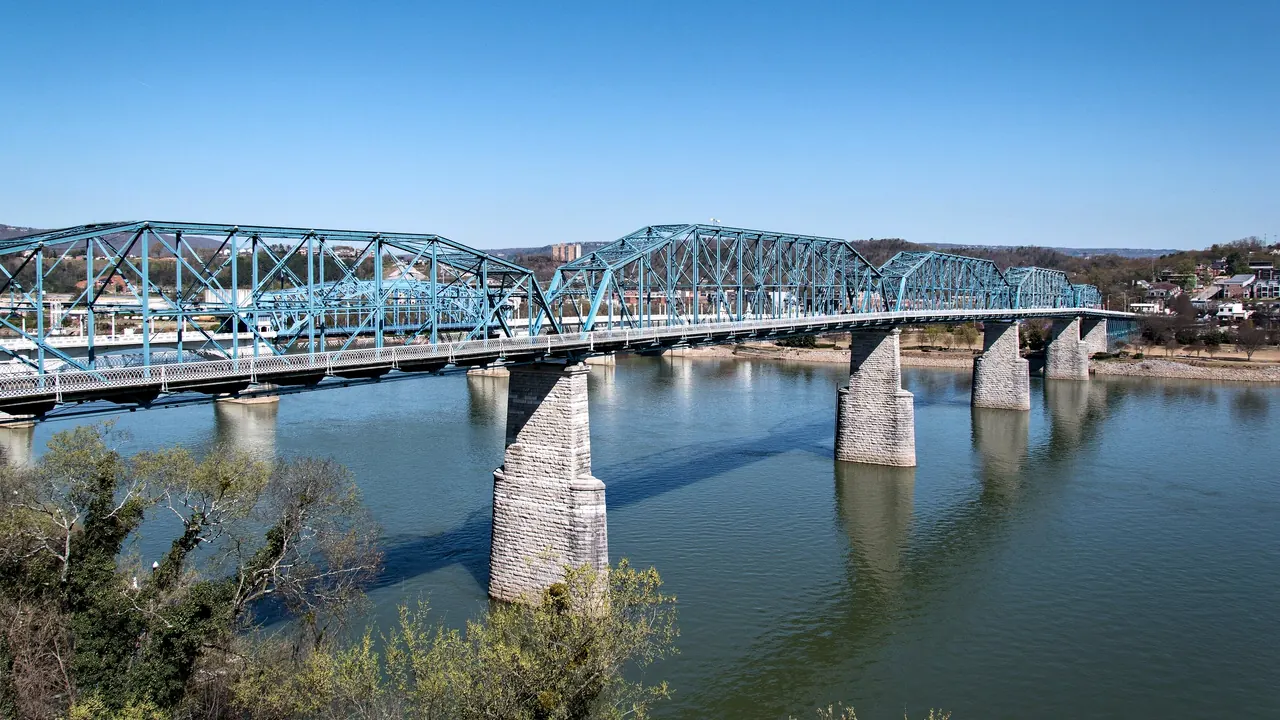
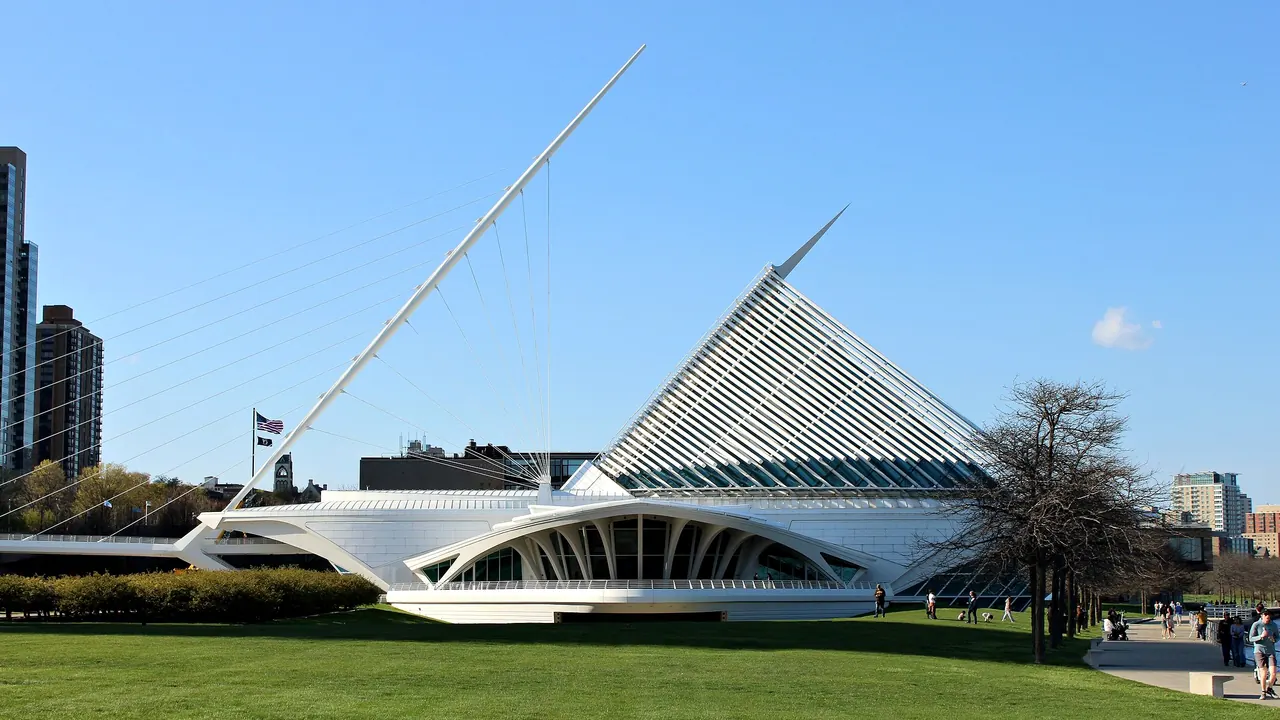
Photos: Chattanooga by Ɱ, CC BY-SA 4.0, cropped; Milwaukee by Michael Barera, CC BY-SA 4.0, cropped.
Chattanooga or Milwaukee?
Our verdict in twelve categories, each scored against the same fixed benchmark cities, and the climate month by month, so you can choose for your trip.
Choose Chattanooga for
- nature and the outdoors
- families
Chattanooga is the pick for travellers who want to spend their days outside. You can climb the sandstone bluffs, hike or paddle the Tennessee River Gorge and run the Ocoee whitewater, then come back to a small, easy-going riverfront town. It also works especially well for families with younger children, because the aquarium, the Incline Railway and Ruby Falls are built for them.
Choose Milwaukee for
- nightlife
- live music and the arts
- beaches
If your evenings matter as much as your days, Milwaukee is the better bet. Corner taverns, Friday fish fries, a full set of resident orchestra, opera and ballet companies and the lakefront festivals in summer give a city break more texture, and Chicago is an easy train ride away. Its good season is shorter, though, so it is mainly a summer city.
Scoreboard
Twelve categories on one fixed scale from 0 to 100. The shaded stretch is the gap between the two.
Your match
Pick a travel style or drag the sliders, and both match scores follow your weighting.
Wins on nature and the outdoors and families with your weighting.
Wins on nightlife and live music and the arts with your weighting.
What matters to you?
Category by category
What the scores mean for a trip.
Beaches & swimming
Neither city is a beach destination, but Milwaukee at least has a real sandy lakefront. Bradford Beach, below the East Side bluffs, has volleyball courts and cabanas and draws a crowd on warm weekends. Lake Michigan stays cool, though, and can turn cold overnight, so many people paddle rather than swim.
Chattanooga's swimming is in fresh water inland: small roped-off areas on Chickamauga Lake and at Harrison Bay, plus swimming holes in the creeks on the plateau. The water is warmer for longer than Milwaukee's lake, but these are places for an hour on a hot afternoon, not for a day on the sand.
Food & drink
Milwaukee has more to seek out. The Friday fish fry, the wood-panelled supper club, frozen custard and cheese curds make up a local food culture of its own, and the Public Market and the South Side's Mexican cooking add variety. Brewing is the city's oldest trade, so beer runs through all of it.
Chattanooga eats Southern: meat-and-three plates, biscuits, smoked brisket and catfish with grits, with the chef-led places and breweries clustered around the Southside and Main Street. It is satisfying for a few days, but there is little international cooking and no market hall to explore.
Culture & sights
Milwaukee has the stronger set of sights. The Calatrava pavilion of the Milwaukee Art Museum and the Harley-Davidson Museum both draw people from far away, and the brewing-era Pabst Mansion, the Basilica of St Josaphat and the cream-brick Third Ward give the city real architectural interest.
Chattanooga's story is the Civil War and the railway. Point Park on Lookout Mountain, Missionary Ridge and the old Terminal Station appeal most to history readers, alongside the Hunter Museum on its bluff and the long Walnut Street Bridge. Either city fills two or three days, but Milwaukee's are the fuller ones.
Nightlife
Milwaukee is the better night out by some distance. The neighbourhood tavern with its old brewery signs is an institution here, and you can choose between rowdy Water Street, Brady Street's mix of dives and cocktail bars, and the taprooms and LGBTQ bars of Walker's Point. Bars stay open until about 2am.
Chattanooga keeps it low-key. A brewery patio or a cocktail bar on the Southside, with Station Street as the busiest block, makes a pleasant evening, but there is little club culture and most places wind down early.
Nature & outdoors
The outdoors is where Chattanooga pulls well ahead. Ridges rise straight above the town, the sandstone bluffs make it a serious climbing base, hang gliders launch from Lookout Mountain, and the Tennessee River Gorge, the Ocoee whitewater and the canyon rim trails at Cloudland Canyon are all within about an hour.
Milwaukee's nature is gentler and built around the lake: Olmsted's Lake Park with its ravines, long flat cycling on the Oak Leaf Trail, and kayaking on the river through the centre. For hills and real hiking, you have to drive about an hour to the Kettle Moraine.
Day trips
Two-hour drives to Nashville or Atlanta set the pattern from Chattanooga, and both make for a long day at the wheel. The pick of the closer outings is Huntsville's Space and Rocket Center, a strong draw for anyone interested in spaceflight, while Lynchburg, hilltop Sewanee and the Chickamauga battlefield are quieter choices. You need a car for every one of them.\n\nMilwaukee's big outing needs no car. Chicago's architecture, museums and lakefront are about an hour and a half away by train. Madison, Frank Lloyd Wright's buildings in Racine, Cedarburg's stone mills and the design village of Kohler give it a deeper list of shorter trips too.
Good for families
Chattanooga has the edge with children, because its attractions are concentrated and aimed squarely at them. The two-building Tennessee Aquarium and the Creative Discovery Museum are a short walk apart, and Lookout Mountain adds the steep Incline Railway, the underground waterfall at Ruby Falls and Rock City. Summer heat is the main thing to plan around.
Milwaukee is still a good family city, with a large zoo, Discovery World's science exhibits and aquariums, and the Mitchell Park Domes for a cold day. Summer at Bradford Beach or a baseball game is the best of it, while the long winter limits what families can do outdoors.
Getting around
Both work the same way: you can walk the centre, but you need a car for most of the rest. Chattanooga has its free downtown electric shuttle and the Walnut Street Bridge across to the North Shore, but its mountains and trails, which are the main reason to come, can only be reached by car.
Milwaukee's Riverwalk and short streetcar link downtown and the Third Ward, and buses reach the zoo and the East Side. In summer, the lakefront trails and bike-share let you get further without driving.
Shopping & style
Shopping is a sideline in both. Milwaukee's Third Ward is slightly better for browsing, with design shops and galleries in old warehouses, and visitors leave with Wisconsin cheese, local beer or Harley-Davidson gear. Chattanooga's best browsing is on Frazier Avenue, with boutiques and galleries, and outdoor gear is the one thing worth buying there.
Affordability
By American standards, neither city is expensive and neither is cheap. Milwaukee is slightly easier on the wallet, with inexpensive tavern beer and fish fries, a free lakefront and many low-cost festivals, though big summer weekends push up hotel rates.
In Chattanooga the costs add up in other ways. The trails and riverfront are free, but the aquarium and the Lookout Mountain attractions all charge full admission, and almost everyone needs a hire car to see the area.
Live music & performing arts
One small symphony and opera company, which shares the gilded 1920s Tivoli Theatre with touring shows, is the core of Chattanooga's programme. Beyond that there are bluegrass and Americana bands in a few Southside bars. That covers an evening or two, and serious music lovers tend to make a separate trip to Nashville.\n\nMilwaukee supports a full set of resident companies: a symphony, the Florentine Opera, the Milwaukee Ballet, a repertory theatre and the Skylight for musicals. The ornate 1895 Pabst Theater books touring bands, and each summer Summerfest fills the lakefront festival grounds with hundreds of acts over several weeks.
Wellness & relaxation
Neither city has a bathing tradition, and spas in both mostly mean hotel or day spas. For rest, Chattanooga offers a slow afternoon on a porch in Bluff View or along the river, and Milwaukee offers walks along the lakefront and the Riverwalk. Milwaukee's one advantage is that the resort village of Kohler, about an hour away, offers a proper spa day, and Chattanooga has nothing comparable nearby.
When should you go?
Pick your month. The climate figures are measured averages, not a forecast.
Chattanooga in July
Milwaukee in July
Daytime high, °C
Rainfall in the month, mm
Temperature and rainfall are climate normals, averaged over the years shown. Chattanooga: 1991-2020 (sunshine 1981-2010) normals, Lovell Field (6.3 km from centre). Milwaukee: 1991-2020 (sunshine 1981-2010) normals, Gen Mitchell International Airport (11.2 km from centre).
Chattanooga has the longer season. Spring and autumn are the times to come. April, May and October bring warm days in the low to mid twenties, ideal for trails and climbing. In July and August highs reach about 32°C, and the heavy humidity makes walking around at midday hard work. Winter is mild but greyer and slightly wetter, and the rain is spread fairly evenly through the year rather than falling in one rainy season.
Milwaukee is a summer city. Winters are properly cold, with January highs around -1°C, and spring arrives late. From June to September the days sit in the mid twenties with the most sunshine of the year. Lake Michigan warms to about 21°C in August, which is as warm as it gets for a swim. September is a pleasant time to visit once the lake starts to cool, and by November the cold is back.
Which traveller are you?
On an outdoors trip, Chattanooga is the clear choice. Lookout Mountain, the Tennessee River Gorge and the Ocoee's whitewater put climbing, hang gliding, mountain biking and paddling within an hour. Milwaukee offers flat lakefront cycling and gentle hiking in the Kettle Moraine.
For a food and nightlife trip, Milwaukee gives you more evenings worth planning. A Friday fish fry, a supper club and a round of corner taverns, Brady Street bars and Walker's Point taprooms beat Chattanooga's few breweries and bars, which go quiet early.
On a culture and arts trip, Milwaukee has more to fill the calendar: a symphony, opera, ballet and repertory theatre, the Calatrava-designed art museum and Summerfest. Chattanooga's Civil War sites and Hunter Museum fill a couple of days, but its theatre and concert programme is thin.
Before you go
| Measure | Chattanooga | Milwaukee |
|---|---|---|
| Currency | US Dollar (USD) | US Dollar (USD) |
| Sockets | AB120 V, 60 Hz | AB120 V, 60 Hz |
| Driving side | Right | Right |
| Time zone | UTC-5, UTC-4 in summer | UTC-6, UTC-5 in summer |
| Emergency number | 911 | 911 |
| Elevation | 206 m | 188 m |
| Main airport | Chattanooga Metropolitan Airport (Lovell Field) (CHA)6 km from centre15 non-stop destinations | General Mitchell International Airport (MKE)12 km from centre34 non-stop destinations |
| Public holidays this year | 13 days | 12 days |
By the numbers
| Measure | Chattanooga | Milwaukee |
|---|---|---|
| City population | 181,099 | 577,222 |
| People per km² | 484 | 2,302 |
| Museums within 10 km | 7 | 14 |
| UNESCO World Heritage sites within 50 km | 0 | 0 |
| Swim season, months above 21 °C | - | 1 month |
Where else could you go?
Every comparison below shares a destination with this one, so you can follow Chattanooga or Milwaukee somewhere new.
- Chicagovs Milwaukee
- Wisconsin Dellsvs Milwaukee
- Atlantavs Chattanooga
- Pigeon Forgevs Chattanooga
- Gatlinburgvs Chattanooga
- Nashvillevs Chattanooga