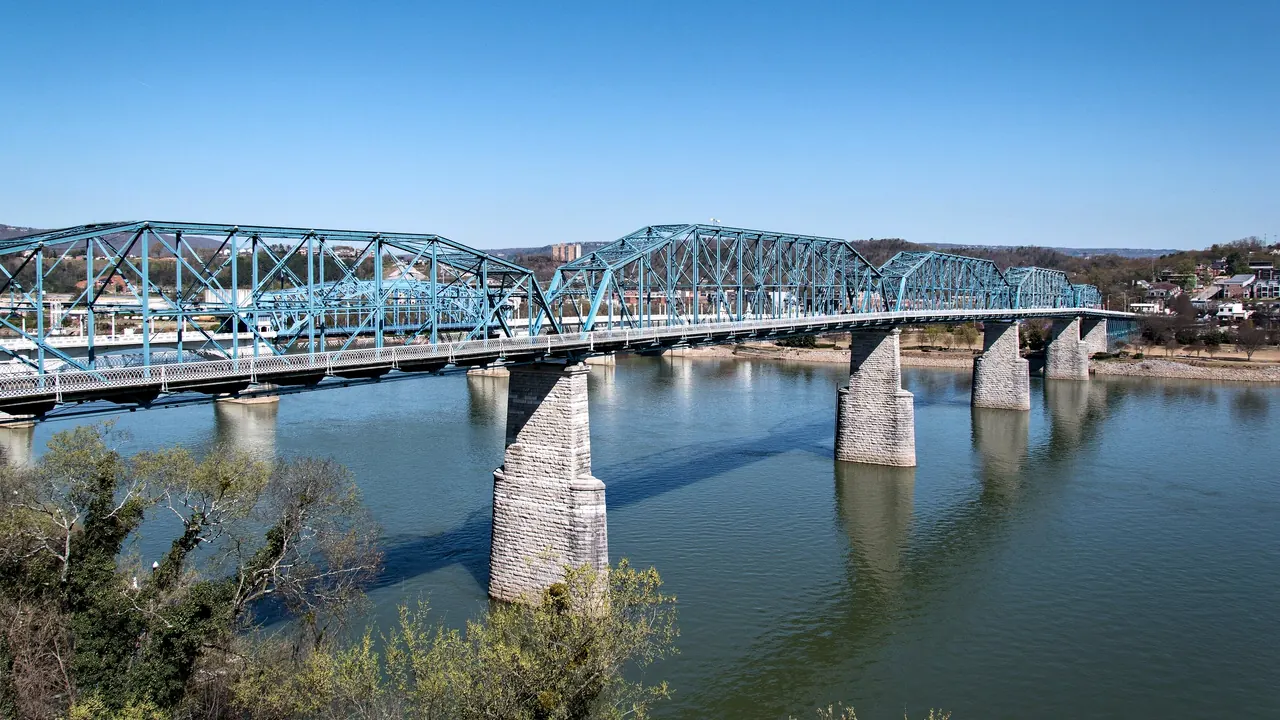
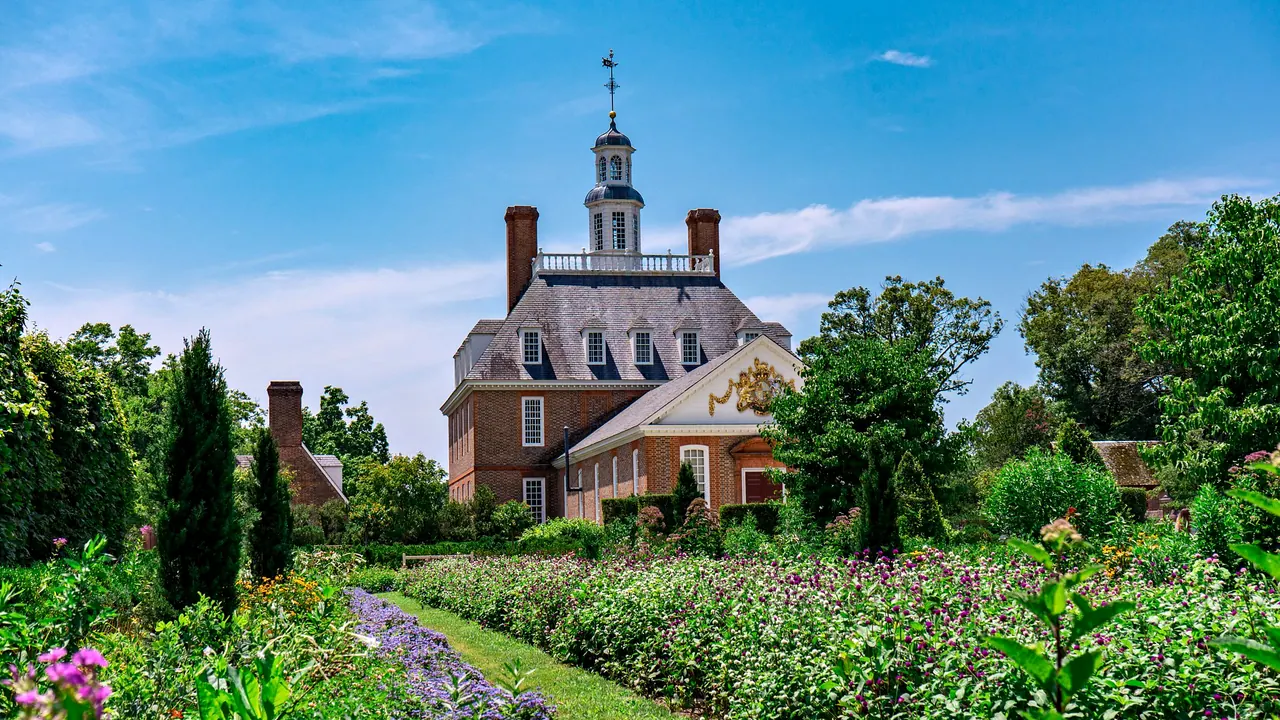
Photos: Chattanooga by Ɱ, CC BY-SA 4.0, cropped; Williamsburg, Virginia by Brian Magill, Pexels License.
Chattanooga or Williamsburg, Virginia?
Our verdict in twelve categories, each scored against the same fixed benchmark cities, and the climate month by month, so you can choose for your trip.
Choose Chattanooga for
- nature and the outdoors
- food and drink
- nightlife
Chattanooga is for travellers who want to spend their days outside. Ridges rise straight from the river, and the sandstone bluffs, gorge paddling, hang gliding and Ocoee whitewater put serious activity within easy reach of town. Evenings are a little livelier too, and the Southern cooking has more range, so it works well for active couples and groups of friends who want a good dinner and a beer after a day on the rock or the trail.
Choose Williamsburg, Virginia for
- culture and sights
- beaches
- families
Williamsburg suits people who come for the eighteenth century and for children. Colonial Williamsburg is a whole re-created town rather than a few monuments, Jamestown and Yorktown are each a short drive away, and the big theme park and water park round out a classic family week. Nights are quiet and the countryside is flat, but history lovers and parents will find more to fill their days here.
Scoreboard
Twelve categories on one fixed scale from 0 to 100. The shaded stretch is the gap between the two.
Your match
Pick a travel style or drag the sliders, and both match scores follow your weighting.
Too close to call, level with your weighting
Wins on nature and the outdoors and food and drink with your weighting.
Wins on culture and sights and beaches with your weighting.
What matters to you?
Category by category
What the scores mean for a trip.
Beaches & swimming
Neither is a beach destination, but Williamsburg gets you closer to salt water. It has a calm strip of sand at Yorktown 20 minutes away, the Chesapeake Bay at Hampton and the Atlantic beaches of Virginia Beach about an hour's drive off, so a proper beach day is easy to add.
Chattanooga is hundreds of kilometres from the coast. It has lake swimming areas at Chickamauga and Harrison Bay and cool creek pools on the plateau, which are good for an hour on a hot afternoon but not for a day on the sand.
Food & drink
Both cook from the same Southern tradition, but Chattanooga gives you more to choose from. Its Southside and Main Street restaurants and breweries make dinner the high point of the day, even if international cooking is thin.
Williamsburg's best eating is simple and coastal: ham biscuits, peanut soup, bay oysters and crab cakes. The candlelit colonial taverns sell atmosphere more than cooking, and Richmond Road is mostly pancake houses and buffets for the theme-park crowds.
Culture & sights
Williamsburg is built around its history. Duke of Gloucester Street runs from the Capitol to the Wren Building, past Bruton Parish Church and the Governor's Palace, with interpreters at work in the shops along the way. The folk and decorative arts collections add more to see indoors.
Chattanooga's sights are scattered rather than concentrated. Civil War ground at Point Park and Missionary Ridge, the old Terminal Station, the Hunter Museum on its bluff and the Bessie Smith Cultural Center make good stops. But the Walnut Street Bridge is the landmark, and the city has no historic core to match a whole restored town.
Nightlife
Neither is a place for a late night, but Chattanooga gives you more of an evening to plan. Its Southside and Main Street bars sit close enough together that you can walk from a brewery taproom to a cocktail bar to a room with a local band. At weekends the crowd is mostly students and young people from the city, so it feels like a night among locals rather than a tourist strip. It suits friends who want two or three stops after dinner and do not mind being in bed before the small hours.
In Williamsburg, evenings revolve around the Historic Area and end when it does. The pubs around William & Mary depend on the student calendar, and the taprooms are out on the edge of town. Families on a theme-park week will hardly notice the gap, but couples or friends who like to go out after dark will find Chattanooga's few blocks worth more than they sound.
Nature & outdoors
This is the widest gap between the two. Chattanooga sits where the Tennessee River cuts through the Cumberland Plateau, with Lookout, Signal and Raccoon mountains rising above town. You can climb on the sandstone bluffs, launch a hang glider or ride the trails in Prentice Cooper State Forest, and the Olympic whitewater of the Ocoee is about an hour away.
Williamsburg's outdoors is gentle and flat. It has the traffic-free Colonial Parkway and the paved Capital Trail for cycling, plus quiet kayaking on tidal creeks where ospreys and bald eagles hunt. It is lovely for a slow day, but there is not a hill in sight.
Day trips
Williamsburg's best outings are very close. Jamestown and Yorktown are each under half an hour away, the James River plantation houses line Route 5, and Richmond and the Hampton Roads museums are about an hour off.
From Chattanooga, the big names are further away. Nashville and Atlanta are each about two hours by car, while Huntsville's rocket centre and the Chickamauga battlefield make easier outings.
Good for families
Both are easy with children, but Williamsburg is the more complete family trip. It has a large theme park with rides for every age, a water park next door, musket firings and fife-and-drum parades in the Historic Area, and replica ships to climb aboard at Jamestown.
Chattanooga makes a fine shorter break built around the Tennessee Aquarium and the Creative Discovery Museum. Up on Lookout Mountain, children can ride the Incline Railway and visit Ruby Falls and Rock City. In both places, summer heat and driving between sights need planning.
Getting around
The pattern is the same in both: a walkable core, then sprawl that needs a car. Chattanooga's centre is linked by the Walnut Street Bridge and a free electric shuttle, but the mountains and trailheads need a car.
Williamsburg's core is a flat, car-free colonial street you can walk in about 20 minutes. It also has an Amtrak station near the centre, but the theme parks, the outlets and the Triangle sites are spread along highways.
Shopping & style
Williamsburg has more that is worth taking home. Its colonial shops sell pewter, pottery and books printed the old way, and Merchants Square and a large outlet centre on Richmond Road add more choice. Chattanooga has converted warehouses at Warehouse Row and small boutiques on Frazier Avenue, and outdoor gear is the one thing it does particularly well.
Affordability
Costs are much the same, typical of a mid-sized American tourist town, with tipping and a hire car in both budgets. Where the money goes differs. In Williamsburg, plentiful motels keep rooms cheap, but the historic sites and theme parks all charge hefty admission. In Chattanooga, many of the best days are free, out on the trails and riverfront, while the aquarium and the mountain attractions are the big costs.
Live music & performing arts
Chattanooga has the fuller programme, though neither is a music destination. The gilded 1920s Tivoli Theatre hosts the city's symphony and opera company and touring shows, and small Southside venues play bluegrass and Americana.
Williamsburg's performances belong to its setting. You will find candlelit recitals of eighteenth-century music, period theatre and fife-and-drum corps, along with student concerts at the college in term time. For an orchestra or a professional theatre company, you need to drive to Richmond or Norfolk.
Wellness & relaxation
Neither has a bathing tradition. Williamsburg is a little better for a restful stay, with spas at the historic inn and the golf resorts on the James River, and early, empty mornings on the colonial greens. Chattanooga offers mostly hotel spas and a quiet porch in Bluff View, and most people go there to be active rather than to unwind.
When should you go?
Pick your month. The climate figures are measured averages, not a forecast.
Chattanooga in July
Williamsburg, Virginia in July
Daytime high, °C
Rainfall in the month, mm
Where the figures come from
Williamsburg, Virginia's sunshine is measured 60 km from the centre, at Richmond International Airport.
Temperature and rainfall are climate normals, averaged over the years shown. Chattanooga: 1991-2020 (sunshine 1981-2010) normals, Lovell Field (6.3 km from centre). Williamsburg, Virginia: 2006-2020 (sunshine 1981-2010, rainfall 1991-2020) normals, Williamsburg / Kingspoint (3.6 km from centre).
The two are almost twins in temperature. Both climb from about 11°C in January to around 32°C in July and August, so April, May, October and early November are the comfortable months for walking. High summer is hot and sticky for long days on foot or on the trails. The real difference is the rain. Chattanooga is wettest from December to March, at well over 120mm a month, and driest in May, August and October. Williamsburg has dry winters and gets its heaviest rain in August, at around 150mm, often in summer downpours.
Williamsburg is sunnier in most months, and its winters are clearly brighter, though Chattanooga has slightly more sun in May. Only Williamsburg has sea swimming. The bay warms to about 26°C in July and August and is still comfortable in September. In Chattanooga, summer swimming means the lakes and creeks, from June to September.
Which traveller are you?
For an outdoors trip, Chattanooga is the clear choice. It has climbing on sandstone bluffs, mountain-bike trails, paddling in the Tennessee River Gorge and waterfalls at Cloudland Canyon. Williamsburg offers gentle Tidewater kayaking and flat cycling, but nothing to climb.
On a culture and arts trip, Williamsburg goes further. A whole colonial capital comes alive with costumed tradespeople, and Jamestown and Yorktown complete the Historic Triangle. Chattanooga's Civil War sites and the Hunter Museum fill two days, but they do not have the same depth.
For a food and nightlife trip, Chattanooga has the edge. It has chef-led kitchens and craft breweries on the Southside, a lively strip of bars on Station Street and live bluegrass and Americana. In Williamsburg, a tavern dinner and a ghost walk usually end the evening.
Before you go
| Measure | Chattanooga | Williamsburg, Virginia |
|---|---|---|
| Currency | US Dollar (USD) | US Dollar (USD) |
| Sockets | AB120 V, 60 Hz | AB120 V, 60 Hz |
| Driving side | Right | Right |
| Time zone | UTC-5, UTC-4 in summer | UTC-5, UTC-4 in summer |
| Emergency number | 911 | 911 |
| Elevation | 206 m | 15 m |
| Main airport | Chattanooga Metropolitan Airport (Lovell Field) (CHA)6 km from centre15 non-stop destinations | Newport News Williamsburg International Airport (PHF)24 km from centre1 non-stop destination |
| Public holidays this year | 13 days | 13 days |
By the numbers
| Measure | Chattanooga | Williamsburg, Virginia |
|---|---|---|
| City population | 181,099 | 15,425 |
| People per km² | 484 | 656 |
| Museums within 10 km | 7 | 8 |
| UNESCO World Heritage sites within 50 km | 0 | 0 |
| Swim season, months above 21 °C | - | 4 months |
Where else could you go?
Every comparison below shares a destination with this one, so you can follow Chattanooga or Williamsburg, Virginia somewhere new.
- Virginia Beachvs Williamsburg, Virginia
- Atlantavs Chattanooga
- Pigeon Forgevs Chattanooga
- Gatlinburgvs Chattanooga
- Washington DCvs Williamsburg, Virginia
- Nashvillevs Chattanooga