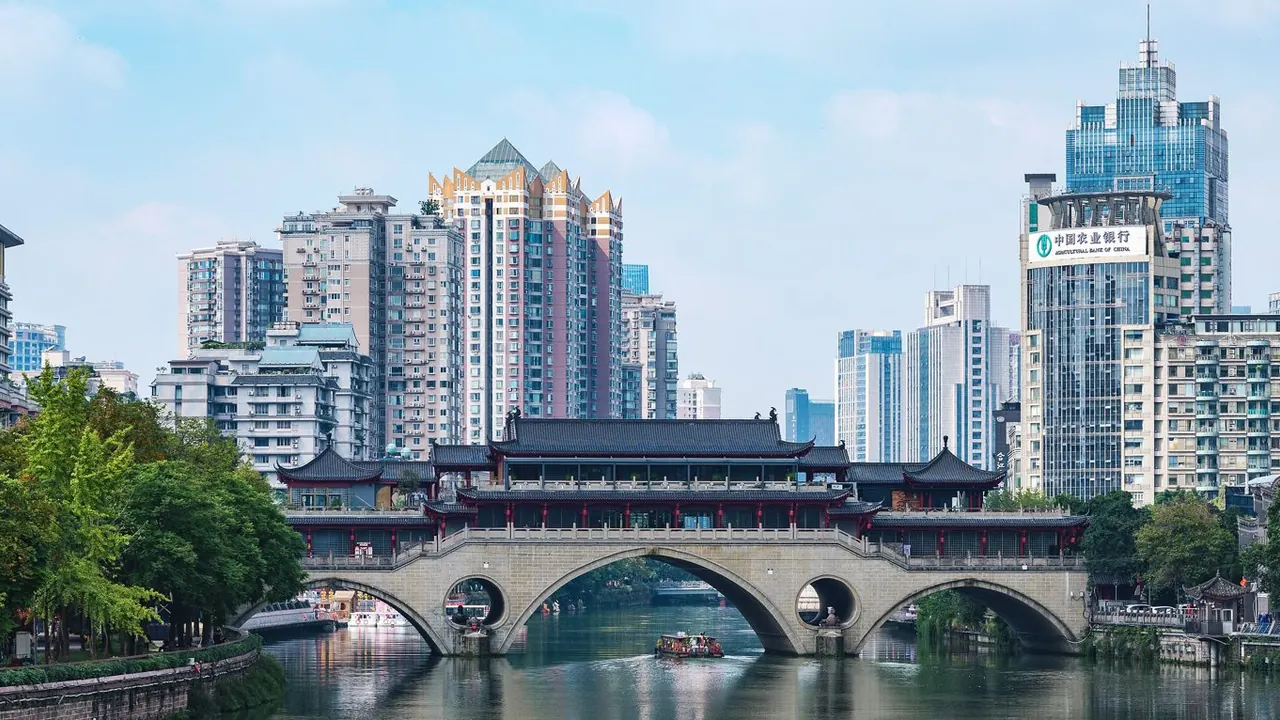
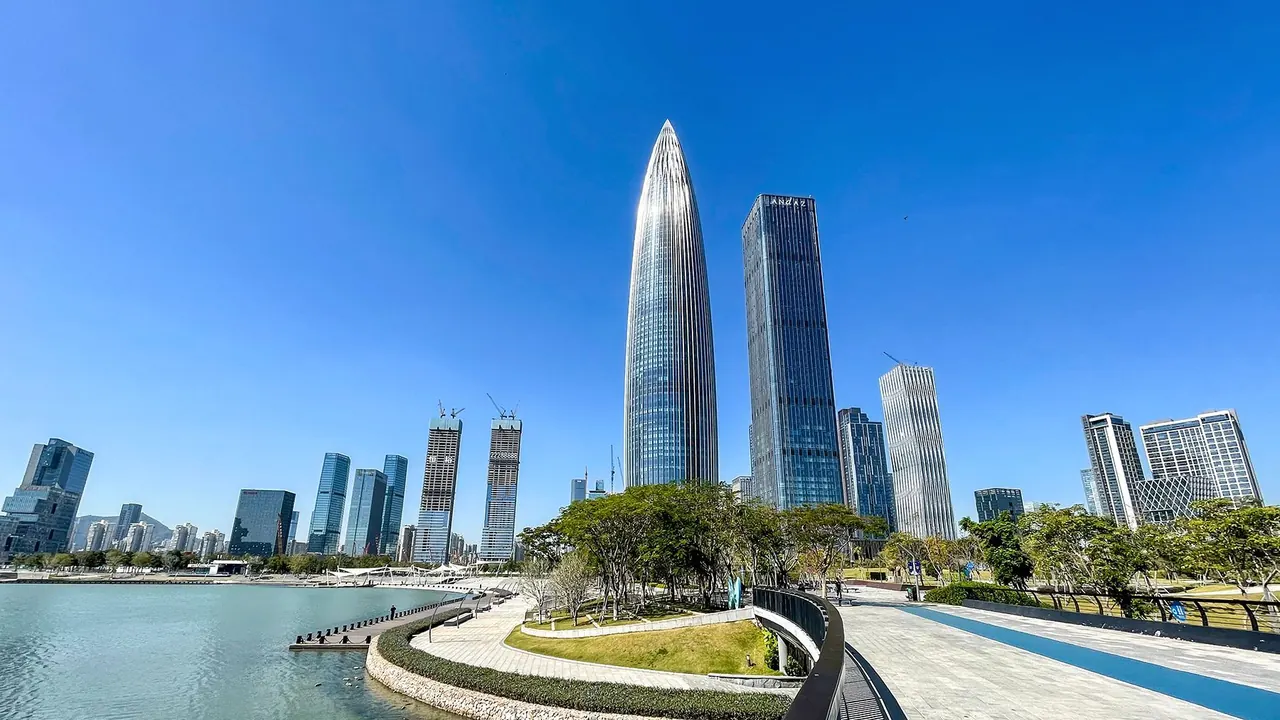
Photos: Chengdu by TurnOnTheNight, CC BY-SA 4.0, cropped; Shenzhen by Windmemories, CC BY-SA 4.0, cropped.
Chengdu or Shenzhen?
Our verdict in twelve categories, each scored against the same fixed benchmark cities, and the climate month by month, so you can choose for your trip.
Choose Chengdu for
- culture and sights
- food and drink
- nightlife
Chengdu suits travellers who plan their days around the table and the sights. It is the home of Sichuan cooking, its shrines, temples and museums fill several days, nights run late over hotpot, and money goes further. Pandas, slow afternoons in teahouses and the Leshan Giant Buddha a short train ride away complete the picture.
Choose Shenzhen for
- beaches
- wellness
- families
Pick Shenzhen if you want warmth and the sea within reach of a big modern city. The Dapeng peninsula beaches, the theme parks of Overseas Chinese Town and the all-night bathhouses give it a leisure side that Chengdu lacks, and Hong Kong, Guangzhou and Macau are close enough for days out. It is a young city, though, with little history of its own.
Scoreboard
Twelve categories on one fixed scale from 0 to 100. The shaded stretch is the gap between the two.
Your match
Pick a travel style or drag the sliders, and both match scores follow your weighting.
Wins on culture and sights and food and drink with your weighting.
Wins on beaches and wellness with your weighting.
What matters to you?
Category by category
What the scores mean for a trip.
Beaches & swimming
Chengdu has no beach at all. It lies deep in the Sichuan Basin, so swimming means a hotel pool or a water park.
Shenzhen has real sand, though not on its doorstep. Xichong, at the tip of the Dapeng peninsula, is the best of it, Dameisha and Xiaomeisha are busier, and in summer the sea is warm enough for long swims. Allow most of a morning to get out there from Futian or Nanshan.
Food & drink
Chengdu is a food destination in its own right. It is the birthplace of Sichuan cooking, with mapo tofu, dan dan noodles and late-night beef-tallow hotpot served from family counters in residential lanes, and jasmine tea in the park teahouses.
Shenzhen eats well because it draws cooks from all over China, so Cantonese dim sum, Chaoshan beef hotpot and Hakka salt-baked chicken sit side by side, and fish picked from the tanks at Nan'ao or Shekou is a highlight. What it lacks is a cooking of its own and old streets built around eating, so good meals tend to happen in malls and office districts.
Culture & sights
Little old fabric survives in either city, but Chengdu has far more to see. There is the Wuhou Shrine, Du Fu's Thatched Cottage, the working Wenshu Monastery and Qingyang Palace, and the Shu gold and jade at Jinsha. Its old lanes are rebuilt, but the sights still fill three or four days.
Most of Shenzhen's landmarks tell the story of its own rise in the late twentieth century: the Ping An tower, Civic Centre and the converted factories of OCT Loft. Nantou old town and the Hakka walled villages add older layers, but they are far apart and quickly seen.
Nightlife
Chengdu goes out for longer and with more spirit, and food is at the heart of it. A slow hotpot dinner leads on to the riverside bar streets around Jiuyanqiao or a cocktail in Yulin, and the snack streets keep serving after midnight.
Shenzhen's nights are split between the bottle-service clubs of Coco Park, Shekou's easy-going pubs and private KTV rooms, with long journeys between them and little happening on the street. It is fine for an evening out but rarely the reason for the trip.
Nature & outdoors
Both give good outdoor days, but of different kinds. From Chengdu the draw is the mountains beyond its flat, hazy plain: Taoist trails on Qingcheng, the long cloud-forest climb of Emeishan with monkeys on the paths, and panda country towards Wolong.
Shenzhen's nature is coastal and closer to hand. There is the headland trail on the Dapeng peninsula, kayaking off the eastern shore, Wutong Mountain's views towards Hong Kong and egrets feeding in the Shenzhen Bay mangroves. The hills are lower, but the sea makes up for it.
Day trips
Both make excellent bases, Chengdu for ancient heritage and Shenzhen for other cities. Chengdu's days out reach back thousands of years: the Leshan Giant Buddha, the irrigation works at Dujiangyan, the bronze masks of Sanxingdui and wooden market towns such as Huanglongxi.
Shenzhen's strength is its neighbours. Hong Kong is under half an hour away by fast train, and Guangzhou's Chen Clan Ancestral Hall and Macau's Portuguese old town are also close. For Hong Kong or Macau, sort out your passport and visa arrangements before you go, so you can get back into the mainland.
Good for families
Chengdu has one draw children will remember above all, the pandas at the breeding base, best seen early in the morning, plus a zoo and an aquarium park. Food that is spicy by default and muggy summers need some planning.
Shenzhen offers more rides and variety: the theme parks of Overseas Chinese Town, OCT East, the safari park and a marine park by the beach at Xiaomeisha, with malls that have play areas and a metro with lifts. Both cities feel safe, and in both, little is written in English.
Getting around
Getting around works much the same way in both. Each has a clean, bilingual metro that reaches the airports and high-speed stations, cheap ride-hailing, shared bikes and a daily life run on mobile payment apps.
The difference is shape. Chengdu is one huge sprawl with a pleasant, walkable heart around Tianfu Square and Chunxi Road. Shenzhen stretches some 80km along the coast, so a beach day from Shekou eats up a morning, and walking only works within districts such as Futian, OCT or Shekou.
Shopping & style
Both have polished malls full of international brands, Chengdu around Chunxi Road and Shenzhen in Futian and Nanshan. For things to take home, Chengdu does better, with Shu brocade, Sichuan embroidery, Sichuan pepper and green teas from the mountains.
Shenzhen's appeal is stranger and more modern: the multi-storey electronics markets of Huaqiangbei, the tailors of Luohu Commercial City and painted canvases at Dafen. It suits gadget hunters more than craft collectors.
Affordability
Chengdu makes your money go further. Comfortable and even upscale hotels cost little, a bowl of noodles from a neighbourhood counter costs almost nothing, and many temples and museums are free or charge modest fees. The main extras are hotpot dinners and train fares for days out.
Shenzhen is one of the pricier cities in mainland China. Everyday meals and the metro are still cheap, but the theme parks, the bars of Shekou and Coco Park and the luxury hotels on Shenzhen Bay add up quickly. A careful traveller can still spend modestly.
Live music & performing arts
Chengdu has more for a night out at a show. Sichuan opera variety shows, with face-changing and fire-spitting, are staged nightly, and its livehouses host indie, folk and the city's own Sichuan-dialect hip-hop.
Shenzhen has good modern halls, including the Shenzhen Concert Hall, home of the city's symphony orchestra. Its programme is mostly touring shows and theatre in Mandarin, though, so it is fine for a concert but not worth planning a trip around.
Wellness & relaxation
Shenzhen takes relaxation more seriously, in its own modern way. It has huge bathhouse complexes open through the night, with pools, saunas, sleeping halls and floors of massage rooms, foot-reflexology parlours on every block and hot springs in the hills around the city.
Chengdu's calm is gentler and more social. You find it in the bamboo chairs of the People's Park teahouses, among the mahjong players and the ear-cleaners, and in the cheap massage parlours on most streets. There is no bathing tradition in the city, and the rest comes in afternoons rather than whole days.
When should you go?
Pick your month. The climate figures are measured averages, not a forecast.
Chengdu in July
Shenzhen in July
Daytime high, °C
Rainfall in the month, mm
Where the figures come from
Shenzhen has no rain gauge within 25 km of the centre, so its rainfall comes from a gridded climate dataset read at the city rather than from a gauge further away.
Shenzhen's sunshine is measured 28 km from the centre, at King's Park.
Temperature and rainfall are climate normals, averaged over the years shown. Chengdu: 1991-2020 normals, Chengdu (4.5 km from centre). Shenzhen: 1999-2020 (sunshine 1991-2020, rainfall 1991-2020) normals, Shenzhen (4.7 km from centre).
Chengdu is at its best in spring and autumn, from April to May and again from late September to October, when days are warm and fairly dry, good for walking the city and hiking in the mountains. Summer is hot and humid, with the rain building from June to a peak of about 211mm in August. Winter is cool, around 10°C in January, and grey. Even its sunniest months get far less sun than Shenzhen.
Shenzhen is warm all year. From December to February highs sit around 20°C, which makes winter the most comfortable time for walking. October and November are still warm, with October close to summer heat, but they are drier and among the sunniest months of the year. The beach season runs from May to October, with the sea near 28°C. This is also the wet season, with August rainfall near 339mm. If you want to visit both cities on one trip, October works well: mild and dry in Chengdu, and hot, sunny and still fine for a swim in Shenzhen.
Which traveller are you?
On a beach and sun trip, Shenzhen is the only real choice. Chengdu is a basin city far from any coast, while Shenzhen has Xichong and the other Dapeng peninsula beaches, warm sea through the summer and green headlands to walk between coves.
For a culture and arts trip, Chengdu has far more to offer. Its shrines to Zhuge Liang and Du Fu, working temples, the ancient Shu treasures at Jinsha and Sanxingdui and nightly Sichuan opera outweigh Shenzhen's modern skyline and scattered old villages.
On a food and nightlife trip, Chengdu wins clearly. Here you eat Sichuan cooking where it comes from, and evenings run from long hotpot dinners to the riverside bars and midnight snack streets. Shenzhen's nights are spread thinly across malls and towers.
Before you go
| Measure | Chengdu | Shenzhen |
|---|---|---|
| Official language | Putonghua | Putonghua |
| Currency | Yuan Renminbi (CNY) | Yuan Renminbi (CNY) |
| Sockets | ACI220 V, 50 Hz | ACI220 V, 50 Hz |
| Driving side | Right | Right |
| Time zone | UTC+8 | UTC+8 |
| Emergency number | Police 110, ambulance 120, fire 119 | Police 110, ambulance 120, fire 119 |
| Elevation | 500 m | 0 m |
| Main airport | Chengdu Shuangliu International Airport (CTU)16 km from centre77 non-stop destinations | Shenzhen Bao'an International Airport (SZX)28 km from centre174 non-stop destinations |
| Public holidays this year | 6 days | 6 days |
By the numbers
| Measure | Chengdu | Shenzhen |
|---|---|---|
| City population | 20,937,757 | 17,494,398 |
| People per km² | 1,456 | 8,759 |
| Museums within 10 km | 10 | 7 |
| UNESCO World Heritage sites within 50 km | 0 | 0 |
| Swim season, months above 21 °C | - | 8 months |
Where else could you go?
Every comparison below shares a destination with this one, so you can follow Chengdu or Shenzhen somewhere new.
- Hong Kongvs Shenzhen
- Macauvs Shenzhen
- Guilinvs Shenzhen
- Xi'anvs Chengdu
- Guilinvs Chengdu
- Hangzhouvs Shenzhen