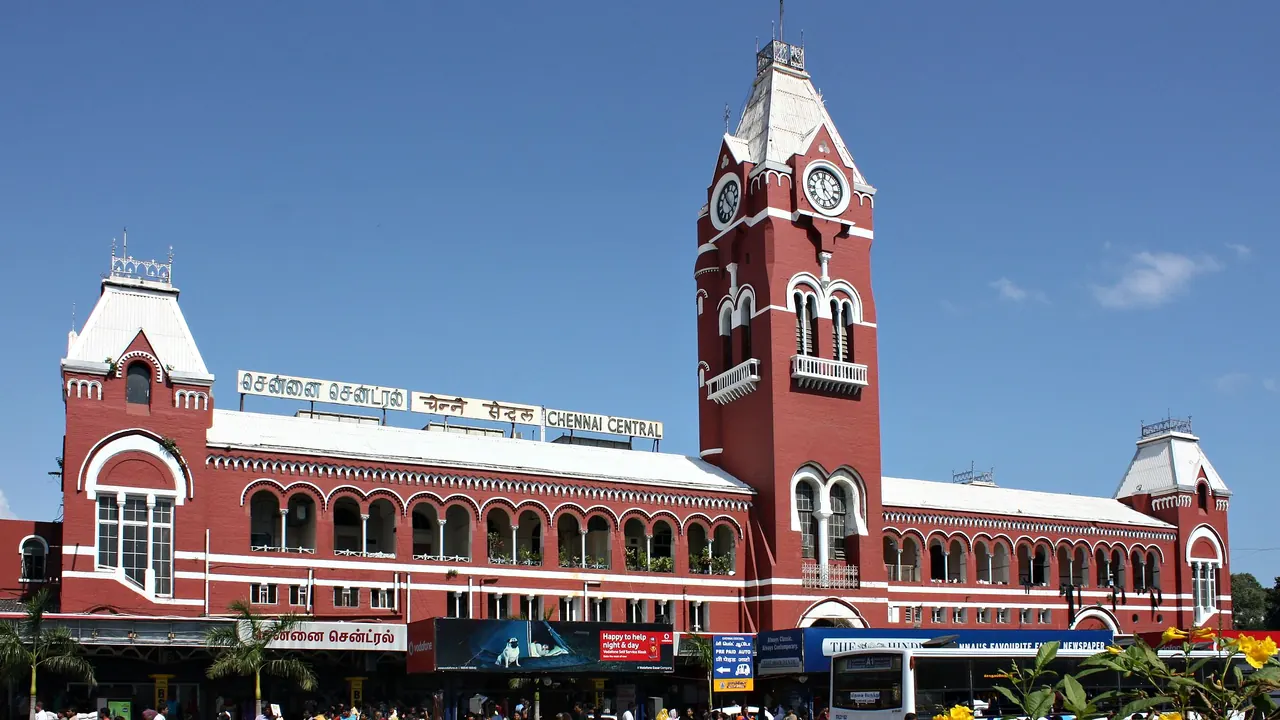
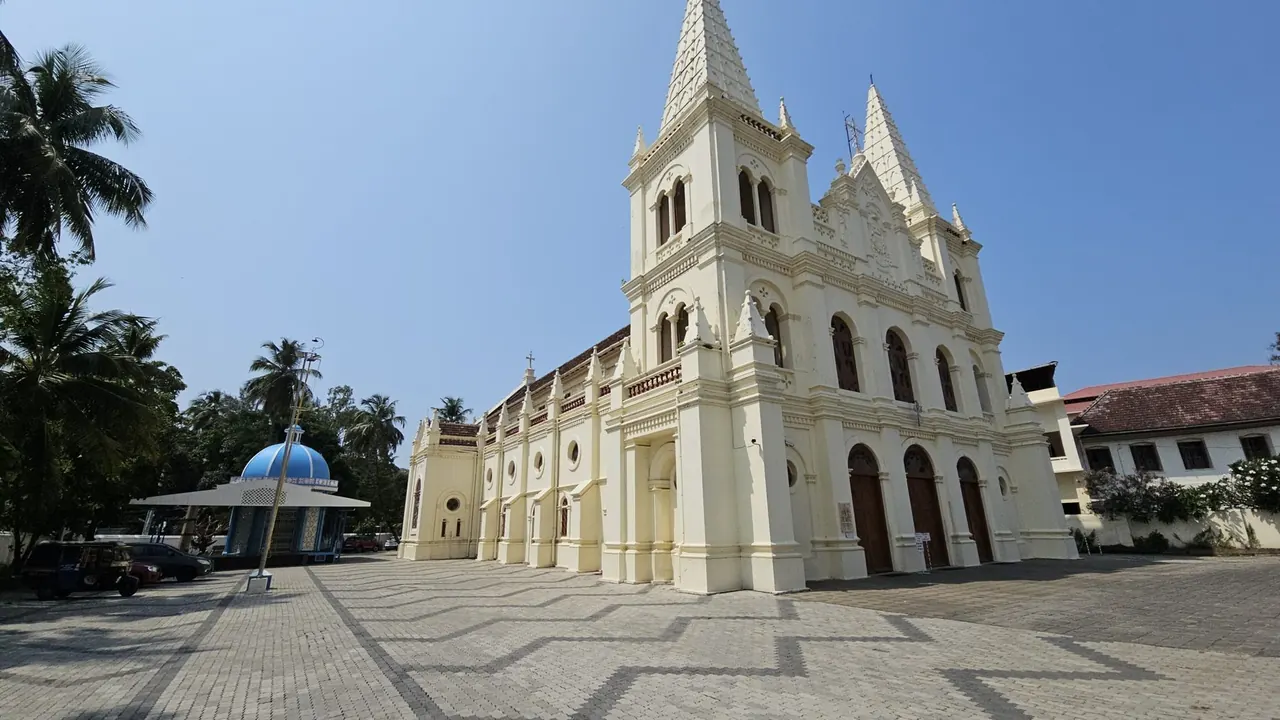
Photos: Chennai by Arian Zwegers derivative work: MrPanyGoff, CC BY 2.0, cropped; Kochi by Vis M, CC BY-SA 4.0, cropped.
Chennai or Kochi?
Our verdict in twelve categories, each scored against the same fixed benchmark cities, and the climate month by month, so you can choose for your trip.
Choose Chennai for
- live music and the arts
- shopping
- food and drink
Chennai suits travellers who want South Indian culture at full strength and don't mind a big, hot, spread-out city. It has the deeper food tradition, the great Carnatic music and dance scene, silk shopping in T. Nagar and two outstanding monuments within reach, Mahabalipuram and Kanchipuram. You will spend much of the time in cars and auto-rickshaws, and the rewards are concerts, temples and banana-leaf meals rather than calm.
Choose Kochi for
- wellness
- nature and the outdoors
- getting around
Kochi is the gentler choice, built around water. Its old quarter in Fort Kochi and Mattancherry is small enough to walk, the backwaters and canals are close by, and Ayurveda here is a real medical tradition rather than a spa menu. Pick it for a slower trip that mixes heritage lanes, boat days, seafood and some time to rest, and don't expect a big performing-arts calendar or serious shopping.
Scoreboard
Twelve categories on one fixed scale from 0 to 100. The shaded stretch is the gap between the two.
Your match
Pick a travel style or drag the sliders, and both match scores follow your weighting.
Wins on live music and the arts and shopping with your weighting.
Wins on wellness and nature and the outdoors with your weighting.
What matters to you?
Category by category
What the scores mean for a trip.
Beaches & swimming
Neither city is a beach destination, but Kochi gives you a better chance of a proper swim. Chennai's Marina and Elliot's Beach are for evening strolls, snacks and kites, not for going in. Even the resort stretches down the East Coast Road are often rough, and many visitors end up using the hotel pool.
Kochi's own sand at Fort Kochi is no better for swimming, but Cherai on Vypeen island, about an hour north, is a real palm-backed swimming beach with a lagoon behind it. Go between November and March, because the monsoon months make the water unsafe.
Food & drink
Chennai is the stronger food city, especially for vegetarian South Indian cooking at its source. Mornings mean tiffin halls with idli, dosa and filter coffee, lunch is the full banana-leaf meal in Mylapore or T. Nagar, and fiery Chettinad meat dishes add range.
Kochi's cooking is a different world, built on coconut, pepper and tamarind. Its strength is seafood: pearl spot, dry-roasted prawns and catches cooked beside the Chinese nets. Syrian Christian and Malabar kitchens add beef fry, duck roast and biryani. Drinking plays a small part in both cities, though Kochi's toddy shops make an unusual afternoon.
Culture & sights
The two are about even for sights, but they are seen in very different ways. Kochi's heritage is concentrated in Fort Kochi and Mattancherry. In two or three unhurried days on foot you can see St Francis Church, the Paradesi Synagogue with its Chinese tiles and the murals of the Mattancherry Palace.
Chennai's sights are larger and more scattered. The Kapaleeshwarar and Parthasarathy temples are busy places of worship, and Fort St George and the red Indo-Saracenic buildings recall British Madras. The Egmore museum's Chola bronzes give Chennai a world-class collection that Kochi has no equivalent for.
Nightlife
Both cities go to bed early under strict alcohol rules, so neither suits a night out. Chennai at least has a few licensed pubs and hotel lounges in Nungambakkam and Alwarpet that fill with young professionals at weekends. Its evenings are otherwise spent outdoors, on the beaches or at temple festivals. Kochi is quieter still: a sunset walk by the fishing nets, dinner, and bed before an early boat.
Nature & outdoors
Kochi is far richer in nature. Water shapes it: canals at Kumbalangi, the villages around Vembanad Lake, and the Mangalavanam mangroves in the city. The forested foothills at Thattekad and the falls at Athirappilly are both within a day trip.
Chennai sits on a flat coastal plain with no hills to walk. Its outdoors means birds: Guindy's blackbuck, plus the pelicans and flamingos at Vedanthangal and Pulicat in winter. It also has the olive ridley turtle walks on winter nights, which are its most distinctive outdoor experience.
Day trips
Chennai has a slight edge, thanks to two first-rate destinations. Mahabalipuram's Pallava carvings, including the Shore Temple and Arjuna's Penance, are about an hour away. The great temples and silk looms of Kanchipuram are a little further inland.
Kochi's outings are pleasant rather than famous. The best known are a backwater day from Alappuzha, the Muziris sites that trace the old Roman trade, and the temple town of Thrissur. Congested roads in both regions mean journeys take longer than the distances suggest.
Good for families
Both are tiring with young children, but in different ways. Kochi's advantage is pace: Fort Kochi is small and slow, and ferries, boat rides and the nets being hauled in keep children happy without long drives.
Chennai has more attractions built for children, such as the large zoo at Vandalur, the planetarium and the pony rides on Elliot's Beach. Reaching them takes long trips through heavy traffic. In either city, a hotel pool and outings in the cooler mornings make the trip much easier.
Getting around
Kochi is easier to get around. The main sights are in a compact, flat old quarter you can walk or cycle, and public ferries and the water metro make crossing the harbour to Ernakulam part of the day out.
Chennai is too spread out and short of pavements for much walking beyond the lanes around the Kapaleeshwarar Temple. The metro helps for the airport and Central station, but most journeys end up in an auto-rickshaw or app cab, often in heavy traffic.
Shopping & style
Chennai is the better place to shop, as long as you want silk, gold and textiles. T. Nagar's crowded sari emporia and old silk houses sell Kanchipuram weaves to wedding shoppers from across the south. Mylapore adds brass lamps and temple jewellery, and the state emporia sell bronzes and Tanjore paintings.
Kochi's shopping is narrower but has more character. Look for antiques in the Jew Town warehouses (many are reproductions), pepper and cardamom from the spice merchants, and cream-and-gold kasavu handloom.
Affordability
Both are very cheap, and everyday meals, autos and sights cost little in either. The difference lies in where a budget can grow. In Chennai the main expense is a good hotel, as the business hotels are aimed at corporate travellers. In Kochi the family homestays are cheap, and the costs come from optional extras: heritage hotels, private houseboats and long Ayurvedic courses.
Live music & performing arts
This is Chennai's biggest advantage. As the capital of Carnatic music and Bharatanatyam, it fills its sabhas with hundreds of concerts during the Margazhi season in December and January, many of them free in the mornings. Kalakshetra and the Mylapore halls keep classical dance and music going for the rest of the year.
Kochi offers nightly Kathakali, shortened for visitors, in small Fort Kochi theatres, where you can watch the make-up being applied, often followed by Kalaripayattu. It is worth one evening, but it is not a full performing-arts scene.
Wellness & relaxation
Kochi is far ahead here. Kerala is the home of Ayurveda, and treatments range from small Fort Kochi clinics to doctor-led programmes lasting one to three weeks, traditionally best taken during the monsoon. The backwater resorts are an easy place to end a trip quietly.
Chennai's appeal is yoga rather than treatment. Studios in Mylapore and Adyar teach in a well-known hatha lineage, and the Theosophical Society's shaded grounds offer a rare quiet spot in a loud, demanding city.
When should you go?
Pick your month. The climate figures are measured averages, not a forecast.
Chennai in July
Kochi in July
Daytime high, °C
Rainfall in the month, mm
Where the figures come from
Kochi has no weather station within reach, so its figures come from a gridded climate model rather than a measured record, and read a broad area rather than the city itself.
Temperature and rainfall are climate normals, averaged over the years shown. Chennai: 1991-2020 normals, Madras / Minambakkam (13.5 km from centre). Kochi: 2001-2020 normals, NASA POWER reanalysis grid, no weather station within 90 km.
The best time for Chennai is January to March. Rain is light, days are sunny and highs stay near 30°C, so walking around the temples is bearable in the mornings. From April the heat builds to around 39°C in May, which is hard going on foot. The main rains come late, peaking in October and November at about 363mm, so autumn is the wettest and greyest time to visit. The sea stays warm all year, but the surf rarely allows swimming.
Kochi's dry season runs from December to March, with January almost rainless at about 13mm. That is also when the sea is calm enough for Cherai. The southwest monsoon arrives in May and peaks in June at about 494mm, with wet weather lasting into October. Kochi's temperatures stay much flatter than Chennai's, hot and humid but never as fierce. So the two overlap best from January to March. Chennai is the drier choice in high summer, and Kochi is the wetter but cooler one.
Which traveller are you?
For a culture and arts trip, Chennai gives you more. In the Margazhi season the sabhas and the Music Academy are full of Carnatic music and Bharatanatyam, and the Egmore museum holds its Chola bronzes. Kochi's heritage lanes are charming, but on stage it offers mainly the nightly Kathakali.
On a relaxing and wellness trip, Kochi is the better fit. Chennai has its yoga lineage, but the heat, horns and crowds leave little calm. In Kerala, Ayurveda's home, a Kochi stay can be built around a consultation, warm-oil massage and shirodhara.
On an outdoors trip, Kochi wins. Around Chennai the land is flat, and outdoor time means birdwatching or surfing at Kovalam, all done in the early morning before the heat. Kochi's landscape is water, so you can paddle past paddy fields and coconut groves. With a night away, the tea hills of Munnar are within reach too.
Before you go
| Measure | Chennai | Kochi |
|---|---|---|
| Official language | Hindi, English | Hindi, English |
| Currency | Indian Rupee (INR) | Indian Rupee (INR) |
| Sockets | CM230 V, 50 Hz | CM230 V, 50 Hz |
| Driving side | Left | Left |
| Time zone | UTC+5:30 | UTC+5:30 |
| Emergency number | 108 or 112 | 108 or 112 |
| Elevation | 6 m | 0 m |
| Main airport | Chennai International Airport (MAA)15 km from centre67 non-stop destinations | Cochin International Airport (COK)24 km from centre36 non-stop destinations |
By the numbers
| Measure | Chennai | Kochi |
|---|---|---|
| City population | 6,599,000 | 677,381 |
| People per km² | 15,462 | 7,138 |
| Museums within 10 km | 8 | 4 |
| UNESCO World Heritage sites within 50 km | 0 | 0 |
| Swim season, months above 21 °C | 12 months | 12 months |
Where else could you go?
Every comparison below shares a destination with this one, so you can follow Chennai or Kochi somewhere new.
- Pondicherryvs Chennai
- Mysorevs Kochi
- Bengaluruvs Chennai
- Bengaluruvs Kochi
- Mysorevs Chennai
- Pondicherryvs Kochi