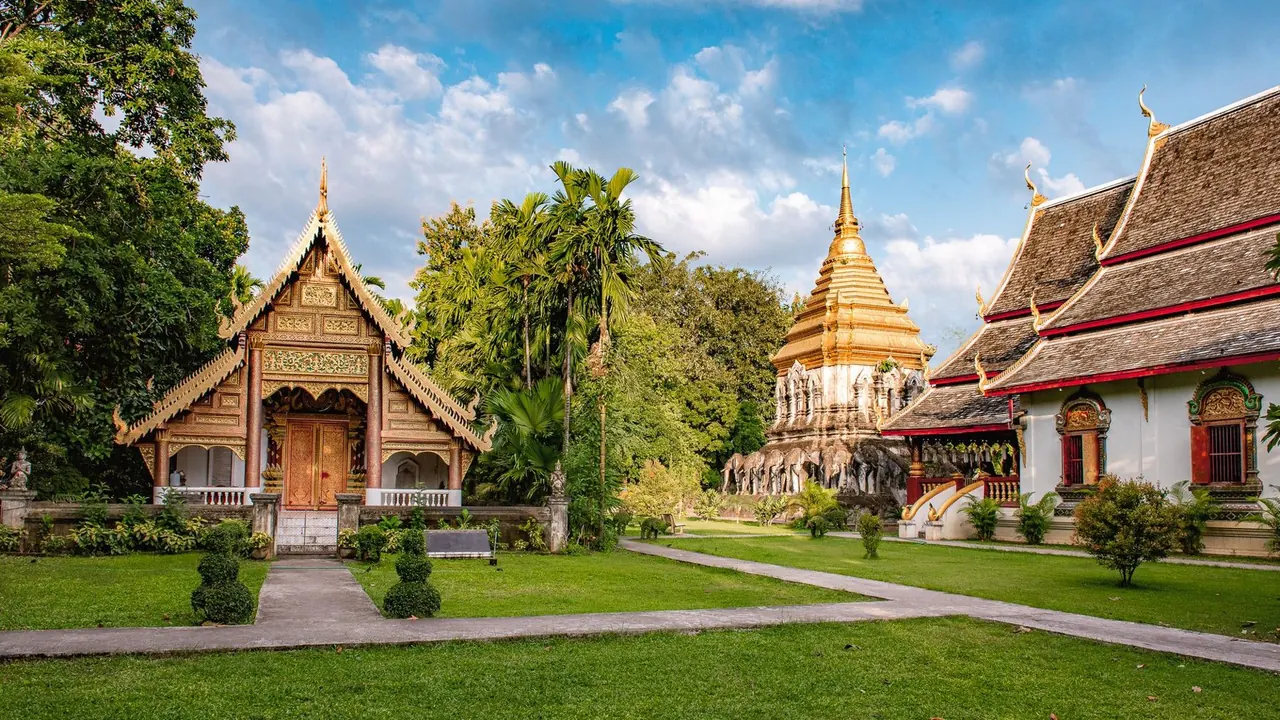
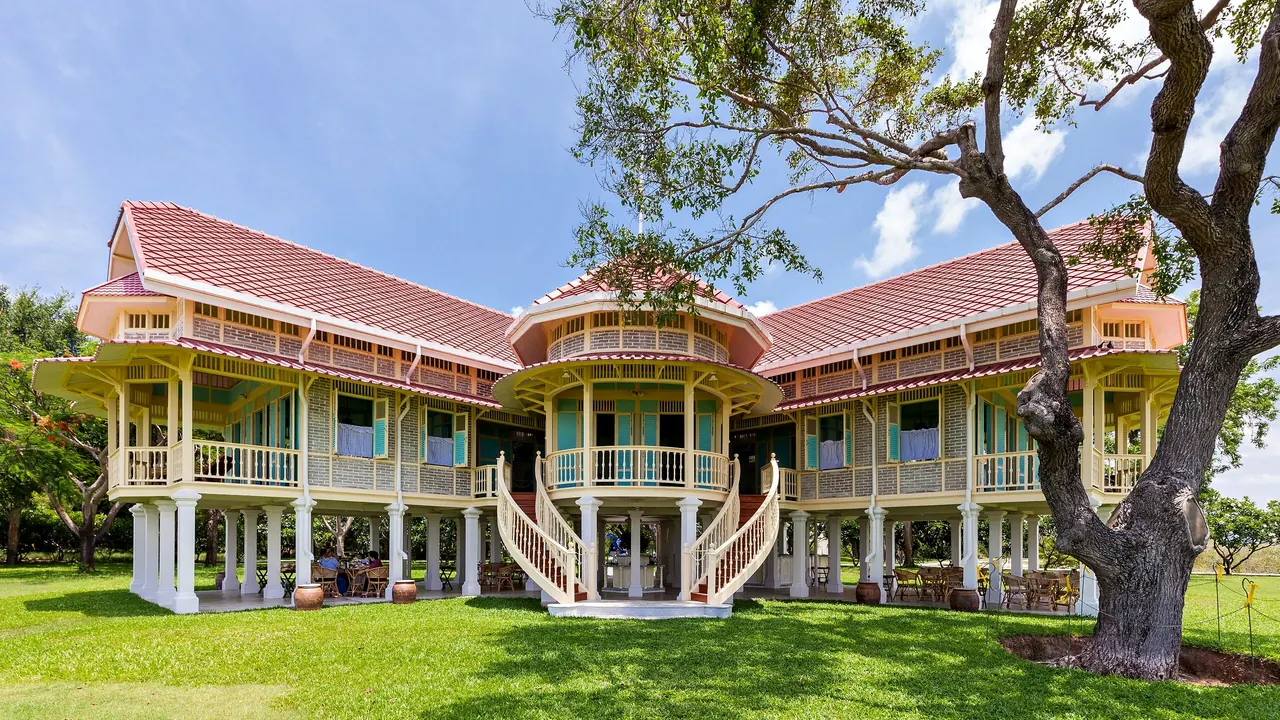
Photos: Chiang Mai by Gije Cho, Pexels License; Hua Hin by allPhoto Bangkok, Pexels License.
Chiang Mai or Hua Hin?
Our verdict in twelve categories, each scored against the same fixed benchmark cities, and the climate month by month, so you can choose for your trip.
Choose Chiang Mai for
- culture and sights
- shopping
- food and drink
Chiang Mai is the choice for travellers who want to walk, eat and look. It has temple lanes inside the moat, northern dishes such as khao soi at market stalls, craft markets on weekend evenings and mountain forest starting at the edge of town. It suits a slow trip built around massage or cooking courses, hill treks and long café mornings, and it makes a budget go further than almost anywhere.
Choose Hua Hin for
- beaches
- families
- day trips
Hua Hin, by contrast, belongs to people who want the sea. Its long beach and warm, calm Gulf water make it the easier base for a family with children, or for a couple after pool, spa and long lunches. The limestone caves of Sam Roi Yot and the old town of Phetchaburi make good outings. Expect little in the way of sights or evenings out.
Scoreboard
Twelve categories on one fixed scale from 0 to 100. The shaded stretch is the gap between the two.
Your match
Pick a travel style or drag the sliders, and both match scores follow your weighting.
Wins on culture and sights and shopping with your weighting.
Wins on beaches and families with your weighting.
What matters to you?
Category by category
What the scores mean for a trip.
Beaches & swimming
There is no real contest here. Chiang Mai lies in a northern valley far from any coast, so swimming means the reservoir at Huay Tung Tao, a quarry lake or a hotel pool. Visitors who want sand usually add the islands to their trip.
Hua Hin is built around its beach, a long sweep of pale sand from the fishing pier to Khao Takiab, with quieter stretches at Khao Tao and towards Pranburi. The Gulf is warm and calm for easy swimming, though the water is often milky rather than clear.
Food & drink
Chiang Mai is the stronger place to eat, because northern cooking is a cuisine in its own right. Khao soi, herby sai ua sausage and chilli dips with sticky rice are served cheaply at Warorot market and the stalls by Chang Phueak Gate. The city's café culture, built on coffee from the surrounding hills, adds a further pleasure.
Hua Hin's strength is seafood: crab and whole fish chosen by weight at the stilted restaurants by the pier, and grazing at the Dechanuchit Road night market. It is good, honest Thai cooking but rarely a reason to come.
Culture & sights
Chiang Mai gives a visitor several days of temple walking inside the moat. The ruined chedi of Wat Chedi Luang, the Lanna wooden halls of Wat Phra Singh and the silver temple of Wat Sri Suphan are the highlights, with Doi Suthep looking down from its mountain. Museums are few, but the old city is itself the sight.
Hua Hin's history is that of a royal seaside retreat. It is best seen at the railway station's royal pavilion and the teak palace of Maruekhathaiyawan. The main palace is rarely open to visitors, so a day or two covers it.
Nightlife
Neither town is built for dancing until dawn, but Chiang Mai has more range. Nimmanhaemin has cocktail and craft beer bars with a university crowd, the streets around Tha Phae Gate have backpacker bars and rooftops, and Loi Kroh Road is the brasher strip.
In Hua Hin, evenings run late only in the few lanes around Soi Bintabaht, where beer and hostess bars serve an older Western crowd. Apart from a sunset drink on a rooftop or by the beach, most visitors end up at the night market or back at the resort.
Nature & outdoors
Chiang Mai has the mountains on its doorstep. Doi Suthep-Pui National Park begins at the western edge of town, and Doi Inthanon, Thailand's highest peak, puts cloud forest within an easy day. Rafting, ziplines, treks to hill villages and mountain biking fill the valleys around.
Hua Hin's wild places need more driving, but they are fine ones: the limestone peaks and sunlit cave pavilion of Khao Sam Roi Yot, and the rainforest of Kaeng Krachan with its gibbons and hornbills. It also offers something the north cannot, which is kitesurfing on the bay in the breezy months.
Day trips
Hua Hin has the better outings. Phetchaburi, an hour north, combines a hilltop palace, a cave temple lit from above and some of the country's finest old murals. The floating market at Damnoen Saduak and the canal town of Amphawa make a long but rewarding day.
From Chiang Mai, the best short trips go to the gilded chedi of Lamphun and to quieter Lampang with its teak mansions and horse carriages, plus the nearby craft villages. Its two famous names, Chiang Rai and Pai, are too far for a comfortable day and work better as overnight stays.
Good for families
Hua Hin is the easier family base. It has a gentle warm sea, resorts with kids' clubs and big pools, two water parks and pony rides on the beach. Because of the midday heat and the busy highway, most families settle into a resort and go out by taxi.
Chiang Mai's single best highlight for children is its elephant sanctuaries, where families feed and walk with the animals, alongside the zoo and the Night Safari. After a few days the attractions run thin, though, and the hazy burning season is best avoided with small children.
Getting around
Both towns are awkward to get around, with small walkable centres, broken pavements and no metro or tram. The difference is their shape. Chiang Mai is a compact, square city where red songthaews and ride-hailing make short hops easy. Hua Hin is a long ribbon along the Phetkasem highway, served by green songthaews running up and down the strip. In both, the national parks call for a car and driver.
Shopping & style
Chiang Mai is a real place to buy handmade things. The Sunday Walking Street, the Saturday market on Wualai Road and the nightly Night Bazaar are full of crafts. Bo Sang is known for painted umbrellas and San Kamphaeng for weaving, and the city has long traditions of celadon and lacquerware.
Hua Hin's best browsing is at the weekend art-and-craft markets in the south of town, while the central night market leans towards T-shirts and copies. Neither town is a place for designer labels.
Affordability
Both towns are inexpensive by Western standards, but Chiang Mai makes money go further. Teak guesthouses, street food, songthaews and daily massages all cost very little, and the main extras are organised excursions and the hill resorts.
Hua Hin is close behind, with mid-range hotels with pools at good value. A beach stay, though, tends to pull visitors towards seafront resorts and restaurants aimed at long-staying foreigners. Thai weekenders also push room rates up on Fridays and Saturdays.
Live music & performing arts
Neither town has opera, theatre or a classical season, but Chiang Mai has more to catch. There are nightly jazz and blues jams near the north gate, bands in Nimmanhaemin, khantoke dinners with Lanna dance and Muay Thai fight nights.
In Hua Hin, live music mostly means cover bands in bars and hotel lounges, despite the town's royal link to jazz. Evenings are better spent at the night market.
Wellness & relaxation
Both are excellent for slowing down, in different ways. Chiang Mai is where people come to learn Thai massage at long-established schools. It adds temple meditation retreats at Wat Umong and Wat Suan Dok, and the bathing pools of the San Kamphaeng hot springs.
Hua Hin's version is the destination spa, with residential retreats offering detox, yoga and fitness programmes in seafront gardens, and massages under the trees on the beach. It offers rest by the sea rather than study or spiritual retreat.
When should you go?
Pick your month. The climate figures are measured averages, not a forecast.
Chiang Mai in July
Hua Hin in July
Daytime high, °C
Rainfall in the month, mm
Where the figures come from
Hua Hin's sunshine is measured 83 km from the centre, at Prachuap Khirikhan.
Temperature and rainfall are climate normals, averaged over the years shown. Chiang Mai: 1991-2020 normals, Chiang Mai (0.6 km from centre). Hua Hin: 1961-1990 (sunshine 1981-2010, rainfall 1981-2010) normals, Hua Hin (1.8 km from centre).
Chiang Mai is at its best from November to February. The days are then dry and warm rather than hot, around 30°C, and the hills are clear for walking. By March and April the valley heats up to about 37°C, and the air turns hazy, which makes it the hardest time for walking the streets. From May the rains set in, peaking in August and September at over 200mm a month, and the trails turn muddy.
Hua Hin is steadier through the year. Daytime highs stay in the low thirties, and the sea is warm enough for swimming in every month, between 27°C and 30°C. December to April is the dry, sunny beach season. The rains come later than in the north and are heaviest in October. A winter trip therefore suits both towns, while autumn is the wettest time on the coast and still damp in the mountains.
Which traveller are you?
On a beach and sun trip, Hua Hin is the clear pick. Several kilometres of pale sand and a calm, warm Gulf are on the doorstep. Chiang Mai is a mountain city a long journey from the sea, with only reservoirs, quarry lakes and hotel pools.
For a culture and arts trip, Chiang Mai has far more to give. Dozens of Lanna temples line the lanes of the moated old city, craft villages keep old skills alive and small bars host nightly jazz. Hua Hin's royal sights fill a day or two.
On a family trip with young children, Hua Hin is easier. Resorts with kids' clubs and big pools open onto gentle water, and water parks fill whole days. Chiang Mai's elephant sanctuaries delight children, but attractions run out quickly and the haze is a worry.
Before you go
| Measure | Chiang Mai | Hua Hin |
|---|---|---|
| Official language | Thai | Thai |
| Currency | Baht (THB) | Baht (THB) |
| Sockets | ABCF220 V, 50 Hz | ABCF220 V, 50 Hz |
| Driving side | Left | Left |
| Time zone | UTC+7 | UTC+7 |
| Emergency number | Police 191, ambulance 1669, fire 199 | Police 191, ambulance 1669, fire 199 |
| Elevation | 310 m | 9 m |
| Main airport | Chiang Mai International Airport (CNX)3 km from centre28 non-stop destinations | Suvarnabhumi Airport (BKK)150 km from centre150 non-stop destinations |
By the numbers
| Measure | Chiang Mai | Hua Hin |
|---|---|---|
| City population | 1,198,000 | 59,369 |
| People per km² | 2,958 | 687 |
| Museums within 10 km | 6 | 0 |
| UNESCO World Heritage sites within 50 km | 0 | 0 |
| Swim season, months above 21 °C | - | 12 months |
Where else could you go?
Every comparison below shares a destination with this one, so you can follow Chiang Mai or Hua Hin somewhere new.
- Pattayavs Hua Hin
- Bangkokvs Hua Hin
- Chiang Raivs Chiang Mai
- Luang Prabangvs Chiang Mai
- Siem Reapvs Hua Hin
- Krabivs Hua Hin