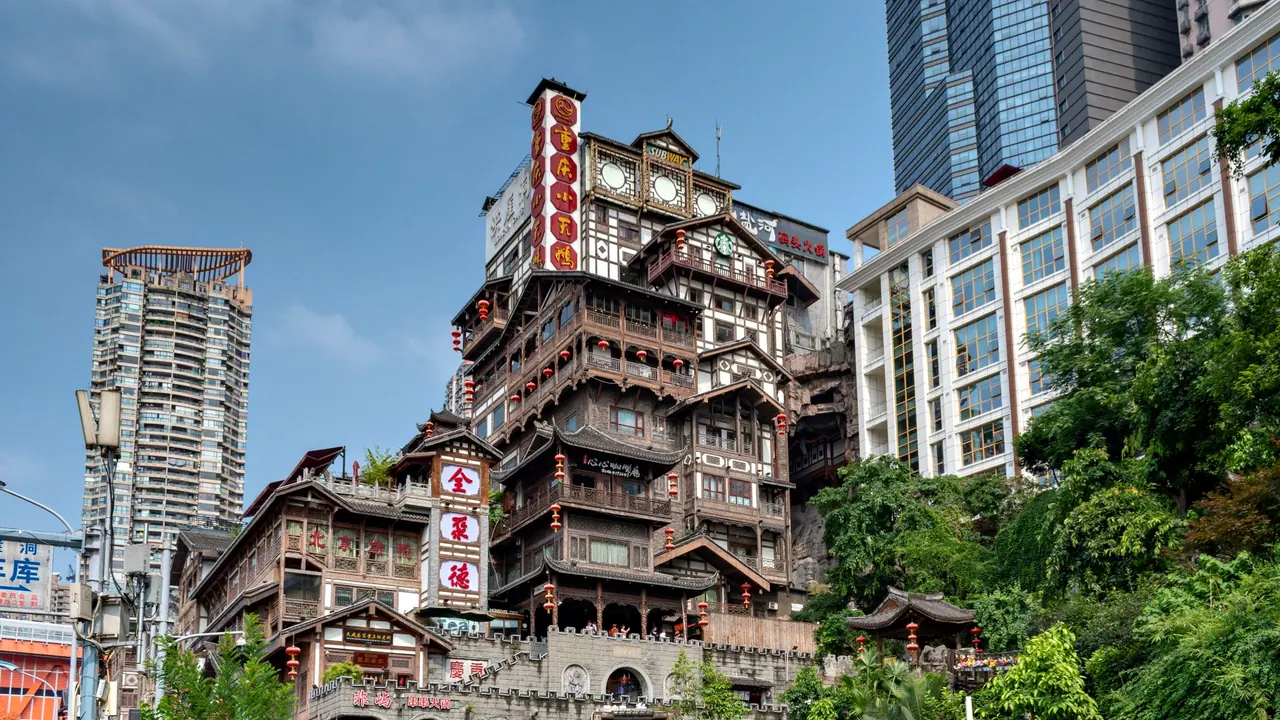
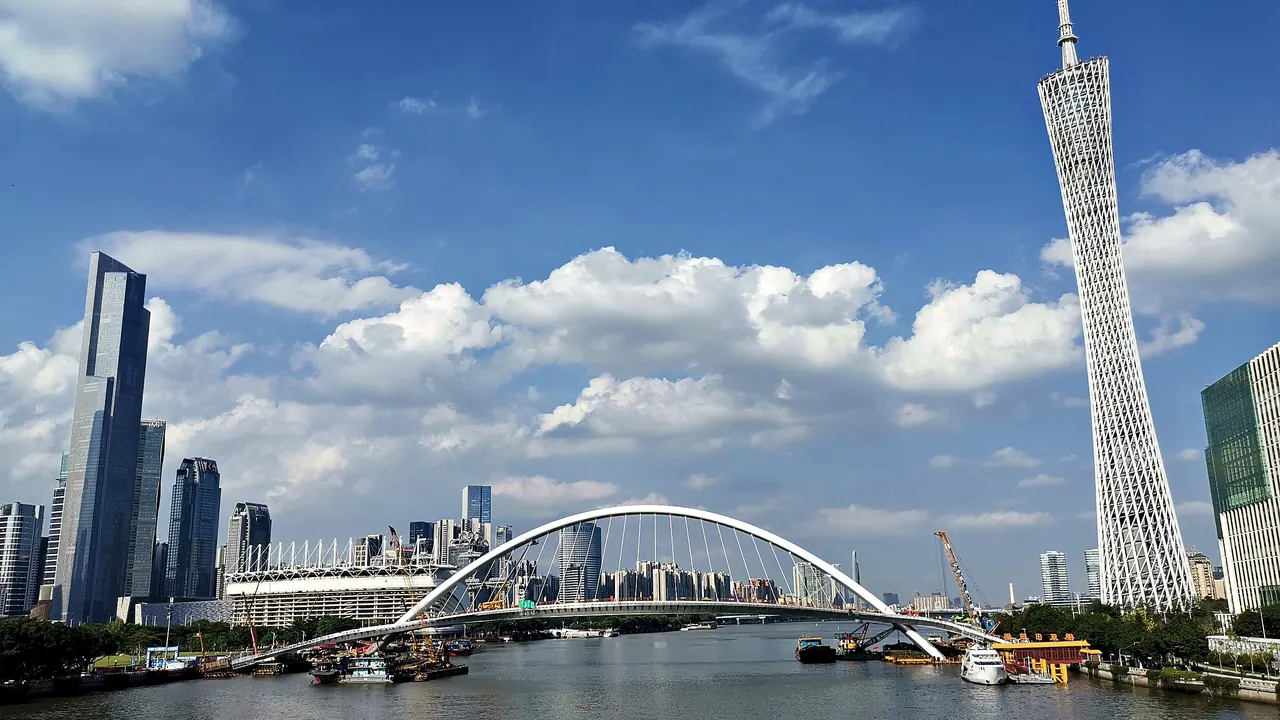
Photos: Chongqing by xiquinhosilva, CC BY 2.0, cropped; Guangzhou by Cwek, CC BY-SA 4.0, cropped.
Chongqing or Guangzhou?
Our verdict in twelve categories, each scored against the same fixed benchmark cities, and the climate month by month, so you can choose for your trip.
Choose Chongqing for
- nature and the outdoors
- nightlife
- prices
Chongqing is for travellers who want a city with a strong physical presence and don't mind working for it. Towers climb river ridges, monorails run through hillsides, and Nanshan and the Wulong karst are close enough to reach easily. It is also the cheaper of the two, it stays out later, and its food is all about chilli and numbing pepper. Choose it if stairs, heat and spice sound like part of the fun.
Choose Guangzhou for
- families
- getting around
- live music and the arts
Guangzhou is the easier and more rounded choice. Cantonese cooking and morning dim sum are the heart of a visit, the Chen Clan Ancestral Hall and Shamian Island give the history more depth, and a huge metro holds the city together. With Chimelong for children and Hong Kong and Macau within a day's reach, it suits families, first-time visitors to China and anyone who wants comfort over drama.
Scoreboard
Twelve categories on one fixed scale from 0 to 100. The shaded stretch is the gap between the two.
Your match
Pick a travel style or drag the sliders, and both match scores follow your weighting.
Too close to call, 2 points apart
Wins on nature and the outdoors and nightlife with your weighting.
Wins on families and getting around with your weighting.
What matters to you?
Category by category
What the scores mean for a trip.
Beaches & swimming
Neither city is a place to swim. Chongqing is more than 1,000km from the sea, and its rivers are muddy working water, so in summer you are limited to pools and hot-spring resorts.
Guangzhou is no better in the city itself, but the sandy beaches on Shenzhen's east side are about two hours away. That makes a beach day possible, if long.
Food & drink
Both cities are worth a trip for the food alone, but Guangzhou's kitchen is broader. Cantonese cooking is built around fresh, clean flavour: morning dim sum halls, roast goose and char siu in Xiguan, live seafood cooked to order. Tianhe adds high-end Cantonese restaurants, and there are good regional Chinese and international options too.
Chongqing pulls hard in one direction. Its food is beef-tallow hotpot, fiery xiaomian noodles and chicken buried in dried chillies. If you love heat, that is thrilling. If you don't, the menu narrows quickly, and there is far less variety beyond it.
Culture & sights
Guangzhou has more history to visit. The carvings of the Chen Clan Ancestral Hall, the Nanyue King's jade burial suit, ancient Buddhist temples and the colonial villas of Shamian Island give real depth across two or three days.
In Chongqing, the city itself is the main sight: lit-up towers on ridges, Hongyadong's stilt houses and the monorail through buildings. Its museums are the Three Gorges Museum and the wartime-capital sites, and most of the old city has been replaced.
Nightlife
Chongqing has the better nights. Evenings start with the riverbank views and the cable car, the Jiefangbei promenades stay full, and hotpot and skewers run past 2am. The Jiujie bar street in Jiangbei is the place for glossy clubs with table service.
Guangzhou's best habit is siu yeh, a late seafood and beer supper at plastic tables. Beyond that, its clubs, karaoke rooms and Zhujiang New Town bars are mostly aimed at local groups rather than visitors dropping in.
Nature & outdoors
Chongqing has much more dramatic landscape. Nanshan's forest rises straight across the Yangtze from the centre, Gele and Jinyun Mountains are easy escapes, and the giant natural bridges and gorges of Wulong are a day away. Three Gorges cruises also start in the city.
Guangzhou's green spaces are pleasant rather than striking. You get Baiyun Mountain's low hills, riverside promenades, the streams of Conghua and the subtropical forest and waterfalls of Dinghu.
Day trips
Guangzhou has slightly more choice, mainly because Hong Kong and Macau are each about an hour or so by train, provided your visa lets you back into the mainland. Closer to home are Foshan's Ancestral Temple, Shunde's cooking and the Kaiping watchtowers.
Chongqing's best outings are Chengdu, about an hour by high-speed train, and the Buddhist cliff carvings at Dazu. Quiet stilt-house towns such as Songji and Laitan add a slower day.
Good for families
Guangzhou is much easier with children. The Chimelong complex in Panyu combines a drive-through safari park with pandas and koalas, a theme park, a water park and a circus. The metro has lifts for buggies, and evening boat trips on the Pearl River round things off.
Chongqing has pandas at its zoo, a science museum and a cable car children love. But constant stairs make a pushchair hard work, and much of the food is too spicy for young children unless you ask for milder versions.
Getting around
Both cities have large, cheap rail networks signed in English. Guangzhou's metro is the smoother of the two: it reaches the airport and the high-speed stations, and river ferries fill some of the gaps. Its main drawback is sheer size, so forty-minute journeys between districts are normal.
In Chongqing, the problem is height rather than distance. Streets, buildings and bridges sit at different levels, so a short hop can mean dozens of flights of stairs or a lift down twenty floors, and map apps often lose you. Cable cars and long escalators help on the slopes.
Shopping & style
Guangzhou's shopping is more interesting because it is a trading city. Whole districts of wholesale markets sell clothing, leather and fabric, you can spend hours tasting at the Fangcun tea market, and Hualin's jade street is in the old western quarter.
Chongqing has big malls around Jiefangbei and Guanyinqiao, but they look much like malls in any large Chinese city. What you can only buy here is edible: packs of hotpot base and Sichuan pepper.
Affordability
Chongqing is the cheaper of the two. Street skewers, noodle breakfasts and hotpot cost very little, taxis are cheap even over long distances, and upscale hotels cost well below coastal rates. The costs that add up are Yangtze cruises and paid viewpoints.
Guangzhou is also good value, with low-cost dim sum and many free temples and parks. However, imported drinks and cocktail bars cost more, and hotel rates jump during the trade fair seasons.
Live music & performing arts
Guangzhou has more to see on stage. The sculpted Opera House stages touring opera and ballet, the Xinghai Concert Hall on Ersha Island is home to the city's symphony orchestra, and Cantonese opera is still performed in neighbourhood halls in the old west.
Chongqing's best show for a visitor is the face-changing and fire-spitting of Sichuan opera. Beyond the glass Grand Theatre on the Jiangbei waterfront, the live scene is small and almost entirely in Chinese.
Wellness & relaxation
Both cities offer hot springs and cheap massage open late, so the difference is in the details. Chongqing's springs have centuries of history, and resorts such as Beiwenquan and Nanwenquan sit on the city's own edges. Locals often end a hotpot night with a foot massage.
Guangzhou's springs are at Conghua, about an hour north, and work best as an overnight stay. Its own way to slow down is the long morning tea, spent over tea and newspapers in parks and teahouses.
When should you go?
Pick your month. The climate figures are measured averages, not a forecast.
Chongqing in July
Guangzhou in July
Daytime high, °C
Rainfall in the month, mm
Temperature and rainfall are climate normals, averaged over the years shown. Chongqing: 1991-2020 normals, Chongqing (10.2 km from centre). Guangzhou: 1991-2020 normals, Guangzhou (8.5 km from centre).
Chongqing has two short good seasons for walking. March is mild and dry, April is warmer with moderate showers, and October is pleasant again, though often overcast. From May the rain builds to a peak of about 211mm in June. July and August are the sunniest months but reach around 34°C with heavy humidity, which is too hot for a city of endless stairs. Winter is cool and very grey, with January highs of about 10°C and almost no sun.
Guangzhou is warmer and wetter. Its rainy season is heavier and longer than Chongqing's, running from April to September and reaching about 357mm in June, and the summer heat is close to Chongqing's. Its best months come just as Chongqing turns dull. October to December are dry and sunny, and even January stays mild at around 19°C, good weather for walking the old western districts. Neither city has a beach, so swimming weather should not decide when you go.
Which traveller are you?
For an outdoors trip, Chongqing is clearly better. Nanshan's forest paths start right across the Yangtze, Jinyun Mountain is a half-day away, and the natural bridges and sinkholes of Wulong make a long day out. Guangzhou's Baiyun Mountain and Dinghu are green but gentle.
On a family trip with children, Guangzhou is much easier. Chimelong's safari park, theme park and water park make a whole visit on their own, and the metro has lifts for buggies. In Chongqing, steep layered streets and heavily spiced food wear families down.
On a tight budget, Chongqing goes further. Noodle breakfasts, skewers and hotpot cost little, and mid-range hotels are cheap even by Chinese standards. Guangzhou is also inexpensive, but its hotel rates jump sharply during the spring and autumn trade fairs.
Before you go
| Measure | Chongqing | Guangzhou |
|---|---|---|
| Official language | Putonghua | Putonghua |
| Currency | Yuan Renminbi (CNY) | Yuan Renminbi (CNY) |
| Sockets | ACI220 V, 50 Hz | ACI220 V, 50 Hz |
| Driving side | Right | Right |
| Time zone | UTC+8 | UTC+8 |
| Emergency number | Police 110, ambulance 120, fire 119 | Police 110, ambulance 120, fire 119 |
| Elevation | 237 m | 21 m |
| Main airport | Chongqing Jiangbei International Airport (CKG)19 km from centre167 non-stop destinations | Guangzhou Baiyun International Airport (CAN)29 km from centre195 non-stop destinations |
| Public holidays this year | 6 days | 6 days |
By the numbers
| Measure | Chongqing | Guangzhou |
|---|---|---|
| City population | 32,054,159 | 18,676,605 |
| People per km² | - | 2,576 |
| Museums within 10 km | 7 | 21 |
| UNESCO World Heritage sites within 50 km | 0 | 0 |
Where else could you go?
Every comparison below shares a destination with this one, so you can follow Chongqing or Guangzhou somewhere new.
- Shenzhenvs Guangzhou
- Macauvs Guangzhou
- Hong Kongvs Guangzhou
- Chengduvs Chongqing
- Yangshuovs Guangzhou
- Zhangjiajievs Chongqing