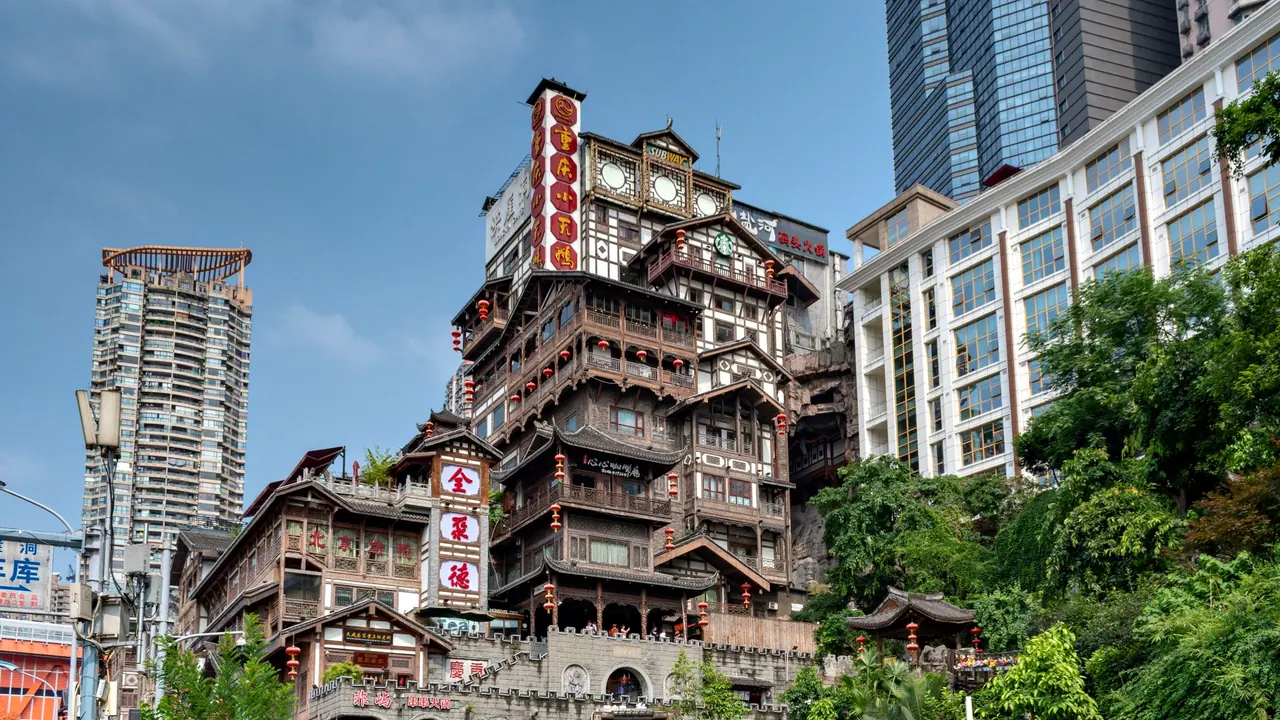
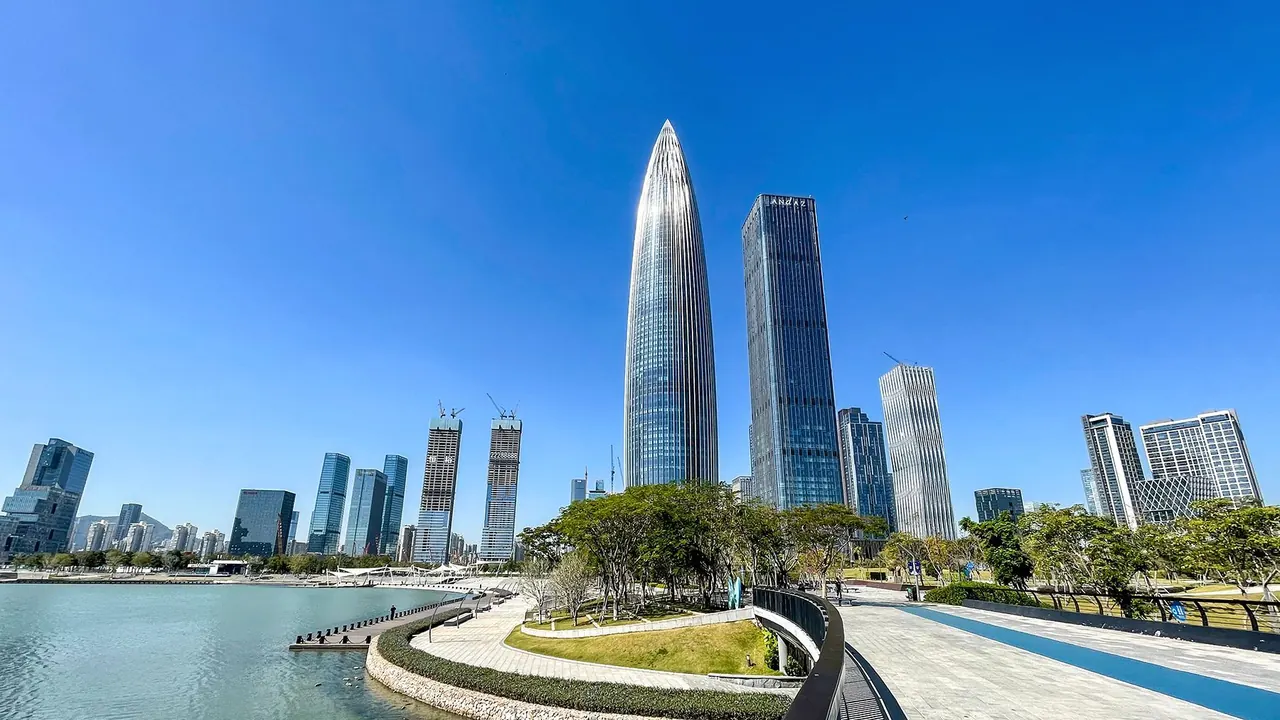
Photos: Chongqing by xiquinhosilva, CC BY 2.0, cropped; Shenzhen by Windmemories, CC BY-SA 4.0, cropped.
Chongqing or Shenzhen?
Our verdict in twelve categories, each scored against the same fixed benchmark cities, and the climate month by month, so you can choose for your trip.
Choose Chongqing for
- culture and sights
- food and drink
- nightlife
Chongqing suits travellers who want a city with a strong flavour of its own. It is a place to eat, with hotpot and fiery noodles at the centre of daily life. Its towers on ridges above two rivers, late riverside nights and lower costs make it the more distinctive and the cheaper stop. Expect stairs, heat and chilli at every turn.
Choose Shenzhen for
- beaches
- families
- getting around
For an easier and more varied trip, Shenzhen makes the better base. A simple metro, theme parks and the beaches of the Dapeng peninsula work well for families, and Hong Kong, Guangzhou and Macau are all within a day's reach. It has less history and character to discover. In return it offers more comfort, long evenings in its bathhouses and a mild, sunny winter.
Scoreboard
Twelve categories on one fixed scale from 0 to 100. The shaded stretch is the gap between the two.
Your match
Pick a travel style or drag the sliders, and both match scores follow your weighting.
Too close to call, 2 points apart
Wins on culture and sights and food and drink with your weighting.
Wins on beaches and families with your weighting.
What matters to you?
Category by category
What the scores mean for a trip.
Beaches & swimming
Chongqing has no beach to offer. It sits deep in the hills of the south-west, and its two rivers are working waterways rather than places to swim. In summer, people cool off in hotel pools and at hot-spring resorts.
Shenzhen has real sand, though not on the doorstep. Xichong, Dameisha and Xiaomeisha line the Dapeng peninsula an hour or more from the centre, and the water is warm through summer and early autumn. It makes a good beach day rather than a beach vacation, and typhoons can cut the season short.
Food & drink
Chongqing is a food destination in its own right. Its hotpot in beef-tallow broth, xiaomian for breakfast, chicken buried in chillies and skewers come from hillside kitchens that cook well past midnight. The catch is that almost everything is spicy, and there is little international or high-end cooking.
Shenzhen offers a wider range but less character of its own. People from across China have brought dim sum, Chaoshan beef hotpot, Hakka and northern cooking, and Nan'ao and Shekou add seafood picked from tanks. Good meals tend to be in malls and residential streets rather than old eating quarters. That makes it the easier city for a mixed group, though not the more memorable one.
Culture & sights
Neither city is a great historic capital, but Chongqing has more to see. Its towers stacked on ridges, the monorail running through buildings and the lit-up peninsula at night are a sight in themselves. The Three Gorges Museum, Luohan Temple, Huguang Guild Hall and the wartime-capital sites, including the Stilwell Museum, fill two or three days.
Shenzhen's history is short, from fishing villages to skyline within living memory, so its landmarks are the Ping An tower, Civic Centre and the converted factories of OCT Loft. Nantou old town, Dapeng Fortress and the Hakka walled village at Crane Lake add older layers, but they are scattered and take effort to reach.
Nightlife
Chongqing's nights are lived on the street. They start with river views and the cable car, then move to hotpot and skewers until past 2am, and Jiefangbei and the promenades stay full late. Jiujie in Jiangbei has the big table-service clubs, and the crowd is almost entirely local.
Shenzhen keeps its nights in a few clusters far apart: clubs around Coco Park, relaxed pubs and terraces in Shekou, and arts bars in OCT, along with private KTV rooms. A foreign visitor may feel more at home in Shekou than anywhere in Chongqing, but there is little life on the streets between venues.
Nature & outdoors
The two are well matched outdoors, but the settings differ. Chongqing is river and mountain country. Nanshan's forest paths look back at the centre across the Yangtze, and further out are Wulong's natural bridges and sinkholes and the cruises through the Three Gorges.
Shenzhen's best walking is by the sea. The Dapeng coastal trail runs between headlands and coves, there is kayaking off the eastern shore, and waders gather in winter at the mangrove reserve on Shenzhen Bay. Apart from Wutong Mountain, its hills are gentler.
Day trips
Shenzhen is very well placed for day trips. Hong Kong is less than half an hour away by fast train, Guangzhou and Foshan are close behind, and Macau is reached by ferry or the delta bridge. That puts three very different cities within a day, although Hong Kong and Macau need the right visa arrangements to get back into the mainland.
Chongqing has fewer outings, but good ones. Chengdu and its pandas are about an hour away by high-speed train, and the Dazu Rock Carvings are among the finest Buddhist cliff carvings in China. Old stilt-house towns such as Zhongshan and Laitan give a quieter look at the region.
Good for families
Shenzhen is the easier city with children. The theme parks of Overseas Chinese Town, the Safari Park, and the marine park and beach at Xiaomeisha give plenty of choice. Lifts in the metro and nursing rooms in the malls make the days smoother.
Chongqing has pandas at its zoo and a science museum in Jiangbei, and the cable car and monorail are rides in themselves. But it is a city of stairs and steep lanes where a pushchair is a burden, and at almost every meal you will need to ask for milder food.
Getting around
Both cities have large, cheap rail networks with English signs, and neither needs a car. Shenzhen's is the simpler to use: the ground is flat, the metro runs to the airport, the border and the theme parks, and shared bikes line the waterfront. Its drawback is distance, as the city stretches about 80km from end to end.
Chongqing's problem is height. Long stairways, lifts that drop twenty floors and streets on several levels confuse map apps. Cable cars, escalators and cheap taxis help you get across the ridges.
Shopping & style
Chongqing's shopping is mall streets and things to eat. The pedestrian streets around Jiefangbei and the Guanyinqiao district in Jiangbei are lined with department stores carrying international and luxury brands, much as in any large Chinese city. The souvenirs worth carrying home are packs of hotpot base, Sichuan pepper and spicy snacks, with a few trinkets in Ciqikou and the old towns.
Shenzhen has stranger and more memorable places to browse. Huaqiangbei's multi-storey markets of phones, drones and components, the tailors and fabric sellers of Luohu Commercial City and Dafen's canvases sold by the metre are worth a look even if you buy nothing. Its polished malls in Futian and Nanshan are much like Chongqing's, and independent boutiques and traditional crafts are scarce in both cities.
Affordability
Both are good value, but money goes further in Chongqing. Noodle breakfasts, skewers and hotpot cost little, and even upscale hotels are much cheaper than in the coastal cities. The costs that add up are Yangtze cruises, cable cars and paid viewpoints.
Shenzhen is one of the pricier cities in mainland China, though everyday meals and the metro stay cheap. Spending rises in the bars of Shekou and Coco Park, at the theme parks and in the hotels on Shenzhen Bay.
Live music & performing arts
Neither city is worth a trip for its stages. Both have a symphony orchestra and a large modern theatre with touring ballet and concerts. The difference lies in what is local.
Chongqing has Sichuan opera, whose face-changing and fire-spitting make a memorable evening even if you speak no Chinese. Shenzhen has no stage tradition of its own to show, but a few live houses around OCT Loft and Nanshan put on Chinese indie and rock bands.
Wellness & relaxation
It is easier to relax in Shenzhen. Its huge bathhouses run through the night, with hot and cold pools, saunas, sleeping halls and massage on several floors, and they draw people from across the region. There are foot-massage parlours on almost every block, and the parks and the Shenzhen Bay waterfront are calm early in the morning.
Chongqing's strength is older: thermal springs at Beiwenquan, Nanwenquan and Dongquan that have been used for centuries, with outdoor pools in wooded valleys. They mean a trip to the edge of a dense, steep, noisy city. A late foot massage after hotpot is much closer to hand.
When should you go?
Pick your month. The climate figures are measured averages, not a forecast.
Chongqing in July
Shenzhen in July
Daytime high, °C
Rainfall in the month, mm
Where the figures come from
Shenzhen has no rain gauge within 25 km of the centre, so its rainfall comes from a gridded climate dataset read at the city rather than from a gauge further away.
Shenzhen's sunshine is measured 28 km from the centre, at King's Park.
Temperature and rainfall are climate normals, averaged over the years shown. Chongqing: 1991-2020 normals, Chongqing (10.2 km from centre). Shenzhen: 1999-2020 (sunshine 1991-2020, rainfall 1991-2020) normals, Shenzhen (4.7 km from centre).
Chongqing has two short good seasons, April and May and then late September into October, when the steep streets are comfortable to walk. July and August reach 34°C with heavy humidity, which is punishing on all those stairs. The rain builds from May and peaks in June. Winter is cool and very grey, around 10°C in January, with almost no sunshine for weeks.
Shenzhen is subtropical, and its calendar works the other way round. From November to February it is dry, sunny and mild at about 20°C, the best time for walking and the parks. Beach season runs from May to October, with the sea at 28°C through the summer. These are also the wettest months, though, with August rainfall reaching 339mm and storms that can close the beaches. October is the one month when both cities are pleasant.
Which traveller are you?
For a food and nightlife trip, Chongqing is the clear choice. Hotpot, xiaomian and chuanchuan skewers are reasons to come in themselves, and evenings run from riverside views into late meals, crowded promenades and the clubs of Jiujie.
On a beach and sun trip, only Shenzhen works. Xichong and the other Dapeng sands have warm sea from May to October, and the winters are mild and sunny. Chongqing lies far inland, with no coast at all.
On a family trip with young children, Shenzhen is much easier. The Overseas Chinese Town theme parks, the Safari Park and the beach keep children busy. The metro has lifts, and the flat districts suit a pushchair in a way Chongqing's stairs never do.
Before you go
| Measure | Chongqing | Shenzhen |
|---|---|---|
| Official language | Putonghua | Putonghua |
| Currency | Yuan Renminbi (CNY) | Yuan Renminbi (CNY) |
| Sockets | ACI220 V, 50 Hz | ACI220 V, 50 Hz |
| Driving side | Right | Right |
| Time zone | UTC+8 | UTC+8 |
| Emergency number | Police 110, ambulance 120, fire 119 | Police 110, ambulance 120, fire 119 |
| Elevation | 237 m | 0 m |
| Main airport | Chongqing Jiangbei International Airport (CKG)19 km from centre167 non-stop destinations | Shenzhen Bao'an International Airport (SZX)28 km from centre174 non-stop destinations |
| Public holidays this year | 6 days | 6 days |
By the numbers
| Measure | Chongqing | Shenzhen |
|---|---|---|
| City population | 32,054,159 | 17,494,398 |
| People per km² | - | 8,759 |
| Museums within 10 km | 7 | 7 |
| UNESCO World Heritage sites within 50 km | 0 | 0 |
| Swim season, months above 21 °C | - | 8 months |
Where else could you go?
Every comparison below shares a destination with this one, so you can follow Chongqing or Shenzhen somewhere new.
- Hong Kongvs Shenzhen
- Macauvs Shenzhen
- Guangzhouvs Shenzhen
- Chengduvs Chongqing
- Zhangjiajievs Chongqing
- Yangshuovs Shenzhen