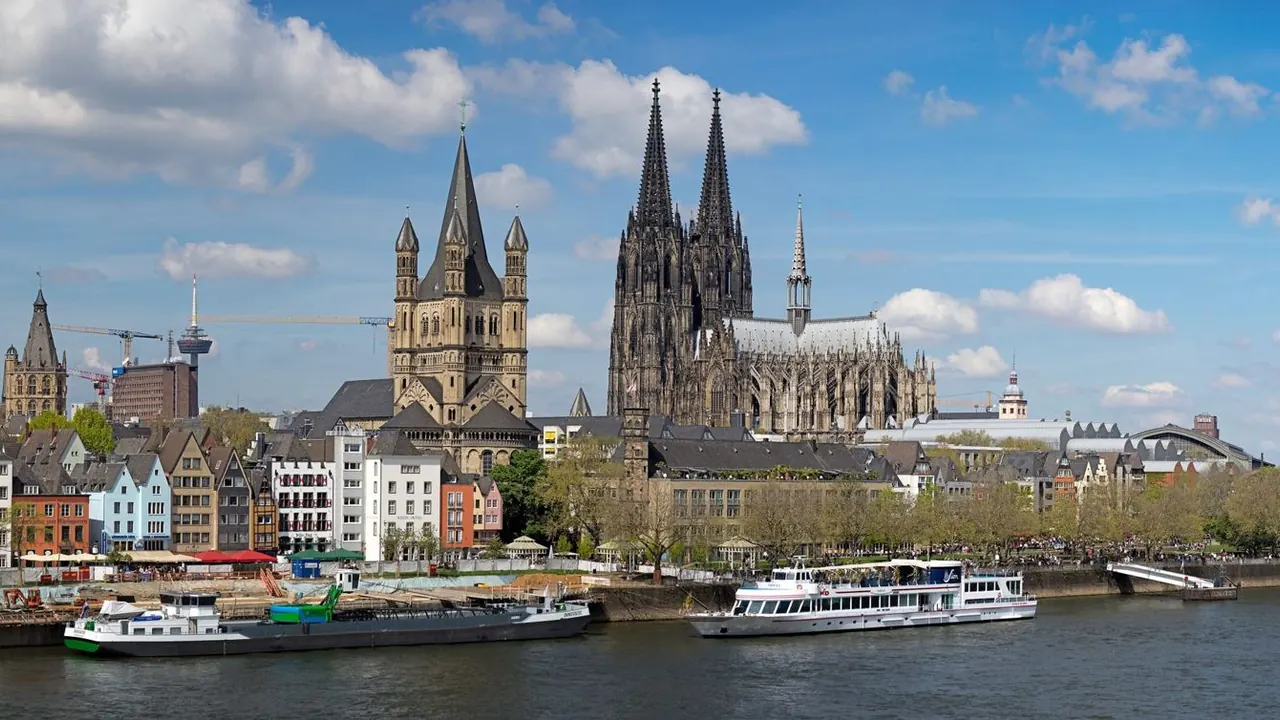
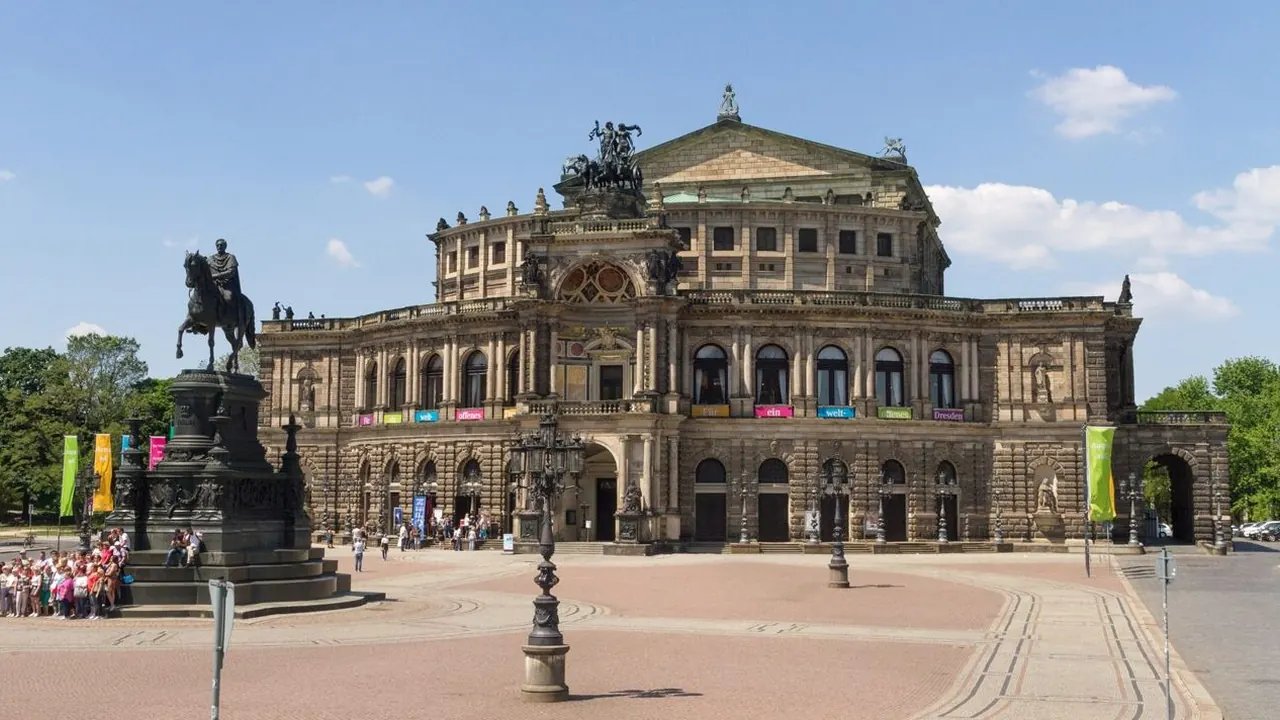
Photos: Cologne by Jörg Braukmann, CC BY-SA 4.0, cropped; Dresden by Maksym Kozlenko, CC BY-SA 4.0, cropped.
Cologne or Dresden?
Our verdict in twelve categories, each scored against the same fixed benchmark cities, and the climate month by month, so you can choose for your trip.
Choose Cologne for
- nightlife
- shopping
- families
Cologne suits travellers who want an easy-going city to spend their evenings in. Kölsch in the brewhouses leads on to bars in the Belgian Quarter and Ehrenfeld and one of Germany's most open gay scenes, with the cathedral and Museum Ludwig as the cultural anchors. It is also the better pick for families and shoppers, and its fast trains reach Bonn, Aachen, the Rhine Gorge and Brussels.
Choose Dresden for
- nature and the outdoors
- culture and sights
- prices
Choose Dresden if the trip is about art, music and landscape. The Old Masters, the Green Vault and the Semperoper give it the richer collections and the grander stages, and Saxon Switzerland's sandstone towers offer walkers and climbers something Cologne cannot match. Evenings are quieter and centre on the Neustadt, and a stay costs a little less.
Scoreboard
Twelve categories on one fixed scale from 0 to 100. The shaded stretch is the gap between the two.
Your match
Pick a travel style or drag the sliders, and both match scores follow your weighting.
Too close to call, 1 point apart
Wins on nightlife and shopping with your weighting.
Wins on nature and the outdoors and culture and sights with your weighting.
What matters to you?
Category by category
What the scores mean for a trip.
Beaches & swimming
Neither city is a place for swimming. The Rhine and the Elbe both carry shipping and strong currents, so their sandy banks are for sitting. On a hot day Cologne's answer is its ring of gravel-pit lakes, such as Fühlinger See and Otto-Maigler-See, which have grassy banks and small patches of sand. Dresden's answer is outdoor pools, gravel pits and the ponds around Moritzburg.
Food & drink
Cologne has the more memorable eating ritual. In the Brauhaus the Köbes keeps bringing Kölsch until you put a beer mat on the glass, alongside Himmel un Ääd and the Halve Hahn. It also has more range beyond the brewhouses, with bistros in the Belgian Quarter and good Turkish food on Ehrenfeld's Venloer Strasse.
Dresden's strengths are cake and wine: Christstollen, Eierschecke with afternoon coffee, and dry whites and sparkling wine from the Elbe vineyards around Radebeul and Meissen. Most of its varied eating is in the Neustadt, while the streets around the Frauenkirche lean towards tourist menus.
Culture & sights
Dresden has the deeper set of sights. In the Zwinger, the Old Masters include the Sistine Madonna, the Residenzschloss holds the Green Vault, and the Albertinum's Romantic painting adds a third collection of world rank. The rebuilt Frauenkirche and Brühl's Terrace give the old town a baroque setting along the Elbe, even though much of it is reconstruction.
Cologne's draw is one overwhelming building, the cathedral, backed by twelve Romanesque churches, Roman remains and the Pop Art of Museum Ludwig. Away from the streets near the river the city is plain post-war rebuilding, so a visit moves from monument to monument rather than through a historic whole.
Nightlife
Cologne is clearly the livelier place for a night out. An evening can start in the Altstadt brewhouses and move on to the cocktail bars of the Belgian Quarter, the student crowds of Zülpicher Strasse or the factory clubs of Ehrenfeld. The gay scene around Rudolfplatz is one of Germany's largest, and Carnival turns the whole city into a street party for days.
Dresden's going out is concentrated in the Äußere Neustadt. There, courtyard pubs, beer kiosks and drinking on the pavement on summer nights make for easy, informal evenings. Across the river, the old town goes quiet after dinner.
Nature & outdoors
Dresden has a national park on its doorstep. Saxon Switzerland's sandstone towers, the view from the Bastei and the multi-day Malerweg are well under an hour away by suburban train, and its rocks are one of the birthplaces of free climbing. The Ore Mountains add summer hiking and some cross-country skiing.
Cologne's outdoors is gentler and further away. In town there are the Grüngürtel parks and the Rhine cycle paths, the Siebengebirge and the Drachenfels are about forty minutes out, and the Eifel's crater lakes are about an hour. It is good walking country, but nothing as dramatic as the Elbe sandstone.
Day trips
Both are excellent bases, but for different kinds of outing. Cologne's strength is speed and the number of places within reach. Bonn, the palaces at Brühl, Düsseldorf and Aachen are all under forty minutes by train, the castle towns of the Rhine Gorge are about an hour and a half away, and Maastricht and Brussels take you across the border.
Dresden's trips lean towards smaller historic places: the porcelain and cathedral of Meissen, the lake palace at Moritzburg, the fortress at Königstein, and the well-preserved towns of Bautzen and Görlitz. Leipzig is about an hour away, and Prague is a long but possible day out along the Elbe gorge.
Good for families
Cologne gives children more to do. Phantasialand, one of Europe's major theme parks, is a short trip south. In town, the zoo with its elephant park and aquarium, the Chocolate Museum and the cable car to the Rheinpark playgrounds fill the days, though Carnival is a time to avoid with small children.
Dresden is calm and pleasant with children. It has a miniature railway in the Großer Garten run largely by children, the Transport Museum and the hands-on section of the Hygiene Museum, plus paddle steamers and rock scenery for older children. It has no theme park or large aquarium, and its art museums suit adults better.
Getting around
Both cities are easy without a car. Cologne's main station opens straight onto the cathedral and the flat centre, and the Stadtbahn and S-Bahn reach the outer districts, though the network map is confusing and trams can be irregular.
In Dresden, the old town and the Neustadt sit either side of the Augustus Bridge and trams cover the rest of the city. Suburban trains and paddle steamers along the Elbe also serve as transport to Meissen, Pillnitz and Saxon Switzerland.
Shopping & style
Cologne is the better place to shop. Schildergasse and Hohe Strasse are among Germany's busiest high streets, and Ehrenstrasse and the Belgian Quarter add independent fashion and design. Mittelstrasse has the higher-end labels, and Eau de Cologne from the historic perfume houses makes a souvenir with real roots.
Dresden's chain stores on Prager Straße are ordinary, and fashion is thin. Its better buys are local crafts: Meissen porcelain, wooden Ore Mountain toys, the small shops of the Neustadt's Kunsthofpassage and the stalls of the Striezelmarkt in Advent.
Affordability
Dresden is the cheaper stay. Hotels are reasonably priced for most of the year, meals in the Neustadt are good value and a single day ticket covers trams and suburban trains. The separate entry charges at the big museums do add up.
In Cologne, hotels make up most of the extra cost, and their rates jump during the trade fairs at the Messe and at Carnival, so your dates matter more here. Brewhouse meals and free entry to the cathedral and churches keep the rest of a stay moderate.
Live music & performing arts
Dresden's classical tradition runs deeper. The Semperoper, which saw premieres by Wagner and Richard Strauss, is home to the Staatskapelle, an orchestra with sixteenth-century roots. The Kreuzchor and Bach at the Frauenkirche add sacred music, although rock and club gigs are modest outside festival time.
Cologne's stage life is broader rather than grander. It has opera and theatre on Offenbachplatz and the Philharmonie beside the cathedral with two orchestras, along with electronic music, jazz and club gigs most nights in Ehrenfeld and the Südstadt. Its Carnival sessions with dialect bands are a stage tradition of their own.
Wellness & relaxation
Cologne has the edge for spa time. Its thermal bath in the Rheinpark is fed by local mineral springs and looks across the river to the cathedral, and Aachen's hot springs, used since Roman times, are under forty minutes away.
Dresden has sauna areas in its municipal baths but no springs of its own, so a proper thermal pool means a trip to Bad Schandau. Its slower pace partly makes up for that: the old town empties in the evening, the Elbe meadows are wide, and there is coffee and cake on a terrace above the river.
When should you go?
Pick your month. The climate figures are measured averages, not a forecast.
Cologne in July
Dresden in July
Daytime high, °C
Rainfall in the month, mm
Temperature and rainfall are climate normals, averaged over the years shown. Cologne: 1991-2020 normals, Köln-Stammheim (5.4 km from centre). Dresden: 1991-2020 normals, Dresden-Strehlen (3.8 km from centre).
The two cities follow much the same pattern through the year. Summers are warm enough for long days outdoors and winters are cold and dull. Dresden swings a little further each way, reaching about 26°C in July and August against Cologne's 25°C and falling to 4°C in January. Summer is also the wettest season in both, with around 80mm a month in July and August, so an afternoon at a lake may need fitting around showers.
The real difference comes outside summer. Dresden's late winter and spring are noticeably drier and sunnier, which makes April and May fine months for walking the old town and Saxon Switzerland. Cologne stays damper and greyer through the cooler months, so May, June and September are its most comfortable times for sightseeing. From November to February both are cold and short of light.
Which traveller are you?
For a food and nightlife trip, Cologne is the clear choice. The brewhouse ritual of Kölsch and Rhineland dishes leads on to Belgian Quarter bars, Ehrenfeld's late factory clubs and a large gay scene. Dresden's evenings mostly stay within one district, the Neustadt.
On an outdoors trip, Dresden wins easily. In under an hour, suburban trains reach Saxon Switzerland's sandstone towers, gorges and the Malerweg trail, with traditional climbing on the rocks. Cologne's walking is gentler and further out, in the Siebengebirge and the Eifel.
On a family trip with young children, Cologne has more to fill the days. Phantasialand is close by, and the city has a zoo with an aquarium, the Chocolate Museum and a cable car over the Rhine. Dresden is pleasant with children but has no theme park.
Before you go
| Measure | Cologne | Dresden |
|---|---|---|
| Official language | German | German |
| Currency | Euro (EUR) | Euro (EUR) |
| Sockets | CF230 V, 50 Hz | CF230 V, 50 Hz |
| Driving side | Right | Right |
| Time zone | UTC+1, UTC+2 in summer | UTC+1, UTC+2 in summer |
| Emergency number | 112 | 112 |
| Elevation | 59 m | 126 m |
| Main airport | Cologne Bonn Airport (CGN)15 km from centre115 non-stop destinations | Dresden Airport (DRS)10 km from centre13 non-stop destinations |
| Public holidays this year | 11 days | 11 days |
By the numbers
| Measure | Cologne | Dresden |
|---|---|---|
| City population | 1,025,523 | 562,764 |
| People per km² | 2,532 | 1,713 |
| Museums within 10 km | 40 | 70 |
| UNESCO World Heritage sites within 50 km | 3 | 1 |
Where else could you go?
Every comparison below shares a destination with this one, so you can follow Cologne or Dresden somewhere new.