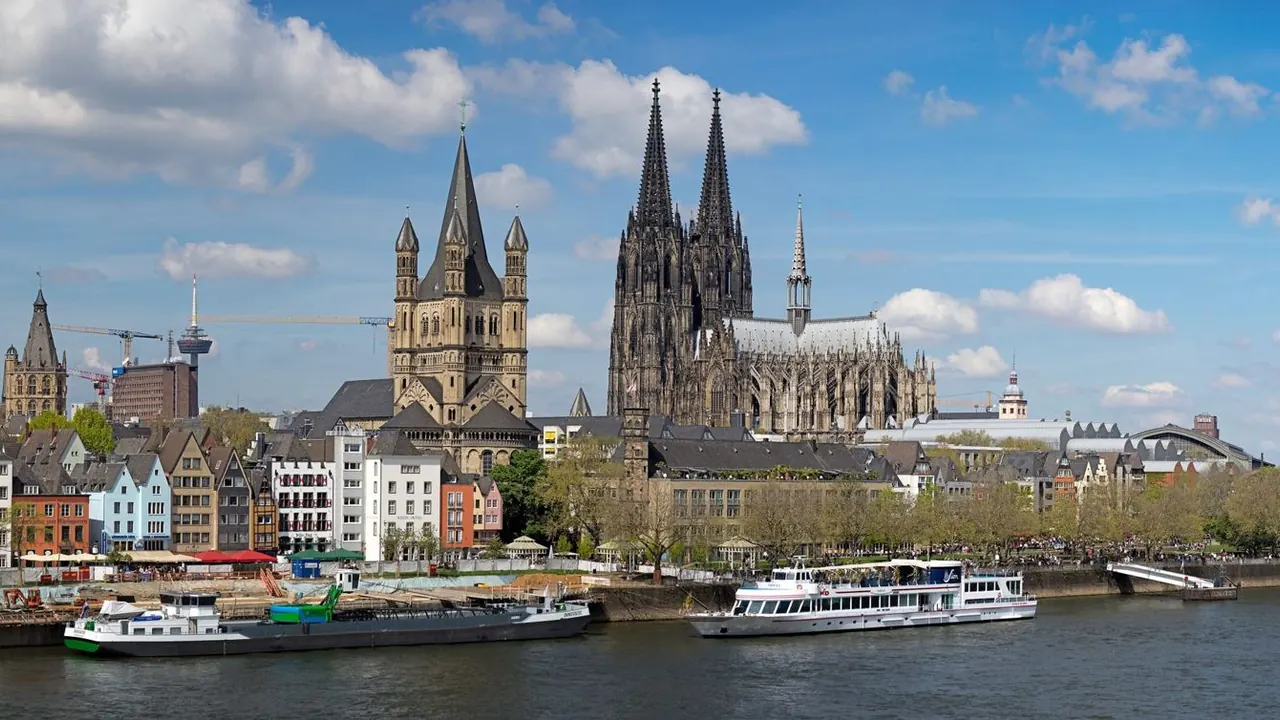
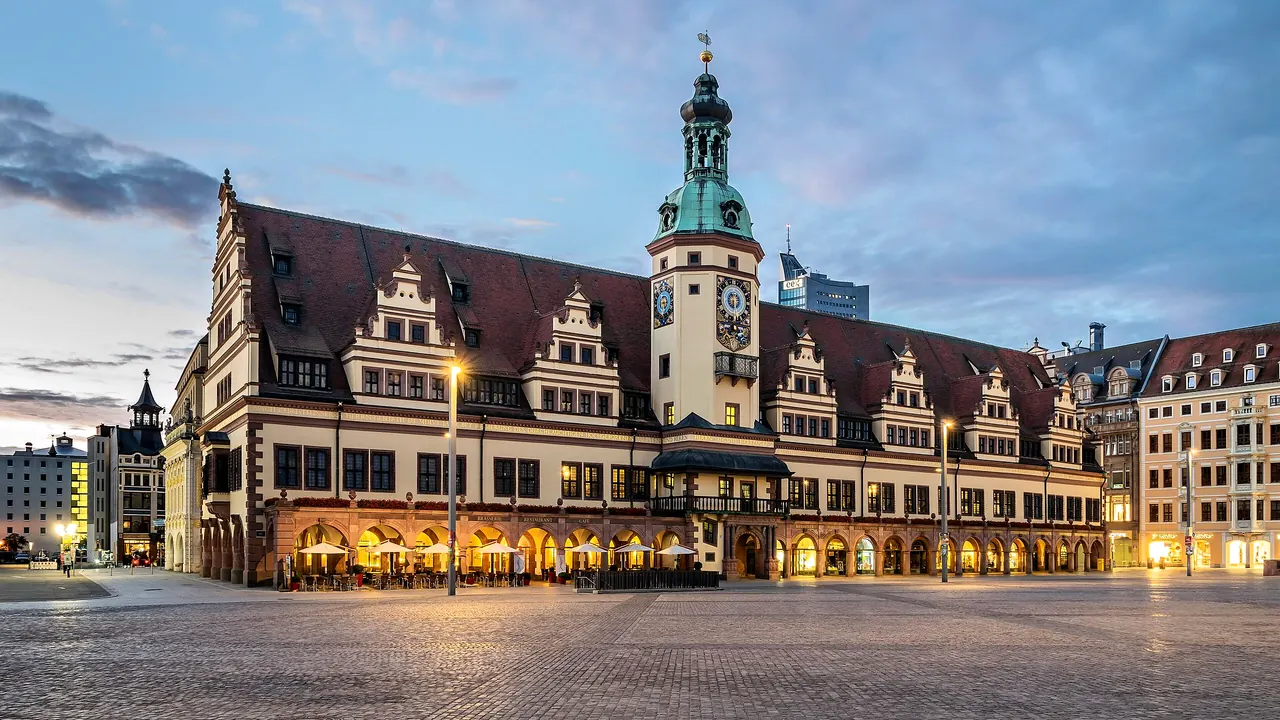
Photos: Cologne by Jörg Braukmann, CC BY-SA 4.0, cropped; Leipzig by Krzysztof Golik, CC BY-SA 4.0, cropped.
Cologne or Leipzig?
Our verdict in twelve categories, each scored against the same fixed benchmark cities, and the climate month by month, so you can choose for your trip.
Choose Cologne for
- wellness
- shopping
- nature and the outdoors
Cologne suits travellers who want a well-rounded city break: a world-famous cathedral and its ring of Romanesque churches, art museums of European standing, and evenings in the brewhouses with Kölsch. It also has more for families, with the zoo, the Chocolate Museum and Phantasialand close by, and it is the better place to unwind, thanks to the mineral-spring baths in the Rheinpark. Shoppers will find a lot more on its high streets too.
Choose Leipzig for
- beaches
- live music and the arts
- prices
Choose Leipzig if music is the point of the trip. The Gewandhaus Orchestra, the Thomanerchor singing in Bach's own church and the opera across Augustusplatz give a mid-sized city a remarkable stage. Rooms cost less, the flooded mine lakes south of town make better summer swimming than anything near Cologne, and the story of 1989 and the GDR gives its sights a character Cologne doesn't have.
Scoreboard
Twelve categories on one fixed scale from 0 to 100. The shaded stretch is the gap between the two.
Your match
Pick a travel style or drag the sliders, and both match scores follow your weighting.
Too close to call, 2 points apart
Wins on wellness and shopping with your weighting.
Wins on beaches and live music and the arts with your weighting.
What matters to you?
Category by category
What the scores mean for a trip.
Beaches & swimming
Neither city has a sea, but Leipzig is better for a hot day. Its flooded lignite mines, the Cospudener See and Markkleeberger See, have sandy shores, clear water and beach bars, and you can reach them by tram or by bike through the floodplain forest.
Cologne swims in gravel-pit lakes on the edge of the city, such as Fühlinger See and Otto-Maigler-See. They have grassy banks and only small patches of sand, and the Rhine itself is not for swimming. Both cities' lakes reach about 22°C at best, so either one makes a pleasant afternoon, not a beach trip.
Food & drink
Cologne has the more memorable food, mostly because of the Brauhaus. The Köbes keep bringing small glasses of Kölsch until you put a beer mat on top, and you eat Himmel un Ääd or a Halve Hahn alongside. Venloer Strasse in Ehrenfeld adds good Turkish and Middle Eastern cooking, and there are a few serious fine-dining kitchens.
Leipzig eats more simply: Saxon roasts with dumplings, the sour, salted Gose beer, and coffee houses dating back to the early eighteenth century. Its best casual food is on the Karli and in Plagwitz, and it has less fine dining than Cologne.
Culture & sights
Cologne has the bigger headline sights. The cathedral alone justifies the trip, the twelve Romanesque churches and Roman remains add depth, and Museum Ludwig and the Wallraf-Richartz rank among the best collections in Europe. The drawback is the plain post-war townscape around them.
Leipzig's sights are fewer and more focused: Bach's Thomaskirche, the Nikolaikirche where the 1989 Monday prayers began, the Stasi story at the Runde Ecke, and the covered trade-fair arcades. Its museums are good rather than famous, and two or three days covers them.
Nightlife
Cologne offers the wider night out. You can move from the brewhouses to cocktail bars in the Belgian Quarter, join the student crowds on Zülpicher Strasse, or head to one of Germany's largest gay scenes around Rudolfplatz. Then there is Carnival, when the whole city celebrates for days.
Leipzig's scene is narrower but rougher round the edges. Its strength is electronic clubbing in old factories and warehouses, where weekend nights run past dawn and door policies are relaxed, plus bar streets on the Karli and in Connewitz. Both cities go quiet in the week.
Nature & outdoors
Cologne is better placed for walking. The wooded volcanic hills of the Siebengebirge and the Drachenfels crag are about forty minutes away, and the Bergisches Land, the Eifel national park and its crater lakes are not much further.
Leipzig's greenery is right in town. The Auwald floodplain forest runs through the city, you can canoe in from Plagwitz on its canals, and the mine lakes suit sailing, cycling and white-water canoeing. For real hills, though, Saxon Switzerland or the Harz are about two hours away by train.
Day trips
Both are excellent bases, and the difference is where the trains take you. From Cologne the trips run along the Rhine: the palaces at Brühl, Bonn, Charlemagne's chapel in Aachen and the castle towns of the Rhine Gorge. Maastricht, Liège and Brussels are just across the borders.
From Leipzig you reach the heartland of German history: Dresden and Weimar in a little over an hour, Luther's Wittenberg, the Bauhaus at Dessau, Naumburg's cathedral and Berlin itself. Cologne's day trips lean towards river scenery and foreign cities, while Leipzig's lean towards the Reformation, the classical age of Goethe and Schiller, and modernism.
Good for families
Cologne has more to fill a family week. The zoo, the Chocolate Museum, the cable car to the Rheinpark and Phantasialand, one of Europe's major theme parks, add up to several full days. Carnival week is best avoided with small children.
Leipzig Zoo, with its covered Gondwanaland tropical hall for wet days, is a superb outing, and in summer the lakes and the smaller Belantis park add more. Beyond those, though, Leipzig runs out of children's options sooner than Cologne.
Getting around
Both are flat, easy cities where nobody needs a car, and both cycle well. Cologne's station stands right beside the cathedral, but the tram and Stadtbahn map takes some working out, and services can be crowded and irregular.
Leipzig is the more compact of the two. Its old town takes about fifteen minutes to cross on foot inside the ring road, the tram network is simple to use, and wide cycle lanes often make a bike the quickest way around.
Shopping & style
Cologne is the better shopping city by some way. Schildergasse and Hohe Strasse are among Germany's busiest high streets, Ehrenstrasse and the Belgian Quarter have independent fashion and design shops, and Eau de Cologne from the historic perfume houses makes a souvenir with a real story.
Leipzig's covered arcades are a pleasant place to shop in any weather, but the shops inside are mostly chains. Its more individual side is in Plagwitz, with vintage and record shops on Karl-Heine-Strasse and the galleries of the Spinnerei.
Affordability
Leipzig is the cheaper stay, and almost all the saving is on the room: central hotels and apartments cost less than in most large German cities. Meals, drinks and transport cost much the same in both.
In Cologne, rooms are moderately priced in ordinary weeks but climb steeply during the big trade fairs at the Messe and during Carnival. Leipzig has its own trade-fair weeks, so check the fair calendar before booking either city.
Live music & performing arts
Leipzig is the stronger music city. The Gewandhaus Orchestra is one of the oldest and finest in the world, and the Thomanerchor sings Bach in the church he served. The June Bachfest and the Wave-Gotik-Treffen at Whitsun bring in visitors in a way nothing in Cologne quite matches.
Cologne still has a lot to offer: the opera and the Schauspiel, the Philharmonie with two orchestras, the WDR broadcast ensembles, a deep electronic and jazz tradition, and the dialect bands of the Carnival sessions.
Wellness & relaxation
Cologne is the better choice for unwinding. Its thermal baths in the Rheinpark are fed by local mineral springs and look across the river to the cathedral, and Aachen's hot springs are under forty minutes away.
Leipzig has sauna complexes and hotel spas but no bathing tradition, and the spa towns such as Bad Düben are a separate trip. What it does offer is calm: it feels uncrowded for a German city, with forest walks and slow Sundays, while central Cologne stays busy.
When should you go?
Pick your month. The climate figures are measured averages, not a forecast.
Cologne in July
Leipzig in July
Daytime high, °C
Rainfall in the month, mm
Temperature and rainfall are climate normals, averaged over the years shown. Cologne: 1991-2020 (sunshine 1981-2010) normals, Köln-Stammheim (5.4 km from centre). Leipzig: 1991-2020 (sunshine 1961-1990, rainfall 1961-1990) normals, Leipzig-Holzhausen (5.7 km from centre).
The two share almost the same summer. July and August reach about 25°C in both, which is warm enough for an afternoon at the lakes, and these are also the wettest months, with Leipzig peaking at 56mm in July. May, June and September are the most comfortable months for walking either city. From April to September Leipzig is the sunnier of the two, and it is drier for most of the year.
Winter sets them apart a little. Leipzig is colder, with January highs around 4°C against 6°C in Cologne, where winters are milder but damper. From November to February both are grey, with short days, so this is weather for museums and concerts, not for long walks. Spring starts slightly cooler in Leipzig but brightens quickly from April.
Which traveller are you?
For a relaxing and wellness trip, choose Cologne. Spring-fed baths sit on the Deutz bank of the river, and Aachen, where the Romans bathed, is a short train ride away. Leipzig has no spa heritage of its own, so a proper soak means leaving town.
On a shopping trip, Cologne gives you far more to work with. Come in Advent, when Christmas markets fill the squares, and head to Mittelstrasse and the streets near Apostelnkirche for higher-end labels. Leipzig's arcades hold mostly chains.
On a trip on a tight budget, Leipzig makes the money go further. As well as cheaper beds, its compact old town means you can skip tram tickets most days, and beer and simple food in the student districts are fairly priced.
Before you go
| Measure | Cologne | Leipzig |
|---|---|---|
| Official language | German | German |
| Currency | Euro (EUR) | Euro (EUR) |
| Sockets | CF230 V, 50 Hz | CF230 V, 50 Hz |
| Driving side | Right | Right |
| Time zone | UTC+1, UTC+2 in summer | UTC+1, UTC+2 in summer |
| Emergency number | 112 | 112 |
| Elevation | 59 m | 110 m |
| Main airport | Cologne Bonn Airport (CGN)15 km from centre115 non-stop destinations | Leipzig/Halle Airport (LEJ)13 km from centre20 non-stop destinations |
| Public holidays this year | 11 days | 11 days |
By the numbers
| Measure | Cologne | Leipzig |
|---|---|---|
| City population | 1,025,523 | 615,932 |
| People per km² | 2,532 | 2,068 |
| Museums within 10 km | 40 | 40 |
| UNESCO World Heritage sites within 50 km | 3 | 1 |
Where else could you go?
Every comparison below shares a destination with this one, so you can follow Cologne or Leipzig somewhere new.
- Dusseldorfvs Cologne
- Maastrichtvs Cologne
- Dresdenvs Leipzig
- Berlinvs Leipzig
- Frankfurtvs Cologne
- Utrechtvs Cologne