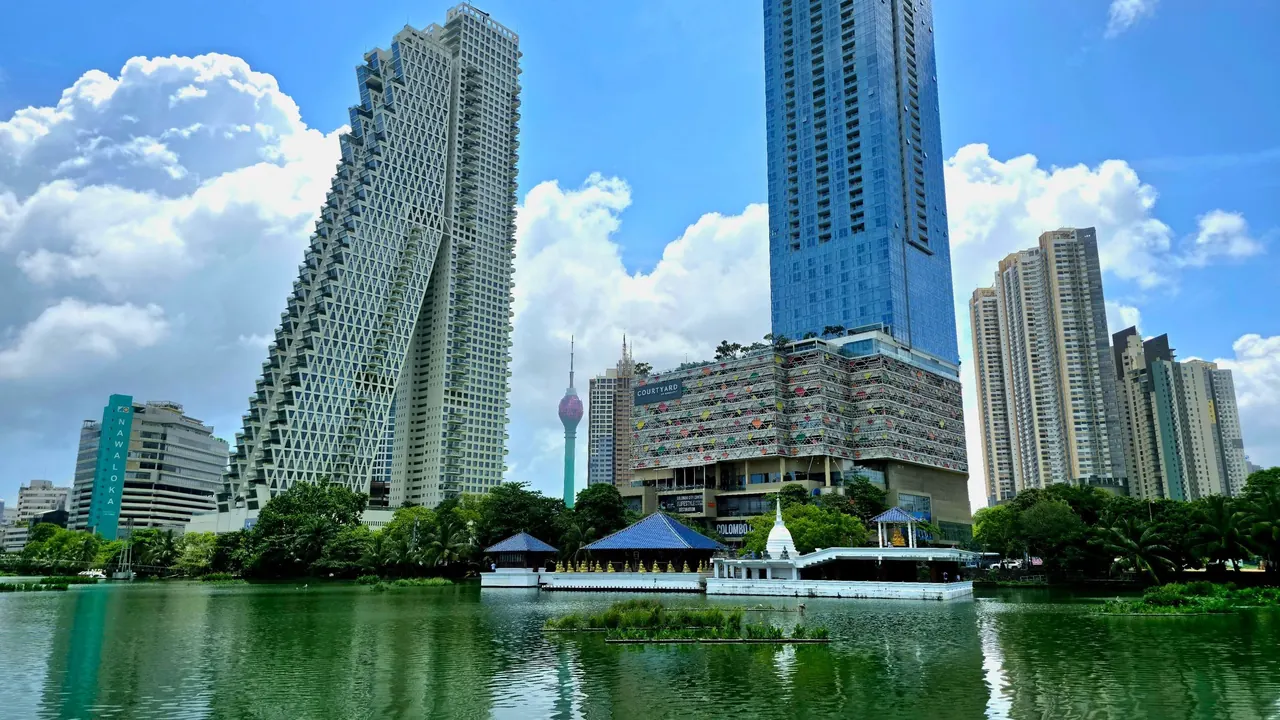
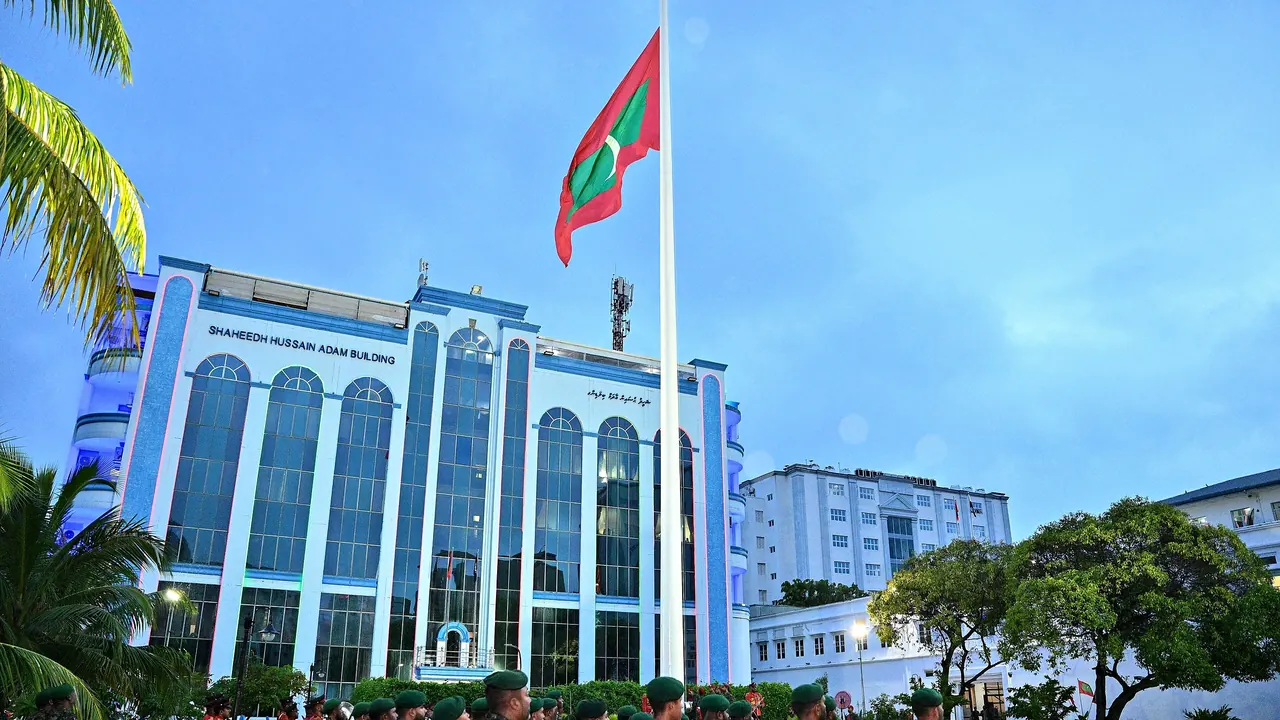
Photos: Colombo by Mohamed Ansaf, Pexels License; Malé by The President's Office of the Republic of Maldives, CC BY 4.0, cropped.
Colombo or Malé?
Our verdict in twelve categories, each scored against the same fixed benchmark cities, and the climate month by month, so you can choose for your trip.
Choose Colombo for
- food and drink
- nightlife
- shopping
Colombo suits travellers who want a city to explore and eat their way through: rice-and-curry spreads, hoppers and kottu, the colonial streets of Fort and Pettah, Ayurveda treatments and a day out to Galle's fort, all for little money. It works best as the first few days of a longer journey round Sri Lanka.
Choose Malé for
- nature and the outdoors
- getting around
- beaches
Choose Malé if the sea is the point of the trip. The capital itself is compact, dry and crowded, and you can see its sights in a morning. Still, the reefs of the Malé atolls, manta and shark dives and village islands such as Maafushi are all a short boat ride away. Treat it as a base for the water rather than as a city break.
Scoreboard
Twelve categories on one fixed scale from 0 to 100. The shaded stretch is the gap between the two.
Your match
Pick a travel style or drag the sliders, and both match scores follow your weighting.
Wins on food and drink and nightlife with your weighting.
Wins on nature and the outdoors and getting around with your weighting.
What matters to you?
Category by category
What the scores mean for a trip.
Beaches & swimming
Neither capital is really a beach city, but Malé has better water close at hand. Hulhumalé's long white lagoon beach is just across the bridge and Villimalé a few minutes away by ferry, both with clear, calm water. On these inhabited islands swimmers stay covered up, so a bikini means a speedboat to Maafushi or a resort day pass.
Colombo's nearest usable sand is Mount Lavinia, with Negombo an hour to the north, and both face open surf and strong currents. Galle Face is a promenade rather than a place to swim, and the proper beach resorts lie further south around Bentota.
Food & drink
Colombo is much the better city to eat in. It has rice and curry with dhal and sambols, hoppers with an egg cooked inside, kottu chopped late into the night and the Dutch Burgher lamprais. Add lagoon crab and the biryani and dosa of the Muslim and Tamil quarters, plus arrack and toddy to drink.
Malé's cooking is narrower and built around tuna, from mas huni with roshi at breakfast to garudhiya broth. The tea shops with their short eats are the best introduction, and the waterfront fish market is worth seeing in its own right. Beyond that the choice soon runs out, and because the city is dry, a drink with dinner means a resort or the airport hotel island.
Culture & sights
Colombo fills a day or two of sightseeing, Malé a morning. Colombo's National Museum holds the country's best royal regalia and sculpture. Fort and Pettah mix Dutch and British buildings with the striped Jami Ul-Alfar mosque and Hindu kovils, and Geoffrey Bawa's Seema Malaka pavilion sits on Beira Lake.
Malé's heritage is small but its own: the coral-stone Old Friday Mosque with its carved headstones, the blue-roofed Mulee-aage palace and a National Museum with carvings from the islands' Buddhist past. Beyond those few streets the city is plain concrete, and attention turns to the sea.
Nightlife
Colombo's nightlife is modest: hotel bars, rooftops facing the ocean, a few clubs in Colombo 3 and casinos that stay open late. It is liveliest at weekends, and bars close on Poya full-moon days. Malé serves no alcohol at all, so evenings mean late-opening cafés, juice bars and the crowded waterfront. For a drink or a dance floor you have to go to a resort or a liveaboard boat.
Nature & outdoors
Underwater, Malé is far ahead. The North and South Malé atolls are a short boat ride out, with channel drift dives past grey reef sharks and eagle rays, manta cleaning stations, wrecks and coral gardens. There are also easy snorkelling trips, dolphin cruises at sunset and surfing on the outer reefs.
Colombo's outdoors is quieter and mostly on land: birdwatching in the Diyasaru and Beddagana wetlands and boat trips through the Muthurajawela marsh. Its big landscapes, such as the Sinharaja rainforest, the tea hills and the rafting at Kitulgala, need a long drive or a night away.
Day trips
From Colombo there are real places to visit. Galle's walled Dutch fort is about two hours south by expressway or coastal railway, with the Bawa gardens at Bentota on the way, and Negombo's canal and fish markets are an hour north. Kandy can be done in a day but is better with a night there.
From Malé every outing is a boat to another island. Maafushi, Guraidhoo and Thulusdhoo show village life along sandy lanes, but they are much alike, and there are no historic towns within reach. People go for the water, not the places.
Good for families
Neither city is made for children, and in both, most families stay briefly and move on. Colombo has a little more to fill a day: the zoo at Dehiwala, flying kites on Galle Face in the evening and a ride on the coastal train. Even so, the heat, traffic and broken pavements rule out pushchairs, and the sea is too rough for small swimmers.
Malé is harder still, with streets packed with scooters, little shade and only Sultan Park and small playgrounds in the city. Hulhumalé, with its calm lagoon and wider streets, is the gentler choice, and a resort with a kids' club is the usual answer.
Getting around
Malé is about 2km across, so you can walk everywhere or take a short taxi at a flat fare, even if the narrow pavements and constant scooters make walking cramped. Buses cross the bridge to Hulhumalé and the airport, and ferries run to Villimalé. Only longer island hops need planning, around ferry days or booked speedboats.
Colombo is more spread out and has no metro, so tuk-tuks and cars booked through an app do most of the work, slowed by heavy traffic on Galle Road. The coastal railway is the pleasant exception. Walking suits Galle Face and Beira Lake rather than the city as a whole.
Shopping & style
Colombo is a real place to shop. Pettah's wholesale bazaar, with one trade to each street, is worth walking even if you buy nothing. Colombo 3 and 7 have design-led stores selling handloom cotton, batik and homeware, some of them in colonial villas. Tea, cinnamon and gems from a reputable dealer are the things to take home.
Shopping in Malé is mostly for the people who live there, along Majeedhee Magu and at the produce market, where jars of smoked tuna paste are the most original souvenir. Lacquered boxes and woven mats are made locally but take some finding among the imported trinkets.
Affordability
Colombo is clearly the cheaper stay. Local meals, tuk-tuks and train fares cost very little and mid-range hotels are good value. Only the big seafront hotels, rooftop bars and imported drinks come close to international prices.
Malé stays moderately priced only while you are on land. Tea-shop meals, taxis and public ferries are cheap, and city guesthouses cost far less than the resorts. The expense starts on the water: speedboats, dives and resort day passes, which are exactly what most visitors come for.
Live music & performing arts
Colombo at least has proper stages. There is the lotus-shaped Nelum Pokuna, the Lionel Wendt theatre for drama and recitals, occasional symphony concerts and Kandyan dance with its drumming and acrobatic leaps. Malé has no theatre or venue with a regular programme, and you mostly hear its bodu beru drumming at national celebrations, at Eid or as a show at a resort.
Wellness & relaxation
Colombo has a genuine local tradition in Ayurveda. Clinics across the city offer warm-oil massage, shirodhara and herbal steam baths, and longer residential courses run down the coast at Beruwala and Bentota. The city itself is not restful, but a sunset on Galle Face or a quiet temple courtyard offers some calm.
Malé has no such tradition, just a few small day spas, little green space and scooters running through the night. Real rest there means a spa day at a resort or a move to a quieter island.
When should you go?
Pick your month. The climate figures are measured averages, not a forecast.
Colombo in July
Malé in July
Daytime high, °C
Rainfall in the month, mm
Temperature and rainfall are climate normals, averaged over the years shown. Colombo: 1991-2020 normals, Colombo (3 km from centre). Malé: 1991-2020 normals, Male (3.9 km from centre).
Both cities are hot all year, with daytime highs of 30°C to 32°C and a warm sea in every month, so the month you choose depends on rain rather than temperature. In either city, walking the streets at midday is hard going in any season. Colombo is at its best from January to March, its driest and sunniest stretch, when the west coast is calm enough to swim. The southwest monsoon brings heavy rain from April, and from about May to September the sea turns rough and swimming is often unsafe, even though July and August are drier. The wettest spell follows from September to November, with October bringing about 349mm.
Malé is best in February and March, when rainfall drops to around 43mm and the sunshine peaks. From April it turns wetter, but the rain is spread more evenly than in Colombo, without the same heavy peaks, so the later months are damp rather than stormy. The northeast monsoon, from about December to April, brings the calmest and clearest water around the atolls for diving and snorkelling. The southwest monsoon roughens the sea for the rest of the year.
Which traveller are you?
For a food and nightlife trip, Colombo wins easily. You can eat rice-and-curry spreads, late-night kottu and Burgher lamprais, then go on to weekend clubs, rooftop bars and arrack cocktails. Malé is dry, and its evenings end at a café or on the promenade.
On an outdoors trip, Malé is the place to be. Dive and snorkel boats reach the North and South Malé atolls quickly, with mantas, reef sharks, wrecks and coral gardens. Colombo has pleasant wetlands, but its rainforest and tea hills are hours away.
On a tight budget, Colombo makes your money go further. Local eating houses, tuk-tuks and train fares cost very little and guesthouses are cheap. In Malé, the speedboat transfers, dives and resort day passes that make a stay worthwhile soon add up.
Before you go
| Measure | Colombo | Malé |
|---|---|---|
| Official language | Tamil, Sinhala | Maldivian |
| Currency | Sri Lanka Rupee (LKR) | Rufiyaa (MVR) |
| Sockets | GM230 V, 50 Hz | ACGJKL230 V, 50 Hz |
| Driving side | Left | Left |
| Time zone | UTC+5:30 | UTC+5 |
| Emergency number | Police 119, ambulance 110, fire 110 | Police 119, ambulance 102, fire 118 |
| Elevation | 1 m | 2 m |
| Main airport | Bandaranaike International Colombo Airport (CMB)28 km from centre58 non-stop destinations | Velana International Airport (MLE)3 km from centre50 non-stop destinations |
By the numbers
| Measure | Colombo | Malé |
|---|---|---|
| Population | 647,557 | 133,019 |
| People per km² | 17,361 | 22,934 |
| Museums within 10 km | 10 | 1 |
| UNESCO World Heritage sites within 50 km | 0 | 0 |
| Swim season, months above 21 °C | 12 months | 12 months |
Where else could you go?
Every comparison below shares a destination with this one, so you can follow Colombo or Malé somewhere new.
- Kandyvs Colombo
- Gallevs Colombo
- Ellavs Colombo
- Trincomaleevs Colombo
- Kochivs Colombo
- Pondicherryvs Colombo