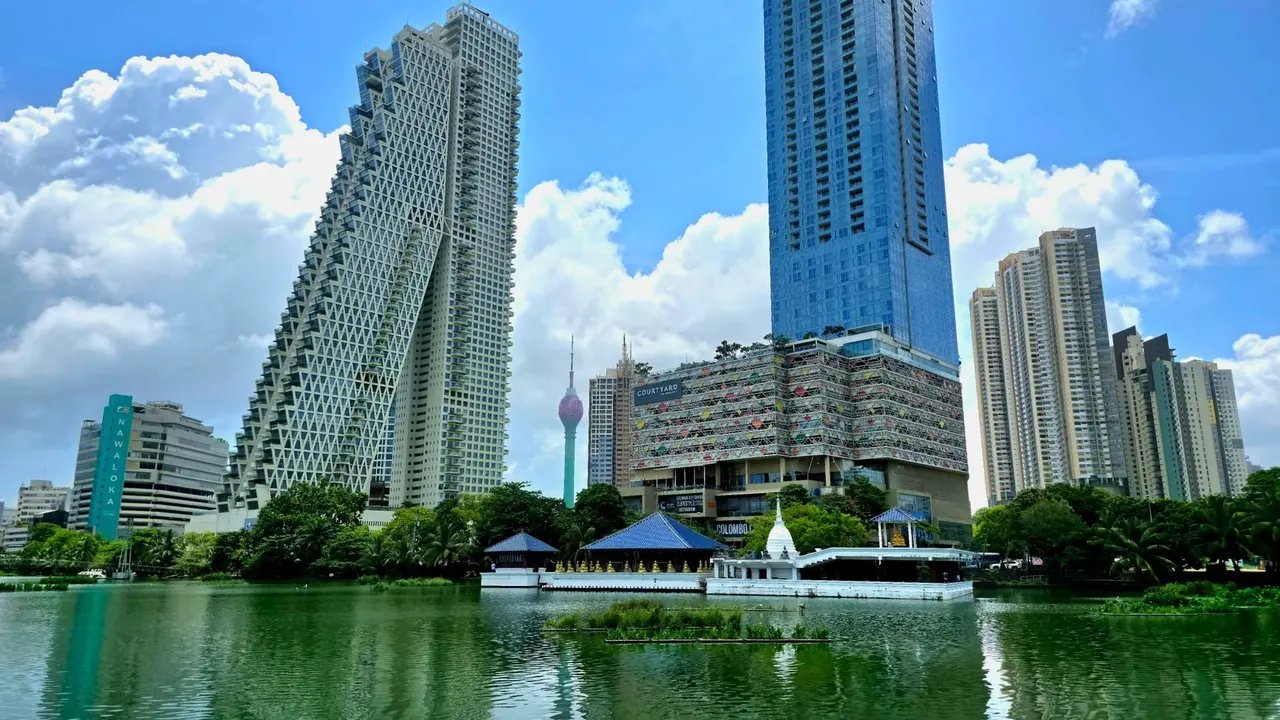
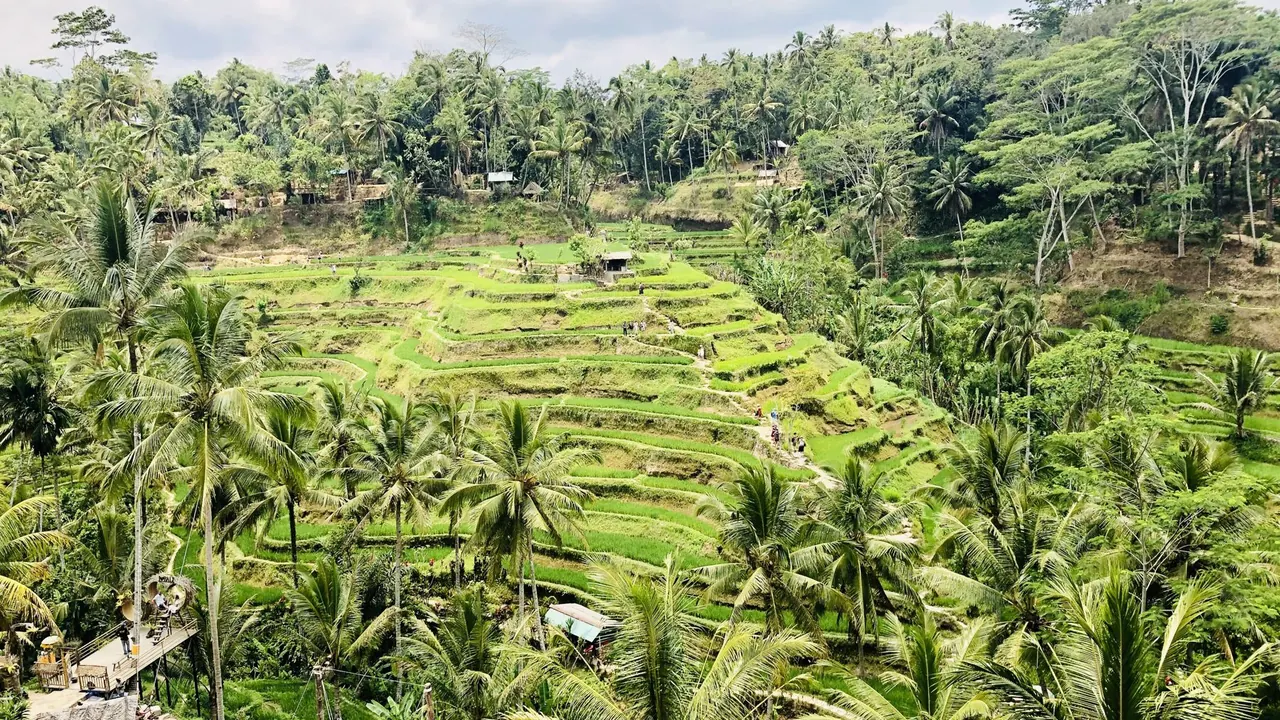
Photos: Colombo by Mohamed Ansaf, Pexels License; Ubud by Pinterpandai, CC BY-SA 3.0, cropped.
Colombo or Ubud?
Our verdict in twelve categories, each scored against the same fixed benchmark cities, and the climate month by month, so you can choose for your trip.
Choose Colombo for
- getting around
- nightlife
- beaches
Colombo suits a traveller who wants a working Asian city at the start or end of a Sri Lanka journey. It has rice-and-curry spreads, hoppers and lagoon crab, weekend rooftop bars over the ocean, the bazaar streets of Pettah and app-booked tuk-tuks that make it easy to get about. It is the better pick if you want the sea nearby and a few evenings out, though its own sights take only a day or two.
Choose Ubud for
- nature and the outdoors
- wellness
- day trips
Ubud is the place for landscape and a slower pace. Rice terraces, river gorges and Mount Batur are close by, yoga and Balinese massage are part of daily life, and every evening there is dance to gamelan in a palace or temple courtyard. Expect early nights and plan on a driver for most outings, because getting around is the town's weak point.
Scoreboard
Twelve categories on one fixed scale from 0 to 100. The shaded stretch is the gap between the two.
Your match
Pick a travel style or drag the sliders, and both match scores follow your weighting.
Wins on getting around and nightlife with your weighting.
Wins on nature and the outdoors and wellness with your weighting.
What matters to you?
Category by category
What the scores mean for a trip.
Beaches & swimming
Neither is a beach base, but Colombo at least lies on the sea. Mount Lavinia is a broad beach at the city's southern edge and Negombo's longer hotel strand is an hour north. The shore is open surf with strong currents, though, and in the southwest monsoon swimming is often unsafe.
Ubud is inland in the hills, so a swim means the best part of an hour's drive to Sanur's calm water inside the reef, and most afternoons end in a villa pool. Travellers who want a proper beach vacation move on from either one, to Bentota or the Bali coast.
Food & drink
Both eat well and cheaply, but Colombo has more local dishes to work through. Rice and curry comes as a spread of small dishes, hoppers are cooked with an egg inside, kottu is chopped on griddles late into the night and the Burgher lamprais is unique to the city. Lagoon crab and cuttlefish come from the sea, and the Tamil and Muslim quarters add dosa and biryani.
Ubud's strength is Balinese pork and duck: babi guling at lunch counters and slow-cooked bebek betutu. On top of that comes a large international layer of plant-based cafés and Kintamani coffee. It is the better town for a raw-food lunch, but Colombo's own cooking goes deeper.
Culture & sights
Colombo is a port city first, and its sights fill a day or two. The National Museum beside Viharamahadevi Park holds the country's finest royal regalia and ancient sculpture. Fort and Pettah set Dutch and British buildings beside the striped Jami Ul-Alfar mosque and Hindu kovils, and Bawa's Seema Malaka pavilion sits on Beira Lake. The island's great ancient cities, though, lie deep in the interior.
Ubud gives a culture trip more, because its traditions are still part of daily life around you. Offerings sit on doorsteps, processions pass on temple feast days and the old palace, Puri Saren, stands at the centre of town. Ubud has been an artists' centre since the 1930s, and the Neka, ARMA and Puri Lukisan collections trace Balinese painting from its traditional styles to the work shaped by the Western painters who settled here. The rock-cut Elephant Cave of Goa Gajah lies at the edge of town.
Nightlife
Neither is a party destination, but Colombo has more going on after dark. There are rooftop lounges over the ocean, hotel bars, a few clubs in Colombo 3 and around Galle Face that fill at weekends, and casinos that stay open late. Many bars close on the monthly Poya full-moon days.
Ubud keeps early hours: a long dinner, a garden bar, perhaps a band, and quiet well before midnight. People who want clubs make the long drive to Seminyak or Canggu.
Nature & outdoors
This is where the two differ most. Ubud is surrounded by rice terraces and river gorges. You can walk the Campuhan Ridge from the centre, raft the Ayung and reach waterfalls such as Tibumana in a short drive. Many visitors also climb Mount Batur before dawn.
Colombo is flat and urban. Beira Lake and Viharamahadevi Park give shade, and the Diyasaru and Beddagana wetlands are good for birdwatching. Sinharaja, the tea hills and whale watching all mean a long drive or a night away.
Day trips
Ubud sits in the middle of Bali's temple country. Tirta Empul, Gunung Kawi, Besakih, the painted pavilions of Klungkung and the Jatiluwih terraces all make easy days out with a hired driver, though the slow roads limit how many fit into one day.
Colombo has one outstanding day trip: the walled Dutch fort town of Galle, about two hours south by the coastal railway or the expressway, with the Bawa gardens at Bentota on the way. Negombo's canal and fish markets are a lesser outing, and Kandy is really an overnight stop.
Good for families
Both welcome children warmly, and neither is easy with a pushchair. Ubud gives families more to do: villas with private pools, dance performances, gentle rafting, rice-field walks and a safari park nearby. It suits older children best, because of the bag-grabbing macaques and the many outings by car.
Colombo has the zoo at Dehiwala, kites on Galle Face Green and a train ride along the coast. With the heat, the traffic and a rough sea, though, most families stay a night or two and then move on to calmer resorts.
Getting around
Neither has a metro, but Colombo is far easier to get around. App-booked tuk-tuks and cars are quick to find, the coastal railway runs to Mount Lavinia and further south, and Galle Face and Beira Lake are pleasant on foot despite the peak-hour traffic.
Ubud has no public transport worth relying on. Its pavements are broken, the valley roads are steep and distances are longer than they look. Most days are planned around a driver or ride-hailing, so stay near the centre if you want to walk to dinner.
Shopping & style
Ubud has the edge for handmade things. There are sarongs and baskets at the Art Market, woodcarving in Mas, silver in Celuk, paintings from Batuan, and linen and yoga wear on Jalan Hanoman.
Colombo's draw is Pettah, a bazaar where each street keeps to its own trade, worth walking even if you buy nothing. Colombo 3 and 7 add handloom and batik design shops, and tea, cinnamon and gems from a reputable dealer make the classic things to take home. Neither is a place for luxury brands.
Affordability
Both are cheap for a visitor, with little to choose between them. A rice-and-curry lunch or a tuk-tuk ride in Colombo and a warung meal or a day with a driver in Ubud cost very little, and imported drink is heavily taxed in both.
The difference is where the money goes at the top end. In Colombo it is the seafront hotels, rooftop bars and seafood restaurants. In Ubud it is the jungle resorts above the river valleys and the tasting-menu cafés, while its homestays and massages help a small budget go a long way.
Live music & performing arts
Ubud has dance every evening. Legong, Barong and Kecak are performed to live gamelan in the palace courtyard, at Pura Taman Saraswati and in village temples by troupes from the surrounding communities. If you happen on a temple festival, you can see the same dances in their own setting.
Colombo has the bigger stages, the Nelum Pokuna and Lionel Wendt theatres, along with occasional orchestral concerts, but nothing on a nightly round. Its tradition to look out for is Kandyan and low-country dance, with drumming and acrobatic leaps.
Wellness & relaxation
Ubud is built around wellness. Yoga starts at dawn in open pavilions, retreats run to every length, riverside spas look over the Ayung gorge and there are sound-healing sessions and the purification ritual at Tirta Empul.
Colombo's offer is Ayurveda, a genuine local medical tradition, with warm-oil massage and shirodhara in clinics across the city. The traffic and heat work against rest, though, and longer programmes mean moving to the retreats at Beruwala or Bentota.
When should you go?
Pick your month. The climate figures are measured averages, not a forecast.
Colombo in July
Ubud in July
Daytime high, °C
Rainfall in the month, mm
Where the figures come from
Ubud's temperatures are measured 29 km from the centre, at Denpasar / Ngurah-Rai.
Ubud's station stands 209 m below the city centre, so the centre is likely a little cooler than the figures say.
Ubud has no rain gauge within 25 km of the centre, so its rainfall comes from a gridded climate dataset read at the city rather than from a gauge further away.
Temperature and rainfall are climate normals, averaged over the years shown. Colombo: 1991-2020 normals, Colombo (3 km from centre). Ubud: 1991-2020 normals, Denpasar / Ngurah-Rai (29 km from centre).
Both are hot all year, so neither has a cool season for long walks. The real difference is the rain, and here the two run almost opposite. Colombo is at its best from January to March, the driest and sunniest stretch, with February at about 76mm and the west-coast sea calm and warm. The rain builds in April and May, and the sea is often too rough to swim through to September. The wettest months come next, September to November, with October close to 349mm.
Ubud is best in the dry season from May to October, when the days are sunniest and August sees only about 36mm. From December to February the rain is heavy, around 297mm in January. That brings the greenest terraces but also muddy trails. Put simply, Colombo is the choice for the northern winter and Ubud for the northern summer.
Which traveller are you?
For a food and nightlife trip, Colombo is the better base. You can eat well at almost any hour and still find somewhere to dance at the weekend. In Ubud, you get good dinners that end early, and any late night means a long drive to the coast.
On a relaxing and wellness trip, Ubud is the clear choice. Colombo has serious Ayurveda, but after each treatment you walk back out into traffic and heat. In Ubud the calm carries on through the day, with early nights, quiet paddies and the whole town keeping restful hours.
For an outdoors trip, Ubud wins easily. In Colombo, a day in real landscape starts with hours in a car, and the city has little green space beyond its parks. In Ubud you step straight out into the countryside, though longer outings still depend on a driver.
Before you go
| Measure | Colombo | Ubud |
|---|---|---|
| Official language | Tamil, Sinhala | Indonesian |
| Currency | Sri Lanka Rupee (LKR) | Rupiah (IDR) |
| Sockets | GM230 V, 50 Hz | CF50 Hz |
| Driving side | Left | Left |
| Time zone | UTC+5:30 | UTC+8 |
| Emergency number | Police 119, ambulance 110, fire 110 | 112 |
| Elevation | 1 m | 210 m |
| Main airport | Bandaranaike International Colombo Airport (CMB)28 km from centre56 non-stop destinations | Denpasar I Gusti Ngurah Rai International Airport (DPS)29 km from centre64 non-stop destinations |
By the numbers
| Measure | Colombo | Ubud |
|---|---|---|
| City population | 647,557 | - |
| People per km² | 17,361 | - |
| Museums within 10 km | 10 | 14 |
| UNESCO World Heritage sites within 50 km | 0 | 1 |
| Swim season, months above 21 °C | 12 months | 12 months |
Where else could you go?
Every comparison below shares a destination with this one, so you can follow Colombo or Ubud somewhere new.