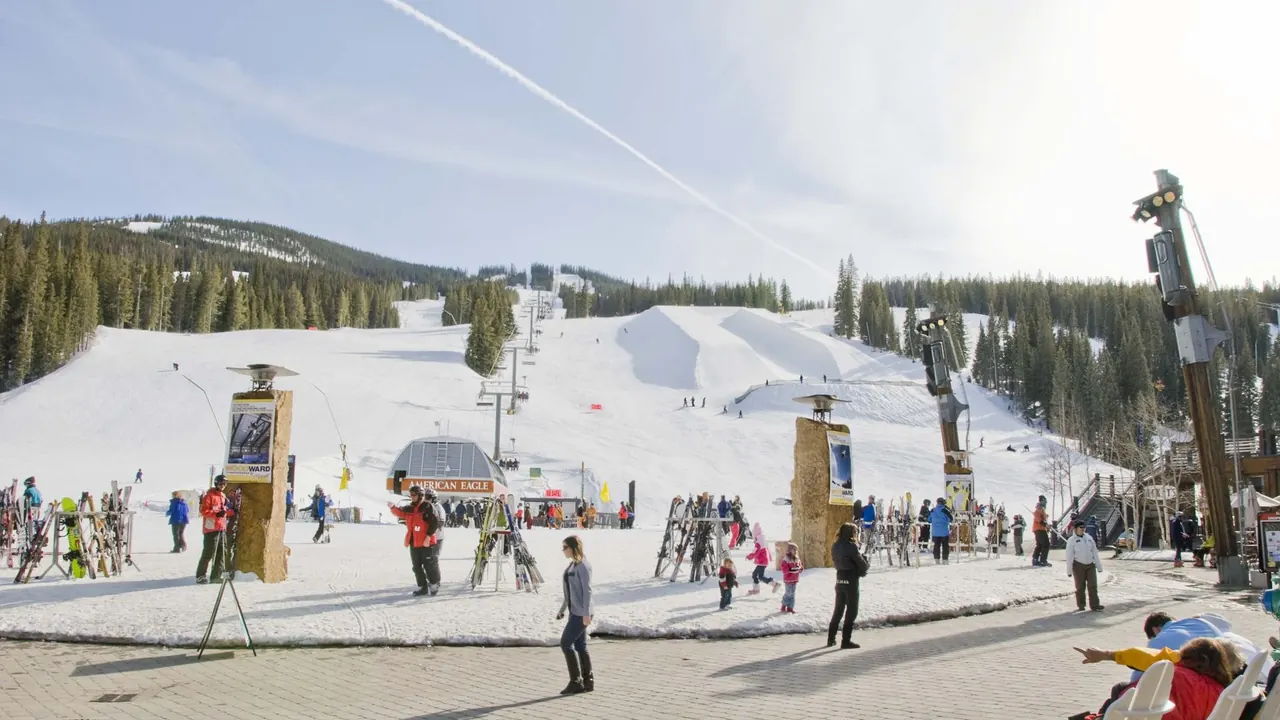
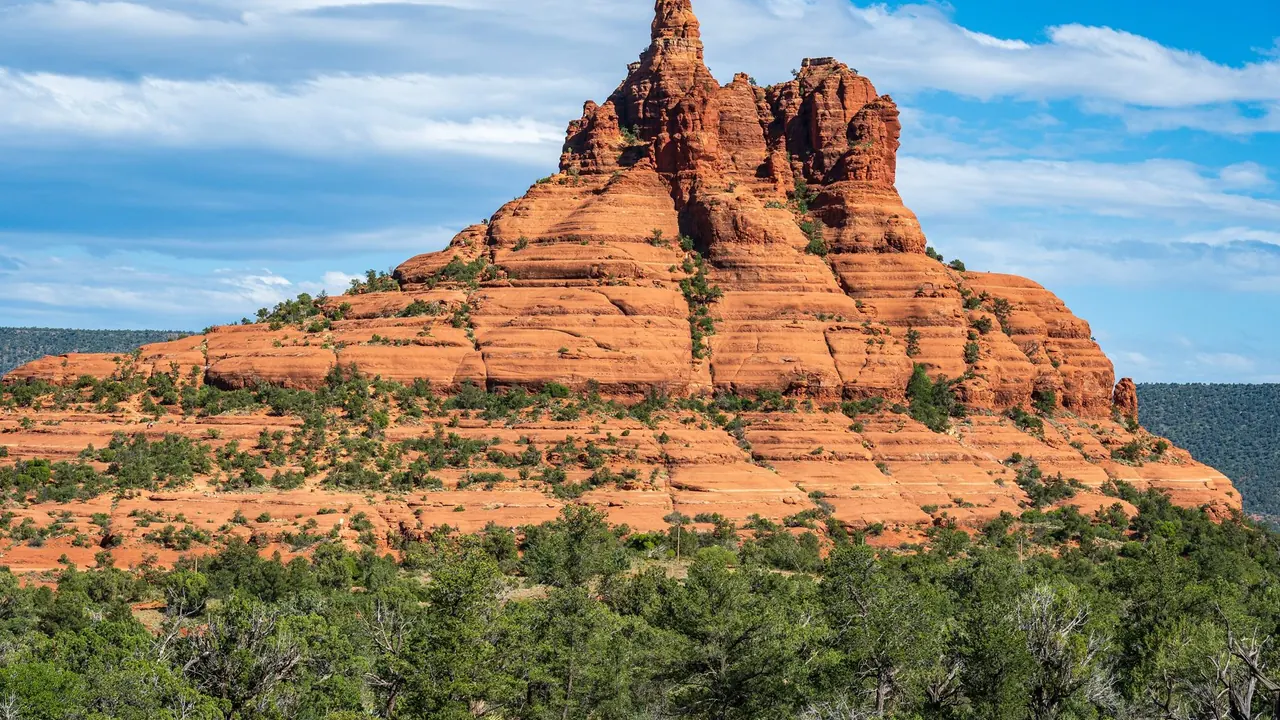
Photos: Copper Mountain by SparkFunElectronics, CC BY 2.0, cropped; Sedona by dconvertini, CC BY-SA 2.0, cropped.
Copper Mountain or Sedona?
Our verdict in twelve categories, each scored against the same fixed benchmark cities, and the climate month by month, so you can choose for your trip.
Choose Copper Mountain for
- getting around
- families
- nightlife
Copper Mountain is for a mountain trip built around activity: skiing from November into spring, or hiking and biking on the high trails in summer. It works especially well with children. The village core is car-free, ski school is central to the resort, and free shuttles mean the car can stay parked. In return you accept plain food, no sights and quiet evenings, plus a couple of days getting used to the altitude.
Choose Sedona for
- wellness
- shopping
- culture and sights
Sedona suits couples and anyone who wants slower days: a red rock trail at dawn, a spa treatment or yoga class in the afternoon, and dinner on a terrace facing the cliffs. It also has more to fill the rest of the day, with Sinagua cliff dwellings, gallery browsing at Tlaquepaque and creek swimming at Slide Rock, though reaching almost all of it takes a drive.
Scoreboard
Twelve categories on one fixed scale from 0 to 100. The shaded stretch is the gap between the two.
Your match
Pick a travel style or drag the sliders, and both match scores follow your weighting.
Wins on getting around and families with your weighting.
Wins on wellness and shopping with your weighting.
What matters to you?
Category by category
What the scores mean for a trip.
Beaches & swimming
Neither is a place to swim, but Sedona at least has somewhere to get wet. Copper's snowmelt lakes are used for boating, so a swim there means a heated lodge pool. In Sedona, the sandstone chute at Slide Rock and the deeper holes at Grasshopper Point and Red Rock Crossing make a cool break after a summer hike, as long as you get there before the weekend crowds.
Food & drink
At Copper Mountain, food is fuel for skiers. You get burgers and chilli at the mid-mountain lodges, pizza and pub plates in the village, and a condo kitchen for everything else. For a proper dinner out, people drive to Frisco or Breckenridge.
Sedona gives you more to look forward to in the evening, even if the range is narrow. It has Southwestern menus built on chilli, corn and grilled meat, plenty of vegetarian cooking and terraces where the sunset over the red rocks is the main attraction. Tasting rooms in the Verde Valley wine country add an afternoon of wine tasting that Copper has no answer to.
Culture & sights
Copper Mountain has nothing to visit in the village itself. It is condos and lodges at the foot of the lifts, and the region's history lives in the neighbouring towns. Sedona is not a museum town either, but it fills an afternoon or two. There is the Chapel of the Holy Cross built into a butte, the Heritage Museum and galleries of Western and Native American art, and out in the backcountry, the Sinagua cliff dwellings at Palatki and Honanki.
Nightlife
Neither is a place for a night out, but the evenings follow different patterns. At Copper, going out is packed into a few hours of après-ski in winter. The lift-base bars fill as the slopes close, the plaza can get loud on a busy weekend, and the altitude and a long day send most people to bed early. Out of season there is little left, and anyone wanting a later night drives half an hour to Breckenridge.
Sedona never gets that rush, but its evenings change little through the year. A beer at a brewpub or a glass of wine in a resort lounge rounds off dinner, and then most people turn in ready for a dawn start on the trail. On a clear night, the best thing to do after dark is look up.
Nature & outdoors
Both are first-rate for the outdoors, but the landscapes could hardly be more different. Copper is alpine: a big ski area under the Tenmile Range with treeless bowls above 3,600m. In summer it becomes the Colorado Trail, the paved path over Vail Pass and fourteen-thousand-foot peaks such as Mount Elbert.
Sedona is red sandstone desert. Trails lead to Cathedral Rock, Devil's Bridge and up West Fork of Oak Creek, there is slickrock singletrack for mountain bikers, and the South Rim of the Grand Canyon is about two hours away. Copper's thin air makes every climb harder, while in Sedona the challenge is the summer heat.
Day trips
From Copper, the drives lead mostly to mining-era towns. Breckenridge keeps a long Victorian main street, Leadville is a high, weathered silver-boom town, and Georgetown and Silver Plume have a historic narrow-gauge railway. Vail's Alpine-style village is just over the pass, and Denver, about an hour and a half away when I-70 is clear, adds the museums of a proper city.
Sedona's history goes back much further. The Sinagua left Montezuma Castle and Tuzigoot within half an hour, and the Wupatki pueblos lie beyond Flagstaff. Jerome clings to its mountainside and the Verde Canyon Railroad runs through a canyon with no road. These places are small, though, and a few days cover them, while Copper's list stretches all the way to a city.
Good for families
Copper Mountain is the easier choice with children. It has a car-free core and a ski school at the heart of the resort, and snow tubing, a mountain coaster and an indoor centre with trampolines and foam pits fill the time off the slopes. The catch is altitude: at nearly 3,000m, young children need watching for the first couple of days.
Sedona suits active families for a short stay, with Slide Rock, the lower paths around Bell Rock and open-air jeep tours. Beyond those there is no zoo or theme park, summer heat on exposed trails needs care, and families often move on to the Grand Canyon after a few days.
Getting around
Copper is much easier once you have arrived. Walkways, lifts and a free shuttle link the resort, and free county buses run on to Frisco, Breckenridge and Keystone. Getting there is the hard part: about two hours by road from Denver's airport, and I-70 in winter can be slow and snowy.
In Sedona, a car is needed for almost everything beyond compact Uptown. Trailheads, the chapel and the day-trip towns are spread out along two highways, the shuttle serves only the busiest trailheads, and parking fills early on weekends.
Shopping & style
Copper's shops stop at ski rental, outdoor gear and resort-branded clothing, and for anything more people drive to the Silverthorne outlets. Sedona gives you a reason to browse. Tlaquepaque has galleries and craft studios set around courtyards and fountains, the main road sells Native American jewellery, pottery and rugs, and the crystal and metaphysical shops are like nothing at Copper.
Affordability
Both are expensive, and for similar reasons: resort lodging and resort meals, plus lift access and rental at Copper, and jeep tours, balloon flights and spa treatments in Sedona.
The ways to save differ. At Copper, condos with kitchens help, so do beds in Frisco or Silverthorne, and summer costs noticeably less. In Sedona, most trails need only a parking pass, picnics cost little, and staying in Cottonwood or Flagstaff brings room rates down.
Live music & performing arts
There is little to attend in either. Copper offers summer concert weekends on the village plaza and acoustic sets at après-ski. Sedona's thin calendar spreads further across the year, with chamber music, local theatre, its long-running film festival in late winter and Native American flute players at some resorts. Neither has a concert hall, so a real programme means driving to Breckenridge from Copper, or to Flagstaff or Phoenix from Sedona.
Wellness & relaxation
This is where the two differ most. Relaxing at Copper means a hot tub facing the slopes, perhaps a massage at the athletic club, and quiet evenings, though the altitude can disturb sleep on the first nights.
Sedona is a retreat town in its own right. Destination spas sit against the canyons, there is yoga, meditation and breathwork, and quiet sunrise walks to the vortexes are part of the local routine. Neither has hot springs or thermal baths, so in Sedona wellness mostly means booking treatments.
When should you go?
Pick your month. The climate figures are measured averages, not a forecast.
Copper Mountain in July
Sedona in July
Daytime high, °C
Rainfall in the month, mm
Where the figures come from
Copper Mountain's temperatures are measured 35 km from the centre, at Leadville / Stringtown.
Copper Mountain has no rain gauge within 25 km of the centre, so its rainfall comes from a gridded climate dataset read at the city rather than from a gauge further away.
Sedona's station stands 153 m above the city centre, so the centre is likely a little warmer than the figures say.
Sedona has no rain gauge within 25 km of the centre, so its rainfall comes from a gridded climate dataset read at the city rather than from a gauge further away.
Temperature and rainfall are climate normals, averaged over the years shown. Copper Mountain: 2006-2020 (rainfall 1991-2020) normals, Leadville / Stringtown (35.2 km from centre). Sedona: 2009-2025 (rainfall 1991-2020) normals, Sedona / West Sedona (1.3 km from centre).
Copper Mountain is a winter place first. From November into spring daytime highs stay around freezing and sit near -2°C in midwinter, which is skiing weather rather than weather for strolling around the village. Summer is short and mild, with highs near 21°C in July and August. Those are the months for hiking and biking, though afternoon thunderstorms are routine. Rain and snow fall fairly evenly through the year, and June is the driest month.
Sedona runs the other way. Spring and autumn are its best seasons for walking, and April to June are the driest stretch. Midsummer is hot, at around 34°C, so hikes start at first light, and July and August bring storms with more than 50mm of rain a month. Winter stays mild, with days around 12°C, crisp air and the odd dusting of snow. That makes it a fair season to visit Sedona just when Copper is buried in snow.
Which traveller are you?
On a family trip with children, Copper Mountain makes the days simpler. Slopes split by ability, a ski school children can join, and plenty to do off the snow keep everyone busy. Sedona's few child-friendly outings need a drive each time, and its hotels mostly cater to couples.
For a relaxing and wellness trip, Sedona is the obvious choice. It is a retreat town, with a slow pace, clear air and treatments, classes and quiet sunrise walks all easy to arrange. At Copper, relaxing amounts to a hot tub after a day on the slopes.
Skiers and snowboarders have only one real option here, and it is Copper Mountain. It has big terrain under the Tenmile Range, snow that lasts from November into spring, and Vail and several other Summit County ski areas a short drive away. Sedona gets only the odd dusting of snow.
Before you go
| Measure | Copper Mountain | Sedona |
|---|---|---|
| Currency | US Dollar (USD) | US Dollar (USD) |
| Sockets | AB120 V, 60 Hz | AB120 V, 60 Hz |
| Driving side | Right | Right |
| Time zone | UTC-7, UTC-6 in summer | UTC-7 |
| Emergency number | 911 | 911 |
| Elevation | 2,955 m | 1,319 m |
| Main airport | Denver International Airport (DEN)132 km from centre231 non-stop destinations | Phoenix Sky Harbor International Airport (PHX)160 km from centre149 non-stop destinations |
| Public holidays this year | 12 days | 12 days |
By the numbers
| Measure | Copper Mountain | Sedona |
|---|---|---|
| City population | 650 | 9,684 |
| People per km² | 8 | 195 |
| Museums within 10 km | 0 | 0 |
| UNESCO World Heritage sites within 50 km | 0 | 0 |
Where else could you go?
Every comparison below shares a destination with this one, so you can follow Copper Mountain or Sedona somewhere new.