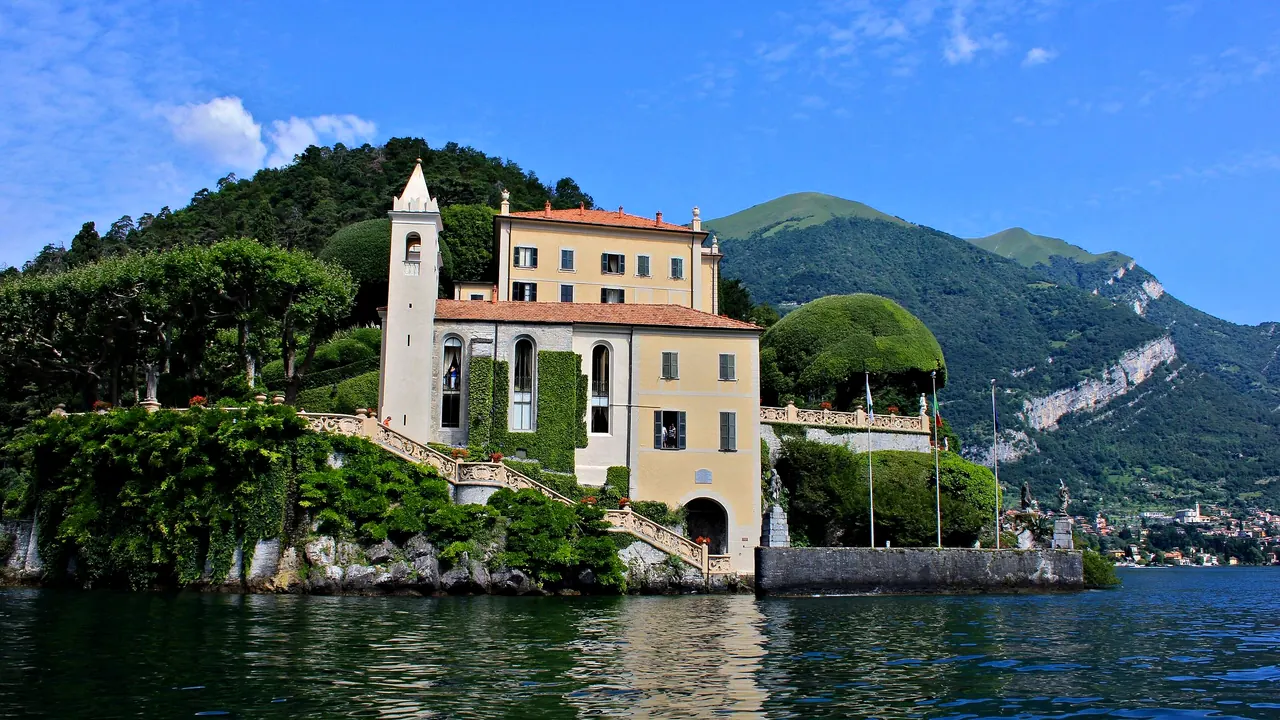
Photos: Lake Como by Navin75, CC BY-SA 2.0, cropped.
Corsica or Lake Como?
Our verdict in twelve categories, each scored against the same fixed benchmark cities, and the climate month by month, so you can choose for your trip.
Choose Corsica for
- beaches
- families
- nightlife
Choose Corsica for a summer of sea and mountains. Its southern coves and the Agriates are the real draw, with a wild granite interior behind them for hiking, canyoning and diving. It suits travellers happy to hire a car, accept slow roads and settle into one coast at a time, and families who want shallow, calm water close to the campsite or villa.
Choose Lake Como for
- day trips
- getting around
- shopping
Lake Como is the gentler, more polished choice. Here the scenery comes to you from a ferry deck, the villa gardens are a short boat ride apart, and Milan, Bergamo and Lugano are close enough for a day out. Couples and anyone wanting rest, a good spa and an easy time without a car will be happier on the lake than on the island's winding roads.
Scoreboard
Twelve categories on one fixed scale from 0 to 100. The shaded stretch is the gap between the two.
Your match
Pick a travel style or drag the sliders, and both match scores follow your weighting.
Too close to call, level with your weighting
Wins on beaches and families with your weighting.
Wins on day trips and getting around with your weighting.
What matters to you?
Category by category
What the scores mean for a trip.
Beaches & swimming
Corsica is a beach destination in the full sense, and Lake Como is not. The island has pale sand and turquoise water at Palombaggia, Santa Giulia and Rondinara in the far south, boat-access coves at Saleccia and Lotu in the Agriates, and the long bay at Calvi. The swimming season runs from early summer well into autumn.
On Lake Como, swimming means a lido at Bellagio, Lenno or Menaggio, a stone jetty, or the more open pebble shores around Domaso on the upper lake. The water is fresh, deep and colder below the surface, the season is mainly midsummer, and a swim there is a pleasant break between ferries rather than a day at the beach.
Food & drink
These two are close, and both cook mountain food. Corsica's is pork and sheep country: lonzu, coppa and figatellu, brocciu in everything from omelettes to fiadone, chestnut flour and wild boar, with grilled fish on the coast and serious wine from Patrimonio and Sartène.
Lake Como's signature is lake fish, perch in butter and sage on risotto or salted missoltini, with polenta and Valtellina cheese and Nebbiolo from the north. In both, the best meals are inland, in Corsican village inns or the crotti and hill trattorias above the lake, and the waterfront terraces are rarely the best places to eat.
Culture & sights
Neither has major museums, and their sights differ in kind. Corsica's heritage is military and spread out: Genoese citadels and watchtowers, Bonifacio on its white cliffs, Corte's upper town, Napoleon's Ajaccio with the Palais Fesch, and the standing stones of Filitosa. Seeing them is a road trip.
Lake Como's culture is villas and gardens, Villa Carlotta, Balbianello and Melzi among them, all within a short boat ride of each other. Como town adds a marble cathedral, Romanesque churches and Terragni's rationalist buildings, so you get more to see for less travelling.
Nightlife
Both are quiet places at night, but Corsica has a little more going on in high summer. In July and August, Porto-Vecchio has big open-air clubs in the hills and Calvi's beach and harbour bars stay busy late.
On Lake Como, the evening ends early in Bellagio, Varenna and Menaggio once the last ferry has gone, and Como town's wine and cocktail bars are about as lively as it gets. A real night out means taking the train to Milan.
Nature & outdoors
Both are spectacular, but Corsica is the wilder and more varied of the two. Its peaks rise above 2,700m straight from the sea, and the GR20 is one of Europe's great treks. Add the red rocks of Piana, Scandola's sea caves, the Bavella needles, canyoning rivers and diving off the Lavezzi islands, and you have mountains and sea in one trip.
Lake Como's scenery is gentler and closer at hand: wooded slopes falling into deep water, walks on the Sentiero del Viandante or the Greenway, and summits on the Grigna. Its own speciality is the afternoon breva wind, which makes the upper lake a serious spot for windsurfing and kitesurfing.
Day trips
Lake Como is much the better base for days out. Milan's Duomo and Last Supper, Bergamo's walled upper town and Lugano across the Swiss border are all about an hour away. On quiet days, a ferry hop between Bellagio, Varenna and Menaggio needs no planning at all.
From Corsica the options are other parts of the island, and its slow mountain roads keep each base to a few nearby outings: Sartène, the Balagne hill villages, Cap Corse. The one hop abroad is the short ferry from Bonifacio to northern Sardinia.
Good for families
Corsica works better for families, mainly because of its water. Sheltered bays like Santa Giulia are shallow and calm, family campsites and resort villages with pools line the east and south coasts, and river pools inland add variety. The long, winding drives are the main thing to avoid.
On Lake Como, children enjoy the ferries, the Brunate funicular and a lido, but steep stepped villages, narrow roads with no pavements and hotels aimed at couples make it harder work. The flatter upper lake near Domaso is the best base for families there. Neither has a zoo or a theme park.
Getting around
Lake Como is far easier to travel without a car. Ferries link Bellagio, Varenna, Menaggio and Cadenabbia in minutes, trains run up from Milan to Como and along the eastern shore, and a stay in the central triangle works well on foot and by boat. Driving is the part to avoid.
In Corsica, a car is close to essential. The roads are narrow and winding, slow in summer, and buses are infrequent. The scenic railway through Corte links Ajaccio, Bastia and Calvi but skips the southern beaches entirely.
Shopping & style
Lake Como has something specific to buy: Como's silk, sold as scarves, ties and fabric in town and at mill outlets, plus a decent mix of Italian fashion in the old centre and Milan close by for anything bigger.
Corsica's shopping is mostly edible: charcuterie, cheese, honey, chestnut flour and wine from the Ajaccio and Bastia markets. Add hand-forged knives and crafts from the Balagne villages, and that is about all there is.
Affordability
Both are expensive in summer, and saving money works differently in each. In Corsica, car hire and the ferry crossing add to high room prices on the southern and Calvi coasts. Campsites, inland villages and June or September are the way to cut costs.
On Lake Como, the grand villa hotels of Bellagio, Tremezzo and Cernobbio set the tone, but Como town and Lecco are cheaper places to stay, and the upper lake has campsites. Because ferries and trains are reasonably priced, you can skip the car entirely.
Live music & performing arts
Neither has much of a performing arts scene, but what each offers is different. Corsica's highlight is its polyphonic singing, unaccompanied voices heard in village churches, along with summer jazz in Calvi and guitar evenings among the Patrimonio vines.
Lake Como has a proper opera house, Como's Teatro Sociale, with its own season, and in summer there are classical concerts in villas and gardens. For a big night of opera, you go to Milan.
Wellness & relaxation
Lake Como is the more restful of the two. The villa hotels and resorts near Cernobbio and Tremezzo have serious spas, some with pools right on the water, and smaller villages away from Bellagio are very quiet once the day visitors leave.
Corsica slows you down in a different way, with siestas, long lunches and silent mountain villages. Formal spas are limited to a few upmarket hotels, and inland thermal springs such as Pietrapola are simple rather than grand.
When should you go?
Pick your month. The climate figures are measured averages, not a forecast.
Corsica in July
Lake Como in July
Daytime high, °C
Rainfall in the month, mm
Temperature and rainfall are climate normals, averaged over the years shown. Corsica: 1991-2020 normals, Ajaccio (5.1 km from centre). Lake Como: 1991-2020 normals, Lugano (22.8 km from centre).
On the Corsican coast, where most visitors stay, high summer runs from June to August. The days are hot, reaching about 29°C, with very little rain and long hours of sunshine. The sea is warm enough to swim from June into October and is warmest in August, at about 25°C. July and August are too hot for long walks at low altitude, so May, June and September are better for hiking and exploring the old towns. The rain returns in September and builds through the autumn to a peak in November of about 115mm. Winters are mild but greyer.
Around the central lake, the weather is cooler and much wetter. Summer days are warm rather than hot, but heavy rain falls from April right through to November. May is the wettest month, at about 178mm, so expect showers and storms on any stay, even in July. Winter is cold for walking around, with January highs near 7°C. Late spring and September give the best mix of mild weather and gardens at their best. Corsica's beach weather lasts several weeks longer at both ends of the summer.
Which traveller are you?
On a beach and sun trip, Corsica is the clear pick. Palombaggia, Rondinara and the Agriates have pale sand and clear sea, the water stays warm into October, and the dry summers mean little rain. Lake Como offers only lidos and jetties.
On a family trip with children, Corsica again works better. Shallow, sheltered bays like Santa Giulia, campsites with pools and river swimming inland keep children busy, whereas the lake's steep stepped villages and couple-oriented hotels make things harder with young children.
For a relaxing and wellness trip, Lake Como has the edge. Grand villa hotels have serious spas with pools on the water, ferries set an easy pace, and the villages go quiet in the evening. Corsica's calm comes from its pace, not its spas.
Before you go
| Measure | Corsica | Lake Como |
|---|---|---|
| Official language | French | Italian |
| Currency | Euro (EUR) | Euro (EUR) |
| Sockets | CE230 V, 50 Hz | CFL230 V, 50 Hz |
| Driving side | Right | Right |
| Time zone | UTC+1, UTC+2 in summer | UTC+1, UTC+2 in summer |
| Emergency number | 112 | 112 |
| Main airport | Ajaccio Napoléon Bonaparte airport (AJA)29 non-stop destinations | Milan Malpensa International Airport (MXP)208 non-stop destinations |
| Public holidays this year | 11 days | 13 days |
By the numbers
| Measure | Corsica | Lake Como |
|---|---|---|
| Population | 355,486 | - |
| People per km² | 41 | - |
| Swim season, months above 21 °C | 4 months | - |
Where else could you go?
Every comparison below shares a destination with this one, so you can follow Corsica or Lake Como somewhere new.
- Lake Gardavs Lake Como
- Sardiniavs Corsica
- Cinque Terrevs Lake Como
- Cinque Terrevs Corsica
- Lake Gardavs Corsica
- Caprivs Corsica