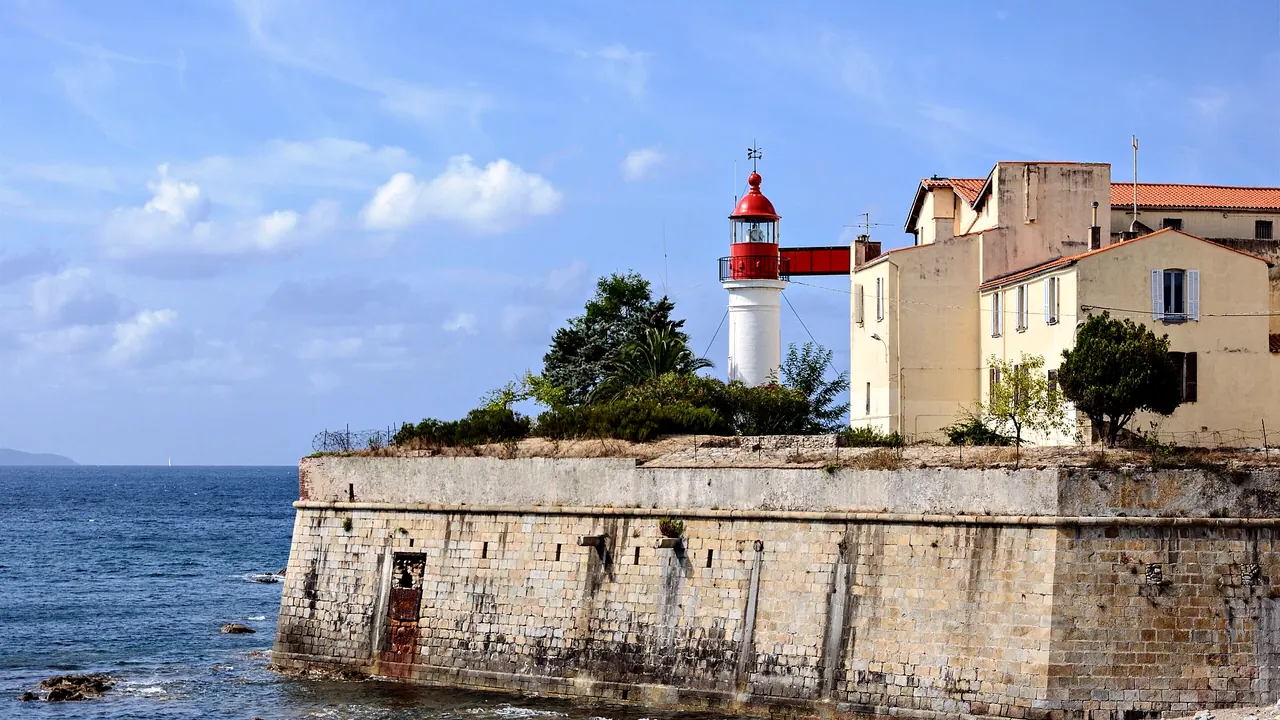
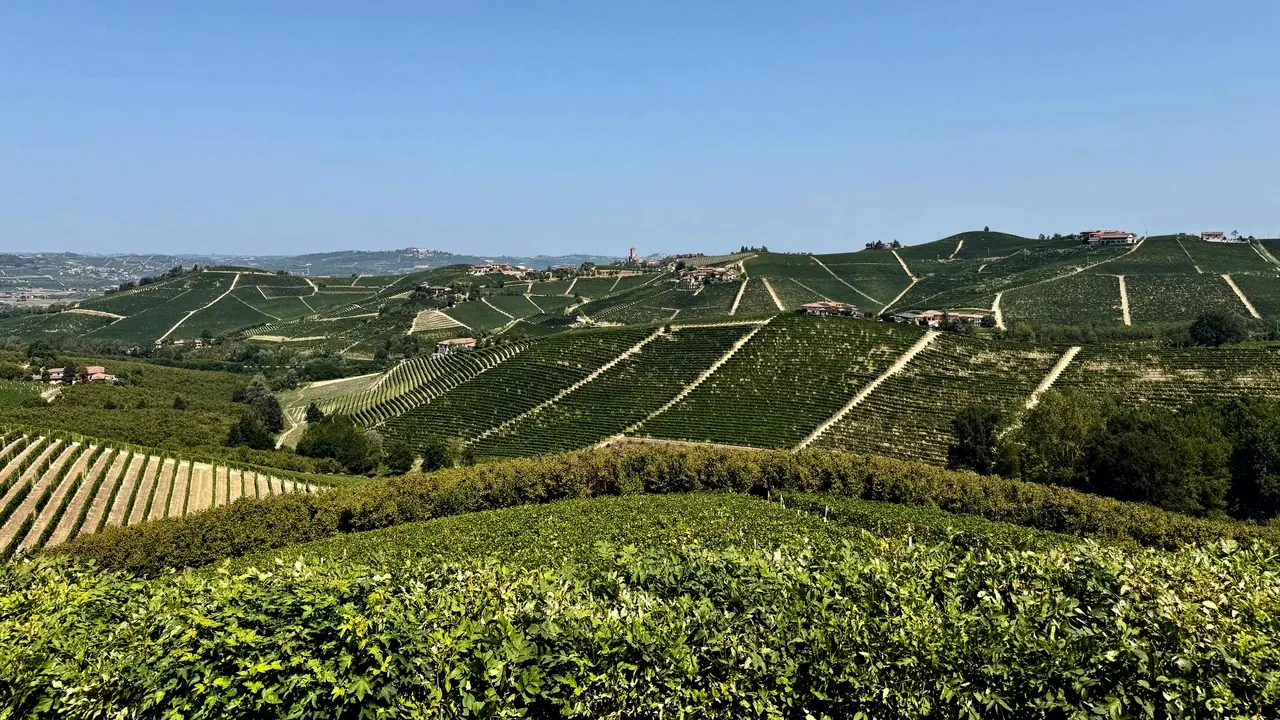
Photos: Corsica by Myrabella, CC BY-SA 3.0, cropped; Piedmont by Martina Amaro, Pexels License.
Corsica or Piedmont?
Our verdict in twelve categories, each scored against the same fixed benchmark cities, and the climate month by month, so you can choose for your trip.
Choose Corsica for
- beaches
- nature and the outdoors
Corsica is the pick for a summer of sea and mountains together: the pale-sand coves of the far south, the boat-access beaches of the Agriates, and granite peaks rising straight behind the shore. It suits travellers who will hire a car, settle near a good beach and accept resort prices in July and August. In return they get some of the finest swimming in the Mediterranean, with hiking, canyoning and diving close by.
Choose Piedmont for
- day trips
- shopping
- food and drink
For eating, drinking and sightseeing, Piedmont is the stronger trip. You have Barolo country and the truffle hills around Alba, and in Turin the Egyptian Museum, the royal palaces and a proper opera house. Trains run to Milan and the lakes. It is usually cheaper, and it works in more seasons, from autumn in the vineyards to winter on the Alpine slopes. Anyone who wants the sea should know that swimming here means lake swimming.
Scoreboard
Twelve categories on one fixed scale from 0 to 100. The shaded stretch is the gap between the two.
Your match
Pick a travel style or drag the sliders, and both match scores follow your weighting.
Wins on beaches and nature and the outdoors with your weighting.
Wins on day trips and shopping with your weighting.
What matters to you?
Category by category
What the scores mean for a trip.
Beaches & swimming
Corsica's beaches are a reason to cross the sea in themselves. In the south, Palombaggia, Santa Giulia and Rondinara have pale sand and turquoise water. In the north, Saleccia and Lotu in the Agriates are reached by boat or a long track, and the west has quieter granite coves.
Piedmont is landlocked, so it can only offer lake bathing: lidos and bathing platforms around Stresa and Baveno on Lake Maggiore, and grassy spots on Lake Orta. The lakes make a pleasant summer extra, with a shorter season than the Corsican sea, but nobody chooses Piedmont for them.
Food & drink
Piedmont is one of Italy's great food regions, and that is the difference here. The Langhe and Roero produce Barolo and Barbaresco, autumn brings white truffles, and there are dishes such as tajarin, agnolotti del plin and vitello tonnato. Turin adds bicerin, gianduiotti and a serious aperitivo habit.
Corsica eats well in a narrower, rustic way: lonzu and figatellu, brocciu in everything, wild boar and chestnut flour, with good wine from Patrimonio. The best of it is in inland village inns. Summer beach menus are often forgettable, which rarely happens in Piedmont.
Culture & sights
Piedmont has far more to see. Turin alone has the Egyptian Museum, the Baroque squares and arcades, and the Royal Palace and the UNESCO-listed Savoy residences such as Venaria Reale. Beyond the city are the Sacra di San Michele, the Sacri Monti chapels and the palaces on the Borromean Islands.
Corsica's sights are fewer and more scattered: Genoese citadels and watchtowers, Bonifacio on its white cliffs, Corte's upper town, Napoleon's birthplace in Ajaccio and the standing stones of Filitosa. They make good stops on a road trip, where the setting matters as much as the monument.
Nightlife
Neither is a destination for a big night out, but Piedmont has the livelier evenings. In Turin they run all year: aperitivo first, then the pavement bars of San Salvario and Vanchiglia, and the banks of the Po in summer.
Corsica's nights are seasonal and patchy. In July and August there are open-air clubs in the hills behind Porto-Vecchio and late harbour bars in Calvi. Outside those towns and those months, the island goes quiet soon after dinner.
Nature & outdoors
Both are superb for the outdoors, and Corsica has the edge because it puts mountains and sea side by side. The GR20 along the island's spine is a long, tough traverse for serious trekkers. Most visitors instead spend a morning on the paths above the Calanques de Piana or a stage of the Mare e Monti, then dive or kayak around Scandola or the Lavezzi islands, with canyoning in the forested rivers in between.
Piedmont's wild country is high Alpine and on a bigger scale: Monte Rosa's trails and refuges, the ibex of Gran Paradiso and the empty Val Grande. It also offers what Corsica does not, a major winter ski area in the Via Lattea, plus road cycling among the Langhe vineyards.
Day trips
Piedmont is the much better base for outings. Turin is about an hour from Milan by fast train and under two hours from Genoa. Within the region, Alba, the Barolo villages, Saluzzo and the Lake Maggiore boats fill several easy days.
On Corsica, slow mountain roads mean each base has its own handful of trips rather than the whole island within reach. Examples are Sartène or the ferry to Sardinia from the south, the Balagne villages from Calvi, and Cap Corse from Bastia.
Good for families
Both work about equally well for families, in different ways. Corsica is a beach-and-outdoors vacation: shallow, calm bays like Santa Giulia, campsites and resort villages with pools, river pools and boat trips to sea caves. The long, winding drives are the hard part.
Piedmont mixes city and countryside. Children can see the mummies and the Cinema Museum in Turin, ride the boats and visit the peacock gardens on Lake Maggiore, and join ski schools in winter. Neither has a major theme park.
Getting around
Piedmont is much easier without a car. Turin is flat, arcaded and served by trams and a metro, and regional trains reach Asti, Alba and Stresa, where boats take over on the lake. A car still helps in the Langhe and the Alpine valleys, but the roads there are pleasant to drive.
On Corsica, a car is close to essential. The scenic railway between Ajaccio, Corte, Bastia and Calvi misses the south entirely, buses are rare, and the narrow coastal roads crawl in summer.
Shopping & style
Shopping on Corsica means filling a larder: charcuterie, chestnut flour, island wine and hand-forged knives, bought at the morning markets of Ajaccio and Bastia and in the Balagne craft villages. Apart from a few summer boutiques in Porto-Vecchio and Calvi, there is little else.
Turin gives Piedmont a real shopping city on top of the edible souvenirs. There are Via Roma and Via Garibaldi, the huge Porta Palazzo market and the Saturday Balon flea market. Chocolates from historic confectioners, Barolo bought at the cellar door and cashmere from the Biella mills make for a far fuller bag to take home.
Affordability
Piedmont is the cheaper trip, and it stays fairly priced for Italy. Turin hotels, set lunches and generous aperitivo keep daily costs moderate. Prices only climb in truffle season in the Langhe, at the lakes in high summer and at the ski resorts.
Corsica is expensive exactly when most people want to go. Rooms in Porto-Vecchio, Bonifacio and Calvi cost a lot in July and August, and car hire and the ferry add more. Campsites, inland villages and June or September soften the bill.
Live music & performing arts
Piedmont has real stages, almost all of them in Turin: opera and ballet at the Teatro Regio, the RAI National Symphony Orchestra, and drama at the historic Teatro Carignano. In summer, the Stresa festival brings classical concerts to the lake.
Corsica's distinctive offer is polyphonic singing, unaccompanied male voices heard in village churches. Add jazz in Calvi and guitar evenings around Patrimonio in summer, and that is most of what there is.
Wellness & relaxation
Piedmont has true spa towns, which Corsica does not. At Acqui Terme, hot water rises at the Bollente in the middle of town, and there are mountain thermal baths at Valdieri and Vinadio. Langhe wine resorts with their own spas add to the choice.
Rest on Corsica comes from the pace: siestas, long lunches and silent mountain villages. Treatments are mostly limited to upmarket hotel spas and a few modest old springs such as Pietrapola.
When should you go?
Pick your month. The climate figures are measured averages, not a forecast.
Corsica in July
Piedmont in July
Daytime high, °C
Rainfall in the month, mm
Where the figures come from
Piedmont has no weather station within reach, so its figures come from a gridded climate model rather than a measured record, and read a broad area rather than one spot.
Temperature and rainfall are climate normals, averaged over the years shown. Corsica: 1991-2020 normals, Ajaccio (5.1 km from centre). Piedmont: 1991-2020 normals, TerraClimate 4 km grid at the town, no weather station within 90 km.
On the Corsican coast the sea is warm enough to swim from June to October, reaching about 25°C in August, and July is close to rainless at 9mm. Midsummer highs of around 29°C make long walks at low altitude hard work, so May, June and September suit hikers and sightseers best. Rain sets in from October and peaks in November at 115mm. Winters are mild but grey.
Where most visitors stay in Piedmont, summers are just as warm but winters are much colder, with January highs of about 9°C. That suits the ski resorts but not lingering in the streets. Rain comes in late spring and again in autumn, and November is the wettest month. May, June, September and October suit Turin and the wine hills best. Lake swimming runs from June to early September, with the warmest water in July and August, a shorter season than Corsica's sea.
Which traveller are you?
On a beach and sun trip, Corsica wins with no contest. Palombaggia, Santa Giulia and Rondinara offer white sand and clear sea that Piedmont's lake lidos and pebble shores on Maggiore cannot match, and the coast stays warm enough to swim well into October.
For a food-led trip, Piedmont is the clear choice. It has Barolo and Barbaresco at the cellar door, white truffles in the Langhe, the coffee houses and vermouth of Turin, and evening aperitivo before San Salvario's bars. Corsica's charcuterie and brocciu are good, but its menus are narrower and its nights quieter.
On a culture and arts trip, Piedmont gives far more to see and hear. Turin has the Egyptian Museum, the Savoy palaces and the Teatro Regio's opera season. Corsica offers citadels, Bonifacio's cliff-top old town and polyphonic singing in summer, but no comparable depth.
Before you go
| Measure | Corsica | Piedmont |
|---|---|---|
| Official language | French | Italian |
| Currency | Euro (EUR) | Euro (EUR) |
| Sockets | CE230 V, 50 Hz | CFL230 V, 50 Hz |
| Driving side | Right | Right |
| Time zone | UTC+1, UTC+2 in summer | UTC+1, UTC+2 in summer |
| Emergency number | 112 | 112 |
| Main airport | Ajaccio Napoléon Bonaparte airport (AJA)29 non-stop destinations | Turin Airport (TRN)65 non-stop destinations |
| Public holidays this year | 11 days | 13 days |
By the numbers
| Measure | Corsica | Piedmont |
|---|---|---|
| Population | 355,486 | 4,341,375 |
| People per km² | 41 | - |
| Swim season, months above 21 °C | 4 months | 4 months |
Where else could you go?
Every comparison below shares a destination with this one, so you can follow Corsica or Piedmont somewhere new.
- Sardiniavs Corsica
- Lake Maggiorevs Piedmont
- Cinque Terrevs Piedmont
- French Rivieravs Piedmont
- Elbavs Corsica
- French Alpsvs Piedmont