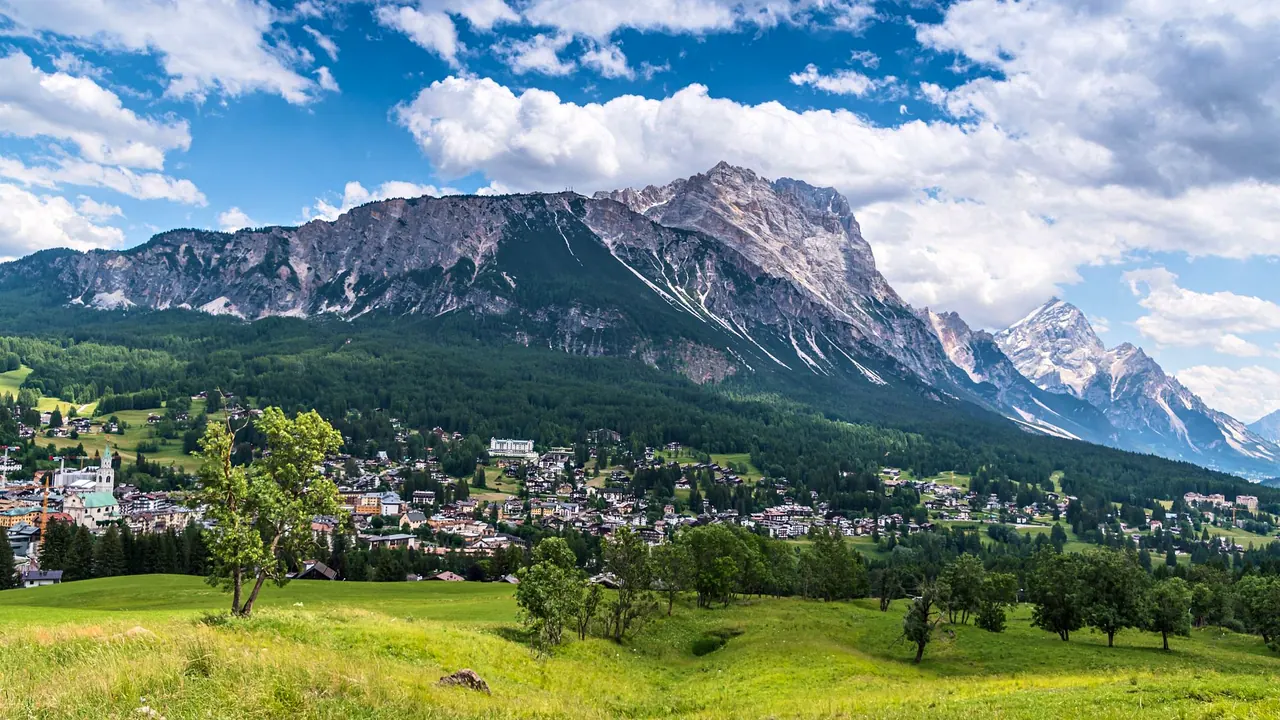
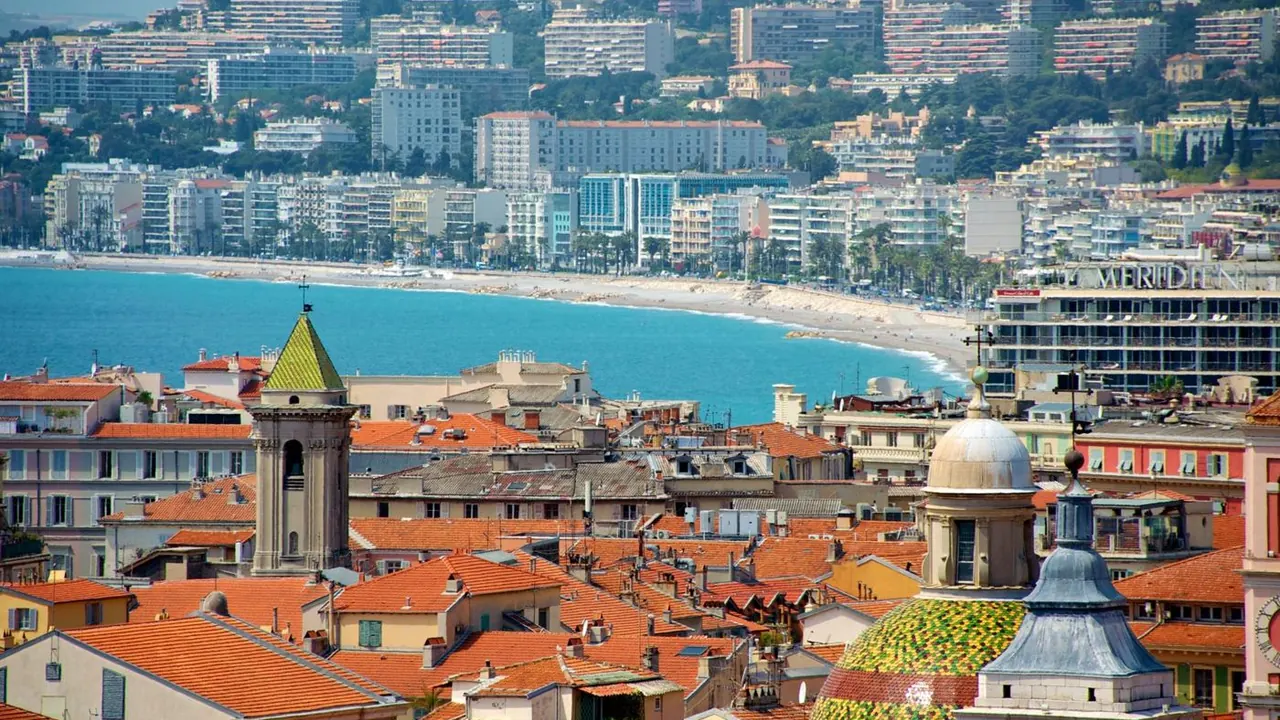
Photos: Cortina d'Ampezzo by Andreas Neubauer, Pexels License; Nice by Daniel Stockman, CC BY-SA 2.0, cropped.
Cortina d'Ampezzo or Nice?
Our verdict in twelve categories, each scored against the same fixed benchmark cities, and the climate month by month, so you can choose for your trip.
Choose Cortina d'Ampezzo for
- nature and the outdoors
- wellness
Cortina d'Ampezzo is for travellers who want the mountains to be the whole point of the trip. The Dolomites rise straight from the town, the lifts start at the edge of the centre, and in winter the valley plugs into one of the largest ski areas in the Alps. Hikers, climbers and skiers who are happy to trade museums, nightlife and easy public transport for that setting, and who can absorb resort prices, will find Nice no substitute.
Choose Nice for
- beaches
- culture and sights
- day trips
Nice suits a broader trip that mixes sea, art and towns. You get a long swimming shore, an old town with its own cooking, the Matisse and Chagall museums, and a coastline of day trips from Monaco to Antibes reached by train without a car. It costs less than Cortina, is easier to get around, and still puts real mountains within reach for a day.
Scoreboard
Twelve categories on one fixed scale from 0 to 100. The shaded stretch is the gap between the two.
Your match
Pick a travel style or drag the sliders, and both match scores follow your weighting.
Wins on nature and the outdoors and wellness with your weighting.
Wins on beaches and culture and sights with your weighting.
What matters to you?
Category by category
What the scores mean for a trip.
Beaches & swimming
There is no real contest. Cortina sits in a high valley over two hours from the Adriatic, and its alpine lakes such as Ghedina stay cold all summer, so swimming mostly means a hotel pool.
Nice has a 7km pebble shore right below the Promenade des Anglais, with clear water warm enough from June into October. Loungers or water shoes help on the stones, and for sand you can take a short train to Villefranche or Antibes.
Food & drink
Nice eats better and more cheaply. Its own Niçois cooking, from socca baked in wood ovens to pissaladière and stuffed vegetables, runs from the Cours Saleya market to modest family places in Vieux Nice, with the Bellet vineyards above the city.
Cortina's Ampezzan food, such as beetroot casunziei and polenta with game, is good and at its best on a rifugio terrace among the peaks. But the choice in the valley is narrow, with almost no street food and little that is cheap.
Culture & sights
Nice offers far more to see. Its Italianate old town, the Belle Époque villas of Cimiez, the Russian Orthodox Cathedral and an art line-up of Matisse, Chagall and Yves Klein can fill two or three days.
Cortina's centre, with its basilica bell tower, painted houses and 1956 Olympic ice stadium, plus the Rimoldi art collection, is enough for a rainy afternoon. Its most memorable history, the First World War tunnels on Lagazuoi, needs a full mountain day to reach.
Nightlife
Neither is a party town, but Nice has a proper evening scene. The lanes of Vieux Nice fill with wine bars, pubs and cocktail bars, and in summer the beach clubs keep the promenade busy late. Cortina's evenings mean après-ski, a stroll along the Corso Italia and a long dinner, with a few smart late bars only in the peak winter weeks.
Nature & outdoors
Both have serious outdoors, but Cortina is in another league. The Tofane, Cristallo and Cinque Torri ring the town, the Tre Cime and Lago di Misurina are under an hour away, and summer and winter alike revolve around the peaks, from hut-to-hut hiking to skiing the Sella Ronda.
Nice's strength is variety rather than drama: coastal paths on Cap Ferrat, cycling on the corniches, sailing and diving, the Esterel's red rocks, and the Mercantour about two hours inland. You can ski and see the sea on the same day, but the mountains are an outing, not the view from your window.
Day trips
Nice is one of the best bases for day trips anywhere on this coast. Monaco, Menton, Èze, Antibes, Cannes and Saint-Paul-de-Vence are mostly under an hour by train or bus, and the Italian Riviera at Sanremo is easy too.
From Cortina, most outings head into the mountains. South Tyrol towns such as San Candido and Brunico are pleasant, Bolzano and its Iceman are about two hours by road, and Venice is a long day by coach.
Good for families
Nice has a slight edge, mainly because it offers more beyond one activity. The Promenade du Paillon's playgrounds and water jets, Parc Phoenix and Monaco's Oceanographic Museum keep children busy, though the pebbles and the summer heat are drawbacks.
Cortina works well for families who ski or hike, with ski schools, the beginner slopes at Socrepes, public skating and gentle walks to huts. Rainy days are harder to fill, and costs climb quickly.
Getting around
Nice is much easier without a car. The centre is a flat half-hour walk end to end, a tram runs from the airport to the port, and regional trains cover the coast.
Cortina's centre is tiny and walkable, and ski buses serve the slopes in winter. But there has been no railway since 1964, arrival means a coach from Venice or a long drive, and buses to the passes are limited, so many visitors hire a car.
Shopping & style
Nice gives you more range: chain stores on Avenue Jean Médecin, luxury labels around rue Paradis, Provençal soaps and olive oil in Vieux Nice, and the Monday antiques market on the Cours Saleya. Cortina packs luxury fashion, furriers and ski wear into the one short Corso Italia, anchored by the Cooperativa di Cortina, polished but quickly done.
Affordability
Neither is cheap, but Nice is the more manageable of the two. Cheap trams and trains make day trips affordable, municipal museums cost little, and socca and market picnics keep meals down, especially in spring and late autumn.
Cortina is among the most expensive places to stay in Italy, with lift passes and equipment hire added to luxury-resort hotel prices. Rifugio meals and early summer rates help, but budget travellers often sleep in cheaper valleys and drive in.
Live music & performing arts
Nice has an actual season. The nineteenth-century Opéra de Nice stages opera, ballet and orchestral concerts, the Théâtre National puts on drama, and July brings the long-running jazz festival, with Carnival in February. Cortina has no theatre or regular venue, only summer chamber music festivals and the odd concert at New Year.
Wellness & relaxation
The two are about level, but they relax you in different ways. In Cortina it happens in the hotel spas, with saunas, hay baths and indoor pools after a day outdoors, and in the clear-air calm of June and September.
Nice offers thalassotherapy along the coast and a slow Riviera routine of an early swim, a long lunch and an evening walk by the bay. Both lose that calm in their peak weeks.
When should you go?
Pick your month. The climate figures are measured averages, not a forecast.
Cortina d'Ampezzo in July
Nice in July
Daytime high, °C
Rainfall in the month, mm
Temperature and rainfall are climate normals, averaged over the years shown. Cortina d'Ampezzo: 1991-2020 normals, Dobbiaco (22.5 km from centre). Nice: 1991-2020 normals, Nice (8 km from centre).
The two run to opposite rhythms. Cortina has two seasons: winter, when daytime highs hover around 0°C and the snow makes it a ski resort, and summer from June to September, when highs of about 22°C are ideal for hiking and the huts. Summer is also its wettest stretch, with July bringing around 130mm, so plan mountain days for the mornings. Spring and late autumn fall between the two and suit neither.
Nice is at its best from May to October. July and August reach about 28°C with very little rain and long sunny days, which is beach weather but hot for walking the streets at midday. The sea is warm enough from June and peaks around 25°C in August, staying swimmable into October. Autumn then turns wet, with October and November the rainiest months, while winter is mild and fine for sightseeing, though not for swimming.
Which traveller are you?
On an outdoors trip, choose Cortina. Lifts climb from town straight onto the peaks, the Alta Via 1 and some of the oldest via ferrata routes in the Alps start close by, and in winter the skiing begins at the edge of town.
For a beach and sun trip, Cortina means giving up the sea, so pick Nice. There each day can turn on the water: an early swim, a kayak or paddleboard on the bay, and the calmer coves at Paloma when the city shore fills.
On a culture and arts trip, Nice wins easily. Cortina's best is a Dolomite fossil museum and a drive to Messner's museum at Plan de Corones. Nice adds Roman Cemenelum and the Massena villa to its galleries, with Picasso at Antibes and the Fondation Maeght nearby.
Before you go
| Measure | Cortina d'Ampezzo | Nice |
|---|---|---|
| Official language | Italian | French |
| Currency | Euro (EUR) | Euro (EUR) |
| Sockets | CFL230 V, 50 Hz | CE230 V, 50 Hz |
| Driving side | Right | Right |
| Time zone | UTC+1, UTC+2 in summer | UTC+1, UTC+2 in summer |
| Emergency number | 112 | 112 |
| Elevation | 1,224 m | 0 m |
| Main airport | Venice Marco Polo Airport (VCE)116 km from centre103 non-stop destinations | Nice-Côte d'Azur Airport (NCE)6 km from centre130 non-stop destinations |
| Public holidays this year | 13 days | 11 days |
By the numbers
| Measure | Cortina d'Ampezzo | Nice |
|---|---|---|
| City population | 5,546 | 357,737 |
| People per km² | 22 | 4,975 |
| Museums within 10 km | 3 | 17 |
| UNESCO World Heritage sites within 50 km | 1 | 2 |
| Swim season, months above 21 °C | - | 4 months |
Where else could you go?
Every comparison below shares a destination with this one, so you can follow Cortina d'Ampezzo or Nice somewhere new.
- Monacovs Nice
- Antibesvs Nice
- Cannesvs Nice
- Saint-Tropezvs Nice
- Innsbruckvs Cortina d'Ampezzo
- Venicevs Cortina d'Ampezzo