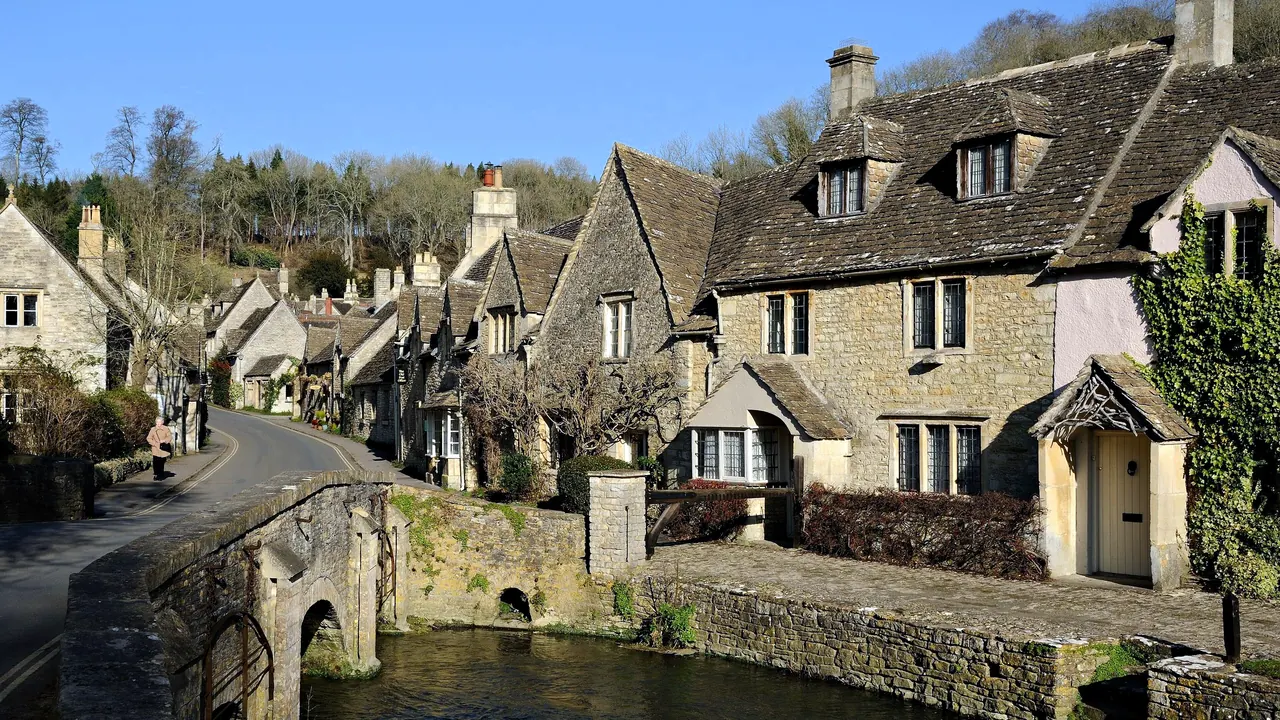
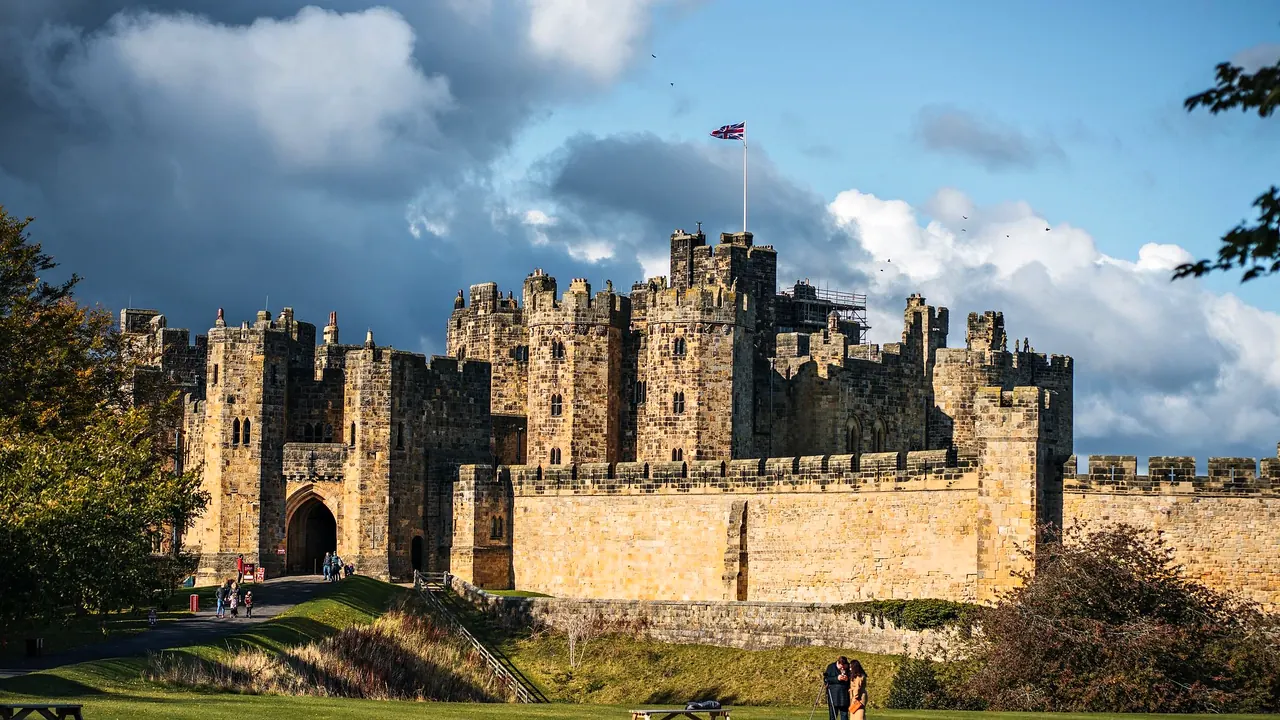
Photos: Cotswolds by Saffron Blaze, CC BY-SA 3.0, cropped; Northumberland by Clément Proust, Pexels License.
Cotswolds or Northumberland?
Our verdict in twelve categories, each scored against the same fixed benchmark cities, and the climate month by month, so you can choose for your trip.
Choose Cotswolds for
- shopping
- wellness
- live music and the arts
The Cotswolds suit travellers who want a comfortable, well-fed stay. Golden-stone villages, good country pubs, spa hotels and Cheltenham's festivals fill the days and evenings, and Oxford, Bath and Stratford are all close enough to visit. It is the softer and more polished choice, and it costs more.
Choose Northumberland for
- beaches
- nature and the outdoors
- prices
Northumberland is for people who would rather have space than polish. It has long empty beaches below castles, seabird colonies on the Farne Islands, the Cheviot Hills and the best stretch of Hadrian's Wall, and it is cheaper and quieter than the Cotswolds. In return there is less shopping, fewer spas and fewer good restaurants.
Scoreboard
Twelve categories on one fixed scale from 0 to 100. The shaded stretch is the gap between the two.
Your match
Pick a travel style or drag the sliders, and both match scores follow your weighting.
Wins on shopping and wellness with your weighting.
Wins on beaches and nature and the outdoors with your weighting.
What matters to you?
Category by category
What the scores mean for a trip.
Beaches & swimming
Only Northumberland has real beaches. The sands at Bamburgh, Embleton Bay and Druridge Bay are wide, backed by dunes and rarely crowded. The North Sea stays cold, though, so they are for walking, kite-flying and rockpooling, and only the hardiest swimmers go in.
The Cotswolds have no coast of their own. The Severn below the escarpment is mud and fast tides, and the nearest thing to a beach is the lake shore at the Water Park near Cirencester, where you can swim in open water in summer.
Food & drink
The Cotswolds eat better overall. Village pubs around Stow, Chipping Campden and the Coln valley cook to a high standard, the farmers' markets in Stroud and Cirencester are good, and Cheltenham adds fine dining and a wider choice of cooking.
Northumberland has the more distinctive local food: oak-smoked kippers from Craster, crab sandwiches in the harbour villages and oysters from Lindisfarne. There are fewer ambitious kitchens, though, and they close early, so a wider choice of restaurants means a trip into Newcastle.
Culture & sights
The two are evenly matched, but their history is different. In the Cotswolds, the villages themselves are the sight: wool-trade towns such as Chipping Campden and Burford, the great wool churches, and Blenheim Palace at Woodstock.
Northumberland's history is the history of a frontier. It has the castles at Bamburgh, Alnwick and Dunstanburgh, Roman forts along Hadrian's Wall, the Elizabethan walls of Berwick and the early Christian heritage of Holy Island. In both regions you drive from site to site.
Nightlife
Both regions are quiet by eleven, and evenings mean a pint by the fire. The difference is that the Cotswolds have a livelier town of their own, Cheltenham, with cocktail bars around the Promenade and Montpellier. In Northumberland, a big night out means taking the train into Newcastle, just beyond the county.
Nature & outdoors
Northumberland is far wilder and emptier. It has the open Cheviot Hills, the forest and dark skies of Kielder, seabird colonies and seal pups on the Farne Islands, and tidal flats full of waders on the way to Holy Island.
The Cotswolds are farmed, gentle country: dry-stone walls, beech woods and long views from the escarpment at Broadway Tower and Cleeve Hill. The Cotswold Way and the paths between villages make lovely walking, but none of it is dramatic.
Day trips
The Cotswolds have more on their doorstep. Oxford, Bath, Stratford-upon-Avon, Warwick Castle and Gloucester Cathedral are all within an hour or so, and some of them are on direct train lines.
Northumberland has strong options too, such as Edinburgh by train from Berwick, Durham Cathedral, Newcastle's quayside and Beamish. They are spread out at either end of a long county, though, so which ones are easy to reach depends on whether you stay in the north or the south.
Good for families
The two are equally good for children in different ways. The Cotswolds are about animals and small-scale fun: the Wildlife Park near Burford, the model village at Bourton, farm parks with spring lambing and the steam railway from Winchcombe. The busiest villages get crowded in summer.
Northumberland gives children more adventure: sandcastles on empty beaches, boat trips to see puffins, the race against the tide to Holy Island and broomstick lessons at Alnwick Castle. There is less to do indoors when it rains.
Getting around
Northumberland is a little easier to get around. Its two rail lines reach Alnwick, Berwick, Hexham and the Wall, and its roads are mostly empty. The one thing to plan around is the causeway to Holy Island, which is cut off at high tide.
You will want a car in the Cotswolds too, but the lanes are narrower and busier, and parking in Bourton, Bibury and Broadway is a summer headache. The railway stations sit on the edges of the region, and rural buses are thin.
Shopping & style
The Cotswolds are well ahead for shopping. Antique dealers fill Tetbury and Stow, Burford and Chipping Campden have galleries and homeware shops, and Cheltenham has Regency arcades and boutiques. Northumberland's shopping is mostly farm shops and small high streets in Hexham and Alnwick. Its one real draw is the vast second-hand bookshop in Alnwick's old railway station.
Affordability
Northumberland is noticeably cheaper. It is priced like the rest of rural England, inland towns such as Hexham cost less than the coast, and the beaches and much of Hadrian's Wall are free.
The Cotswolds charge a premium for their inns, manor hotels and stone cottages, and good pub meals add up. Sharing a cottage with a group, staying in a chain hotel in Cheltenham and picnicking from farm shops are the ways to keep costs down.
Live music & performing arts
The Cotswolds have much more on stage. Cheltenham has its Victorian Everyman Theatre and long-running festivals of jazz, classical music and literature, Longborough stages opera in summer, and the Royal Shakespeare Company is an easy evening trip to Stratford.
Northumberland's own tradition is folk music, with the Northumbrian smallpipes at pub sessions and small festivals. Beyond the modest arts centres in Hexham and Berwick, concerts and big shows mean going to Newcastle and Gateshead.
Wellness & relaxation
For pampering, the Cotswolds win easily. Spa breaks are a mainstay of the region's country-house hotels, and Bath's natural hot springs are close to the southern edge. Northumberland has only a few hotel spas. What it offers is the quiet of a cottage on an empty coast, which suits rest more than treatments.
When should you go?
Pick your month. The climate figures are measured averages, not a forecast.
Cotswolds in July
Northumberland in July
Daytime high, °C
Rainfall in the month, mm
Where the figures come from
Cotswolds has no rain gauge within 25 km of the centre, so its rainfall comes from a gridded climate dataset read at the destination rather than from a gauge further away.
Cotswolds's sunshine is measured 46 km from the centre, at Lyneham.
Northumberland has no rain gauge within 25 km of the centre, so its rainfall comes from a gridded climate dataset read at the destination rather than from a gauge further away.
Temperature and rainfall are climate normals, averaged over the years shown. Cotswolds: 1961-1990 (sunshine 1991-2020, rainfall 1991-2020) normals, Fairford Royal Air Force Base (22.5 km from centre). Northumberland: 1991-2020 normals, Boulmer (7 km from centre).
Both regions are at their best from May to September, but the Cotswolds are warmer. July afternoons reach about 22°C inland on the wolds. On the Northumberland coast they stay nearer 18°C, with a cooling wind off the water. The North Sea warms only to about 15°C in August, so even at the height of summer most people paddle and walk rather than swim. In the Cotswolds, late spring and early summer are also the sunniest stretch, and April and May are among the driest months, which makes them good for walking between villages.
The two follow the same pattern in rain. August is a damp month in both, and the wettest stretch comes from October to December, with around 85mm a month. Winters are cold and grey in both, though the Cotswolds dip slightly lower, to about 5°C in January. The short days with little sun suit pub fires and cottage stays more than long walks.
Which traveller are you?
On an outdoors trip, Northumberland is the clear choice. You can walk the Cheviots, follow the coast path past castles, take a boat out to the puffins and seals of the Farnes, and look at the dark skies over Kielder. The Cotswold hills are pleasant but much tamer.
For a relaxing and wellness trip, pick the Cotswolds. Country-house hotels with proper spas are spread across the region, and Bath's thermal rooftop pool is close to the southern wolds. Northumberland is very quiet, but it offers little in the way of treatments.
On a tight budget, Northumberland goes further. Inland bases such as Hexham and the Tyne Valley are fairly priced, and the beaches and much of the Wall cost nothing. Cotswold inns and cottages are among the dearest in rural England.
Before you go
| Measure | Cotswolds | Northumberland |
|---|---|---|
| Official language | English | English |
| Currency | Pound Sterling (GBP) | Pound Sterling (GBP) |
| Sockets | G230 V, 50 Hz | G230 V, 50 Hz |
| Driving side | Left | Left |
| Time zone | UTC, UTC+1 in summer | UTC, UTC+1 in summer |
| Emergency number | 112 or 999 | 112 or 999 |
| Main airport | Bristol Airport (BRS)117 non-stop destinations | Newcastle International Airport (NCL)80 non-stop destinations |
| Public holidays this year | 8 days | 8 days |
By the numbers
| Measure | Cotswolds | Northumberland |
|---|---|---|
| Population | - | 323,820 |
| People per km² | - | 65 |
| Swim season, months above 21 °C | - | None |
Where else could you go?
Every comparison below shares a destination with this one, so you can follow Cotswolds or Northumberland somewhere new.
- Edinburghvs Northumberland
- Isle of Wightvs Cotswolds
- Lake Districtvs Northumberland
- Peak Districtvs Cotswolds
- Jurassic Coastvs Cotswolds
- Yorkshire Dalesvs Northumberland