Photos: Cotswolds by Saffron Blaze, CC BY-SA 3.0, cropped; Isle of Wight by Michael Coppins, CC BY-SA 4.0, cropped.
Cotswolds or Isle of Wight?
Our verdict in twelve categories, each scored against the same fixed benchmark cities, and the climate month by month, so you can choose for your trip.
Choose Cotswolds for
- day trips
- shopping
- wellness
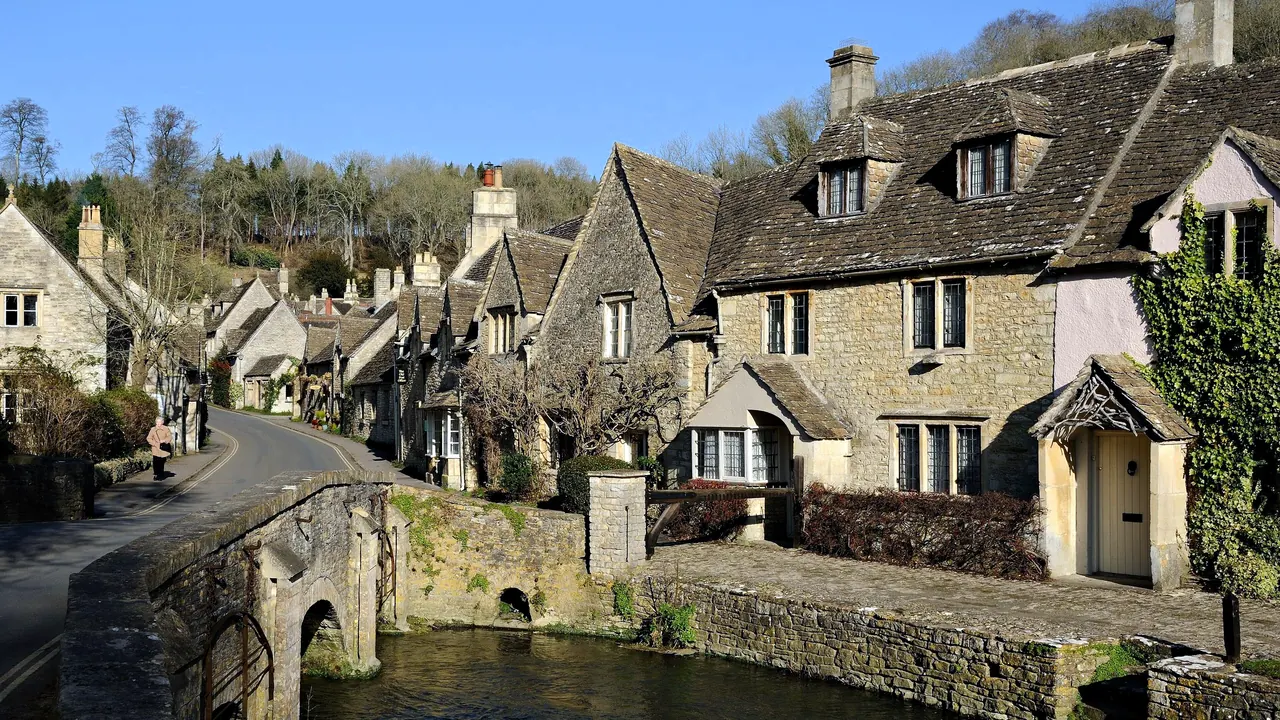
The Cotswolds suit a slow inland trip built around honey-stone villages, wool churches and good country pubs, with a car to link them. They are the better choice for couples and older travellers who want history, a spa hotel, antique shops and evenings at Cheltenham's festivals or the theatres in Stratford. Oxford, Bath and Stratford are all close enough to fill spare days. There is no sea, though, and staying here is expensive.
Choose Isle of Wight for
- beaches
- getting around
- prices
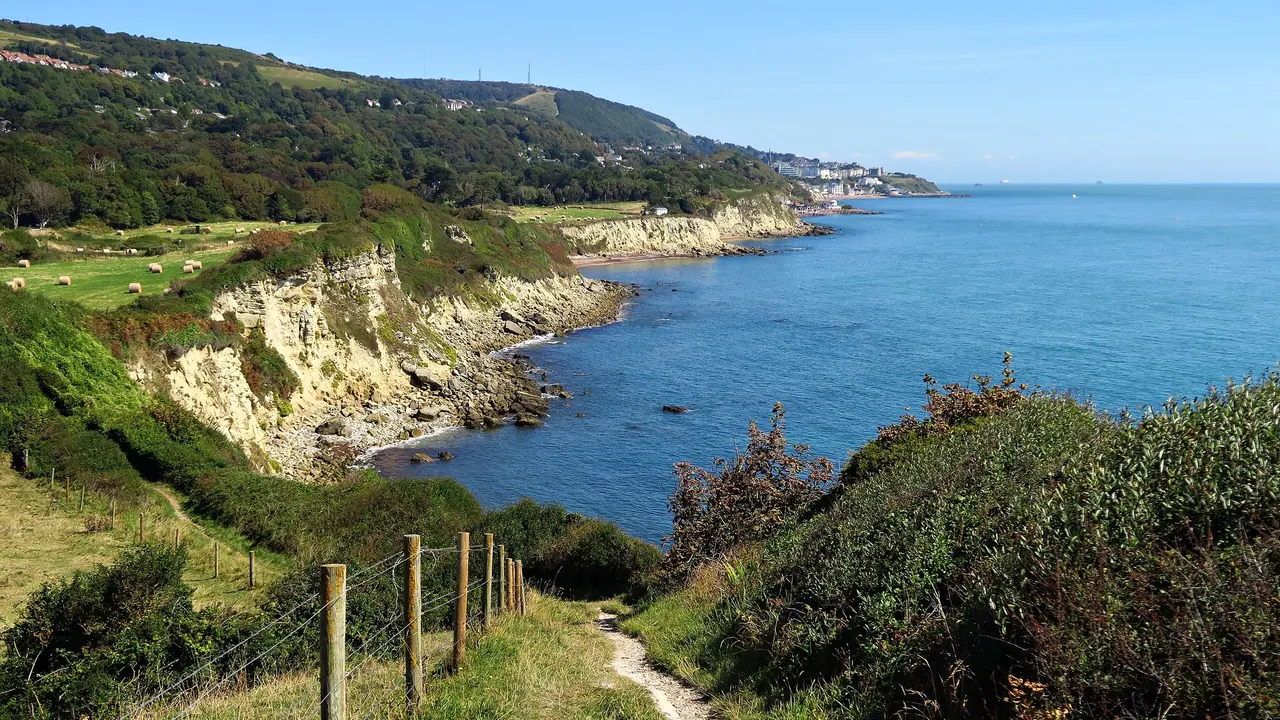
Families and anyone who wants the seaside should pick the Isle of Wight. It has sandy bays that shelve gently, attractions built for children, a coast path round chalk cliffs and the Needles, and buses and a little railway that let you manage without a car. In return you get fewer great sights, simpler food and very little to shop for. Every trip off the island means a ferry crossing.
Scoreboard
Twelve categories on one fixed scale from 0 to 100. The shaded stretch is the gap between the two.
Your match
Pick a travel style or drag the sliders, and both match scores follow your weighting.
Wins on day trips and shopping with your weighting.
Wins on beaches and getting around with your weighting.
What matters to you?
Category by category
What the scores mean for a trip.
Beaches & swimming
If the beach matters, this one is easy. The Cotswolds are inland, and the Severn Estuary below the escarpment is mudflat and fierce tide, a place for walking rather than swimming. The only sand is the lake beach at the Cotswold Water Park.
The Isle of Wight was built around its beaches. Sandown and Shanklin share a long, sheltered sandy bay where small children can paddle safely, and Compton Bay in the west is wilder, with surf. The sea stays cool even in late summer, so this is a bucket-and-spade coast rather than a place for long swims.
Food & drink
The Cotswolds eat noticeably better. Their stone inns around Stow, Chipping Campden and the Coln valley cook local lamb, game and cheeses to a high standard, and Cheltenham adds fine dining.
On the Isle of Wight, the best meal is often the simplest: crab or lobster in a harbour pub at Bembridge or Ventnor, or garlic and tomatoes from island growers. Beyond that it is mostly fish and chips and pub lunches, with only a few ambitious kitchens around Cowes and Ventnor.
Culture & sights
In the Cotswolds the sights are woven into the landscape. Chipping Campden, Burford and Northleach are wool-trade towns with some of England's finest parish churches, and Blenheim Palace, Sudeley Castle and the gardens at Hidcote fill the gaps between them.
The Isle of Wight has one sight of national standing, Queen Victoria's Osborne House, and the Norman castle at Carisbrooke. After those come smaller visits such as Brading's Roman mosaics, Tennyson's Farringford and the Needles Old Battery. Each is a pleasant half day, but the list runs out sooner.
Nightlife
Neither place is for going out, and both villages and island towns are quiet by eleven. The difference is where the exceptions lie. In the Cotswolds, Cheltenham has cocktail bars and late venues around the Promenade and Montpellier, which fill up on race days.
On the Isle of Wight there are a few late bars and small clubs in Newport and Ryde. Its one lively stretch is Cowes during the August regatta, when sailing crews take over the waterfront.
Nature & outdoors
Both are gentle, well-walked country with no real hills or wilderness, but one is inland and the other is coast. The Cotswolds offer rolling wolds, beech woods and the western escarpment, where the Cotswold Way looks out over the Severn Vale to Wales. Spring brings bluebells and wild garlic.
On the Isle of Wight, the drama comes from the sea. You can walk Tennyson Down to the Needles, explore the landslipped woods of the Undercliff or follow a coast path all the way round the island. The Solent also brings sailing, kayaking and paddleboarding, and the woods hold red squirrels.
Day trips
The Cotswolds have some of the best day trips in England, and none of them needs a crossing. Oxford's colleges, Bath's Roman baths and crescents, Stratford's Shakespeare houses and Warwick Castle are all within about an hour, along with the cathedrals at Gloucester, Worcester and Wells.
The Isle of Wight's outings are good but take more effort. The fast ferry to Portsmouth's Historic Dockyard and HMS Victory is quick, and Lymington leads to the New Forest and Beaulieu. Each trip off the island has to be planned around the boats, so many visitors spend their spare days hopping between Cowes, Yarmouth and Ventnor instead.
Good for families
Families have an easier time on the Isle of Wight. The sands shelve gently, distances are short, and Blackgang Chine, Robin Hill, the zoo at Sandown and fossil hunts on the south-west beaches are all made for children.
The Cotswolds make a pleasant, calmer alternative, with the wildlife park near Burford, Bourton's model village and shallow river, and lambing at the farm parks. But every outing is a car journey, and the busiest villages are crowded in summer.
Getting around
In the Cotswolds a car is close to essential. The villages are near each other but linked by narrow lanes. Rural buses from Moreton-in-Marsh, Kingham or Kemble are thin, especially on Sundays, and finding a parking space in Bourton or Bibury in summer is hard work.
The Isle of Wight is easier to manage without a car. It is only about 37km across, buses reach every town, and the little railway from Ryde Pier serves the east-coast resorts. Foot-passenger ferries land right in Ryde and Cowes, although a car still helps for the remote south-west.
Shopping & style
The Cotswolds are a real shopping destination for antiques and country interiors, with dealers filling Tetbury and Stow-on-the-Wold, galleries in Burford and Chipping Campden, and Regency arcades in Cheltenham.
The Isle of Wight offers little more than Newport's everyday high street, the sailing chandlers of Cowes, a few glassblowers and potters, and jars of coloured Alum Bay sand.
Affordability
Neither is cheap, but the Cotswolds are dearer. Their manor-house hotels, characterful inns and cottage rentals cost well above most of rural England, and the gardens, stately homes and wildlife park each charge a full admission.
The Isle of Wight still charges full seaside prices in July and August, and taking a car on the ferry adds a lot. A foot-passenger crossing with the island's buses keeps costs down, caravan parks give families a cheaper base, and spring and early autumn are much easier on the budget.
Live music & performing arts
The Cotswolds have more to plan an evening around. Cheltenham has its Victorian Everyman Theatre and long-running jazz, classical and literature festivals, Longborough stages opera in a barn in summer, and the Royal Shakespeare Company is about half an hour from the northern villages.
The Isle of Wight's big moment is the June festival outside Newport, a rock and pop weekend descended from the famous line-ups of the late 1960s. Beyond that there is a small theatre in Shanklin, an arts centre on Newport's quay and covers bands in the pubs.
Wellness & relaxation
For proper pampering, the Cotswolds are far ahead. Spa breaks are central to the country-house hotels here, with pools and saunas in converted barns, and Bath's rooftop thermal pool, fed by Britain's only natural hot springs, is close to the southern wolds.
The Isle of Wight's calm is plainer. Ventnor still has the quiet of the Victorian health resort it was built as, and you can sit on clifftop benches above the sea or have tea in the gardens at Quarr Abbey. Spa treatments are limited to a few small hotel spas and treatment rooms.
When should you go?
Pick your month. The climate figures are measured averages, not a forecast.
Cotswolds in July
Isle of Wight in July
Daytime high, °C
Rainfall in the month, mm
Where the figures come from
Cotswolds has no rain gauge within 25 km of the centre, so its rainfall comes from a gridded climate dataset read at the destination rather than from a gauge further away.
Cotswolds's sunshine is measured 46 km from the centre, at Lyneham.
Isle of Wight's temperatures are measured 39 km from the centre, at Bournemouth Airport.
Isle of Wight has no rain gauge within 25 km of the centre, so its rainfall comes from a gridded climate dataset read at the destination rather than from a gauge further away.
Temperature and rainfall are climate normals, averaged over the years shown. Cotswolds: 1961-1990 (sunshine 1991-2020, rainfall 1991-2020) normals, Fairford Royal Air Force Base (22.5 km from centre). Isle of Wight: 1991-2020 normals, Bournemouth Airport (38.9 km from centre).
Both are at their best from late May to September. Neither gets hot: summer afternoons reach about 22°C in the wolds and on the island alike. The Isle of Wight has the only real beach season. Around the resort coast the Channel only reaches 18°C in August, so July to September is the time for swimming, and even then most people paddle. Island summers are also the drier and sunnier of the two. In the Cotswolds, by contrast, rain stays steady through July and August, so pack for showers on walks.
In winter the island is the milder place, while the high wolds can feel raw at around 5°C in January. Mild doesn't mean dry, though. October to December is the island's wettest stretch, at up to 116mm a month, and wind on the cliffs makes it worse. Late autumn is wet in the Cotswolds too, but the fire in a village pub and the beech woods turning around Stroud make October a good month for a short stay. The island is at its weakest from November to February.
Which traveller are you?
On a beach and sun trip, choose the Isle of Wight. Sandown Bay and Ryde have broad, gently shelving sand, and Compton Bay has surf under coloured cliffs. The nearest the Cotswolds get to a beach is a lake shore at the Water Park.
For a culture and arts trip, the Cotswolds give far more. There are the wool-trade villages and their great churches, Blenheim Palace and the Roman villa at Chedworth. Add Cheltenham's music and literature festivals, and Oxford and Bath an hour or less away.
On a relaxing and wellness trip, the Cotswolds are the better choice. Country-house hotels have proper spas with pools and saunas, and Bath's natural hot springs are close by. The island offers sea air and quiet clifftop benches, but almost no treatments.
Before you go
| Measure | Cotswolds | Isle of Wight |
|---|---|---|
| Official language | English | English |
| Currency | Pound Sterling (GBP) | Pound Sterling (GBP) |
| Sockets | G230 V, 50 Hz | G230 V, 50 Hz |
| Driving side | Left | Left |
| Time zone | UTC, UTC+1 in summer | UTC, UTC+1 in summer |
| Emergency number | 112 or 999 | 112 or 999 |
| Main airport | Bristol Airport (BRS)117 non-stop destinations | Southampton Airport (SOU)15 non-stop destinations |
| Public holidays this year | 8 days | 8 days |
By the numbers
| Measure | Cotswolds | Isle of Wight |
|---|---|---|
| Population | - | 140,459 |
| People per km² | - | 369 |
| Swim season, months above 21 °C | - | None |
Where else could you go?
Every comparison below shares a destination with this one, so you can follow Cotswolds or Isle of Wight somewhere new.
- Peak Districtvs Cotswolds
- Devonvs Isle of Wight
- Normandyvs Isle of Wight
- Snowdoniavs Cotswolds
- Devonvs Cotswolds
- Yorkshire Dalesvs Cotswolds