United Kingdom
Isle of Wight
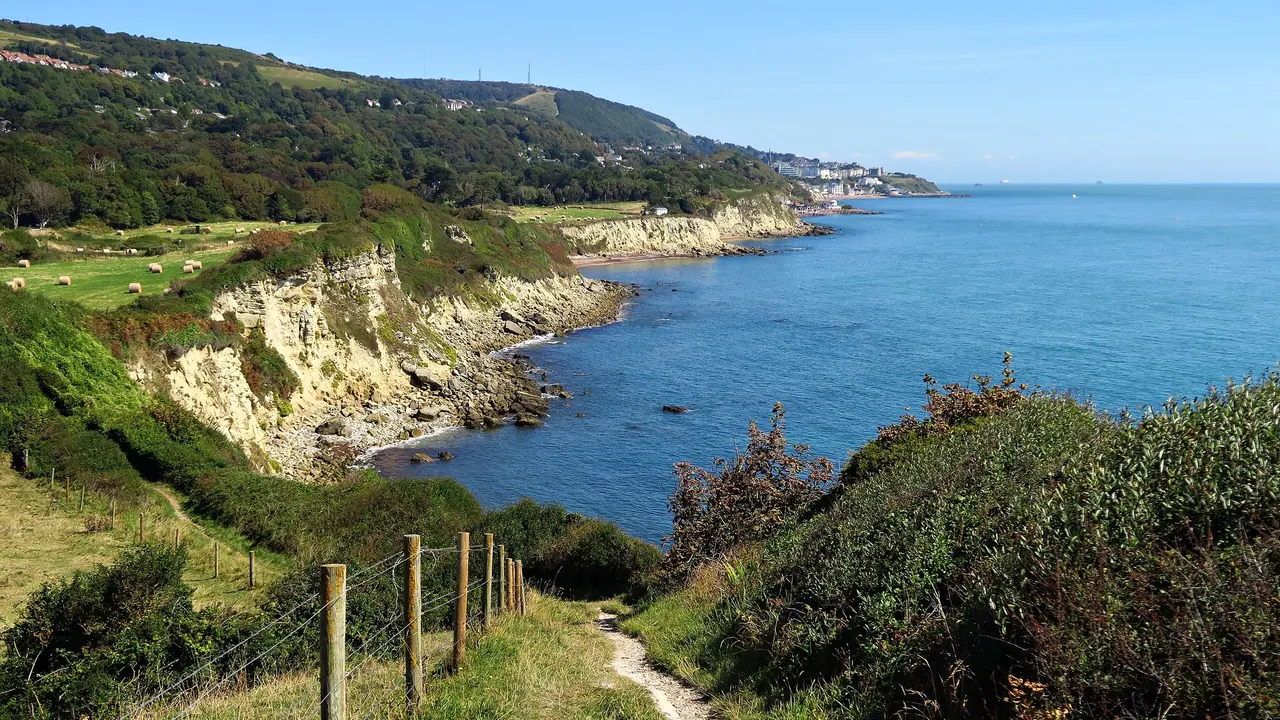
The coast path near St Lawrence on the south coast
- Families68
- Nature & outdoors62
- Getting around58
Photo: Michael Coppins, CC BY-SA 4.0, cropped
Match
42
Every category weighted equally
- Beach & sun43
- Culture & arts41
- Food & nightlife36
- Family trip49
- Outdoors48
- Relax & unwind44
- Shopping & style39
- On a budget42
Isle of Wight in twelve categories
Our verdict on each, scored 0 to 100 against the same fixed benchmark cities, so a score means the same thing on every page.
Beaches & swimming. Scores 45 out of 100.
Food & drink. Scores 38 out of 100.
Culture & sights. Scores 45 out of 100.
Nightlife. Scores 15 out of 100.
Nature & outdoors. Scores 62 out of 100.
Day trips. Scores 55 out of 100.
Good for families. Scores 68 out of 100.
Getting around. Scores 58 out of 100.
Shopping & style. Scores 22 out of 100.
Affordability. Scores 38 out of 100.
Live music & performing arts. Scores 28 out of 100.
Wellness & relaxation. Scores 35 out of 100.
Isle of Wight category by category
Beaches & swimming
45Beaches are what the island's resort towns were built around. On the east coast, Sandown Bay curves for miles past Sandown and Shanklin. It is sheltered, sandy and shelves gently, and it suits buckets, spades and paddling. Ryde has broad flat sands that run far out at low tide. In the south, Ventnor has a small beach under its terraced Victorian town, and Steephill Cove is a tiny inlet you reach only on foot. In the west, Compton Bay is wide and wild, with surf and red and white cliffs, while Colwell Bay faces the calm Solent.
This is still the English Channel. The sea reaches about 17-18°C in late summer, so swimming really belongs to July to September. Even then, many visitors paddle more than they swim. A grey day can empty the sand quickly.
Food & drink
38Island cooking is mostly good produce and simple cooking. Crab and lobster landed along the south and east coasts go into sandwiches and salads in harbour pubs at Bembridge, Ventnor and Yarmouth. The island also grows garlic and glasshouse tomatoes, and it has a few small vineyards, a local cheese and its own ales. Farm shops and markets make picnics easy. Elsewhere, food means fish and chips on the seafront, cream teas in thatched villages such as Godshill, and pub lunches after a walk on the downs. A handful of ambitious restaurants cluster around Cowes and Ventnor, but nobody crosses the Solent to eat.
Culture & sights
45The best-known sight is Osborne House near East Cowes, Queen Victoria's Italianate seaside home. Its state rooms are richly furnished, the terraced gardens run down to her private beach, and it is the island's one sight of national standing. Carisbrooke Castle, on a hill above Newport, is a well-kept Norman fortress where Charles I was held prisoner.
Beyond those, there is a scattered set of smaller places: Brading Roman Villa with its mosaics, the Victorian Needles Old Battery on its headland, and Yarmouth's Tudor castle. Literary visitors can see Tennyson's Farringford and Julia Margaret Cameron's house at Freshwater, and the island's dinosaur fossils are on show at Sandown. Each makes a good half day, but together they are a modest list.
Nightlife
15Evenings revolve around the pub. There are old inns in the villages, harbour pubs in Cowes and Yarmouth, and a few late bars and a small club or two in Newport and Ryde. Cowes livens up during its sailing regatta week in August, when the waterfront fills with crews and parties. The rest of the year, most of the island is quiet by eleven, and it is not a place to choose for going out.
Nature & outdoors
62Much of the island is protected countryside: rolling chalk downs, a patchwork of farmland, and a coast that changes every few miles. The best walking is in the west. Tennyson Down runs along a narrow ridge to the Needles, three chalk stacks standing in the sea, and Alum Bay's cliffs show bands of coloured sand. In the south, the Undercliff is a tangled, landslipped shelf of woodland and old ponds. A coastal path of about 110km goes all the way round, and a network of bridleways and quiet lanes makes the island good for cycling.
On the water, the Solent is one of the world's great sailing grounds. Cowes has been its centre for two centuries, and dinghy schools, kayaking and paddleboarding are easy to find. The island is also a refuge for red squirrels, which you can see in woods such as those around Newtown Creek. The scale is gentle, though: there are no real hills or wilderness here.
Day trips
55There are two kinds of outing. On the island itself, you can spend a day in a different small town: Cowes for its sailing waterfront, Yarmouth for its harbour and castle, Ventnor for its Victorian terraces, and thatched Godshill. Since the island is small, it is easy to see several of them.
Across the Solent, the best mainland trip is Portsmouth. The fast foot ferry from Ryde takes well under half an hour, and the Historic Dockyard holds HMS Victory, the Mary Rose and the waterfront of Old Portsmouth. The ferry from Yarmouth crosses to Lymington, close to the New Forest villages, the motor museum at Beaulieu and the shipbuilding hamlet of Buckler's Hard. From Cowes, ferries cross to Southampton, and Winchester and its cathedral are about a quarter of an hour further on by train. Every mainland trip starts with a crossing, so a day out there takes some planning.
Good for families
68For generations, the island has been a classic British family seaside vacation, and it is still set up for one. The sands of Sandown Bay are gentle and shelve slowly, and many attractions are made for children. Blackgang Chine, on the southern cliffs, is one of the oldest amusement parks in the country and themed around smugglers, dinosaurs and fairy tales. Robin Hill has woodland adventure play. There is a tiger and lemur zoo at Sandown, a steam railway, and plenty of dinosaur fossils: children can join fossil hunts on the beaches of the south-west coast. At the Needles, a chairlift drops down to Alum Bay.
Nothing is far away, roads and villages feel safe, and the caravan parks and cottages are set up for families. The limits are the weather, a cool sea, and attractions that are charming rather than large.
Getting around
58The island is small: about 37km from end to end, so no drive is long. The bus network is unusually good for rural England. It links every town, and open-top buses run over the downs to the Needles in summer. A short electric railway runs from Ryde Pier down the east coast to Shanklin, so the resort towns are easy without a car. A car still helps for remote beaches, walking trailheads and the scattered sights in the south-west. Bear in mind that the lanes are narrow and winding, and they get busy in August. Arrival is always by ferry. The car ferries are slower, while the foot-passenger crossings to Ryde and Cowes are quick and land right in town.
Shopping & style
22Shopping is low-key. Newport has the island's main high street, which is everyday rather than special. Cowes has sailing chandlers and nautical clothing shops along its narrow High Street. Around the island, there are glassblowers and potters, craft studios in Ventnor and Yarmouth, and farm shops selling garlic, chutneys and local cheese. Sticks of rock and coloured Alum Bay sand fill the souvenir shelves. Nobody visits to shop.
Affordability
38In summer, the island is moderately expensive. Self-catering cottages, B&Bs and seaside hotels charge full English high-season prices in July and August, and the best coastal places book up early. The ferry adds a large cost, especially with a car. A foot-passenger crossing combined with the island's buses costs much less. Caravan parks, pub meals and picnics from farm shops keep a family budget under control. Spring and early autumn are much cheaper than the school summer break.
Live music & performing arts
28Music on the island is best known for the Isle of Wight Festival. It began in the late 1960s and became famous for its legendary early line-ups, and today it brings a big rock and pop weekend to the fields outside Newport each June. Ventnor holds a small arts fringe in summer. The rest of the year is modest: a Victorian theatre in Shanklin for touring shows and pantomime, an arts centre on the quay in Newport, and folk and covers bands in the pubs. Unless your trip coincides with the festival, there is little to plan an evening around.
Wellness & relaxation
35There are no thermal baths, hammams or bathing traditions here, and spa options are limited to a few hotels and small treatment rooms. The island's real appeal for rest is its pace. The villages are quiet and the clifftop benches look out to sea. Ventnor was built as a Victorian health resort because of its mild, sheltered climate, and it keeps that convalescent calm. The monks at Quarr Abbey welcome visitors to their gardens and tea room. Visitors who want to unwind come for the slow rhythm and the sea air, not for treatments.
Where to stay in Isle of Wight
For a first visit, most people base themselves on the east coast. Sandown and Shanklin share the long, sheltered sands of Sandown Bay. The zoo and the dinosaur fossils are close by, and the electric railway from Ryde Pier means you can arrive on the foot ferry and manage without a car. It is the obvious choice for families and beach days. Ryde itself suits travellers who want quick crossings to Portsmouth and a few late bars.
Ventnor, on the south coast, is calmer: Victorian terraces above a small beach, a mild climate, crab in the harbour pubs and woodland walks along the Undercliff. It suits couples and anyone after a quiet stay with good food. Cowes is the base for sailors, with its waterfront, harbour pubs and some of the island's more ambitious kitchens, though in regatta week in August the waterfront fills with crews and parties.
The west, around Yarmouth and Freshwater, is for walkers. Tennyson Down, the Needles and Compton Bay are all close, and a car helps here. The island is only about 37km across, so one base covers a whole trip. On a second visit, many people swap the east-coast resorts for the quieter west.
When should you go?
Pick a month to see what it is like. The climate figures are measured averages, not a forecast.
Isle of Wight in July
Daytime high, °C
Rainfall in the month, mm
The whole year
Shaded against this destination’s own year: the deepest cell is its best month for that figure and the palest its weakest.
Where the figures come from
Isle of Wight's temperatures are measured 39 km from the centre, at Bournemouth Airport.
Isle of Wight has no rain gauge within 25 km of the centre, so its rainfall comes from a gridded climate dataset read at the destination rather than from a gauge further away.
Temperature and rainfall are climate normals, averaged over the years shown. Isle of Wight: 1991-2020 normals, Bournemouth Airport (38.9 km from centre).
Before you go
| Measure | Isle of Wight |
|---|---|
| Official language | English |
| Currency | Pound Sterling (GBP) |
| Sockets | G230 V, 50 Hz |
| Driving side | Left |
| Time zone | UTC, UTC+1 in summer |
| Emergency number | 112 or 999 |
| Main airport | Southampton Airport (SOU)15 non-stop destinations |
| Public holidays this year | 8 days |
By the numbers
| Measure | Isle of Wight |
|---|---|
| Population | 140,459 |
| People per km² | 369 |
| Swim season, months above 21 °C | None |
Compare Isle of Wight with
Every comparison with a written verdict behind it.
- Brittany
- Cornwall
- Cotswolds
- Devon
- Isle of Skye
- Lake District
- Loire Valley
- Normandy
- Peak District
- Scottish Highlands
- Snowdonia
- Yorkshire Dales