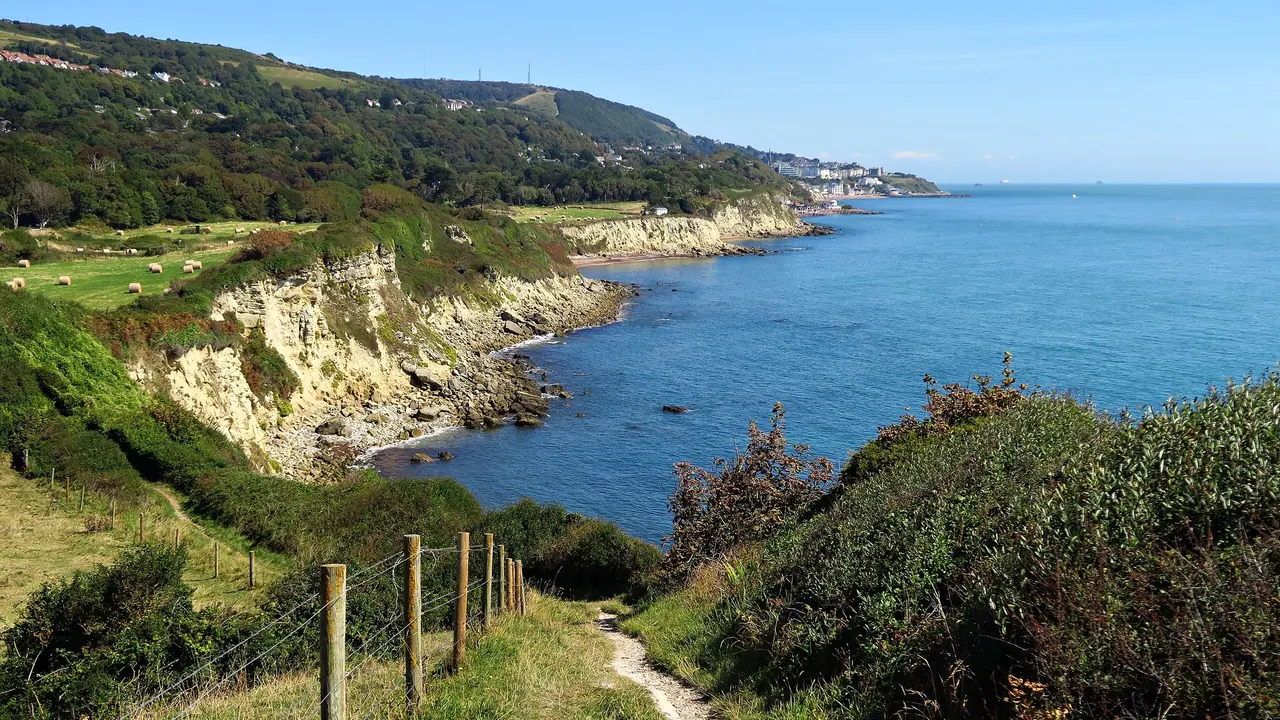
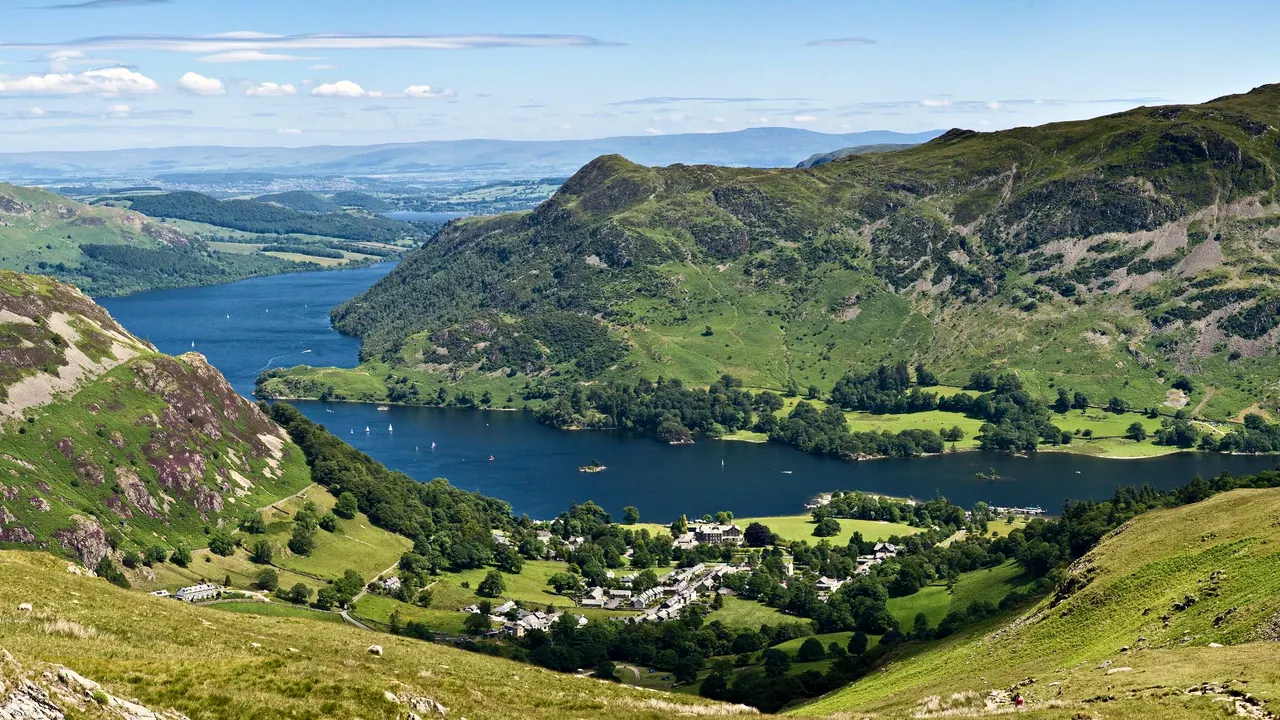
Photos: Isle of Wight by Michael Coppins, CC BY-SA 4.0, cropped; Lake District by Diliff, CC BY-SA 3.0, cropped.
Isle of Wight or Lake District?
Our verdict in twelve categories, each scored against the same fixed benchmark cities, and the climate month by month, so you can choose for your trip.
Choose Isle of Wight for
- beaches
- getting around
- families
The Isle of Wight suits a seaside vacation in the traditional sense: sandy bays on the east coast, gentle chalk walks out to the Needles, and children's attractions that are never more than a short bus ride away. It is the warmer, drier and sunnier of the two. It is also easier to manage without a car, and it is the better pick for families who want the beach to be the centre of the day.
Choose Lake District for
- nature and the outdoors
- food and drink
- wellness
Choose the Lake District if the landscape is the point. Its fells, ridges and glacial lakes are on a different scale from the island's downs. A stay there is built around long walks, scrambles and time on the water, finished with a hearty pub supper by the fire. Expect more rain and cooler days, and accept that a car helps once you leave the central valleys.
Scoreboard
Twelve categories on one fixed scale from 0 to 100. The shaded stretch is the gap between the two.
Your match
Pick a travel style or drag the sliders, and both match scores follow your weighting.
Too close to call, level with your weighting
Wins on beaches and getting around with your weighting.
Wins on nature and the outdoors and food and drink with your weighting.
What matters to you?
Category by category
What the scores mean for a trip.
Beaches & swimming
The island has real seaside. Sandown Bay's gently shelving sands suit children, Ryde has broad flats at low tide, and Compton Bay lies wild under its cliffs. Swimming in the Channel is mainly for late summer, but the beaches are the reason the resort towns exist.
The Lake District offers a different kind of swimming, in lakes and tarns from jetties and shingle shores. Wild swimmers love Buttermere and Ullswater on a still day, but it is a cold dip between walks, and the Cumbrian coast is better for a stroll than a swim.
Food & drink
Neither is a place people visit for the food, but the Lake District gives you more to look forward to. Its slate-floored inns serve Herdwick lamb and Cumberland sausage with local ales. Around Cartmel and Windermere there is country-house cooking good enough to travel for, plus sticky toffee pudding and Grasmere gingerbread.
The island's strength is its produce rather than its kitchens: crab and lobster in the harbour pubs of Bembridge and Yarmouth, garlic and tomatoes, farm-shop picnics and cream teas in Godshill. Its handful of ambitious restaurants in Cowes and Ventnor do not match the best of the Lakes.
Culture & sights
The two are broadly level here. Both offer a modest spread of sights that each fill half a day, rather than one great museum. The island's best are royal and military: Osborne House, Queen Victoria's seaside palace, Carisbrooke Castle, where Charles I was held prisoner, and the Roman mosaics at Brading.
The Lake District's heritage is literary and prehistoric: Wordsworth at Dove Cottage, Beatrix Potter at Hill Top, Ruskin at Brantwood and the Castlerigg stone circle, all spread across the valleys. Its landscape, shaped by centuries of hill farming, is the main monument.
Nightlife
An evening on the island means a harbour pub in Cowes or Yarmouth or an old village inn, with a few late bars in Newport and Ryde. Cowes fills with sailing crews and parties during its regatta week in August. In the Lakes, the pub is a walkers' fireside in Ambleside or Keswick, where the talk turns to the next morning's route. Both places are quiet by late evening, and neither has clubs worth planning a night around.
Nature & outdoors
This is where the Lake District pulls clearly ahead. England's highest mountains rise above long glacial lakes. Routes such as Striding Edge, Scafell Pike and the Fairfield Horseshoe are proper mountain days, and the crags are where British rock climbing began. The trade-off is rough ground and weather that turns fast.
The island's outdoors is gentler and coastal: the chalk ridge of Tennyson Down out to the Needles, the wooded Undercliff, a 110km coastal path and quiet lanes for cycling. Its particular strength is the water, since the Solent off Cowes is famous sailing country, and red squirrels live in its woods.
Day trips
Both have a good spread of outings, and the real difference is how you reach them. From the island, every mainland trip starts with a ferry. Portsmouth's Historic Dockyard, with HMS Victory and the Mary Rose, is a quick crossing from Ryde, and the ferry to Lymington puts the New Forest and Beaulieu within reach.
From the Lakes you simply drive out, to Carlisle's castle and cathedral, the central stretches of Hadrian's Wall or the Yorkshire Dales, though these are harder without a car. Within each region, market towns such as Kendal and Cartmel fill the role that Cowes, Yarmouth and Godshill play on the island.
Good for families
The island is the easier family choice, and it has been built around bucket-and-spade vacations for generations. Blackgang Chine, Robin Hill, the zoo at Sandown, fossil hunts on the south-west beaches and the chairlift at the Needles are all close together, and the sands shelve gently.
The Lake District suits families who like being outdoors. It has lake steamers, the Eskdale miniature railway and the Beatrix Potter connection for younger children, and ghyll scrambling for older ones. Rain is the bigger problem there, as there is little to do indoors.
Getting around
The island is far simpler to get around. It is only about 37km from end to end and buses reach every town. Open-top buses climb to the Needles in summer, and the railway from Ryde Pier links the east-coast resorts, so a car-free stay works well. The one hurdle is the ferry crossing.
The Lake District can be done without a car in the central valleys, by train to Windermere and then by bus and lake steamer. The western valleys of Wasdale and Eskdale need a car and the steep Hardknott and Wrynose passes, and summer traffic around Windermere and Keswick is heavy.
Shopping & style
Neither is a place to shop, and the two differ more in kind than in amount. The island's shops follow the sea and the studio. Cowes's narrow High Street sells sailing gear and nautical clothing, while glassblowers, potters and the craft studios of Ventnor and Yarmouth supply the gifts, with a jar of Alum Bay's striped sand as the classic souvenir. Newport covers everyday needs.
The Lakes give a shopper slightly more to do, because Ambleside and Keswick are effectively outfitters' towns. A forgotten waterproof or a better pair of walking boots is easy to put right before heading up the fells, which the island has no real equivalent for. The rest is close in spirit to the island's craft studios: Herdwick wool, slate work and landscape paintings, with Kendal for ordinary errands.
Affordability
Both are priced for the crowds of the school summer break, so neither is cheap in July and August, and both become cheaper in the quieter months. On the island the ferry adds to the cost, which you can keep down by crossing on foot and using the buses, and caravan parks and farm-shop picnics help families. In the Lakes the fells cost nothing to walk, and youth hostels, bunkhouses and campsites make a stay workable for walkers on a budget.
Live music & performing arts
There is little live performance in either place, and no opera or orchestras to plan around. The island has the bigger single event, the Isle of Wight Festival outside Newport each June, but little else beyond Shanklin's theatre and bands in the pubs. The Lakes offer more through the year, with plays at Theatre by the Lake in Keswick, the arts centre in Kendal and the town's mountain festival in November.
Wellness & relaxation
The Lake District is the better place to unwind, mostly because of its lakeside hotels around Windermere and Ullswater, where a spa pool with a view of the water follows a day's walking. Add quiet valleys, evenings by the fire and the local habit of a cold swim in a tarn.
The island has fewer treatments to offer. Its calm comes from clifftop benches, quiet villages and the restful feel of Ventnor, built as a Victorian health resort, with the gardens of Quarr Abbey for a still afternoon.
When should you go?
Pick your month. The climate figures are measured averages, not a forecast.
Isle of Wight in July
Lake District in July
Daytime high, °C
Rainfall in the month, mm
Where the figures come from
Isle of Wight's temperatures are measured 39 km from the centre, at Bournemouth Airport.
Isle of Wight has no rain gauge within 25 km of the centre, so its rainfall comes from a gridded climate dataset read at the destination rather than from a gauge further away.
Lake District's temperatures are measured 37 km from the centre, at Walney Island.
Lake District has no rain gauge within 25 km of the centre, so its rainfall comes from a gridded climate dataset read at the destination rather than from a gauge further away.
Lake District's sunshine is measured 90 km from the centre, at Leeming.
Temperature and rainfall are climate normals, averaged over the years shown. Isle of Wight: 1991-2020 normals, Bournemouth Airport (38.9 km from centre). Lake District: 1991-2020 normals, Walney Island (36.8 km from centre).
The Isle of Wight is the milder of the two all year. Summer highs on the island reach about 22°C and the sea warms to around 18°C by August, so July to September is the time for swimming. From May onwards the months are sunny and fairly dry. Rain builds from October, and winter is mild but grey and wet, so spring and autumn suit walking better than bathing.
The Lake District is cooler and much wetter in every month. Summer days only reach the high teens, and even July brings around 132mm of rain, against about 50mm on the island. Late spring is the best time for the fells, with the driest spells and decent sunshine, and early autumn comes a close second. From October to January the rain passes 180mm a month and the days are short, so winter visits are for hardy walkers and fireside weekends.
Which traveller are you?
On a beach and sun trip, the Isle of Wight is the clear choice. Sandown Bay's sheltered sands, Compton Bay's surf and a sea you can swim in by late summer easily beat lake shingle and the cold Irish Sea, and the island gets more sunshine too.
For an outdoors trip, the Lake District wins comfortably. Helvellyn by Striding Edge, Scafell Pike and the Langdale Pikes give real mountain days, with climbing and lake paddling on top. The island's downs and coastal path are pleasant but gentle by comparison.
On a relaxing and wellness trip, lean towards the Lake District. Lakeside hotels around Windermere and Ullswater pair spa pools with views over the water, and the quiet valleys set a slow pace. The island offers sea air and Ventnor's calm, but few treatments.
Before you go
| Measure | Isle of Wight | Lake District |
|---|---|---|
| Official language | English | English |
| Currency | Pound Sterling (GBP) | Pound Sterling (GBP) |
| Sockets | G230 V, 50 Hz | G230 V, 50 Hz |
| Driving side | Left | Left |
| Time zone | UTC, UTC+1 in summer | UTC, UTC+1 in summer |
| Emergency number | 112 or 999 | 112 or 999 |
| Main airport | Southampton Airport (SOU)15 non-stop destinations | Manchester Airport (MAN)211 non-stop destinations |
| Public holidays this year | 8 days | 8 days |
By the numbers
| Measure | Isle of Wight | Lake District |
|---|---|---|
| Population | 140,459 | - |
| People per km² | 369 | - |
| Swim season, months above 21 °C | None | None |
Where else could you go?
Every comparison below shares a destination with this one, so you can follow Isle of Wight or Lake District somewhere new.
- Yorkshire Dalesvs Lake District
- Cotswoldsvs Isle of Wight
- Peak Districtvs Lake District
- Snowdoniavs Lake District
- Devonvs Isle of Wight
- Normandyvs Isle of Wight